March 27th Financial Breakfast: Trump postpones strikes on Iranian power plants for another 10 days; gold prices fall back below $4400; fading hopes for a Middle East ceasefire boost oil prices.
2026-03-27 07:24:49
On Friday (March 27, Beijing time) in early Asian trading, spot gold was trading around $4,398 per ounce. Gold prices fell nearly 3% on Thursday due to a stronger dollar, market participants reassessing the possibility of a ceasefire in the Middle East, and Trump postponing the strike on Iranian power plants for another 10 days. US crude oil was trading around $93.40 per barrel. Oil prices closed higher on Thursday as market hopes for a swift end to the Middle East wars faded.

U.S. stocks plunged on Thursday, with the Nasdaq falling more than 2%, confirming it has entered correction territory. The S&P 500 and Dow Jones Industrial Average both fell by more than 1%. Investors sought safe havens amid concerns about an escalation of the war between the U.S. and Israel against Iran.
A sharp rise in oil prices exacerbated market concerns about inflation, causing the Nasdaq and S&P 500 to suffer their biggest one-day drops since January 20. US President Trump stated that Iran must reach an agreement or face continued attacks, and said that controlling Iranian oil was an option, while a senior Iranian official called the US-proposed ceasefire "unilateral and unfair," but said diplomatic efforts were not over.
Markets are oscillating amid “fog of war,” with conflicting signals and uncertainty surrounding the war dominating market movements, according to Doug Beath, global equity strategist at Wells Fargo Investment Institute.
After the market closed, Trump announced a 10-day suspension of attacks on Iranian energy facilities until April 6 at the request of the Iranian government, and said that negotiations were progressing "very well." This news slightly narrowed the decline in stock index futures.
In terms of sectors, the energy sector performed best, rising 1.6%, while the communication services sector fell sharply by 3.5% due to Meta and Google's loss in a case concerning the harm done to children by social media. The technology sector fell 2.7%, with chip stocks being the main drag, and the Philadelphia Semiconductor Index falling sharply by 4.8%. Regarding economic data, initial jobless claims in the US rose slightly last week, indicating a stable labor market and providing the Federal Reserve with room to maintain interest rates while monitoring the impact of the war.
Gold prices fell on Thursday as the dollar strengthened and oil prices rose, prompting market participants to reassess the possibility of a ceasefire in the Middle East.
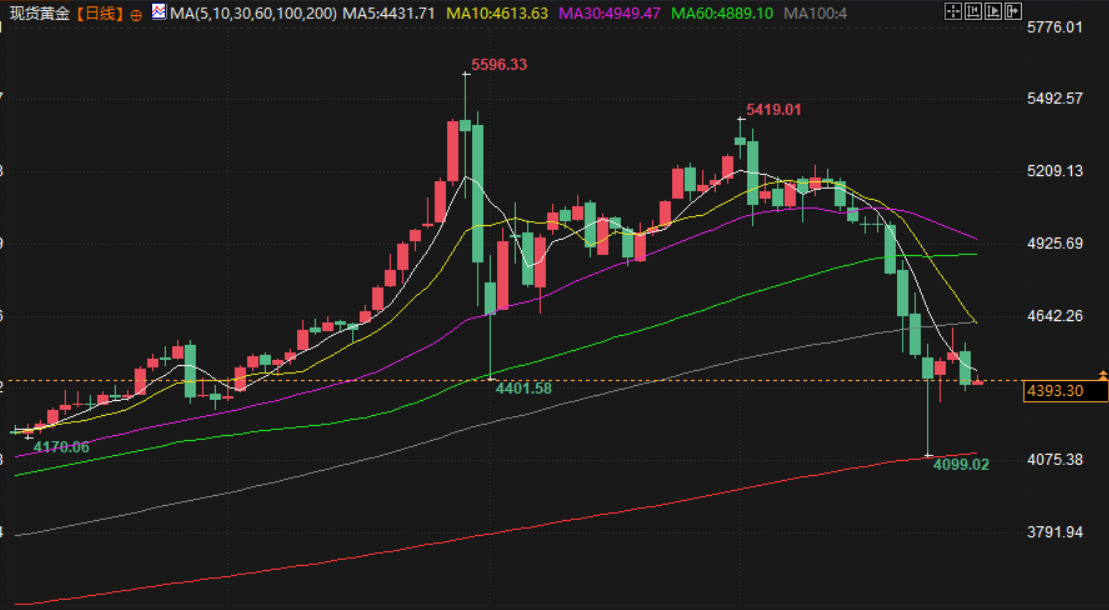
Spot gold fell 2.7% to $4,384.38 an ounce, while U.S. gold futures settled down 3.9% at $4,376.3. A slight rise in the dollar made dollar-denominated gold more expensive for investors holding other currencies, while rising oil prices exacerbated inflationary pressures and reinforced expectations that high interest rates would persist.
Kitco Metals senior analyst Jim Wyckoff said that if the conflict continues, gold prices could fall below $4,000, while hopes for a ceasefire and interest rate cuts could push gold prices back up to around $5,000.
A senior Iranian official called the US-proposed solution to end the nearly four-week conflict "one-sided and unfair," but US President Trump said that as a goodwill gesture in negotiations, Iran allowed 10 oil tankers to pass through the Strait of Hormuz. Since the start of the US-Israel war against Iran on February 28, gold prices have fallen by 17%.
In addition, spot silver fell 5% to $67.71, platinum fell 4.2%, and palladium fell 5%. Last week, initial jobless claims in the U.S. rose slightly, indicating a stable labor market and providing the Federal Reserve with room to keep interest rates unchanged while monitoring inflation risks.
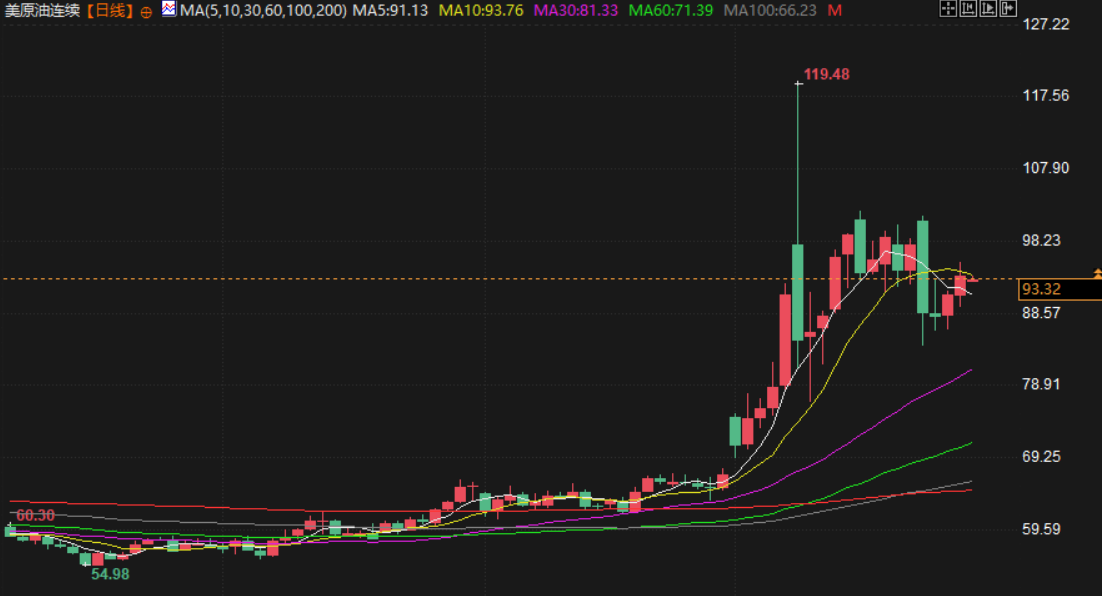
Oil prices closed higher on Thursday, with Brent crude futures rising 5.7% to $108.01 a barrel and WTI crude futures rising 4.6% to $94.48 a barrel, as market hopes for a swift end to the Middle East wars faded.
A US envoy confirmed that a 15-point action plan had been sent to Iran as a basis for negotiations, but the Iranian Foreign Minister stated that the plan was still under review and that no dialogue had yet begun on ending the war. A senior Iranian official called the plan "unilateral and unfair," while US President Trump stated that Iran had allowed 10 oil tankers to pass through the Strait of Hormuz as a gesture of goodwill. Matador Economics' chief economist noted that the market is confused and frustrated by the veracity of the US-Iran news, and investors are turning to safer assets.
Meanwhile, the Pentagon plans to deploy thousands more airborne troops to the Gulf region, while the Houthi rebels in Yemen, allied with Iran, are preparing to launch another attack on key Red Sea shipping lanes to demonstrate unity. Furthermore, at least 40% of Russia's oil export capacity is at a standstill, and the suspension of processing at one of its largest refineries due to a Ukrainian drone attack has further exacerbated supply shortages. However, there are also signs of partial resumption of shipping: a Thai oil tanker passed through the Strait of Hormuz after diplomatic coordination, and Iran made its first concession to EU countries, indicating its willingness to accept any request from Spain regarding the strait.
The dollar rose against major currencies on Thursday, with the dollar index gaining 0.35% to 99.97. This was influenced by significant disagreements over a US-Iran peace agreement and dashed hopes for de-escalation in the Middle East.
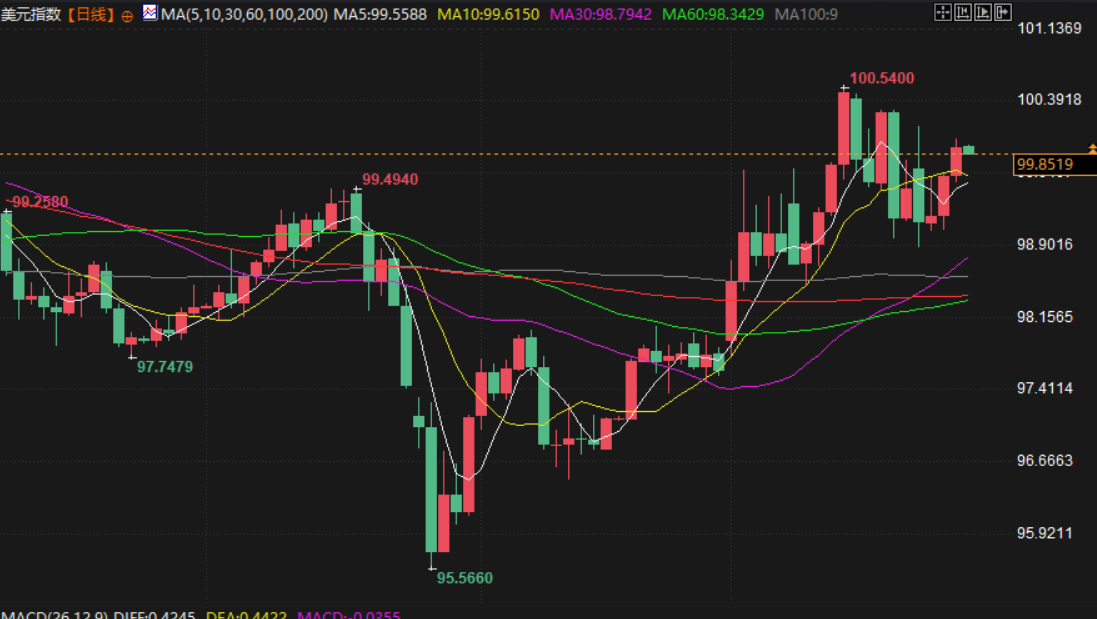
An Iranian official said the US proposal failed to meet the minimum requirements and only served US and Israeli interests, but diplomatic efforts were not over, while US President Trump said he was unsure whether he was willing to reach an agreement to end the war.
Corpay's chief market strategist pointed out that there are huge differences between the two sides on the terms of the negotiations. Iran has a strong incentive to keep the Strait of Hormuz closed to oil tanker traffic. Global energy supply pressure is expected to rise sharply, and investors are preparing for severe economic consequences. Safe-haven demand is driving the dollar higher.
The euro fell 0.3% to $1.1524, the pound fell 0.35% to $1.3319, and the dollar rose 0.22% to 159.81 yen.
U.S. initial jobless claims rose slightly last week, indicating a stable labor market and giving the Federal Reserve room to keep interest rates unchanged while assessing war-related inflation risks. The market has fully priced in expectations of three European Central Bank rate hikes this year, with policymakers stating that a rate hike at the next meeting would be "an option" should war cause inflation to surge.
Trump says strikes against Iranian power plants will be delayed for another 10 days.
On the afternoon of March 26 local time (early morning of March 27 Beijing time), US President Trump posted on his social media platform "Real Social" that, "At the request of the Iranian government, I hereby declare that I will postpone the strikes against Iranian energy facilities for another 10 days, until 8 p.m. Eastern Time on April 6, 2026." Trump also stated, "Negotiations are ongoing, and despite false and contradictory statements from fake news media and others, the negotiations are progressing very well." (CCTV International News)
The US is considering shifting its arms and ammunition supplies to Ukraine to the Middle East.
According to a report by The Washington Post, citing three sources familiar with the matter, the Pentagon is considering diverting weapons and ammunition originally intended for Ukraine to the Middle East due to shortages of some key U.S. military ammunition caused by the war with Iran. The report states that air defense interceptor missiles procured through NATO mechanisms may be redistributed. At a cabinet meeting that day, U.S. President Trump was also asked about this issue, but he did not answer directly, only stating, "The United States has a large amount of ammunition, stockpiled in other countries, for example, throughout Europe, and sometimes it's moved from one place to another." NATO responded to the report, stating that weapons funded by NATO allies for Ukraine are still being delivered. (CCTV International News)
UN Food and Agriculture Organization: The US-Israel-Iran conflict is rapidly impacting the global food and energy supply chain.
On March 26 local time, the Food and Agriculture Organization of the United Nations (FAO) stated that the current conflict between the US, Israel, and Iran has triggered one of the most rapid and severe shocks to global commodity flows in recent years. Disruptions to shipping in the Strait of Hormuz, leading to higher costs for energy, fertilizers, and shipping insurance, are having a continued spillover effect on global food security and the stability of agricultural supply chains. FAO Chief Economist Maximo Torero explained at a media briefing that the Strait of Hormuz is a crucial global energy and fertilizer transport route, carrying approximately 20 million barrels of oil daily, accounting for about 35% of global crude oil shipments; it also handles large quantities of liquefied natural gas and fertilizer trade, and sulfur from the Gulf region is a vital raw material for phosphate fertilizer production. The impact of the disrupted shipping lanes has rapidly spread to the global food and agricultural system. (CCTV News)
White House: No plans yet to mitigate the impact of the Department of Homeland Security shutdown.
White House Press Secretary Carolyn Levitt said in a statement that the White House is discussing how to mitigate the impact of the Department of Homeland Security shutdown, but no preparations or plans have been made at this time. She stated, "The best and simplest way to pay the Transportation Security Administration (TSA) personnel is to provide funding to the Department of Homeland Security."
The United States is reportedly developing a military plan for a "fatal blow" to Iran.
U.S. officials and sources say the U.S. Department of Defense is developing a "lethal strike" military plan against Iran. The plan includes striking Iran's main oil export hubs and key islands, as well as blocking or seizing ships transporting Iranian oil in the Strait of Hormuz. In addition, the U.S. military has developed a ground operation plan deep inland to obtain highly enriched uranium buried in nuclear facilities. Another option is to carry out a large-scale airstrike to prevent Iran from acquiring these nuclear materials in the future. It is understood that U.S. President Trump has not yet made a final decision on the above plans, and the White House has stated that ground operations are still in "hypothetical" discussion. (CCTV News)
US media: Iran wants the US to lower its demands before initiating any negotiations.
According to the Wall Street Journal, citing sources familiar with the matter, Iran will not agree to meet to negotiate a possible ceasefire until the United States agrees to reduce the demands of its 15-point plan. The sources said Iran is open to talks but considers the US proposals excessive, including dismantling most of its nuclear program, ending support for regional allies, and limiting its missile program. Iranian and Arab officials said Tehran ruled out the possibility of discussing Iran's missile program as a starting point for talks. They stated that Iran is also unwilling to commit to a permanent halt to uranium enrichment activities. The sources said Iran also wants assurances (preferably through a third party) that the US and Israel will not retaliate with further attacks. One Iranian official said Iran remains willing to consider previously proposed restrictions on its nuclear program, including diluting its stockpile of highly enriched uranium. The US suspects Iran might eventually use its stockpile of highly enriched uranium, far exceeding any civilian needs, to develop nuclear weapons.
Iran says it is prepared to respond to a potential "suicide attack" by the United States to open the Strait of Hormuz.
Iran's Tasnim News Agency reported on the 26th, citing military sources, that Iran is prepared to blockade the Strait of Hormuz if the United States attempts a "suicide attack" to open it. The report stated that Iran has mobilized over one million combatants in preparation for ground warfare against the United States. Furthermore, large numbers of young Iranians are flocking to recruitment centers of the "Mobilization of the Poor," the Islamic Revolutionary Guard Corps, and the military, applying to participate in combat. Meanwhile, the US news website Axios reported on the 26th, citing US officials and sources, that the US Department of Defense is developing a "lethal strike" military plan against Iran, including invading or blockading Kharg Island, Iran's main oil export hub; attacking Larak Island, a strategic location used by Iran to control the Strait of Hormuz; seizing Abu Musa Island and two other small islands located at the western entrance to the strait; and blocking or seizing ships transporting Iranian oil on the eastern side of the Strait of Hormuz. (Xinhua)
Mediator: Iran did not ask Trump to halt attacks on energy facilities
According to the Wall Street Journal, mediators involved in the peace talks revealed that Iran has not demanded a U.S. halt to its strikes on Iranian energy facilities, nor has it given a final response to the 15-point plan to end the war. Trump previously stated that he would suspend strikes on Iranian energy facilities for another 10 days, until April 6th. Trump's previous deadline was this Friday. He stated that the extension was at Iran's request. The mediators said that Iranian officials have indicated to them that Iran is interested in negotiations, but the Iranian leadership has not yet participated or made a final decision. The mediators stated that Iranian officials have asked the U.S. to reduce its excessive demands in the 15-point plan before agreeing to meet to discuss a possible ceasefire. Iran has also ruled out discussing its missile program as a starting point for negotiations and is unwilling to commit to a permanent halt to uranium enrichment activities. The mediators stated that the chances of a successful ceasefire remain low because the hardline demands made by the U.S. and Iran exceed what the other side can accept.
Minister Wang Wentao met with U.S. Trade Representative Greer.
On March 26, Minister of Commerce Wang Wentao met with U.S. Trade Representative Greer in Yaoundé, Cameroon, on the sidelines of the 14th WTO Ministerial Conference. The two sides exchanged in-depth views on China-U.S. economic and trade relations, multilateral and regional economic and trade cooperation, and other issues. Ambassador Li Yongzhe, China's Permanent Mission to the WTO, also attended the meeting. Wang Wentao stated that President Xi Jinping pointed out that economic and trade relations should continue to be the ballast and engine of China-U.S. relations, not a stumbling block or point of conflict. Both sides should jointly implement the important consensus reached at the Busan summit and previous phone calls between the two heads of state, properly handle the relationship between competition and cooperation, and between the past and the future, strengthen mutually beneficial cooperation, avoid vicious competition, maintain close communication, and jointly "look forward" to promote the healthy, stable, and sustainable development of bilateral economic and trade relations. Wang Wentao emphasized that China is willing to strengthen multilateral and regional economic and trade cooperation with the U.S., jointly promote WTO reform, strive for practical results at the 14th WTO Ministerial Conference, and support positive outcomes at the APEC and G20 meetings. Wang Wentao also expressed serious concern regarding the US's initiation of Section 301 investigations against several economies, including China, based on so-called "overcapacity" and "lack of a ban on the import of forced labor products." Greer stated that over the past year, the US and China have conducted constructive trade consultations and maintained close communication and cooperation. The US is willing to work with China, guided by the consensus reached by the two heads of state, to strengthen dialogue, promote the sustained and stable development of US-China trade relations, and achieve mutual benefit and win-win results in the trade and economic field. The US is willing to strengthen communication and exchanges with China within the WTO and regional frameworks. (Ministry of Commerce)
my country's total social logistics volume reached 58.6 trillion yuan in the first two months of this year, showing a clear upward trend.
The China Federation of Logistics and Purchasing released logistics operation data for the first two months of this year today (February 27). The data shows that my country's logistics operations have achieved a good start, with social logistics demand steadily recovering. In January and February this year, my country's total social logistics volume reached 58.6 trillion yuan, a year-on-year increase of 6.7% at comparable prices. This growth rate is 1.6 and 1.4 percentage points higher than the full year of last year and the same period last year, respectively, indicating a significant recovery trend. Structurally, domestic production and consumption, as well as international import logistics demand, improved simultaneously, with logistics demand in all sectors accelerating compared to the same period last year. In January and February, the total value of industrial goods logistics increased by 6.3% year-on-year. Among them, more than 80% of industrial sub-sectors saw growth, with the computer, communication and other electronic equipment manufacturing industry, and high-end equipment manufacturing sectors such as railway, shipbuilding, and aerospace all experiencing growth rates exceeding 10%. (CCTV News)
Key Focus Today
stock market
U.S. stocks plunged on Thursday, with the Nasdaq falling more than 2%, confirming it has entered correction territory. The S&P 500 and Dow Jones Industrial Average both fell by more than 1%. Investors sought safe havens amid concerns about an escalation of the war between the U.S. and Israel against Iran.
A sharp rise in oil prices exacerbated market concerns about inflation, causing the Nasdaq and S&P 500 to suffer their biggest one-day drops since January 20. US President Trump stated that Iran must reach an agreement or face continued attacks, and said that controlling Iranian oil was an option, while a senior Iranian official called the US-proposed ceasefire "unilateral and unfair," but said diplomatic efforts were not over.
Markets are oscillating amid “fog of war,” with conflicting signals and uncertainty surrounding the war dominating market movements, according to Doug Beath, global equity strategist at Wells Fargo Investment Institute.
After the market closed, Trump announced a 10-day suspension of attacks on Iranian energy facilities until April 6 at the request of the Iranian government, and said that negotiations were progressing "very well." This news slightly narrowed the decline in stock index futures.
In terms of sectors, the energy sector performed best, rising 1.6%, while the communication services sector fell sharply by 3.5% due to Meta and Google's loss in a case concerning the harm done to children by social media. The technology sector fell 2.7%, with chip stocks being the main drag, and the Philadelphia Semiconductor Index falling sharply by 4.8%. Regarding economic data, initial jobless claims in the US rose slightly last week, indicating a stable labor market and providing the Federal Reserve with room to maintain interest rates while monitoring the impact of the war.
Gold Market
Gold prices fell on Thursday as the dollar strengthened and oil prices rose, prompting market participants to reassess the possibility of a ceasefire in the Middle East.
Spot gold fell 2.7% to $4,384.38 an ounce, while U.S. gold futures settled down 3.9% at $4,376.3. A slight rise in the dollar made dollar-denominated gold more expensive for investors holding other currencies, while rising oil prices exacerbated inflationary pressures and reinforced expectations that high interest rates would persist.
Kitco Metals senior analyst Jim Wyckoff said that if the conflict continues, gold prices could fall below $4,000, while hopes for a ceasefire and interest rate cuts could push gold prices back up to around $5,000.
A senior Iranian official called the US-proposed solution to end the nearly four-week conflict "one-sided and unfair," but US President Trump said that as a goodwill gesture in negotiations, Iran allowed 10 oil tankers to pass through the Strait of Hormuz. Since the start of the US-Israel war against Iran on February 28, gold prices have fallen by 17%.
In addition, spot silver fell 5% to $67.71, platinum fell 4.2%, and palladium fell 5%. Last week, initial jobless claims in the U.S. rose slightly, indicating a stable labor market and providing the Federal Reserve with room to keep interest rates unchanged while monitoring inflation risks.
oil market
Oil prices closed higher on Thursday, with Brent crude futures rising 5.7% to $108.01 a barrel and WTI crude futures rising 4.6% to $94.48 a barrel, as market hopes for a swift end to the Middle East wars faded.
A US envoy confirmed that a 15-point action plan had been sent to Iran as a basis for negotiations, but the Iranian Foreign Minister stated that the plan was still under review and that no dialogue had yet begun on ending the war. A senior Iranian official called the plan "unilateral and unfair," while US President Trump stated that Iran had allowed 10 oil tankers to pass through the Strait of Hormuz as a gesture of goodwill. Matador Economics' chief economist noted that the market is confused and frustrated by the veracity of the US-Iran news, and investors are turning to safer assets.
Meanwhile, the Pentagon plans to deploy thousands more airborne troops to the Gulf region, while the Houthi rebels in Yemen, allied with Iran, are preparing to launch another attack on key Red Sea shipping lanes to demonstrate unity. Furthermore, at least 40% of Russia's oil export capacity is at a standstill, and the suspension of processing at one of its largest refineries due to a Ukrainian drone attack has further exacerbated supply shortages. However, there are also signs of partial resumption of shipping: a Thai oil tanker passed through the Strait of Hormuz after diplomatic coordination, and Iran made its first concession to EU countries, indicating its willingness to accept any request from Spain regarding the strait.
Foreign exchange market
The dollar rose against major currencies on Thursday, with the dollar index gaining 0.35% to 99.97. This was influenced by significant disagreements over a US-Iran peace agreement and dashed hopes for de-escalation in the Middle East.
An Iranian official said the US proposal failed to meet the minimum requirements and only served US and Israeli interests, but diplomatic efforts were not over, while US President Trump said he was unsure whether he was willing to reach an agreement to end the war.
Corpay's chief market strategist pointed out that there are huge differences between the two sides on the terms of the negotiations. Iran has a strong incentive to keep the Strait of Hormuz closed to oil tanker traffic. Global energy supply pressure is expected to rise sharply, and investors are preparing for severe economic consequences. Safe-haven demand is driving the dollar higher.
The euro fell 0.3% to $1.1524, the pound fell 0.35% to $1.3319, and the dollar rose 0.22% to 159.81 yen.
U.S. initial jobless claims rose slightly last week, indicating a stable labor market and giving the Federal Reserve room to keep interest rates unchanged while assessing war-related inflation risks. The market has fully priced in expectations of three European Central Bank rate hikes this year, with policymakers stating that a rate hike at the next meeting would be "an option" should war cause inflation to surge.
International News
Trump says strikes against Iranian power plants will be delayed for another 10 days.
On the afternoon of March 26 local time (early morning of March 27 Beijing time), US President Trump posted on his social media platform "Real Social" that, "At the request of the Iranian government, I hereby declare that I will postpone the strikes against Iranian energy facilities for another 10 days, until 8 p.m. Eastern Time on April 6, 2026." Trump also stated, "Negotiations are ongoing, and despite false and contradictory statements from fake news media and others, the negotiations are progressing very well." (CCTV International News)
The US is considering shifting its arms and ammunition supplies to Ukraine to the Middle East.
According to a report by The Washington Post, citing three sources familiar with the matter, the Pentagon is considering diverting weapons and ammunition originally intended for Ukraine to the Middle East due to shortages of some key U.S. military ammunition caused by the war with Iran. The report states that air defense interceptor missiles procured through NATO mechanisms may be redistributed. At a cabinet meeting that day, U.S. President Trump was also asked about this issue, but he did not answer directly, only stating, "The United States has a large amount of ammunition, stockpiled in other countries, for example, throughout Europe, and sometimes it's moved from one place to another." NATO responded to the report, stating that weapons funded by NATO allies for Ukraine are still being delivered. (CCTV International News)
UN Food and Agriculture Organization: The US-Israel-Iran conflict is rapidly impacting the global food and energy supply chain.
On March 26 local time, the Food and Agriculture Organization of the United Nations (FAO) stated that the current conflict between the US, Israel, and Iran has triggered one of the most rapid and severe shocks to global commodity flows in recent years. Disruptions to shipping in the Strait of Hormuz, leading to higher costs for energy, fertilizers, and shipping insurance, are having a continued spillover effect on global food security and the stability of agricultural supply chains. FAO Chief Economist Maximo Torero explained at a media briefing that the Strait of Hormuz is a crucial global energy and fertilizer transport route, carrying approximately 20 million barrels of oil daily, accounting for about 35% of global crude oil shipments; it also handles large quantities of liquefied natural gas and fertilizer trade, and sulfur from the Gulf region is a vital raw material for phosphate fertilizer production. The impact of the disrupted shipping lanes has rapidly spread to the global food and agricultural system. (CCTV News)
White House: No plans yet to mitigate the impact of the Department of Homeland Security shutdown.
White House Press Secretary Carolyn Levitt said in a statement that the White House is discussing how to mitigate the impact of the Department of Homeland Security shutdown, but no preparations or plans have been made at this time. She stated, "The best and simplest way to pay the Transportation Security Administration (TSA) personnel is to provide funding to the Department of Homeland Security."
The United States is reportedly developing a military plan for a "fatal blow" to Iran.
U.S. officials and sources say the U.S. Department of Defense is developing a "lethal strike" military plan against Iran. The plan includes striking Iran's main oil export hubs and key islands, as well as blocking or seizing ships transporting Iranian oil in the Strait of Hormuz. In addition, the U.S. military has developed a ground operation plan deep inland to obtain highly enriched uranium buried in nuclear facilities. Another option is to carry out a large-scale airstrike to prevent Iran from acquiring these nuclear materials in the future. It is understood that U.S. President Trump has not yet made a final decision on the above plans, and the White House has stated that ground operations are still in "hypothetical" discussion. (CCTV News)
US media: Iran wants the US to lower its demands before initiating any negotiations.
According to the Wall Street Journal, citing sources familiar with the matter, Iran will not agree to meet to negotiate a possible ceasefire until the United States agrees to reduce the demands of its 15-point plan. The sources said Iran is open to talks but considers the US proposals excessive, including dismantling most of its nuclear program, ending support for regional allies, and limiting its missile program. Iranian and Arab officials said Tehran ruled out the possibility of discussing Iran's missile program as a starting point for talks. They stated that Iran is also unwilling to commit to a permanent halt to uranium enrichment activities. The sources said Iran also wants assurances (preferably through a third party) that the US and Israel will not retaliate with further attacks. One Iranian official said Iran remains willing to consider previously proposed restrictions on its nuclear program, including diluting its stockpile of highly enriched uranium. The US suspects Iran might eventually use its stockpile of highly enriched uranium, far exceeding any civilian needs, to develop nuclear weapons.
Iran says it is prepared to respond to a potential "suicide attack" by the United States to open the Strait of Hormuz.
Iran's Tasnim News Agency reported on the 26th, citing military sources, that Iran is prepared to blockade the Strait of Hormuz if the United States attempts a "suicide attack" to open it. The report stated that Iran has mobilized over one million combatants in preparation for ground warfare against the United States. Furthermore, large numbers of young Iranians are flocking to recruitment centers of the "Mobilization of the Poor," the Islamic Revolutionary Guard Corps, and the military, applying to participate in combat. Meanwhile, the US news website Axios reported on the 26th, citing US officials and sources, that the US Department of Defense is developing a "lethal strike" military plan against Iran, including invading or blockading Kharg Island, Iran's main oil export hub; attacking Larak Island, a strategic location used by Iran to control the Strait of Hormuz; seizing Abu Musa Island and two other small islands located at the western entrance to the strait; and blocking or seizing ships transporting Iranian oil on the eastern side of the Strait of Hormuz. (Xinhua)
Mediator: Iran did not ask Trump to halt attacks on energy facilities
According to the Wall Street Journal, mediators involved in the peace talks revealed that Iran has not demanded a U.S. halt to its strikes on Iranian energy facilities, nor has it given a final response to the 15-point plan to end the war. Trump previously stated that he would suspend strikes on Iranian energy facilities for another 10 days, until April 6th. Trump's previous deadline was this Friday. He stated that the extension was at Iran's request. The mediators said that Iranian officials have indicated to them that Iran is interested in negotiations, but the Iranian leadership has not yet participated or made a final decision. The mediators stated that Iranian officials have asked the U.S. to reduce its excessive demands in the 15-point plan before agreeing to meet to discuss a possible ceasefire. Iran has also ruled out discussing its missile program as a starting point for negotiations and is unwilling to commit to a permanent halt to uranium enrichment activities. The mediators stated that the chances of a successful ceasefire remain low because the hardline demands made by the U.S. and Iran exceed what the other side can accept.
Domestic News
Minister Wang Wentao met with U.S. Trade Representative Greer.
On March 26, Minister of Commerce Wang Wentao met with U.S. Trade Representative Greer in Yaoundé, Cameroon, on the sidelines of the 14th WTO Ministerial Conference. The two sides exchanged in-depth views on China-U.S. economic and trade relations, multilateral and regional economic and trade cooperation, and other issues. Ambassador Li Yongzhe, China's Permanent Mission to the WTO, also attended the meeting. Wang Wentao stated that President Xi Jinping pointed out that economic and trade relations should continue to be the ballast and engine of China-U.S. relations, not a stumbling block or point of conflict. Both sides should jointly implement the important consensus reached at the Busan summit and previous phone calls between the two heads of state, properly handle the relationship between competition and cooperation, and between the past and the future, strengthen mutually beneficial cooperation, avoid vicious competition, maintain close communication, and jointly "look forward" to promote the healthy, stable, and sustainable development of bilateral economic and trade relations. Wang Wentao emphasized that China is willing to strengthen multilateral and regional economic and trade cooperation with the U.S., jointly promote WTO reform, strive for practical results at the 14th WTO Ministerial Conference, and support positive outcomes at the APEC and G20 meetings. Wang Wentao also expressed serious concern regarding the US's initiation of Section 301 investigations against several economies, including China, based on so-called "overcapacity" and "lack of a ban on the import of forced labor products." Greer stated that over the past year, the US and China have conducted constructive trade consultations and maintained close communication and cooperation. The US is willing to work with China, guided by the consensus reached by the two heads of state, to strengthen dialogue, promote the sustained and stable development of US-China trade relations, and achieve mutual benefit and win-win results in the trade and economic field. The US is willing to strengthen communication and exchanges with China within the WTO and regional frameworks. (Ministry of Commerce)
my country's total social logistics volume reached 58.6 trillion yuan in the first two months of this year, showing a clear upward trend.
The China Federation of Logistics and Purchasing released logistics operation data for the first two months of this year today (February 27). The data shows that my country's logistics operations have achieved a good start, with social logistics demand steadily recovering. In January and February this year, my country's total social logistics volume reached 58.6 trillion yuan, a year-on-year increase of 6.7% at comparable prices. This growth rate is 1.6 and 1.4 percentage points higher than the full year of last year and the same period last year, respectively, indicating a significant recovery trend. Structurally, domestic production and consumption, as well as international import logistics demand, improved simultaneously, with logistics demand in all sectors accelerating compared to the same period last year. In January and February, the total value of industrial goods logistics increased by 6.3% year-on-year. Among them, more than 80% of industrial sub-sectors saw growth, with the computer, communication and other electronic equipment manufacturing industry, and high-end equipment manufacturing sectors such as railway, shipbuilding, and aerospace all experiencing growth rates exceeding 10%. (CCTV News)
- Risk Warning and Disclaimer
- The market involves risk, and trading may not be suitable for all investors. This article is for reference only and does not constitute personal investment advice, nor does it take into account certain users’ specific investment objectives, financial situation, or other needs. Any investment decisions made based on this information are at your own risk.