Tin prices continue to fluctuate at high levels! Supply disruptions are the biggest variable.
2026-03-27 11:32:53
According to APP reports, the Shanghai tin futures contract has experienced significant volatility recently, previously rising over 3% to a high of 364,320 yuan/ton, while the LME tin futures contract also strengthened, rising over 3% to around 45,500 USD/ton. The latest data shows that the Shanghai tin futures contract is currently trading at 364,320 yuan/ton, up 2.18% from the previous trading day's settlement price, with an intraday high of 364,720 yuan/ton and a low of 345,550 yuan/ton; the LME tin March contract is currently trading at 44,818 USD/ton, showing a slight stabilization trend.
The price difference between Shanghai tin and LME tin remains within a reasonable range, but due to exchange rate fluctuations and import window factors, there is still room for dynamic adjustment in the short term. Market participants are generally concerned that tin, as a scarce non-ferrous metal, is shifting its price movement logic from traditional supply and demand to a composite driver model of "resource scarcity + emerging demand growth".
From the supply side, global tin production is highly concentrated. Indonesia, as the largest exporter, has recently intensified its crackdown on illegal mining, leading to periodic fluctuations in export volumes. Meanwhile, slow resumption of production at mines in northern Africa due to geopolitical factors, coupled with logistical disruptions in some African production areas, has further exacerbated market concerns about tightening supply. Analysts recently noted that "improved macro sentiment and geopolitical policy disturbances have combined to drive tin prices higher, but the actual fundamentals still depend on the progress of overseas mine resumption." Current overall inventory levels are not high, and even with supply recovery, a certain supply gap is still expected in 2026.
Demand remains resilient. The electronics, semiconductor, and new energy sectors continue to generate pent-up demand, particularly with AI data center servers requiring significantly more tin per unit compared to traditional models, and new energy vehicles consuming significantly more tin than gasoline vehicles, providing medium- to long-term support for tin prices. On the macro level, a weak dollar environment and improved risk appetite further catalyze capital inflows into the non-ferrous metals sector.
However, high prices also come with risks. A de-escalation in geopolitical tensions or a slowdown in downstream procurement could trigger a price correction. Investors need to closely monitor developments in Indonesian export policies, global inventory changes, and the release of macroeconomic data.
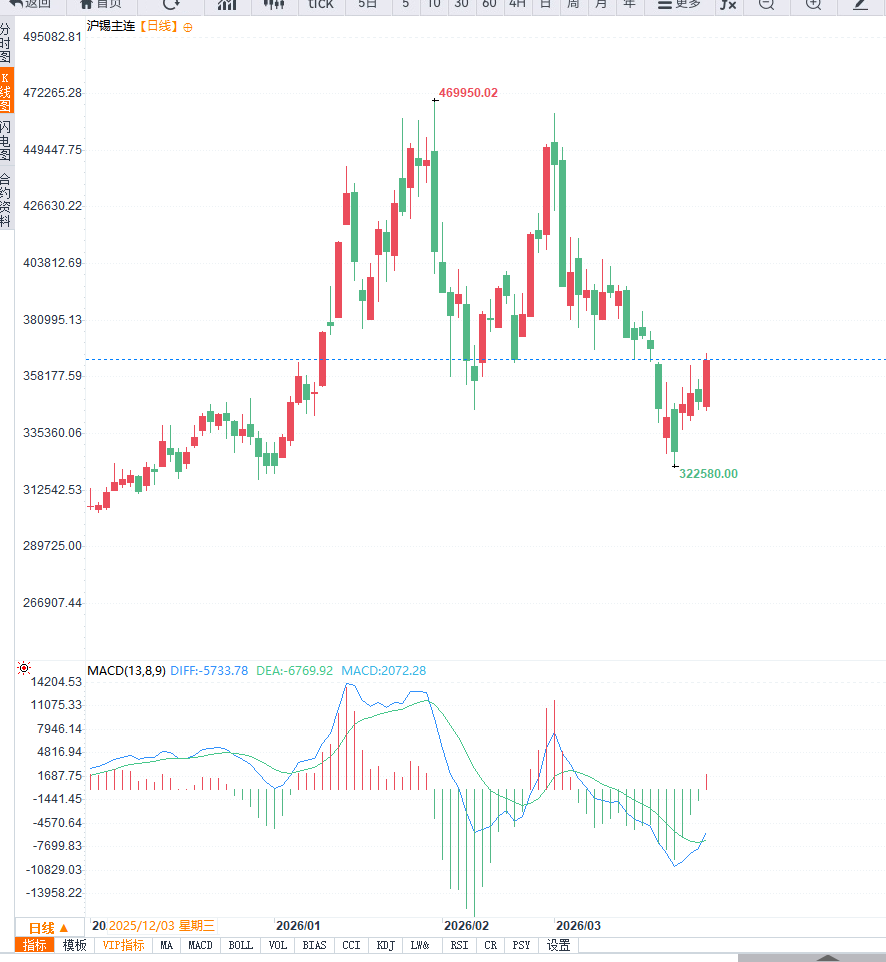
Editor's Summary : Tin prices are currently in a high-level consolidation pattern, characterized by a tight supply-demand balance and mixed macroeconomic sentiment. Short-term volatility may remain high, while the scarcity of the resource will continue to provide a floor for prices in the medium to long term. Market participants should pay attention to marginal changes in policy and fundamentals, taking into account their own risk appetite.
The price difference between Shanghai tin and LME tin remains within a reasonable range, but due to exchange rate fluctuations and import window factors, there is still room for dynamic adjustment in the short term. Market participants are generally concerned that tin, as a scarce non-ferrous metal, is shifting its price movement logic from traditional supply and demand to a composite driver model of "resource scarcity + emerging demand growth".
From the supply side, global tin production is highly concentrated. Indonesia, as the largest exporter, has recently intensified its crackdown on illegal mining, leading to periodic fluctuations in export volumes. Meanwhile, slow resumption of production at mines in northern Africa due to geopolitical factors, coupled with logistical disruptions in some African production areas, has further exacerbated market concerns about tightening supply. Analysts recently noted that "improved macro sentiment and geopolitical policy disturbances have combined to drive tin prices higher, but the actual fundamentals still depend on the progress of overseas mine resumption." Current overall inventory levels are not high, and even with supply recovery, a certain supply gap is still expected in 2026.
Demand remains resilient. The electronics, semiconductor, and new energy sectors continue to generate pent-up demand, particularly with AI data center servers requiring significantly more tin per unit compared to traditional models, and new energy vehicles consuming significantly more tin than gasoline vehicles, providing medium- to long-term support for tin prices. On the macro level, a weak dollar environment and improved risk appetite further catalyze capital inflows into the non-ferrous metals sector.
However, high prices also come with risks. A de-escalation in geopolitical tensions or a slowdown in downstream procurement could trigger a price correction. Investors need to closely monitor developments in Indonesian export policies, global inventory changes, and the release of macroeconomic data.
Editor's Summary : Tin prices are currently in a high-level consolidation pattern, characterized by a tight supply-demand balance and mixed macroeconomic sentiment. Short-term volatility may remain high, while the scarcity of the resource will continue to provide a floor for prices in the medium to long term. Market participants should pay attention to marginal changes in policy and fundamentals, taking into account their own risk appetite.
- Risk Warning and Disclaimer
- The market involves risk, and trading may not be suitable for all investors. This article is for reference only and does not constitute personal investment advice, nor does it take into account certain users’ specific investment objectives, financial situation, or other needs. Any investment decisions made based on this information are at your own risk.