Crude oil trading alert: Oil prices surged and then retreated, geopolitical sentiment is waning, be wary of a potential correction!
2026-03-31 09:22:09
The rapidly escalating geopolitical situation in the Middle East has become the core driving factor behind the sharp fluctuations in the crude oil market. Against the backdrop of multiple overlapping risks, international oil prices have risen sharply, with WTI crude oil once approaching $106 , setting a new high for the period. The market generally believes that supply disruption risks and shipping safety issues are once again dominating oil price trends, and risk premiums have increased significantly.
Judging from the developments, US President Trump issued a strong warning to Iran, stating that if an agreement is not reached by April 6 and navigation in the Strait of Hormuz is not restored, the US may strike Iranian energy and infrastructure. This statement significantly exacerbated market concerns about a further deterioration of the situation. Meanwhile, the White House revealed that US-Iran negotiations are still progressing, but significant differences exist between the two sides' public positions and private communications, leaving the market lacking confidence in reaching an agreement in the short term.
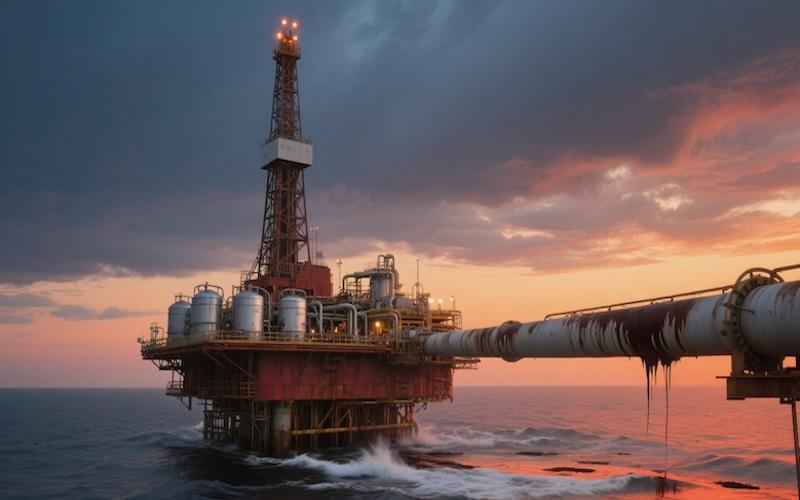
At the same time, energy transportation risks have increased significantly. Kuwait National Oil Company confirmed that its oil tanker "Al-Salmi," fully loaded with crude oil, was attacked and caught fire in Dubai port, posing a potential risk of oil spill. This incident directly impacts market expectations regarding supply chain stability. It is worth noting that the Strait of Hormuz handles approximately 20% of global seaborne crude oil transport ; any disruption could have a systemic impact on the global energy market.
Against this backdrop, market risk aversion has intensified significantly, with funds flowing rapidly into the energy sector, driving up oil prices rapidly. Simultaneously, inflation expectations have also risen, and the market has begun to reassess the potential impact of rising energy prices on the global economy. Especially in the current macroeconomic environment, high oil prices could suppress consumption and manufacturing, thereby exacerbating the risk of slower growth.
Chris Weston, head of research at Pepperstone Group, said: "The market is facing ongoing geopolitical headlines that are likely to continue in the coming days and weeks, and the likelihood of a ceasefire in the short term remains low."
Despite concerns about renewed inflation fueled by soaring oil prices, comments from Federal Reserve Chairman Jerome Powell eased market tensions to some extent. Powell noted that long-term inflation expectations remain stable and that the short-term energy price increases have a limited impact on overall inflation. This statement prompted the market to readjust its assessment of the policy path, and U.S. Treasury yields stabilized.
Evercore analyst Krishna Guha said, "Powell's dovish policy signals, coupled with a market reassessment of the drag on economic growth from high oil prices, are driving a shift in interest rate expectations, and the probability of a rate cut is increasing."
From an investor's perspective, the market is currently closely watching whether the Strait of Hormuz will reopen, the progress of negotiations between the US and Iran, and the security status of energy facilities. If the conflict escalates further, oil prices may still have room to rise; however, if there are signs of de-escalation, a pullback from these high levels could occur.
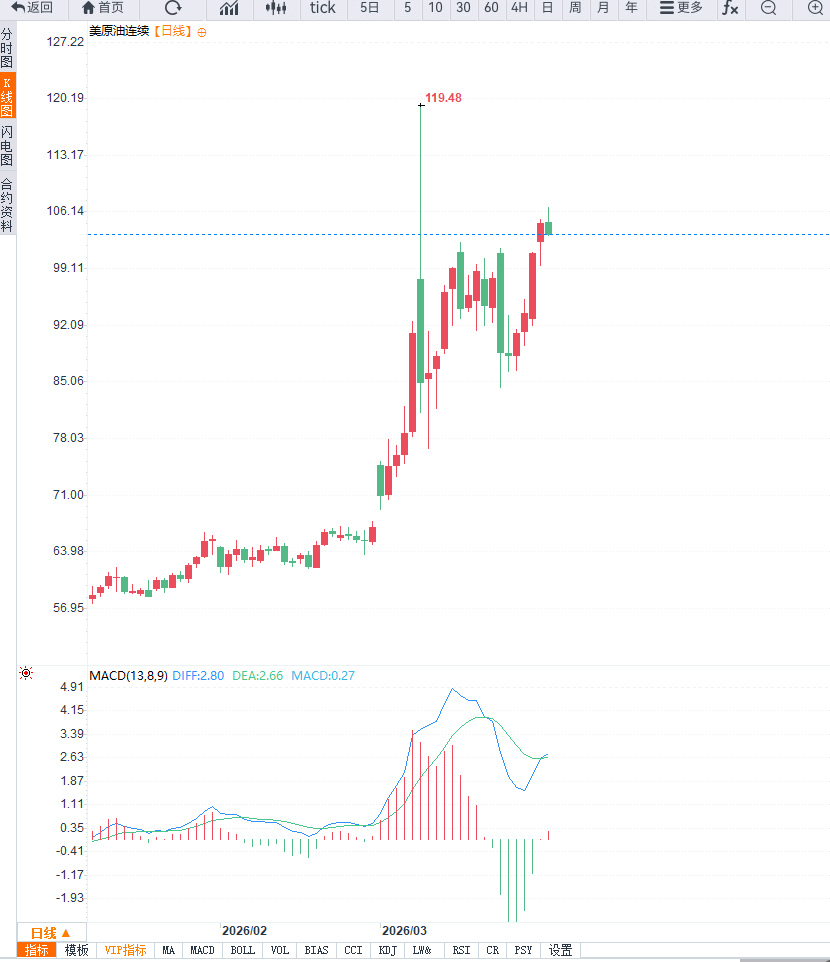
From a technical perspective, on the daily chart, WTI crude oil remains in an overall upward trend, but momentum weakened after approaching $106 , resulting in a short-term high-level consolidation. Key resistance levels to watch are the $108 area (a previous structural level) and selling pressure near the psychological level, while significant support lies at the $100 psychological level ; a break below this level could open up further downside potential. On the 4-hour chart, prices have shown clear signs of being overbought, with momentum indicators gradually declining, suggesting a short-term technical correction is needed. If a breakout above the previous high fails to materialize, oil prices may enter a wide trading range with significantly increased volatility.
Editor's Summary : Overall, escalating tensions in the Middle East and energy transportation risks are becoming the core drivers of rising oil prices, and supply uncertainty will continue to support high prices in the short term. However, from a marginal perspective, the market has gradually priced in extreme risks, and coupled with concerns about slowing economic growth at the macro level, the momentum for continued unilateral price increases is weakening. In the near future, oil prices are more likely to enter a period of high-level fluctuation. Investors need to pay close attention to changes in the geopolitical situation and policy signals, and be wary of the risk of a correction in a highly volatile environment.
Judging from the developments, US President Trump issued a strong warning to Iran, stating that if an agreement is not reached by April 6 and navigation in the Strait of Hormuz is not restored, the US may strike Iranian energy and infrastructure. This statement significantly exacerbated market concerns about a further deterioration of the situation. Meanwhile, the White House revealed that US-Iran negotiations are still progressing, but significant differences exist between the two sides' public positions and private communications, leaving the market lacking confidence in reaching an agreement in the short term.
At the same time, energy transportation risks have increased significantly. Kuwait National Oil Company confirmed that its oil tanker "Al-Salmi," fully loaded with crude oil, was attacked and caught fire in Dubai port, posing a potential risk of oil spill. This incident directly impacts market expectations regarding supply chain stability. It is worth noting that the Strait of Hormuz handles approximately 20% of global seaborne crude oil transport ; any disruption could have a systemic impact on the global energy market.
Against this backdrop, market risk aversion has intensified significantly, with funds flowing rapidly into the energy sector, driving up oil prices rapidly. Simultaneously, inflation expectations have also risen, and the market has begun to reassess the potential impact of rising energy prices on the global economy. Especially in the current macroeconomic environment, high oil prices could suppress consumption and manufacturing, thereby exacerbating the risk of slower growth.
Chris Weston, head of research at Pepperstone Group, said: "The market is facing ongoing geopolitical headlines that are likely to continue in the coming days and weeks, and the likelihood of a ceasefire in the short term remains low."
Despite concerns about renewed inflation fueled by soaring oil prices, comments from Federal Reserve Chairman Jerome Powell eased market tensions to some extent. Powell noted that long-term inflation expectations remain stable and that the short-term energy price increases have a limited impact on overall inflation. This statement prompted the market to readjust its assessment of the policy path, and U.S. Treasury yields stabilized.
Evercore analyst Krishna Guha said, "Powell's dovish policy signals, coupled with a market reassessment of the drag on economic growth from high oil prices, are driving a shift in interest rate expectations, and the probability of a rate cut is increasing."
From an investor's perspective, the market is currently closely watching whether the Strait of Hormuz will reopen, the progress of negotiations between the US and Iran, and the security status of energy facilities. If the conflict escalates further, oil prices may still have room to rise; however, if there are signs of de-escalation, a pullback from these high levels could occur.
From a technical perspective, on the daily chart, WTI crude oil remains in an overall upward trend, but momentum weakened after approaching $106 , resulting in a short-term high-level consolidation. Key resistance levels to watch are the $108 area (a previous structural level) and selling pressure near the psychological level, while significant support lies at the $100 psychological level ; a break below this level could open up further downside potential. On the 4-hour chart, prices have shown clear signs of being overbought, with momentum indicators gradually declining, suggesting a short-term technical correction is needed. If a breakout above the previous high fails to materialize, oil prices may enter a wide trading range with significantly increased volatility.
Editor's Summary : Overall, escalating tensions in the Middle East and energy transportation risks are becoming the core drivers of rising oil prices, and supply uncertainty will continue to support high prices in the short term. However, from a marginal perspective, the market has gradually priced in extreme risks, and coupled with concerns about slowing economic growth at the macro level, the momentum for continued unilateral price increases is weakening. In the near future, oil prices are more likely to enter a period of high-level fluctuation. Investors need to pay close attention to changes in the geopolitical situation and policy signals, and be wary of the risk of a correction in a highly volatile environment.
- Risk Warning and Disclaimer
- The market involves risk, and trading may not be suitable for all investors. This article is for reference only and does not constitute personal investment advice, nor does it take into account certain users’ specific investment objectives, financial situation, or other needs. Any investment decisions made based on this information are at your own risk.