Market strategist: Extreme gold price volatility has led to a wait-and-see attitude among retail investors, and a short-term correction may be imminent.
2026-03-31 10:33:41
Although gold prices have successfully returned above $4,500 per ounce, the current market volatility is making many investors uneasy.
A senior market strategist pointed out that extreme volatility and a high-risk environment have forced many retail investors to temporarily adopt a wait-and-see approach, which may put further downward pressure on gold prices in the short term. Overall, while the gold market remains at historically high levels, short-term trading has become significantly more difficult, and long-term investment strategies need to be assessed in conjunction with global macroeconomic trends.
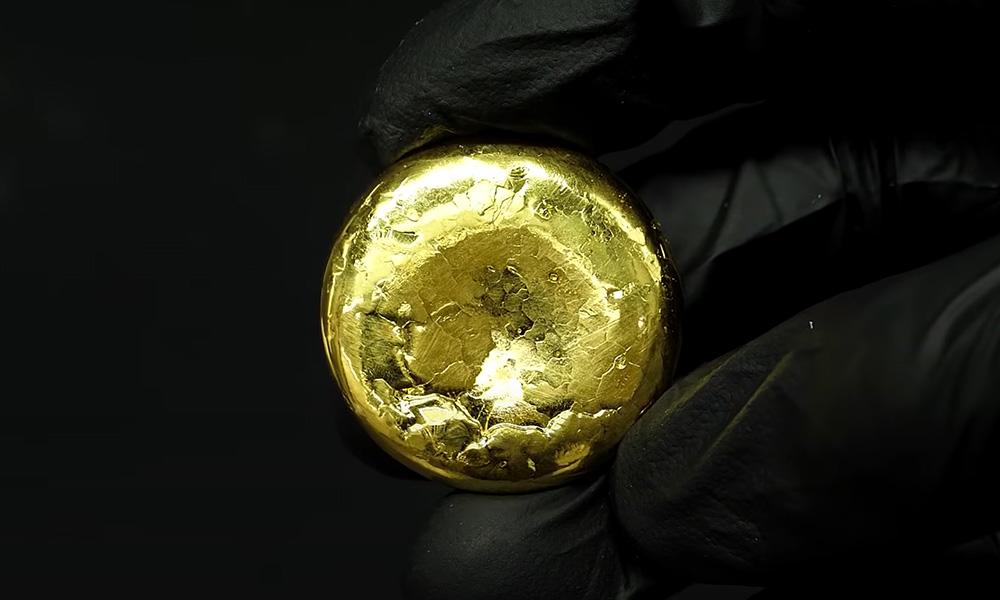
The gold market has recently successfully returned above $4,500 per ounce; however, according to market strategists, the current sharp price fluctuations are causing many retail investors to remain on the sidelines, which could put additional downward pressure on gold prices in the short term.
Carley Garner, co-founder of DeCarley Trading, said she still prefers to sell gold on rallies. She also noted that the extreme price volatility makes trading extremely difficult, and almost no one can easily profit in the current environment.
Ghana said, "This is currently a high-risk market."
She specifically mentioned that extreme volatility and high margin requirements have pushed a large number of traders off the market. "Most people no longer have enough risk tolerance."
Ghana further explained that the rapid price fluctuations in the futures and options markets have made opening and managing positions increasingly difficult. Even traders who held short positions during this pullback often found themselves unexpectedly on the wrong side due to the rapid pace of market reversals.
She added that the cost of directly buying options is currently very high, and even micro futures contracts can generate huge profit and loss fluctuations in a short period of time. This situation has led to a significant decrease in leveraged trading activity.
Ghana noted that while participation from leveraged traders has declined, investors in physical gold and gold ETFs may have stronger holding capacity. However, even in these relatively stable markets, stress is not entirely unavoidable.
She said, "There is clearly some panic selling right now, and I'm not sure if anyone is actually in a profitable position."
She added that the decline in market liquidity is further exacerbating volatility across the entire commodities market, creating a vicious cycle in which traders distance themselves from the market, leading to further reductions in stability.
Ghana believes that, under the current circumstances, the gold market may find it difficult to quickly regain the upward momentum it had at the beginning of the year. Retail investors may need a considerable amount of time to regain confidence in entering the market, while traders remain cautious about buying and trading gold futures.
She emphasized that despite the recent sharp correction, gold prices remain at historically high levels. She said, "Even after this correction, gold has still performed remarkably well."
Looking at long-term charts, she pointed out that the recent decline, when placed in a larger time context, is actually just a relatively small fluctuation. "It feels like the end of the world, but compared to the previous parabolic rise, this is just a minor episode."
However, Ghana made it clear that she remains cautious about the short-term outlook for gold. She said, "I'm not bullish on gold. I really don't see how these current price levels can hold."
She anticipates a potential technical rebound in gold in the short term, which might retest previous resistance levels, but any rebound could present a good selling opportunity . She added, "If a rebound occurs, perhaps driven by geopolitical news, I would be more inclined to capitalize on the downside."
Ghana emphasized that crude oil is currently the core driving force of the entire commodity market, and that metals, grains, and other commodities are all indirectly affected by crude oil price movements.
She said, "No matter what you're trading—metals, grains, or livestock—you're actually indirectly trading crude oil now."
The dramatic fluctuations in crude oil prices have not only significantly increased trading risk but also markedly enhanced the correlation between different asset classes. For example, there is a clear linkage between crude oil prices and currencies such as the Japanese yen; as energy prices rise, the yen weakens.
Ghana stated that her trading firm did not opt to directly buy expensive crude oil put options, but instead expressed the same macroeconomic judgment through other means. She explained, "Instead, we bought yen call options. If crude oil prices fall, the yen should rebound."
In the agricultural sector, Ghana anticipates limited upside potential despite some supply-side concerns. She pointed out that the grain market is highly correlated with the energy market, with wheat and oil prices showing a particularly close link.
She said, "I don't think grain prices will suddenly surge and continue to rise." She added that the price ceiling for corn, wheat, and soybeans may already be visible.
Overall, although the gold market has returned above $4,500, the sharp fluctuations and high-risk characteristics have clearly dampened market participation.
Ghana believes that gold will still face some downward pressure in the short term, while crude oil, as the dominant force, is affecting the entire commodity sector, including gold, through correlation transmission.
In this environment, Ghana advises traders to adopt a low-cost, low-risk defensive strategy, and for many ordinary participants, choosing to temporarily stay on the sidelines may be a wiser choice.
She concluded by saying, "When the market is this crazy, most people are losing money. If you're on the sidelines right now, don't feel regretful; it's not actually a bad position."
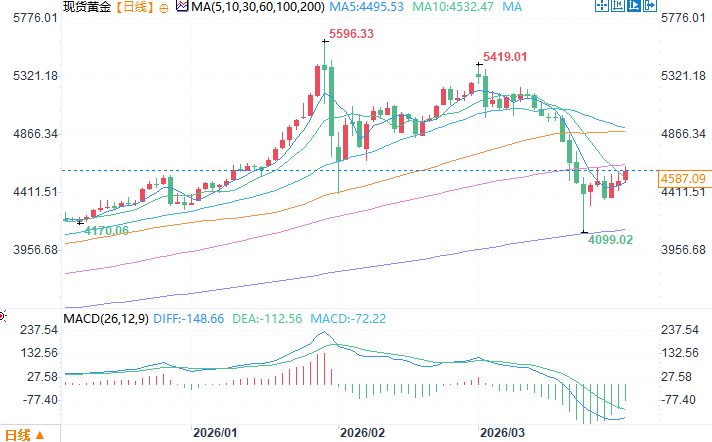
Spot gold daily chart source: EasyForex
At 10:33 AM Beijing time on March 31, spot gold was trading at $4583.09 per ounce.
A senior market strategist pointed out that extreme volatility and a high-risk environment have forced many retail investors to temporarily adopt a wait-and-see approach, which may put further downward pressure on gold prices in the short term. Overall, while the gold market remains at historically high levels, short-term trading has become significantly more difficult, and long-term investment strategies need to be assessed in conjunction with global macroeconomic trends.
Gold prices have returned to $4,500, but volatility remains the biggest challenge.
The gold market has recently successfully returned above $4,500 per ounce; however, according to market strategists, the current sharp price fluctuations are causing many retail investors to remain on the sidelines, which could put additional downward pressure on gold prices in the short term.
Carley Garner, co-founder of DeCarley Trading, said she still prefers to sell gold on rallies. She also noted that the extreme price volatility makes trading extremely difficult, and almost no one can easily profit in the current environment.
Ghana said, "This is currently a high-risk market."
She specifically mentioned that extreme volatility and high margin requirements have pushed a large number of traders off the market. "Most people no longer have enough risk tolerance."
Fast reversal transactions have become extremely complex.
Ghana further explained that the rapid price fluctuations in the futures and options markets have made opening and managing positions increasingly difficult. Even traders who held short positions during this pullback often found themselves unexpectedly on the wrong side due to the rapid pace of market reversals.
She added that the cost of directly buying options is currently very high, and even micro futures contracts can generate huge profit and loss fluctuations in a short period of time. This situation has led to a significant decrease in leveraged trading activity.
Physical gold and ETF holders are relatively more resilient, but panic selling still exists.
Ghana noted that while participation from leveraged traders has declined, investors in physical gold and gold ETFs may have stronger holding capacity. However, even in these relatively stable markets, stress is not entirely unavoidable.
She said, "There is clearly some panic selling right now, and I'm not sure if anyone is actually in a profitable position."
She added that the decline in market liquidity is further exacerbating volatility across the entire commodities market, creating a vicious cycle in which traders distance themselves from the market, leading to further reductions in stability.
The short-term outlook is cautious, and gold still has room to fall.
Ghana believes that, under the current circumstances, the gold market may find it difficult to quickly regain the upward momentum it had at the beginning of the year. Retail investors may need a considerable amount of time to regain confidence in entering the market, while traders remain cautious about buying and trading gold futures.
She emphasized that despite the recent sharp correction, gold prices remain at historically high levels. She said, "Even after this correction, gold has still performed remarkably well."
Looking at long-term charts, she pointed out that the recent decline, when placed in a larger time context, is actually just a relatively small fluctuation. "It feels like the end of the world, but compared to the previous parabolic rise, this is just a minor episode."
However, Ghana made it clear that she remains cautious about the short-term outlook for gold. She said, "I'm not bullish on gold. I really don't see how these current price levels can hold."
She anticipates a potential technical rebound in gold in the short term, which might retest previous resistance levels, but any rebound could present a good selling opportunity . She added, "If a rebound occurs, perhaps driven by geopolitical news, I would be more inclined to capitalize on the downside."
The energy market dominates the entire commodities sector.
Ghana emphasized that crude oil is currently the core driving force of the entire commodity market, and that metals, grains, and other commodities are all indirectly affected by crude oil price movements.
She said, "No matter what you're trading—metals, grains, or livestock—you're actually indirectly trading crude oil now."
The dramatic fluctuations in crude oil prices have not only significantly increased trading risk but also markedly enhanced the correlation between different asset classes. For example, there is a clear linkage between crude oil prices and currencies such as the Japanese yen; as energy prices rise, the yen weakens.
Ghana stated that her trading firm did not opt to directly buy expensive crude oil put options, but instead expressed the same macroeconomic judgment through other means. She explained, "Instead, we bought yen call options. If crude oil prices fall, the yen should rebound."
The agricultural products market was also dragged down by crude oil prices, with limited upside potential.
In the agricultural sector, Ghana anticipates limited upside potential despite some supply-side concerns. She pointed out that the grain market is highly correlated with the energy market, with wheat and oil prices showing a particularly close link.
She said, "I don't think grain prices will suddenly surge and continue to rise." She added that the price ceiling for corn, wheat, and soybeans may already be visible.
In conclusion, in a highly volatile environment, defense is paramount; remaining on the sidelines may be a rational choice.
Overall, although the gold market has returned above $4,500, the sharp fluctuations and high-risk characteristics have clearly dampened market participation.
Ghana believes that gold will still face some downward pressure in the short term, while crude oil, as the dominant force, is affecting the entire commodity sector, including gold, through correlation transmission.
In this environment, Ghana advises traders to adopt a low-cost, low-risk defensive strategy, and for many ordinary participants, choosing to temporarily stay on the sidelines may be a wiser choice.
She concluded by saying, "When the market is this crazy, most people are losing money. If you're on the sidelines right now, don't feel regretful; it's not actually a bad position."
Spot gold daily chart source: EasyForex
At 10:33 AM Beijing time on March 31, spot gold was trading at $4583.09 per ounce.
- Risk Warning and Disclaimer
- The market involves risk, and trading may not be suitable for all investors. This article is for reference only and does not constitute personal investment advice, nor does it take into account certain users’ specific investment objectives, financial situation, or other needs. Any investment decisions made based on this information are at your own risk.