Gasoline at $4 a barrel has arrived! Powell's words extinguished expectations of interest rate hikes, and the window for interest rate cuts suddenly opened.
2026-04-01 11:10:27
U.S. gasoline prices recently broke through $4 per gallon, a phenomenon that, as a significant indicator of the ongoing supply shock in the energy market, could have been seen as a clear signal that the Federal Reserve needed to raise interest rates to curb inflation. However, at least at this stage, this assessment seems unfounded, with the market generally believing that raising interest rates is not an appropriate option.
Investors are currently more inclined to believe that the Federal Reserve will keep benchmark interest rates stable, and may even turn to rate cuts later this year. Policymakers are carefully weighing whether the drag on economic growth from higher energy prices will outweigh their contribution to persistent inflation, an expectation that reflects a complex market assessment of the economic outlook.
In a market-influential speech on Monday (March 30), Federal Reserve Chairman Jerome Powell made it clear that raising interest rates now would be a misguided policy move for an economy already facing a weakening labor market and significantly heightened recession fears on Wall Street.
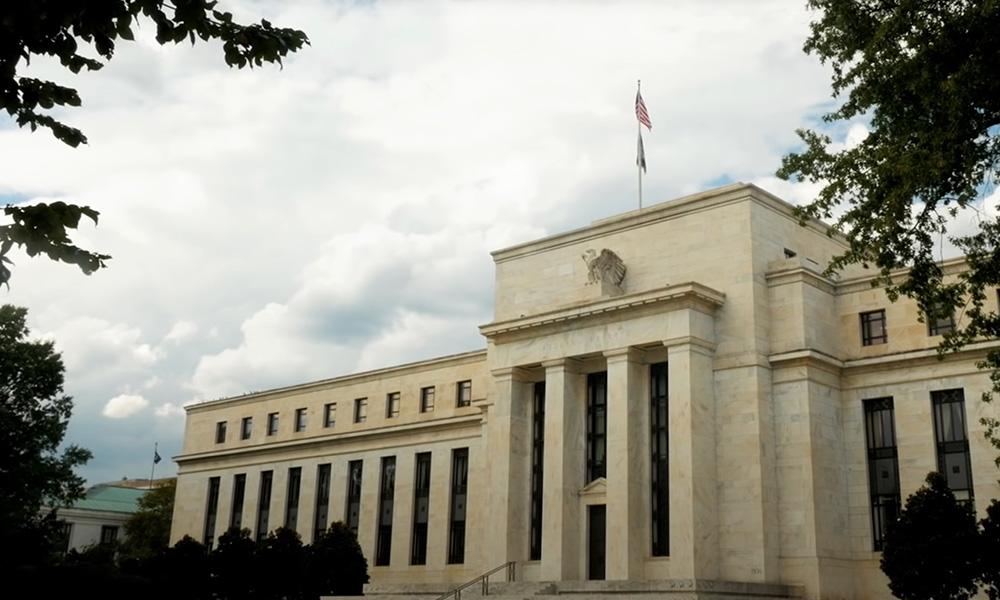
When asked whether policymakers should consider raising interest rates now, Powell replied, "By the time the effects of monetary policy tightening are truly felt, the oil price shock may have already passed, and you will be putting additional pressure on the economy at the wrong time. Therefore, the rational tendency is to ignore any form of supply shock."
These comments come at a critical turning point for the market. The market has been struggling to grasp the Federal Reserve's policy intentions as conflicting and constantly shifting economic signals have made it difficult for investors to form stable expectations.
Just days ago, traders were seriously considering that the Federal Reserve's next move might be an interest rate hike. This sentiment stemmed primarily from some unsettling recent inflation data: February's import price increases far exceeded market expectations, even before the sharp rise in conflict-related oil prices; and the OECD also significantly raised its 2026 inflation forecast for the United States to 4.2%.
However, Powell's comments, while retaining the Fed's characteristically cautious wording—that both rate hikes and cuts are possible— helped the market quickly retreat from a more hawkish stance . Before the current conflict erupted, the market widely expected the Fed to implement two, or even three, rate cuts this year, as inflation was expected to continue falling back to the Fed's 2% target, and policymakers would shift their focus to supporting the labor market.
According to the CME Group's FedWatch Tool, futures prices in early trading on Tuesday indicated a mere 2.1% probability of an interest rate hike by the end of the year. This low probability comes against the backdrop of national unleaded gasoline prices having surpassed $4 at gas stations and U.S. crude oil prices exceeding $102 per barrel, highlighting a significant shift in market expectations regarding the Fed's policy path.
While the future direction of interest rates remains highly uncertain, Wall Street commentary has clearly shifted towards anticipating rate cuts . Admittedly, the probability of a rate cut is currently low, around 25%, but this probability has risen significantly in the past two days.
Rob Subbaraman, head of global macro research at Nomura Securities, points out that when dealing with higher prices, "central bank governors often talk more than they act."
He added, "Under the current circumstances, it is reasonable for the central bank to maintain its policy unchanged but to adopt a more hawkish stance, which helps to anchor market and public inflation expectations as overall inflation data surges. However, the transmission to wage growth and core inflation may be limited, while the Middle East conflict could quickly escalate into a global growth shock."
In fact, concerns about the potential negative impact of soaring oil prices on economic growth have gradually outweighed market worries about rising consumer prices.
This aligns closely with Powell's expressed concerns: raising interest rates now will not effectively address energy costs and may instead create more economic problems later. Policymakers are currently less concerned about the direct impact of energy-driven inflation and more focused on the risk that high oil prices could weaken consumer demand and business hiring.
RSM chief economist Joseph Brusuelas said central bank policymakers should pay close attention to the "demand destruction" caused by the energy shock.
He wrote: “Time is not an ally of the American economy. The greater risk lies in what might happen next: demand destruction. This is an economic concept used to describe how high prices force individuals and businesses to reduce spending. It sounds abstract, but its actual impact is very concrete, meaning reduced car sales, reduced home purchases, reduced restaurant spending, reduced business investment, and ultimately, reduced jobs.”
He further added that the Federal Reserve is facing a dilemma in its policy-making: if it raises interest rates now, it may further slow economic growth; while if it keeps the current interest rates unchanged, it faces the potential risk of a further deterioration in the oil price situation.
He stated, "This is the classic stagflation dilemma, and there is currently no clean and simple solution. If the situation worsens, the Federal Reserve will take action. But we believe it is more likely that the Fed will remain patient, and when it finally acts, it may already be behind the economic curve, putting further pressure on demand before making a significant rate cut."
Jason Thomas, a strategist at The Carlyle Group, expressed similar concerns. He stated that the Federal Reserve may not only be forced to cut interest rates, but the pace of these cuts may need to exceed the usual 25 basis point increments, indicating a more aggressive approach.
This policy dynamic clearly highlights the shift in the Federal Reserve's approach to external shocks: no longer focusing on temporary price spikes, but rather paying more attention to broader economic consequences and potential downside risks.
Jason Thomas, global head of research and investment strategy at The Carlyle Group, wrote: “This is not a Fed that will sit idly by while a temporary supply shock devastates the labor market. In this downturn scenario, a rate cut could come as early as September, and it is likely to be a significant one of more than 25 basis points .”
In conclusion , although gasoline prices exceeding $4 per gallon and remaining high have put significant pressure on the market, the latest statements from Federal Reserve Chairman Powell and analyses from several economists indicate that policymakers tend to "ignore" such supply shocks and avoid tightening policy at an inappropriate time. Market expectations for interest rate cuts have therefore warmed somewhat, but the overall policy path remains highly uncertain.
Investors need to continuously monitor energy price trends, labor market data, and subsequent communications from the Federal Reserve to more accurately grasp the future direction of the US economy and monetary policy. In the current complex environment, rational judgment and a long-term perspective are particularly important.
Investors are currently more inclined to believe that the Federal Reserve will keep benchmark interest rates stable, and may even turn to rate cuts later this year. Policymakers are carefully weighing whether the drag on economic growth from higher energy prices will outweigh their contribution to persistent inflation, an expectation that reflects a complex market assessment of the economic outlook.
Powell's speech sent a clear signal
In a market-influential speech on Monday (March 30), Federal Reserve Chairman Jerome Powell made it clear that raising interest rates now would be a misguided policy move for an economy already facing a weakening labor market and significantly heightened recession fears on Wall Street.
When asked whether policymakers should consider raising interest rates now, Powell replied, "By the time the effects of monetary policy tightening are truly felt, the oil price shock may have already passed, and you will be putting additional pressure on the economy at the wrong time. Therefore, the rational tendency is to ignore any form of supply shock."
These comments come at a critical turning point for the market. The market has been struggling to grasp the Federal Reserve's policy intentions as conflicting and constantly shifting economic signals have made it difficult for investors to form stable expectations.
Just days ago, traders were seriously considering that the Federal Reserve's next move might be an interest rate hike. This sentiment stemmed primarily from some unsettling recent inflation data: February's import price increases far exceeded market expectations, even before the sharp rise in conflict-related oil prices; and the OECD also significantly raised its 2026 inflation forecast for the United States to 4.2%.
However, Powell's comments, while retaining the Fed's characteristically cautious wording—that both rate hikes and cuts are possible— helped the market quickly retreat from a more hawkish stance . Before the current conflict erupted, the market widely expected the Fed to implement two, or even three, rate cuts this year, as inflation was expected to continue falling back to the Fed's 2% target, and policymakers would shift their focus to supporting the labor market.
According to the CME Group's FedWatch Tool, futures prices in early trading on Tuesday indicated a mere 2.1% probability of an interest rate hike by the end of the year. This low probability comes against the backdrop of national unleaded gasoline prices having surpassed $4 at gas stations and U.S. crude oil prices exceeding $102 per barrel, highlighting a significant shift in market expectations regarding the Fed's policy path.
While the future direction of interest rates remains highly uncertain, Wall Street commentary has clearly shifted towards anticipating rate cuts . Admittedly, the probability of a rate cut is currently low, around 25%, but this probability has risen significantly in the past two days.
The difficult trade-off between inflation and economic growth
Rob Subbaraman, head of global macro research at Nomura Securities, points out that when dealing with higher prices, "central bank governors often talk more than they act."
He added, "Under the current circumstances, it is reasonable for the central bank to maintain its policy unchanged but to adopt a more hawkish stance, which helps to anchor market and public inflation expectations as overall inflation data surges. However, the transmission to wage growth and core inflation may be limited, while the Middle East conflict could quickly escalate into a global growth shock."
In fact, concerns about the potential negative impact of soaring oil prices on economic growth have gradually outweighed market worries about rising consumer prices.
This aligns closely with Powell's expressed concerns: raising interest rates now will not effectively address energy costs and may instead create more economic problems later. Policymakers are currently less concerned about the direct impact of energy-driven inflation and more focused on the risk that high oil prices could weaken consumer demand and business hiring.
RSM chief economist Joseph Brusuelas said central bank policymakers should pay close attention to the "demand destruction" caused by the energy shock.
He wrote: “Time is not an ally of the American economy. The greater risk lies in what might happen next: demand destruction. This is an economic concept used to describe how high prices force individuals and businesses to reduce spending. It sounds abstract, but its actual impact is very concrete, meaning reduced car sales, reduced home purchases, reduced restaurant spending, reduced business investment, and ultimately, reduced jobs.”
He further added that the Federal Reserve is facing a dilemma in its policy-making: if it raises interest rates now, it may further slow economic growth; while if it keeps the current interest rates unchanged, it faces the potential risk of a further deterioration in the oil price situation.
He stated, "This is the classic stagflation dilemma, and there is currently no clean and simple solution. If the situation worsens, the Federal Reserve will take action. But we believe it is more likely that the Fed will remain patient, and when it finally acts, it may already be behind the economic curve, putting further pressure on demand before making a significant rate cut."
Jason Thomas, a strategist at The Carlyle Group, expressed similar concerns. He stated that the Federal Reserve may not only be forced to cut interest rates, but the pace of these cuts may need to exceed the usual 25 basis point increments, indicating a more aggressive approach.
This policy dynamic clearly highlights the shift in the Federal Reserve's approach to external shocks: no longer focusing on temporary price spikes, but rather paying more attention to broader economic consequences and potential downside risks.
Jason Thomas, global head of research and investment strategy at The Carlyle Group, wrote: “This is not a Fed that will sit idly by while a temporary supply shock devastates the labor market. In this downturn scenario, a rate cut could come as early as September, and it is likely to be a significant one of more than 25 basis points .”
In conclusion , although gasoline prices exceeding $4 per gallon and remaining high have put significant pressure on the market, the latest statements from Federal Reserve Chairman Powell and analyses from several economists indicate that policymakers tend to "ignore" such supply shocks and avoid tightening policy at an inappropriate time. Market expectations for interest rate cuts have therefore warmed somewhat, but the overall policy path remains highly uncertain.
Investors need to continuously monitor energy price trends, labor market data, and subsequent communications from the Federal Reserve to more accurately grasp the future direction of the US economy and monetary policy. In the current complex environment, rational judgment and a long-term perspective are particularly important.
- Risk Warning and Disclaimer
- The market involves risk, and trading may not be suitable for all investors. This article is for reference only and does not constitute personal investment advice, nor does it take into account certain users’ specific investment objectives, financial situation, or other needs. Any investment decisions made based on this information are at your own risk.