Trump makes a sudden "slap in the face"! Steel, aluminum, and copper tariffs are deflated overnight, and derivative products see significant tariff reductions.
2026-04-03 10:02:25
US President Trump signed a proclamation on Thursday (April 2) adjusting national security tariffs on imports of steel, aluminum, and copper, lowering tariff rates on derivative products made from these metals, simplifying compliance procedures, and preventing importers from underreporting declared values.
This move, based on Section 232 of the Trade Act of 1974, aims to make the tariff system simpler and more intuitive, while balancing domestic industry protection with cost pressures on downstream businesses.
The Trump administration will continue to maintain the 50% import tariff on major metal commodities such as steel, aluminum, and copper, but will apply the tariff to the actual sales price paid by American consumers, rather than the previously underreported import value.
U.S. government officials said that some importers had previously reduced tariff costs by artificially lowering the value of imports, and the new rules will effectively close this loophole, potentially increasing tariff revenue .
For derivative products, the adjustments are divided into two categories:
If the content of steel, aluminum, or copper in derivative products is less than 15% by weight, the previous 50% tariff will be eliminated . For example, perfume bottles with aluminum caps or dental floss boxes with tiny steel cutting blades will be exempted.
If the steel, aluminum, or copper content in a derivative product exceeds 15% by weight, a lower 25% tariff will apply , and it will be levied on the entire value of the imported goods, not just on the metal content. For example, a washing machine or gas stove primarily made of steel will be subject to a uniform 25% ad valorem tariff.
Previously, importers faced a complex and burdensome compliance burden when calculating the value of metal content in thousands of derivative products, ranging from tractor parts to stainless steel sinks and railway equipment. The new regulations significantly simplify the process, making the tariff system "simpler, more straightforward, and more direct."
Trump administration officials stated that they have consulted extensively with industry and received positive feedback. Tariffs will be reduced for many products; for some, tariffs may increase slightly, but overall they are acceptable and will not cause substantial economic differences.
This adjustment aims to protect the national security of the U.S. steel, aluminum, and copper industries, while reducing the burden on downstream manufacturers and consumers. Officials emphasized that the new rule will effectively prevent underreporting of value, potentially increasing tariff revenue.
Against the backdrop of current global geopolitical tensions and supply chain uncertainties, this policy adjustment reflects the Trump administration's sophisticated use of trade protection tools under the "America First" framework, maintaining high tariff barriers while reducing compliance costs for businesses by simplifying rules .
The Trump administration optimized Section 232 national security tariffs by lowering tariffs on steel, aluminum, and copper derivatives. The 50% tariff on bulk metals remained in effect, while exemptions were granted for low-metal-content derivatives, and a uniform 25% tariff was applied to high-metal-content products, calculated based on the actual sales price.
This adjustment simplifies compliance procedures, effectively closes loopholes for underreporting, and reduces costs for some downstream companies while protecting domestic industries, reflecting a policy balance between national security and economic efficiency.
The impact of this policy on the US dollar precisely reflects the inherent contradictions of current US trade policy: on the one hand, it attempts to maintain the tariff system by constantly "patching" it up, trying to stabilize market confidence in the continuity of US policy; but on the other hand, this frequent adjustment and high degree of uncertainty are continuously eroding the long-term credibility of the dollar. During Friday's Asian trading session, the US dollar index fluctuated narrowly around 100.00, after a significant increase of 0.46% in the previous trading day.
In the short term, the predictability of policy shifts provides support for the US dollar; however, in the long term, as the trend of trade weaponization remains unchanged, the dollar's status as a global safe-haven currency will continue to be eroded.
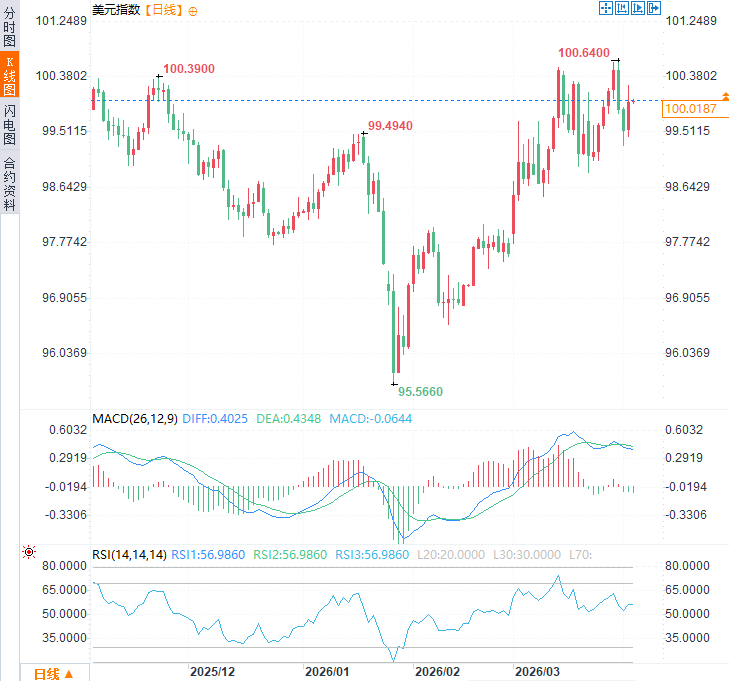
(US Dollar Index Daily Chart, Source: FX678)
At 10:01 Beijing time, the US dollar index is currently at 100.02.
This move, based on Section 232 of the Trade Act of 1974, aims to make the tariff system simpler and more intuitive, while balancing domestic industry protection with cost pressures on downstream businesses.
Tariffs on bulk commodities such as steel, aluminum, and copper
The Trump administration will continue to maintain the 50% import tariff on major metal commodities such as steel, aluminum, and copper, but will apply the tariff to the actual sales price paid by American consumers, rather than the previously underreported import value.
U.S. government officials said that some importers had previously reduced tariff costs by artificially lowering the value of imports, and the new rules will effectively close this loophole, potentially increasing tariff revenue .
New regulations on tariffs on derivative products
For derivative products, the adjustments are divided into two categories:
If the content of steel, aluminum, or copper in derivative products is less than 15% by weight, the previous 50% tariff will be eliminated . For example, perfume bottles with aluminum caps or dental floss boxes with tiny steel cutting blades will be exempted.
If the steel, aluminum, or copper content in a derivative product exceeds 15% by weight, a lower 25% tariff will apply , and it will be levied on the entire value of the imported goods, not just on the metal content. For example, a washing machine or gas stove primarily made of steel will be subject to a uniform 25% ad valorem tariff.
Simplified compliance procedures
Previously, importers faced a complex and burdensome compliance burden when calculating the value of metal content in thousands of derivative products, ranging from tractor parts to stainless steel sinks and railway equipment. The new regulations significantly simplify the process, making the tariff system "simpler, more straightforward, and more direct."
Trump administration officials stated that they have consulted extensively with industry and received positive feedback. Tariffs will be reduced for many products; for some, tariffs may increase slightly, but overall they are acceptable and will not cause substantial economic differences.
Economic impact analysis
This adjustment aims to protect the national security of the U.S. steel, aluminum, and copper industries, while reducing the burden on downstream manufacturers and consumers. Officials emphasized that the new rule will effectively prevent underreporting of value, potentially increasing tariff revenue.
Against the backdrop of current global geopolitical tensions and supply chain uncertainties, this policy adjustment reflects the Trump administration's sophisticated use of trade protection tools under the "America First" framework, maintaining high tariff barriers while reducing compliance costs for businesses by simplifying rules .
Editor's Summary
The Trump administration optimized Section 232 national security tariffs by lowering tariffs on steel, aluminum, and copper derivatives. The 50% tariff on bulk metals remained in effect, while exemptions were granted for low-metal-content derivatives, and a uniform 25% tariff was applied to high-metal-content products, calculated based on the actual sales price.
This adjustment simplifies compliance procedures, effectively closes loopholes for underreporting, and reduces costs for some downstream companies while protecting domestic industries, reflecting a policy balance between national security and economic efficiency.
Analysis of the impact on the US dollar
The impact of this policy on the US dollar precisely reflects the inherent contradictions of current US trade policy: on the one hand, it attempts to maintain the tariff system by constantly "patching" it up, trying to stabilize market confidence in the continuity of US policy; but on the other hand, this frequent adjustment and high degree of uncertainty are continuously eroding the long-term credibility of the dollar. During Friday's Asian trading session, the US dollar index fluctuated narrowly around 100.00, after a significant increase of 0.46% in the previous trading day.
In the short term, the predictability of policy shifts provides support for the US dollar; however, in the long term, as the trend of trade weaponization remains unchanged, the dollar's status as a global safe-haven currency will continue to be eroded.
(US Dollar Index Daily Chart, Source: FX678)
At 10:01 Beijing time, the US dollar index is currently at 100.02.
- Risk Warning and Disclaimer
- The market involves risk, and trading may not be suitable for all investors. This article is for reference only and does not constitute personal investment advice, nor does it take into account certain users’ specific investment objectives, financial situation, or other needs. Any investment decisions made based on this information are at your own risk.