World Gold Council: Global central banks made net purchases of 19 tons of gold in February, with emerging markets showing continued enthusiasm.
2026-04-03 13:20:02
Central bank gold demand remains highly uncertain as countries grapple with economic uncertainty and rising inflationary pressures stemming from the ongoing conflict with Iran. Nevertheless, recent data shows that central banks have maintained an active gold-buying stance ahead of a full-blown conflict.
According to the latest report from the World Gold Council, central banks around the world purchased a total of 19 tons of gold in February, with the National Bank of Poland being the undisputed main buyer.

The Polish central bank significantly increased its gold reserves by 20 tons in February, becoming the most prominent participant in the global gold market that month. Marissa Salim, senior research director at the World Gold Council, stated in a report: "This brings Poland's total gold reserves to 570 tons, representing 31% of its total reserves."
The governor of the Central Bank of Poland, Adam Glapiński, had previously announced that the bank had set a long-term target of 700 tons of gold reserves.
Analysts are closely watching the next move in Poland's official gold reserves, as the Polish central bank has proposed monetizing a portion of them. Early last month, Governor Grapinski stated plans to raise approximately $13 billion through the potential sale of some gold reserves to support defense spending. He explained that the move aims to generate profit and repurchase the gold once economic activity improves in the future.
This year, the Central Bank of Uzbekistan purchased 8 tons of gold for the second time in February, bringing its official gold reserves to 407 tons, accounting for 88% of the country's total reserves.
The Central Bank of Malaysia also increased its gold reserves for the second time in February, adding 2 tons to its official gold reserves.
Marissa Salim also pointed out that major Asian countries and the Czech Republic continued their moderate but steady gold buying in February, indicating that emerging market central banks' long-term preference for gold has not changed.
The report shows that Türkiye and Russia were the main gold sellers in February, with Russia selling 6 tons of gold that month.
Meanwhile, the Central Bank of Turkey sold 8 tons of gold in February. Turkey's recent reserve data has attracted widespread market attention: its official gold holdings fell sharply by 58.4 tons in March. Reports indicate that some of the gold was sold directly, while the majority was used through swap agreements to obtain foreign exchange or lira.
Looking ahead, analysts expect that central bank gold demand growth may continue to slow as countries prioritize protecting their economies from supply chain uncertainties and rising energy prices.
However, the World Gold Council points out that new players are constantly entering the gold market, which could continue to provide important support for gold demand.
Marissa Salim stated that the Bank of Uganda had been continuously purchasing gold since launching its domestic gold procurement program two years ago, continuing until March. She said, "The bank plans to purchase at least 100 kilograms of gold from domestic artisanal, medium-sized, and large producers between March and June this year. This move aims to increase foreign exchange reserves and buffer the impact of international financial market risks on the country's economy."
Marissa Salim also pointed out that the Central Bank of Kenya has made it clear that it plans to launch a similar domestic gold purchase program.
She concluded, "February appears to have shown a rebound in central bank buying after a relatively calm January, highlighting their strong commitment to gold's role in reserves. At the same time, central banks may also be cautiously considering price factors as they accumulate gold. The active participation of central banks in Southeast Asia and Africa in emerging markets suggests that the story of emerging market gold buying continues."
In conclusion , despite the economic uncertainty and inflationary pressures brought about by the ongoing conflict with Iran, central banks around the world maintained a relatively active gold-buying stance in February, with emerging market central banks such as Poland being particularly prominent. Although future demand growth may slow due to the need for economic protection, the continued entry of new participants and the strategic determination of some countries to increase their gold reserves in the long term still provide solid support for the gold market.
The importance of gold in central bank reserves is becoming increasingly apparent as geopolitical risks rise.
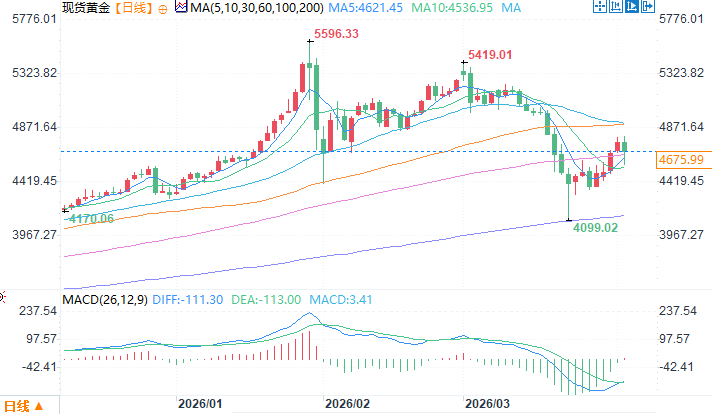
Spot gold daily chart source: EasyForex
Spot gold closed at $4675.99 per ounce on April 2.
Global central banks purchased 19 tons of gold in February, with Poland becoming the largest buyer.
According to the latest report from the World Gold Council, central banks around the world purchased a total of 19 tons of gold in February, with the National Bank of Poland being the undisputed main buyer.
The Polish central bank significantly increased its gold reserves by 20 tons in February, becoming the most prominent participant in the global gold market that month. Marissa Salim, senior research director at the World Gold Council, stated in a report: "This brings Poland's total gold reserves to 570 tons, representing 31% of its total reserves."
The governor of the Central Bank of Poland, Adam Glapiński, had previously announced that the bank had set a long-term target of 700 tons of gold reserves.
Analysts are closely watching the next move in Poland's official gold reserves, as the Polish central bank has proposed monetizing a portion of them. Early last month, Governor Grapinski stated plans to raise approximately $13 billion through the potential sale of some gold reserves to support defense spending. He explained that the move aims to generate profit and repurchase the gold once economic activity improves in the future.
Uzbekistan and Malaysia continued to increase their holdings, with robust buying activity in emerging markets.
This year, the Central Bank of Uzbekistan purchased 8 tons of gold for the second time in February, bringing its official gold reserves to 407 tons, accounting for 88% of the country's total reserves.
The Central Bank of Malaysia also increased its gold reserves for the second time in February, adding 2 tons to its official gold reserves.
Marissa Salim also pointed out that major Asian countries and the Czech Republic continued their moderate but steady gold buying in February, indicating that emerging market central banks' long-term preference for gold has not changed.
Türkiye and Russia were the main sellers, with Türkiye significantly reducing its holdings in March.
The report shows that Türkiye and Russia were the main gold sellers in February, with Russia selling 6 tons of gold that month.
Meanwhile, the Central Bank of Turkey sold 8 tons of gold in February. Turkey's recent reserve data has attracted widespread market attention: its official gold holdings fell sharply by 58.4 tons in March. Reports indicate that some of the gold was sold directly, while the majority was used through swap agreements to obtain foreign exchange or lira.
Future demand may slow, but new players will continue to enter the market.
Looking ahead, analysts expect that central bank gold demand growth may continue to slow as countries prioritize protecting their economies from supply chain uncertainties and rising energy prices.
However, the World Gold Council points out that new players are constantly entering the gold market, which could continue to provide important support for gold demand.
Marissa Salim stated that the Bank of Uganda had been continuously purchasing gold since launching its domestic gold procurement program two years ago, continuing until March. She said, "The bank plans to purchase at least 100 kilograms of gold from domestic artisanal, medium-sized, and large producers between March and June this year. This move aims to increase foreign exchange reserves and buffer the impact of international financial market risks on the country's economy."
Marissa Salim also pointed out that the Central Bank of Kenya has made it clear that it plans to launch a similar domestic gold purchase program.
She concluded, "February appears to have shown a rebound in central bank buying after a relatively calm January, highlighting their strong commitment to gold's role in reserves. At the same time, central banks may also be cautiously considering price factors as they accumulate gold. The active participation of central banks in Southeast Asia and Africa in emerging markets suggests that the story of emerging market gold buying continues."
In conclusion , despite the economic uncertainty and inflationary pressures brought about by the ongoing conflict with Iran, central banks around the world maintained a relatively active gold-buying stance in February, with emerging market central banks such as Poland being particularly prominent. Although future demand growth may slow due to the need for economic protection, the continued entry of new participants and the strategic determination of some countries to increase their gold reserves in the long term still provide solid support for the gold market.
The importance of gold in central bank reserves is becoming increasingly apparent as geopolitical risks rise.
Spot gold daily chart source: EasyForex
Spot gold closed at $4675.99 per ounce on April 2.
- Risk Warning and Disclaimer
- The market involves risk, and trading may not be suitable for all investors. This article is for reference only and does not constitute personal investment advice, nor does it take into account certain users’ specific investment objectives, financial situation, or other needs. Any investment decisions made based on this information are at your own risk.