Non-farm payrolls surged by 178,000! February's negative growth was reversed in an instant, the US dollar index broke through the 100 mark in a flash, why did institutional and retail investors' views change so drastically?
2026-04-03 20:48:26
On Friday (April 3), at 8:30 PM Beijing time, the U.S. Bureau of Labor Statistics released its March non-farm payrolls report . The report showed that seasonally adjusted non-farm payrolls in the U.S. increased by 178,000 in March, far exceeding consensus expectations and representing a significant rebound from the revised figure for February. The market had previously widely expected only 60,000 new jobs and an unemployment rate of 4.4%. February's non-farm payrolls were revised to a negative growth of 133,000, and January's figure was also revised upwards to 160,000. Against the backdrop of two consecutive months of data volatility, this report became a crucial window into the resilience of the labor market. Prior to the data release, exchange rates and bond yields in major global financial markets fluctuated within a limited range, with investors adopting a cautious wait-and-see attitude.

The unemployment rate fell to 4.3%, and the labor force participation rate reached 61.9%. Average hourly earnings rose 0.2% month-over-month, a slight slowdown from the previous month. Job growth was primarily concentrated in healthcare, construction, and transportation and warehousing, while the number of federal government employees continued to decline.
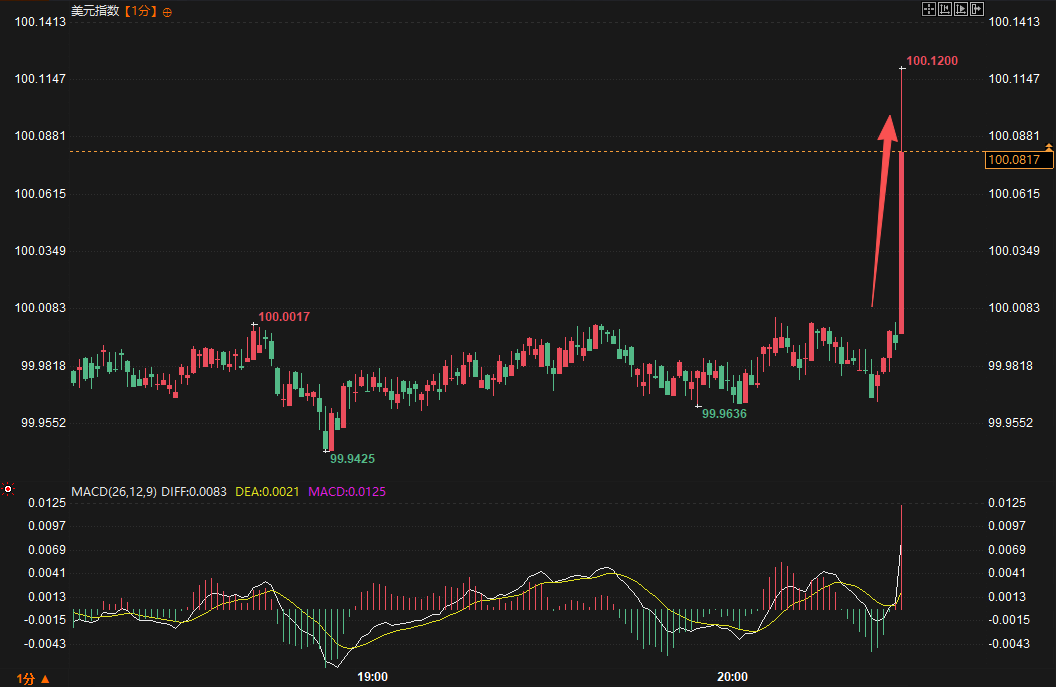
Following the data release, the market reacted clearly: the US dollar index rose by about 12 points, reaching a high of 100.12; the US dollar broke through the 0.8000 level against the Swiss franc, reaching a high of 0.8022; the euro and pound sterling both fell back against the US dollar; US Treasury yields rose in tandem, with the 10-year yield rising 3.9 basis points to 4.349% and the 2-year yield rising 7.7 basis points to 3.875%. These price movements reflect the market's immediate pricing in of stronger-than-expected employment data.
This non-farm payroll report provides clear fundamental signals, with a significant rebound in total employment and structural improvements mutually reinforcing each other. The increase of 178,000 jobs not only far exceeded the consensus expectation of 60,000 but also reversed the negative growth trend of February. The upward revision of January's data further confirms the stability of the trend. The unemployment rate fell to 4.3%, and the labor force participation rate remained at 61.9%, indicating that there was no significant contraction in the labor supply. The moderate increase of 0.2% in average hourly earnings month-on-month suggests that wage pressures are manageable, avoiding a second wave of accelerating inflation.
Historically, market reactions to stronger-than-expected data have been remarkably consistent: after significant revisions to the previously weak February data, the rebound of 178,000 jobs this time is approaching the highest level since December 2024, echoing the trend of previous months with better-than-expected employment figures. In terms of the latest quotes, the US dollar index broke through the 100 mark, the USD/CHF pair rose to 0.8022, the EUR/USD pair fell back to around 1.1529, and the GBP/USD pair touched a low of 1.3201; US Treasury yields rose simultaneously at both the short and long ends, while the spread between the 10-year and 2-year yields remained stable. These quote changes perfectly match the short-term characteristics following strong non-farm payroll data releases, demonstrating a self-consistent long-term and short-term logic.
From a technical perspective, the US dollar index and other currencies quickly moved away from the upper edge of their recent consolidation range after the data release, indicating a short-term strengthening of bullish momentum. The yield curve in the bond market shifted upward at the short end, reflecting the market's repricing of economic resilience. For these currencies, this data provided short-term support for the US dollar index, exerted downward pressure on major non-US currencies, and provided upward momentum for US Treasury yields.
A comparison of perspectives from well-known institutions and retail investors further highlights the discrepancy in expectations. Before the data release, institutional opinions largely revolved around a consensus range of 60,000, with some citing revised negative growth data from February to maintain caution. Retail investor discussions focused on the potential transmission of weak employment to the consumer side, with overall expectations leaning towards conservatism. After the data release, the discrepancy quickly became apparent: institutions promptly updated their analyses, acknowledging that the employment rebound exceeded expectations, but still maintaining a neutral assessment based on historical monthly fluctuations; retail investor sentiment clearly shifted to positive, believing that the strong data boosted market confidence. Well-known institutions such as JPMorgan Chase had previously pointed out that negative employment figures might be more common, and this strong performance temporarily alleviated related discussions, but the overall framework still primarily relies on data verification.
Based on the strong rebound in this non-farm payroll data , the US dollar exchange rate is likely to maintain a relatively strong trend in the short term, consistent with the logic of support from major currency interest rate differentials. US Treasury yields may fluctuate around current levels, with stable labor market signals providing support for pricing. In the long term, if subsequent months' employment data continue to show similar resilience, market assessments of the economic cycle will further stabilize; conversely, if seasonal or corrective fluctuations occur, the market may return to a range-bound pattern. Overall, this report reinforces the marginal improvement trend in the employment market, and the sustainability of price movements will depend on the pace of future data verification.
Q: What are the background factors behind the significant increase in non-farm payrolls in March compared to expectations?
The report shows that job growth was primarily driven by the end of a strike in the healthcare industry and a seasonal recovery in the construction and transportation/warehousing sectors due to warmer temperatures. These factors combined to push for an unexpected increase of 178,000 jobs, a stark contrast to the revised negative growth in February. The upward revision of January's data also validated the stability of the previous trend.
Q: How have the views of institutional and retail investors changed before and after the data was released?
Before the release, most institutions used a consensus figure of 60,000 as a benchmark and remained cautious based on the revised negative growth data for February, while retail investors focused on the impact of weak employment on consumption. After the release, institutions acknowledged that the rebound exceeded expectations but emphasized the characteristics of historical volatility, while retail investor sentiment turned optimistic, believing that the data boosted overall confidence, and the expectation deviation was clearly visible.
Q: How should we interpret the recent decline in the unemployment rate and the labor force participation rate data?
The unemployment rate fell from 4.4% to 4.3%, and the labor force participation rate remained stable at 61.9%, indicating an improved balance between labor supply and demand, and that the expansion of the employed population was not accompanied by significant supply-side pressure. This is consistent with the characteristics of similar rebound periods in history, showing that the market is more resilient than was feared during previous downturns.
Q: What does the 0.2% month-on-month increase in average hourly wages mean for market pricing?
The consensus that hourly wage growth was slightly below 0.3% reflects a moderate wage growth trend, avoiding a second wave of accelerating inflation. This complements the strong rebound in total employment, jointly supporting the market's pricing logic of a stable rather than overheated labor market, consistent with the historical reaction path of months with strong non-farm payrolls but manageable wages.
Q: What is the special significance of this report compared to historical non-farm payroll data?
This increase of 178,000 jobs marks the highest level since December 2024, reversing the negative growth trend of February. Coupled with a decline in the unemployment rate and upward revisions to the data, this reinforces the signal of marginal improvement in the job market. Historical experience shows that such unexpected rebounds are often accompanied by synchronized adjustments in the US dollar and yields. This price reaction perfectly follows this path, demonstrating a high degree of consistency between short-term and long-term logic.
The unemployment rate fell to 4.3%, and the labor force participation rate reached 61.9%. Average hourly earnings rose 0.2% month-over-month, a slight slowdown from the previous month. Job growth was primarily concentrated in healthcare, construction, and transportation and warehousing, while the number of federal government employees continued to decline.
Following the data release, the market reacted clearly: the US dollar index rose by about 12 points, reaching a high of 100.12; the US dollar broke through the 0.8000 level against the Swiss franc, reaching a high of 0.8022; the euro and pound sterling both fell back against the US dollar; US Treasury yields rose in tandem, with the 10-year yield rising 3.9 basis points to 4.349% and the 2-year yield rising 7.7 basis points to 3.875%. These price movements reflect the market's immediate pricing in of stronger-than-expected employment data.
Deep interconnect analysis
This non-farm payroll report provides clear fundamental signals, with a significant rebound in total employment and structural improvements mutually reinforcing each other. The increase of 178,000 jobs not only far exceeded the consensus expectation of 60,000 but also reversed the negative growth trend of February. The upward revision of January's data further confirms the stability of the trend. The unemployment rate fell to 4.3%, and the labor force participation rate remained at 61.9%, indicating that there was no significant contraction in the labor supply. The moderate increase of 0.2% in average hourly earnings month-on-month suggests that wage pressures are manageable, avoiding a second wave of accelerating inflation.
Historically, market reactions to stronger-than-expected data have been remarkably consistent: after significant revisions to the previously weak February data, the rebound of 178,000 jobs this time is approaching the highest level since December 2024, echoing the trend of previous months with better-than-expected employment figures. In terms of the latest quotes, the US dollar index broke through the 100 mark, the USD/CHF pair rose to 0.8022, the EUR/USD pair fell back to around 1.1529, and the GBP/USD pair touched a low of 1.3201; US Treasury yields rose simultaneously at both the short and long ends, while the spread between the 10-year and 2-year yields remained stable. These quote changes perfectly match the short-term characteristics following strong non-farm payroll data releases, demonstrating a self-consistent long-term and short-term logic.
From a technical perspective, the US dollar index and other currencies quickly moved away from the upper edge of their recent consolidation range after the data release, indicating a short-term strengthening of bullish momentum. The yield curve in the bond market shifted upward at the short end, reflecting the market's repricing of economic resilience. For these currencies, this data provided short-term support for the US dollar index, exerted downward pressure on major non-US currencies, and provided upward momentum for US Treasury yields.
A comparison of perspectives from well-known institutions and retail investors further highlights the discrepancy in expectations. Before the data release, institutional opinions largely revolved around a consensus range of 60,000, with some citing revised negative growth data from February to maintain caution. Retail investor discussions focused on the potential transmission of weak employment to the consumer side, with overall expectations leaning towards conservatism. After the data release, the discrepancy quickly became apparent: institutions promptly updated their analyses, acknowledging that the employment rebound exceeded expectations, but still maintaining a neutral assessment based on historical monthly fluctuations; retail investor sentiment clearly shifted to positive, believing that the strong data boosted market confidence. Well-known institutions such as JPMorgan Chase had previously pointed out that negative employment figures might be more common, and this strong performance temporarily alleviated related discussions, but the overall framework still primarily relies on data verification.
Trend Outlook
Based on the strong rebound in this non-farm payroll data , the US dollar exchange rate is likely to maintain a relatively strong trend in the short term, consistent with the logic of support from major currency interest rate differentials. US Treasury yields may fluctuate around current levels, with stable labor market signals providing support for pricing. In the long term, if subsequent months' employment data continue to show similar resilience, market assessments of the economic cycle will further stabilize; conversely, if seasonal or corrective fluctuations occur, the market may return to a range-bound pattern. Overall, this report reinforces the marginal improvement trend in the employment market, and the sustainability of price movements will depend on the pace of future data verification.
Frequently Asked Questions
Q: What are the background factors behind the significant increase in non-farm payrolls in March compared to expectations?
The report shows that job growth was primarily driven by the end of a strike in the healthcare industry and a seasonal recovery in the construction and transportation/warehousing sectors due to warmer temperatures. These factors combined to push for an unexpected increase of 178,000 jobs, a stark contrast to the revised negative growth in February. The upward revision of January's data also validated the stability of the previous trend.
Q: How have the views of institutional and retail investors changed before and after the data was released?
Before the release, most institutions used a consensus figure of 60,000 as a benchmark and remained cautious based on the revised negative growth data for February, while retail investors focused on the impact of weak employment on consumption. After the release, institutions acknowledged that the rebound exceeded expectations but emphasized the characteristics of historical volatility, while retail investor sentiment turned optimistic, believing that the data boosted overall confidence, and the expectation deviation was clearly visible.
Q: How should we interpret the recent decline in the unemployment rate and the labor force participation rate data?
The unemployment rate fell from 4.4% to 4.3%, and the labor force participation rate remained stable at 61.9%, indicating an improved balance between labor supply and demand, and that the expansion of the employed population was not accompanied by significant supply-side pressure. This is consistent with the characteristics of similar rebound periods in history, showing that the market is more resilient than was feared during previous downturns.
Q: What does the 0.2% month-on-month increase in average hourly wages mean for market pricing?
The consensus that hourly wage growth was slightly below 0.3% reflects a moderate wage growth trend, avoiding a second wave of accelerating inflation. This complements the strong rebound in total employment, jointly supporting the market's pricing logic of a stable rather than overheated labor market, consistent with the historical reaction path of months with strong non-farm payrolls but manageable wages.
Q: What is the special significance of this report compared to historical non-farm payroll data?
This increase of 178,000 jobs marks the highest level since December 2024, reversing the negative growth trend of February. Coupled with a decline in the unemployment rate and upward revisions to the data, this reinforces the signal of marginal improvement in the job market. Historical experience shows that such unexpected rebounds are often accompanied by synchronized adjustments in the US dollar and yields. This price reaction perfectly follows this path, demonstrating a high degree of consistency between short-term and long-term logic.
- Risk Warning and Disclaimer
- The market involves risk, and trading may not be suitable for all investors. This article is for reference only and does not constitute personal investment advice, nor does it take into account certain users’ specific investment objectives, financial situation, or other needs. Any investment decisions made based on this information are at your own risk.