Is the rebound from 4100 a bull trap for gold?
2026-04-03 21:54:58
On Friday, April 3rd, a holiday, spot gold prices settled at $4675 per ounce. Gold prices touched a low of around $4100 in early trading this week before rebounding quickly, but overall remained suppressed by rising oil prices and inflation expectations stemming from conflicts in the Middle East. International oil prices remained above $100 per barrel, pushing up global energy costs, and market expectations of potential monetary policy tightening by major central banks intensified, causing gold's short-term safe-haven appeal to be partially offset by macroeconomic pressures. Although gold has generally been in an upward trend over the past three years, current volatility highlights the complex interplay between fundamentals and technical factors.
The ongoing tensions in the Middle East have directly fueled concerns about oil supply, and high oil prices have exacerbated the risk of imported inflation. This is similar to 2022, when energy price shocks prompted central banks to quickly shift to tightening, but this was later seen by the market as a delayed reaction. In the current environment, the instinctive buying of gold as a traditional safe-haven asset has not been entirely absent, but it is suppressed by expectations of higher real interest rates. Traders have observed that every $10/barrel increase in oil prices typically leads to an upward shift in core inflation expectations by about 0.5 percentage points, which directly increases the opportunity cost of holding non-yielding assets. In the short term, gold prices are unlikely to escape this "knee-jerk" correction, but once energy prices stabilize or there are signs of supply recovery, and the inflation peak is confirmed, expectations of a shift towards looser monetary policy will once again support gold.
Looking deeper, this round of oil price shocks differs from simple geopolitical premiums; it's compounded by the fragility of global supply chains. Consumers are already feeling the effects of rising fuel costs, corporate profits are facing pressure, and the probability of a subsequent economic slowdown is increasing. This is precisely the nascent positive factor for gold in the medium to long term, based on historical experience. Traders should be wary that the sensitivity of gold prices to oil prices has shifted from a positive correlation in 2022 to a temporary negative correlation, reflecting that interest rate paths are dominating the pricing logic.
Major central banks are currently prioritizing inflation control and remain highly vigilant about oil-driven price pressures. Recent statements from the Federal Reserve, the European Central Bank, and the Bank of England indicate that the window for interest rate hikes is not entirely closed, especially given the backdrop of energy costs being passed on to the service sector and wages. This contrasts sharply with some traders' expectations of multiple rate cuts in 2026. Historical data shows that after similar energy shocks, the first policy shift by central banks often lags by 6 to 9 months, during which time gold is vulnerable to pressure from a high-interest-rate environment.
However, analysts point out that this tightening orientation may be short-sighted. The impact of fuel prices on the economy will gradually become apparent, and as demand contracts, monetary policy will inevitably shift towards supporting growth rather than continuing to tighten. Traders can refer to the 2022 path: gold prices initially faced pressure, then rebounded as policy shifted. Currently, market pricing has partially reflected the probability of interest rate hikes, but if central banks release any dovish signals at their next meeting, the upward momentum of gold prices will significantly strengthen. Overall, policy expectations remain the core variable for medium-term gold price fluctuations, and traders need to closely monitor the qualitative descriptions of energy inflation in central bank statements.
Some countries have recently reduced their gold purchases or even sold off reserves to stabilize their currencies, putting additional downward pressure on gold prices. The Central Bank of Turkey released approximately 58 tons of gold in the past two weeks through sales and swap operations, and India has also taken similar reserve management measures. It remains unclear whether other emerging market central banks will follow suit, but this trend has already led to a marginal weakening of physical demand.
From a financial perspective, reserve sales are typically an emergency measure to address currency depreciation and capital outflows, sacrificing the long-term advantages of diversified asset allocation. Traders should note that such operations may intensify in a high oil price environment, as increased energy import bills complicate foreign exchange reserve management. While supply-side easing has temporarily alleviated upward pressure on gold prices, it also suggests that global structural demand for gold has not fundamentally disappeared. Once exchange rate pressures ease, the probability of central banks returning to net buying will rise, which will be a crucial medium- to long-term supporting variable for gold prices.
Technical charts show that gold prices found support this week near the 200-day moving average, currently around $4215 per ounce. After previously touching a high of $4800, prices retreated but did not trigger a new round of panic selling, indicating strong bullish sentiment. Next week, gold prices are expected to retest the 50-day moving average, currently hovering around $5000 per ounce. A successful break above this level would alleviate oversold pressure and open up further upside potential.
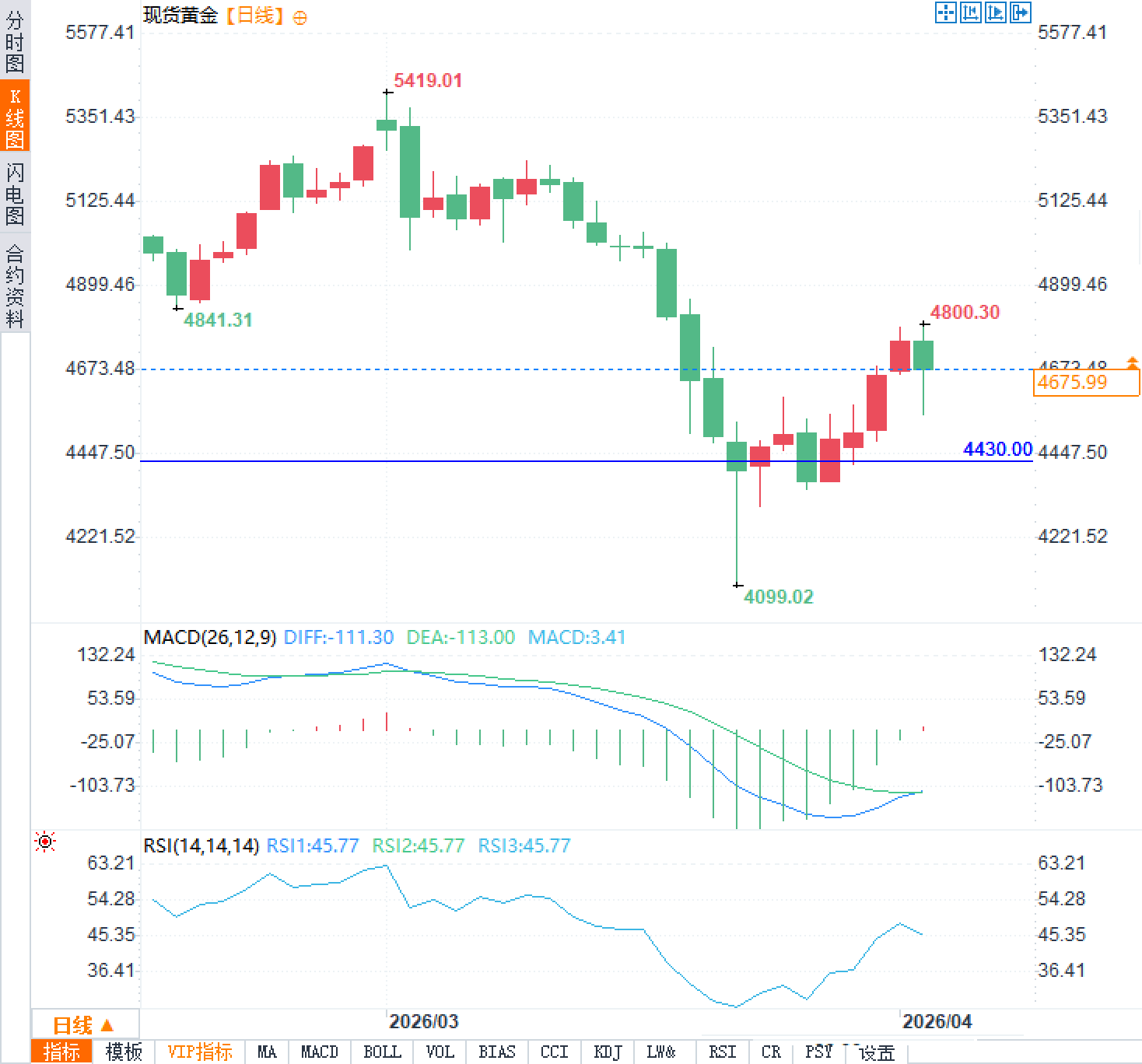
Recent market analysis has emphasized that $4,200 remains a key watershed: a rebound above this level could sustain bullish hopes, while a break below could trigger a deeper correction. The short-term outlook is slightly positive, but caution is still advised in the medium term.
Geopolitical conflicts and the short-term impact of oil prices on gold.
The ongoing tensions in the Middle East have directly fueled concerns about oil supply, and high oil prices have exacerbated the risk of imported inflation. This is similar to 2022, when energy price shocks prompted central banks to quickly shift to tightening, but this was later seen by the market as a delayed reaction. In the current environment, the instinctive buying of gold as a traditional safe-haven asset has not been entirely absent, but it is suppressed by expectations of higher real interest rates. Traders have observed that every $10/barrel increase in oil prices typically leads to an upward shift in core inflation expectations by about 0.5 percentage points, which directly increases the opportunity cost of holding non-yielding assets. In the short term, gold prices are unlikely to escape this "knee-jerk" correction, but once energy prices stabilize or there are signs of supply recovery, and the inflation peak is confirmed, expectations of a shift towards looser monetary policy will once again support gold.
Looking deeper, this round of oil price shocks differs from simple geopolitical premiums; it's compounded by the fragility of global supply chains. Consumers are already feeling the effects of rising fuel costs, corporate profits are facing pressure, and the probability of a subsequent economic slowdown is increasing. This is precisely the nascent positive factor for gold in the medium to long term, based on historical experience. Traders should be wary that the sensitivity of gold prices to oil prices has shifted from a positive correlation in 2022 to a temporary negative correlation, reflecting that interest rate paths are dominating the pricing logic.
Central Bank Policy Expectations and Inflation Response Logic
Major central banks are currently prioritizing inflation control and remain highly vigilant about oil-driven price pressures. Recent statements from the Federal Reserve, the European Central Bank, and the Bank of England indicate that the window for interest rate hikes is not entirely closed, especially given the backdrop of energy costs being passed on to the service sector and wages. This contrasts sharply with some traders' expectations of multiple rate cuts in 2026. Historical data shows that after similar energy shocks, the first policy shift by central banks often lags by 6 to 9 months, during which time gold is vulnerable to pressure from a high-interest-rate environment.
However, analysts point out that this tightening orientation may be short-sighted. The impact of fuel prices on the economy will gradually become apparent, and as demand contracts, monetary policy will inevitably shift towards supporting growth rather than continuing to tighten. Traders can refer to the 2022 path: gold prices initially faced pressure, then rebounded as policy shifted. Currently, market pricing has partially reflected the probability of interest rate hikes, but if central banks release any dovish signals at their next meeting, the upward momentum of gold prices will significantly strengthen. Overall, policy expectations remain the core variable for medium-term gold price fluctuations, and traders need to closely monitor the qualitative descriptions of energy inflation in central bank statements.
Gold Reserve Adjustments and Supply-Side Dynamics
Some countries have recently reduced their gold purchases or even sold off reserves to stabilize their currencies, putting additional downward pressure on gold prices. The Central Bank of Turkey released approximately 58 tons of gold in the past two weeks through sales and swap operations, and India has also taken similar reserve management measures. It remains unclear whether other emerging market central banks will follow suit, but this trend has already led to a marginal weakening of physical demand.
From a financial perspective, reserve sales are typically an emergency measure to address currency depreciation and capital outflows, sacrificing the long-term advantages of diversified asset allocation. Traders should note that such operations may intensify in a high oil price environment, as increased energy import bills complicate foreign exchange reserve management. While supply-side easing has temporarily alleviated upward pressure on gold prices, it also suggests that global structural demand for gold has not fundamentally disappeared. Once exchange rate pressures ease, the probability of central banks returning to net buying will rise, which will be a crucial medium- to long-term supporting variable for gold prices.
Key technical price levels and trend analysis
Technical charts show that gold prices found support this week near the 200-day moving average, currently around $4215 per ounce. After previously touching a high of $4800, prices retreated but did not trigger a new round of panic selling, indicating strong bullish sentiment. Next week, gold prices are expected to retest the 50-day moving average, currently hovering around $5000 per ounce. A successful break above this level would alleviate oversold pressure and open up further upside potential.
Recent market analysis has emphasized that $4,200 remains a key watershed: a rebound above this level could sustain bullish hopes, while a break below could trigger a deeper correction. The short-term outlook is slightly positive, but caution is still advised in the medium term.
- Risk Warning and Disclaimer
- The market involves risk, and trading may not be suitable for all investors. This article is for reference only and does not constitute personal investment advice, nor does it take into account certain users’ specific investment objectives, financial situation, or other needs. Any investment decisions made based on this information are at your own risk.