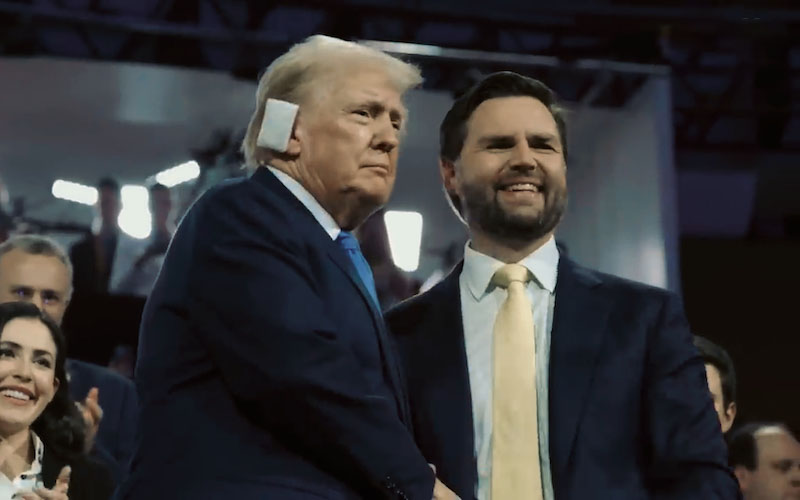
Trump has requested a $1.5 trillion increase in the 2027 military budget, a record high in decades.
2026-04-04 02:09:31
According to an Associated Press report on April 3, US President Trump formally requested Congress to increase the defense budget for fiscal year 2027 to $1.5 trillion—the largest military spending request in decades, a surge of approximately $445 billion from the $901 billion budget for fiscal year 2026, representing an increase of over 50%. At the same time, the White House explicitly demanded significant cuts to non-defense spending on domestic social welfare, healthcare, and education, with an overall reduction of 10%. The core of this cut is delegating responsibility for essential public services such as childcare subsidies, Medicaid, and Medicare to state and local governments.
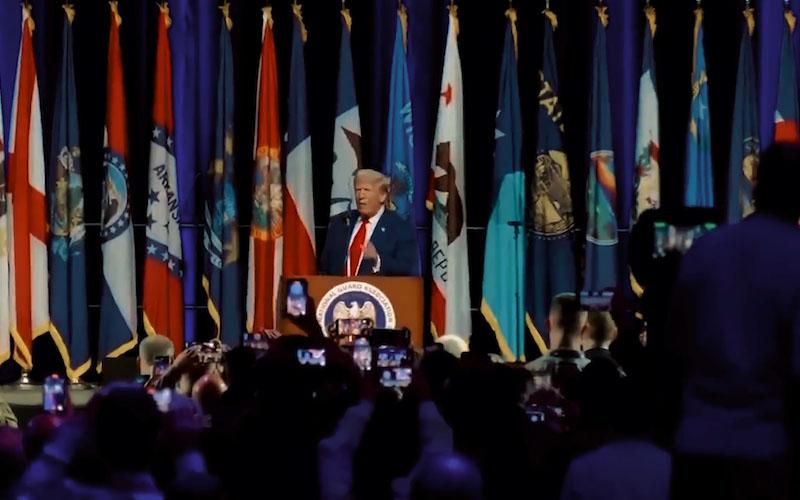
Background of the military spending proposal and the cost of war: The heavy financial burden of the US-Israel war in Iraq
The White House released details of the budget on April 3, a core component of Trump's fiscal year 2027 budget, at a critical juncture as the joint US-Israeli military action against Iran continues to escalate. Pentagon calculations show that every week the conflict lasts costs American taxpayers over $11 billion in direct costs; the expenditure on ammunition, logistics, and troop deployment alone forced the Pentagon to urgently request an additional $200 billion in special funding last month to replenish damaged equipment such as Tomahawk missiles and Patriot interceptors.
To date, the conflict has resulted in the deaths of 3,527 Iranians, including 1,606 civilians and at least 244 children. This conflict represents a significant departure from Trump's 2024 campaign promise to "end overseas wars and prioritize the American people," and its development reveals a deep strategic connection between the US military-industrial complex and Israel, with a large portion of American taxpayers' money being channeled into extra-regional military operations.
How large is this military spending?
Historical Comparison: Largest Increase Since World War II, Debt Risk Peaks
Data from CCTV's military channel shows that the United States' military spending in 2027 will reach $1.5 trillion, an increase of nearly 67% from $895 billion in fiscal year 2025. This is the highest increase since the end of World War II, far exceeding the military spending expansion during the Cold War era, such as Reagan's "Star Wars" program and Bush's "War on Terror." In absolute terms, this budget exceeds the combined annual military spending of the two wars in Afghanistan and Iraq from 2001 to 2010 (approximately $600 billion), and is also higher than the peak defense spending of any single fiscal year since World War II.
Even more serious is the issue of fiscal unsustainability: the current US federal debt has exceeded $39 trillion, with a debt-to-GDP ratio exceeding 120%, far surpassing the historical peak of 119% after World War II; the federal government's annual fiscal deficit is nearly $2 trillion, with annual interest payments on national debt alone exceeding $1 trillion; new military spending relies entirely on "borrowing to expand the military," creating a cycle of "war—deficit—high interest—even larger deficit." A CCTV commentator believes that this budget reflects a "short-term military expansion-oriented approach that squeezes future fiscal and livelihood investments."
Global Comparison: One Country's Prominent Military Spending Sparks Concerns of an Arms Race
Data from the Stockholm International Peace Research Institute (SIPRI) in 2025 shows that global annual military spending will total approximately $2.7 trillion, with the United States accounting for over 55% at $1.5 trillion. This is not only six times the military spending of China (approximately $250 billion), but also exceeds the combined military spending of the world's second to tenth largest countries. Xinhua News Agency's "Blue Hall Observation" column points out that this large-scale military expansion could disrupt the global strategic balance, spurring many countries to increase their defense spending, thereby increasing the potential risks of a global arms race and regional conflicts.
Comparison of People's Livelihoods: Increased military spending squeezes budgets for people's livelihoods, significantly impacting low-income groups.
During a closed-door White House event, Trump stated bluntly, "We're at war, we can't afford to worry about things like childcare subsidies or Medicaid. The federal government can't do it, but the state governments can." CCTV News calculated that the $1.5 trillion military spending is equivalent to five times the total annual education expenditure and eight times the total budget for Medicaid in the United States. A 10% cut in non-defense spending will directly lead to a $73 billion funding gap for public welfare, significantly reducing benefits such as food stamps, childcare, and public healthcare for low-income families, potentially further exacerbating income inequality and social conflicts in the United States.
Current status of revenue for military-industrial complex
The US-Israel war in Iraq and the exorbitant military spending have brought significant profits to US defense industry giants. According to data from the Center for Strategic and International Studies, in just 12 days of the war, direct US military spending reached $16.5 billion, with over 90% flowing to five major defense contractors, including Lockheed Martin, Raytheon (RTX), and Boeing.
In early March, after meeting with defense contractors at the White House, Trump announced that companies had agreed to quadruple the production capacity of anti-missile systems such as Patriot and THAAD (Terminal High Altitude Area Defense). Each THAAD interceptor costs $12.7 million, and a Patriot PAC-3 interceptor costs $3.7 million. These high-priced munitions are being used extensively to intercept Iranian missile and drone attacks, generating continuous order revenue.
The list of beneficiary companies is clear:
Lockheed Martin: A core supplier of F-35 fighter jets, Patriot missiles, and THAAD interceptor missiles, with new orders expected to exceed $100 billion;
Raytheon Technologies (RTX): A major manufacturer of Tomahawk missiles and precision-guided bombs, with production capacity now operating at three shifts.
Boeing: The F-15, Growler electronic warfare aircraft, and B-52 modification projects directly benefit from the Middle East's air strike needs;
Northrop Grumman, General Dynamics, and L3 Harris: These companies have secured orders for stealth bombers, submarines, missile warheads, and radar electronics, respectively. Their stock prices have surged since the Russia-Ukraine conflict in 2022, the Gaza conflict in 2023, and the start of the war against Iraq in 2025, with a cumulative increase of over 150%.
Franklin Spinney, a former U.S. Department of Defense official, stated that the U.S. military-industrial complex (the military, arms dealers, and congressional lobbying groups) has a profound influence on national policy. Its operating model is characterized by "creating an enemy—launching a war—consuming ammunition—requesting budgets—expanding production capacity." The duration of the war and the scale of consumption are directly related to corporate profits, which is also an important interest consideration for the Trump administration in promoting military expansion.
Expert Opinions
CCTV military expert Du Wenlong stated that the $1.5 trillion military budget is more inclined towards "offensive preparedness," with the budget focusing on upgrading the nuclear arsenal, hypersonic weapons, space combat systems, and the "Golden Dome" all-domain missile defense system. This layout is mainly to maintain the United States' global military advantage and cope with great power competition, which may further increase the potential risk of global conflict.
Xinhua News Agency's international affairs expert Hong Lin stated that the Trump administration's policy logic of "using war to support the military and using the military to protect businesses" has further strengthened the ties between the United States and the military-industrial complex. Currently, the United States faces multiple challenges in areas such as high debt and livelihood issues, while military-industrial enterprises reap significant profits. This contrasting pattern may negatively impact the US economy and social stability, and also affect the global peace and development process.
Researchers at the Brookings Institution stated that while the presidential budget itself has no legal force, the $1.5 trillion proposal sends a clear signal that the U.S. military strategy is shifting from "limited intervention" to "full expansion." Even if both parties in Congress cut the budget, military spending is still expected to exceed $1.2 trillion, setting a new historical record, which will have a profound impact on the global security landscape.
Conclusion
The proposed $1.5 trillion military spending plan encapsulates the current military strategic orientation of the United States and reflects the influence of the military-industrial complex in national policy. This path of "expanding the military through borrowing, cutting spending on civilian life, and strengthening the military presence outside the region" carries uncertainties in its actual effects. It could impact the United States' own fiscal sustainability and social stability, and also have a broad impact on the global security landscape.
Background of the military spending proposal and the cost of war: The heavy financial burden of the US-Israel war in Iraq
The White House released details of the budget on April 3, a core component of Trump's fiscal year 2027 budget, at a critical juncture as the joint US-Israeli military action against Iran continues to escalate. Pentagon calculations show that every week the conflict lasts costs American taxpayers over $11 billion in direct costs; the expenditure on ammunition, logistics, and troop deployment alone forced the Pentagon to urgently request an additional $200 billion in special funding last month to replenish damaged equipment such as Tomahawk missiles and Patriot interceptors.
To date, the conflict has resulted in the deaths of 3,527 Iranians, including 1,606 civilians and at least 244 children. This conflict represents a significant departure from Trump's 2024 campaign promise to "end overseas wars and prioritize the American people," and its development reveals a deep strategic connection between the US military-industrial complex and Israel, with a large portion of American taxpayers' money being channeled into extra-regional military operations.
How large is this military spending?
Historical Comparison: Largest Increase Since World War II, Debt Risk Peaks
Data from CCTV's military channel shows that the United States' military spending in 2027 will reach $1.5 trillion, an increase of nearly 67% from $895 billion in fiscal year 2025. This is the highest increase since the end of World War II, far exceeding the military spending expansion during the Cold War era, such as Reagan's "Star Wars" program and Bush's "War on Terror." In absolute terms, this budget exceeds the combined annual military spending of the two wars in Afghanistan and Iraq from 2001 to 2010 (approximately $600 billion), and is also higher than the peak defense spending of any single fiscal year since World War II.
Even more serious is the issue of fiscal unsustainability: the current US federal debt has exceeded $39 trillion, with a debt-to-GDP ratio exceeding 120%, far surpassing the historical peak of 119% after World War II; the federal government's annual fiscal deficit is nearly $2 trillion, with annual interest payments on national debt alone exceeding $1 trillion; new military spending relies entirely on "borrowing to expand the military," creating a cycle of "war—deficit—high interest—even larger deficit." A CCTV commentator believes that this budget reflects a "short-term military expansion-oriented approach that squeezes future fiscal and livelihood investments."
Global Comparison: One Country's Prominent Military Spending Sparks Concerns of an Arms Race
Data from the Stockholm International Peace Research Institute (SIPRI) in 2025 shows that global annual military spending will total approximately $2.7 trillion, with the United States accounting for over 55% at $1.5 trillion. This is not only six times the military spending of China (approximately $250 billion), but also exceeds the combined military spending of the world's second to tenth largest countries. Xinhua News Agency's "Blue Hall Observation" column points out that this large-scale military expansion could disrupt the global strategic balance, spurring many countries to increase their defense spending, thereby increasing the potential risks of a global arms race and regional conflicts.
Comparison of People's Livelihoods: Increased military spending squeezes budgets for people's livelihoods, significantly impacting low-income groups.
During a closed-door White House event, Trump stated bluntly, "We're at war, we can't afford to worry about things like childcare subsidies or Medicaid. The federal government can't do it, but the state governments can." CCTV News calculated that the $1.5 trillion military spending is equivalent to five times the total annual education expenditure and eight times the total budget for Medicaid in the United States. A 10% cut in non-defense spending will directly lead to a $73 billion funding gap for public welfare, significantly reducing benefits such as food stamps, childcare, and public healthcare for low-income families, potentially further exacerbating income inequality and social conflicts in the United States.
Current status of revenue for military-industrial complex
The US-Israel war in Iraq and the exorbitant military spending have brought significant profits to US defense industry giants. According to data from the Center for Strategic and International Studies, in just 12 days of the war, direct US military spending reached $16.5 billion, with over 90% flowing to five major defense contractors, including Lockheed Martin, Raytheon (RTX), and Boeing.
In early March, after meeting with defense contractors at the White House, Trump announced that companies had agreed to quadruple the production capacity of anti-missile systems such as Patriot and THAAD (Terminal High Altitude Area Defense). Each THAAD interceptor costs $12.7 million, and a Patriot PAC-3 interceptor costs $3.7 million. These high-priced munitions are being used extensively to intercept Iranian missile and drone attacks, generating continuous order revenue.
The list of beneficiary companies is clear:
Lockheed Martin: A core supplier of F-35 fighter jets, Patriot missiles, and THAAD interceptor missiles, with new orders expected to exceed $100 billion;
Raytheon Technologies (RTX): A major manufacturer of Tomahawk missiles and precision-guided bombs, with production capacity now operating at three shifts.
Boeing: The F-15, Growler electronic warfare aircraft, and B-52 modification projects directly benefit from the Middle East's air strike needs;
Northrop Grumman, General Dynamics, and L3 Harris: These companies have secured orders for stealth bombers, submarines, missile warheads, and radar electronics, respectively. Their stock prices have surged since the Russia-Ukraine conflict in 2022, the Gaza conflict in 2023, and the start of the war against Iraq in 2025, with a cumulative increase of over 150%.
Franklin Spinney, a former U.S. Department of Defense official, stated that the U.S. military-industrial complex (the military, arms dealers, and congressional lobbying groups) has a profound influence on national policy. Its operating model is characterized by "creating an enemy—launching a war—consuming ammunition—requesting budgets—expanding production capacity." The duration of the war and the scale of consumption are directly related to corporate profits, which is also an important interest consideration for the Trump administration in promoting military expansion.
Expert Opinions
CCTV military expert Du Wenlong stated that the $1.5 trillion military budget is more inclined towards "offensive preparedness," with the budget focusing on upgrading the nuclear arsenal, hypersonic weapons, space combat systems, and the "Golden Dome" all-domain missile defense system. This layout is mainly to maintain the United States' global military advantage and cope with great power competition, which may further increase the potential risk of global conflict.
Xinhua News Agency's international affairs expert Hong Lin stated that the Trump administration's policy logic of "using war to support the military and using the military to protect businesses" has further strengthened the ties between the United States and the military-industrial complex. Currently, the United States faces multiple challenges in areas such as high debt and livelihood issues, while military-industrial enterprises reap significant profits. This contrasting pattern may negatively impact the US economy and social stability, and also affect the global peace and development process.
Researchers at the Brookings Institution stated that while the presidential budget itself has no legal force, the $1.5 trillion proposal sends a clear signal that the U.S. military strategy is shifting from "limited intervention" to "full expansion." Even if both parties in Congress cut the budget, military spending is still expected to exceed $1.2 trillion, setting a new historical record, which will have a profound impact on the global security landscape.
Conclusion
The proposed $1.5 trillion military spending plan encapsulates the current military strategic orientation of the United States and reflects the influence of the military-industrial complex in national policy. This path of "expanding the military through borrowing, cutting spending on civilian life, and strengthening the military presence outside the region" carries uncertainties in its actual effects. It could impact the United States' own fiscal sustainability and social stability, and also have a broad impact on the global security landscape.
- Risk Warning and Disclaimer
- The market involves risk, and trading may not be suitable for all investors. This article is for reference only and does not constitute personal investment advice, nor does it take into account certain users’ specific investment objectives, financial situation, or other needs. Any investment decisions made based on this information are at your own risk.