













Iran firmly refuses to ceasefire; Trump issues ultimatum: Without a deal, the entire country could be wiped out overnight.
2026-04-07 10:35:03
The conflict in the Middle East continues to escalate, with tensions between Iran and the United States and Israel reaching a new high. Iran has explicitly rejected proposals for a temporary ceasefire, insisting on a permanent end to the war, while US President Trump has issued a stern warning, threatening a devastating strike against Iran if it does not reach an agreement and open key straits within the stipulated timeframe.
This latest development has not only exacerbated regional military confrontation but has also further disrupted global energy markets and the international political landscape.
Iran responded to the United States on Monday (April 6) through Pakistan, a mediator, by explicitly rejecting the request for a temporary ceasefire.
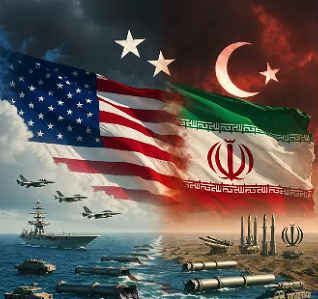
Iran's official news agency reported that Tehran hopes for a permanent end to the war with the United States and Israel, rather than accepting a temporary ceasefire. Iran's response included 10 demands, primarily concerning ending all conflicts in the region, establishing a safe passage agreement for the Strait of Hormuz, lifting sanctions against Iran, and post-war reconstruction.
Iran has emphasized the need to ensure the safety of navigation in the Strait of Hormuz and to obtain reliable guarantees that it will not be attacked again.
Iranian Supreme Joint Military Command spokesman Ebrahim Zolfaqari issued a statement on state television, calling Trump's warning a sign of "mental instability" and describing it as rude, arrogant, and baseless.
Trump rejected Iran's response and insisted on maintaining the deadline. At a press conference, he stated that if Iran failed to reach an agreement and open the Strait of Hormuz, crucial to global energy supplies, by 8 p.m. Eastern Time on Tuesday (0000 GMT on Wednesday), the United States would take extreme measures. He warned that Iran could be "annihilated" overnight, and that night could be Tuesday night.
Trump further clarified that if no agreement is reached with Tehran, then at midnight ET (0400 GMT) on Wednesday, "every bridge in Iran will be destroyed," and "every power plant in Iran will stop working, burn, explode, and never be usable again." He also threatened to attack civilian infrastructure such as power plants and bridges, claiming that the Iranian people "are willing to endure this suffering for freedom." Trump added that the U.S. had intercepted messages requesting such bombings.
U.S. Defense Secretary Pete Hegseth also praised the successful rescue operation over the weekend of a U.S. Air Force pilot whose fighter jet was shot down last Friday.
Iran has expressed strong outrage over the US-Israeli attack on Tehran's Sharif Polytechnic University early Monday morning. The university is one of Iran's top science and technology institutions, and Iranian media reported that the attack severely damaged the school's artificial intelligence data center and other facilities. Iran's science and technology minister accused the US and Israel of attacking approximately 30 universities during the war.
Iranian Foreign Minister Abbas Araqchi stated on social media platform X that regarding the attack on Sharif University, "the aggressors will see our power." Iran also threatened retaliation for the attack.
Independent experts point out that attacks on civilian infrastructure such as power plants, bridges, and universities could constitute war crimes.
Multiple airstrikes occurred in the Middle East on Monday, with US Defense Secretary Hergsays stating that the number of airstrikes that day would be the highest since the start of the war, and that Tuesday's operations would be even larger. Iranian state media reported that Majid Khademi, the intelligence chief of Iran's Islamic Revolutionary Guard Corps, had been killed in the conflict, and Israel claimed responsibility for his death.
The impact of this nearly six-week-long war on the global economy is becoming increasingly apparent. The sharp rise in fuel prices has begun to stir up domestic politics in the United States, damaging Trump's approval ratings and exacerbating Republicans' anxieties about the upcoming midterm elections.
The framework for ending the war, brokered by Pakistan, originally proposed an immediate ceasefire followed by negotiations on a broader peace agreement within 15 to 20 days. However, Iran's hardline stance and Trump's stern ultimatum have made the prospects for peace even more bleak.
Overall , Iran's refusal to accept a temporary ceasefire and insistence on a permanent solution, coupled with Trump's devastating threats, has pushed the Middle East conflict to an even more dangerous brink. This situation not only tests the strategic resolve of all parties involved but also poses a serious challenge to global energy security, economic stability, and the geopolitical landscape.
The international community is paying close attention to subsequent developments, as any further military escalation could have unpredictable and serious consequences.
This latest development has not only exacerbated regional military confrontation but has also further disrupted global energy markets and the international political landscape.
Iran insists on a permanent end to the conflict and sets forth several conditions.
Iran responded to the United States on Monday (April 6) through Pakistan, a mediator, by explicitly rejecting the request for a temporary ceasefire.
Iran's official news agency reported that Tehran hopes for a permanent end to the war with the United States and Israel, rather than accepting a temporary ceasefire. Iran's response included 10 demands, primarily concerning ending all conflicts in the region, establishing a safe passage agreement for the Strait of Hormuz, lifting sanctions against Iran, and post-war reconstruction.
Iran has emphasized the need to ensure the safety of navigation in the Strait of Hormuz and to obtain reliable guarantees that it will not be attacked again.
Iranian Supreme Joint Military Command spokesman Ebrahim Zolfaqari issued a statement on state television, calling Trump's warning a sign of "mental instability" and describing it as rude, arrogant, and baseless.
Trump's tough stance and threats to destroy civilian infrastructure
Trump rejected Iran's response and insisted on maintaining the deadline. At a press conference, he stated that if Iran failed to reach an agreement and open the Strait of Hormuz, crucial to global energy supplies, by 8 p.m. Eastern Time on Tuesday (0000 GMT on Wednesday), the United States would take extreme measures. He warned that Iran could be "annihilated" overnight, and that night could be Tuesday night.
Trump further clarified that if no agreement is reached with Tehran, then at midnight ET (0400 GMT) on Wednesday, "every bridge in Iran will be destroyed," and "every power plant in Iran will stop working, burn, explode, and never be usable again." He also threatened to attack civilian infrastructure such as power plants and bridges, claiming that the Iranian people "are willing to endure this suffering for freedom." Trump added that the U.S. had intercepted messages requesting such bombings.
U.S. Defense Secretary Pete Hegseth also praised the successful rescue operation over the weekend of a U.S. Air Force pilot whose fighter jet was shot down last Friday.
Iran threatens retaliation for university attacks
Iran has expressed strong outrage over the US-Israeli attack on Tehran's Sharif Polytechnic University early Monday morning. The university is one of Iran's top science and technology institutions, and Iranian media reported that the attack severely damaged the school's artificial intelligence data center and other facilities. Iran's science and technology minister accused the US and Israel of attacking approximately 30 universities during the war.
Iranian Foreign Minister Abbas Araqchi stated on social media platform X that regarding the attack on Sharif University, "the aggressors will see our power." Iran also threatened retaliation for the attack.
Independent experts point out that attacks on civilian infrastructure such as power plants, bridges, and universities could constitute war crimes.
Escalating conflict exacerbates global concerns
Multiple airstrikes occurred in the Middle East on Monday, with US Defense Secretary Hergsays stating that the number of airstrikes that day would be the highest since the start of the war, and that Tuesday's operations would be even larger. Iranian state media reported that Majid Khademi, the intelligence chief of Iran's Islamic Revolutionary Guard Corps, had been killed in the conflict, and Israel claimed responsibility for his death.
The impact of this nearly six-week-long war on the global economy is becoming increasingly apparent. The sharp rise in fuel prices has begun to stir up domestic politics in the United States, damaging Trump's approval ratings and exacerbating Republicans' anxieties about the upcoming midterm elections.
The future situation is full of uncertainty.
The framework for ending the war, brokered by Pakistan, originally proposed an immediate ceasefire followed by negotiations on a broader peace agreement within 15 to 20 days. However, Iran's hardline stance and Trump's stern ultimatum have made the prospects for peace even more bleak.
Overall , Iran's refusal to accept a temporary ceasefire and insistence on a permanent solution, coupled with Trump's devastating threats, has pushed the Middle East conflict to an even more dangerous brink. This situation not only tests the strategic resolve of all parties involved but also poses a serious challenge to global energy security, economic stability, and the geopolitical landscape.
The international community is paying close attention to subsequent developments, as any further military escalation could have unpredictable and serious consequences.
- Risk Warning and Disclaimer
- The market involves risk, and trading may not be suitable for all investors. This article is for reference only and does not constitute personal investment advice, nor does it take into account certain users’ specific investment objectives, financial situation, or other needs. Any investment decisions made based on this information are at your own risk.

