Civilization's demise vs. Iran's extreme restraint: the ultimate showdown between the US and Iran—a sleepless night awaits.
2026-04-07 21:41:38
As the deadline set by Trump at 8 p.m. Eastern Time on April 7 (8 a.m. Beijing Time on April 8) draws ever closer, the ceasefire negotiations between the United States and Iran have reached an unprecedented stalemate.
The war, which broke out on February 28, has lasted for nearly 40 days. The joint military strikes by the United States and Israel have been escalating. Iran’s top universities and core petrochemical plants have been attacked one after another. The war has spread to the Gulf region and Lebanon. Israel’s military action has displaced 1.2 million Lebanese people.
More importantly, the near-blockade of the Strait of Hormuz has triggered a global energy crisis—as a key shipping route supplying 20% of the world's oil and gas, its obstruction directly impacts the international oil and gas supply chain and exacerbates global market volatility. Against this backdrop, Iran formally proposed a ten-point peace plan through Pakistani mediation, while Trump's tough response and military threats have brought the situation to the brink of collapse.
US President Trump, speaking about Iran, said, "The entire civilization of Iran will perish tonight, never to recover. I don't want that to happen, but it's very likely to happen. However, now that we have achieved a complete and thorough regime change, with a new, wiser, and more mature government in power, perhaps something truly transformative will happen—who knows? Tonight we will know all this; it is an extremely important moment in the long and complex history of the world."
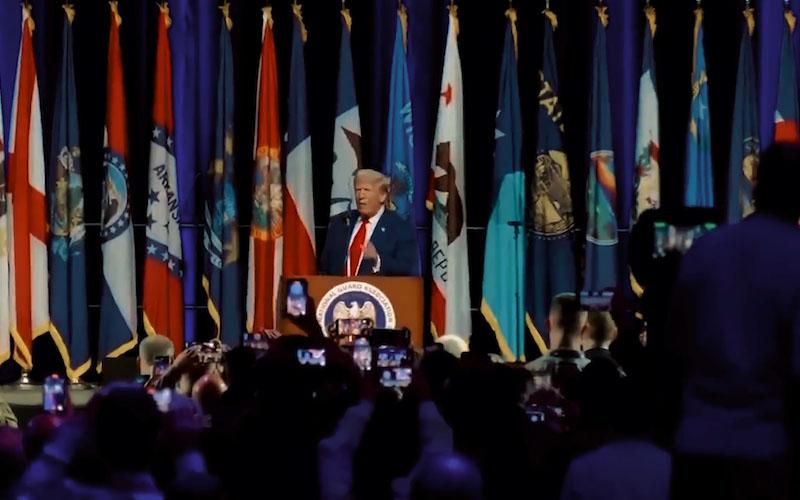
However, facing continued threats from the United States, a senior Iranian source reported that there have been no negotiations with the US, and that the US wants Iran to surrender under pressure. If the US attacks Iran's power plants, the entire Middle East will be plunged into complete darkness. If the situation spirals out of control, Iran's allies will also close the Bab el-Mandeb Strait.
Iran's Islamic Revolutionary Guard Corps (IRGC) issued a strong warning to US allies in the Persian Gulf region, stating that Iran would not hesitate to strike US-related oil and gas infrastructure, potentially plunging the industry into years of turmoil. A statement from the IRGC, published by Iran's semi-official Tasnim News Agency, said: "US partners in the region must understand that Iran has so far exercised great restraint and adhered to the principle of good neighborliness." "US partners must understand that while Iran previously considered its targets for retaliation, these considerations will no longer apply."
The Iranian state news agency IRNA revealed that although the peace plan did not disclose all the details, its core framework clearly points to four key demands: First, a permanent end to regional hostilities. Iran firmly rejects the 45-day temporary ceasefire proposal put forward by the US and the mediators. Iran emphasizes that a temporary ceasefire would only give the US and Israel time to regroup and launch subsequent attacks. The lessons learned from Israel's 12-day war in June 2025 have made Tehran lose faith in the "temporary agreement."
Secondly, a safe passage mechanism for the Strait of Hormuz should be established. This mechanism must guarantee Iran's dominance over the strait and refuse to transfer control to the United States. This is fundamentally opposed to Trump's demand for "full opening of the strait and the collection of passage fees by the United States."
Third, fully lift sanctions against Iran, including economic recovery measures such as unfreezing frozen assets;
Fourth, promote post-war reconstruction, covering areas such as energy facilities and infrastructure for people's livelihood damaged by the conflict.
It is worth noting that, in order to demonstrate its sincerity in negotiations, Iran has withdrawn its previous demands for war reparations, but has clearly adhered to its core bottom line: it will never abandon its ballistic missile program, nor will it hand over its 60% stockpile of highly enriched uranium—two items that Tehran considers strategic bargaining chips for national security.
In stark contrast to Iran's ten-point plan, the 15-point proposal delivered by the United States through Pakistan exhibits a strong hegemonic logic.
Its core demands include: a 30-day temporary ceasefire, the dismantling of the three major nuclear facilities, including Natanz, a ban on domestic uranium enrichment, the transfer of highly enriched uranium stockpiles to the United States, restrictions on the size and range of ballistic missiles, and the unconditional opening of the Strait of Hormuz.
In exchange, the United States only pledged to lift sanctions against Iran and provide civilian power generation support for the Bushehr nuclear power plant.
Iran has stated that the proposal is "extremely unreasonable and deceptive," pointing out that the demands for a temporary ceasefire and the dismantling of nuclear facilities are essentially aimed at depriving Iran of its strategic defense capabilities.
Behind this divergence lies the irreconcilable conflict of fundamental interests: Iran regards nuclear technology and control of the Strait of Hormuz as the core of its national sovereignty, while the United States is trying to weaken Iran's regional influence and consolidate its petrodollar hegemony through negotiations. The U.S. military has deployed two Marine Expeditionary Forces (approximately 5,000 personnel), the 82nd Airborne Division (approximately 3,000 personnel), and elite special forces to the Middle East, with military deployments aimed directly at control of the Strait of Hormuz.
In response to Iran’s ten-point plan, Trump gave a contradictory response at a White House press conference: on the one hand, he acknowledged that the proposal “has some weight and is an important step forward,” while on the other hand, he emphasized that it “does not meet the core demands of the United States.”
Its hardline stance goes far beyond diplomatic rhetoric: on Sunday, it posted on the TruthSocial platform threatening that "Tuesday will be the day of reckoning for Iran's power plants and bridges," and declared that "if the Strait is not opened, we are prepared to fall into hell."
They then exerted further pressure at a press conference, stating that if no agreement could be reached, "all bridges and power plants in Iran will cease to exist," and even threatened that a full-scale strike could be completed within four hours.
This threat has triggered a strong backlash from the international community: a spokesperson for the UN Secretary-General expressed "shock" and pointed out that attacks on civilian facilities violate international law; human rights organizations and US congressmen criticized the move as a war crime, and the controversy could further hinder the negotiation process.
More noteworthy is the alignment between Trump's threats and military mobilizations—in the recent pilot rescue operation, the US military deployed 155 aircraft of various types deep into Iranian airspace. Although the US claimed a "zero-casualty withdrawal," Iran disclosed that two US transport planes were shot down and several soldiers were killed. The contradiction between the two sides' reports highlights the complexity of the situation.
The root of the current stalemate can be traced back to the Trump administration's withdrawal from the 2015 Iran nuclear deal in 2018—an agreement that traded Iran's restrictions on its nuclear program for the lifting of sanctions. Trump's withdrawal and the reinstatement of sanctions became a key turning point in the deterioration of the situation.
In response to the attack on the Natanz nuclear facility in 2021, Iran increased its uranium enrichment level from the 3.6% permitted by the agreement to nearly 60% (90% enrichment is required to make a nuclear bomb). Although the UN nuclear watchdog confirmed that Iran does not yet have the capability to make nuclear weapons, this move has exacerbated regional tensions.
On February 28, 2026, just as Oman declared that a US-Iran agreement was "within reach," the US and Israel launched a joint war, causing the negotiations to break down.
Trump subsequently extended the deadline multiple times (from 48 hours to the final 8 a.m. on April 8). This capricious pressure tactic was interpreted as "forcing Iran to unilaterally compromise." Iran, however, consistently denied any direct negotiations with the United States, conveying its position only through third parties such as Pakistan, highlighting the lack of trust between the two sides.
As the deadline approaches, the chances of reaching a ceasefire are becoming increasingly slim.
Geopolitical risks continue to fuel market risk aversion, international oil and gas prices are fluctuating more sharply, and the global energy supply chain is facing ongoing shocks.
Iranian Ambassador to Pakistan Reza Amiri Moghaddam posted on the X platform that Pakistan's mediation has entered a "critical and sensitive phase," but US and Iranian negotiators have not yet held face-to-face consultations, and a huge gap remains between the two sides' positions.
Analysts point out that Iran's refusal to implement a temporary ceasefire and its insistence on its bottom line of nuclear technology and control of the Strait of Hormuz have created a deadlock with the United States' hegemonic ambitions; while Trump's military threats, though seemingly tough, are actually constrained by both domestic political pressure and international condemnation.
If negotiations break down after the deadline in the coming days, shipping safety in the Strait of Hormuz will be directly impacted, regional conflicts may escalate further, and global energy and financial markets will face greater uncertainty.
The war, which broke out on February 28, has lasted for nearly 40 days. The joint military strikes by the United States and Israel have been escalating. Iran’s top universities and core petrochemical plants have been attacked one after another. The war has spread to the Gulf region and Lebanon. Israel’s military action has displaced 1.2 million Lebanese people.
More importantly, the near-blockade of the Strait of Hormuz has triggered a global energy crisis—as a key shipping route supplying 20% of the world's oil and gas, its obstruction directly impacts the international oil and gas supply chain and exacerbates global market volatility. Against this backdrop, Iran formally proposed a ten-point peace plan through Pakistani mediation, while Trump's tough response and military threats have brought the situation to the brink of collapse.
US President Trump, speaking about Iran, said, "The entire civilization of Iran will perish tonight, never to recover. I don't want that to happen, but it's very likely to happen. However, now that we have achieved a complete and thorough regime change, with a new, wiser, and more mature government in power, perhaps something truly transformative will happen—who knows? Tonight we will know all this; it is an extremely important moment in the long and complex history of the world."
However, facing continued threats from the United States, a senior Iranian source reported that there have been no negotiations with the US, and that the US wants Iran to surrender under pressure. If the US attacks Iran's power plants, the entire Middle East will be plunged into complete darkness. If the situation spirals out of control, Iran's allies will also close the Bab el-Mandeb Strait.
Iran's Islamic Revolutionary Guard Corps (IRGC) issued a strong warning to US allies in the Persian Gulf region, stating that Iran would not hesitate to strike US-related oil and gas infrastructure, potentially plunging the industry into years of turmoil. A statement from the IRGC, published by Iran's semi-official Tasnim News Agency, said: "US partners in the region must understand that Iran has so far exercised great restraint and adhered to the principle of good neighborliness." "US partners must understand that while Iran previously considered its targets for retaliation, these considerations will no longer apply."
Iran's Ten-Point Peace Plan: Core Demands and Bottom Line
The Iranian state news agency IRNA revealed that although the peace plan did not disclose all the details, its core framework clearly points to four key demands: First, a permanent end to regional hostilities. Iran firmly rejects the 45-day temporary ceasefire proposal put forward by the US and the mediators. Iran emphasizes that a temporary ceasefire would only give the US and Israel time to regroup and launch subsequent attacks. The lessons learned from Israel's 12-day war in June 2025 have made Tehran lose faith in the "temporary agreement."
Secondly, a safe passage mechanism for the Strait of Hormuz should be established. This mechanism must guarantee Iran's dominance over the strait and refuse to transfer control to the United States. This is fundamentally opposed to Trump's demand for "full opening of the strait and the collection of passage fees by the United States."
Third, fully lift sanctions against Iran, including economic recovery measures such as unfreezing frozen assets;
Fourth, promote post-war reconstruction, covering areas such as energy facilities and infrastructure for people's livelihood damaged by the conflict.
It is worth noting that, in order to demonstrate its sincerity in negotiations, Iran has withdrawn its previous demands for war reparations, but has clearly adhered to its core bottom line: it will never abandon its ballistic missile program, nor will it hand over its 60% stockpile of highly enriched uranium—two items that Tehran considers strategic bargaining chips for national security.
The US's 15-point proposal and the core differences between the two sides
In stark contrast to Iran's ten-point plan, the 15-point proposal delivered by the United States through Pakistan exhibits a strong hegemonic logic.
Its core demands include: a 30-day temporary ceasefire, the dismantling of the three major nuclear facilities, including Natanz, a ban on domestic uranium enrichment, the transfer of highly enriched uranium stockpiles to the United States, restrictions on the size and range of ballistic missiles, and the unconditional opening of the Strait of Hormuz.
In exchange, the United States only pledged to lift sanctions against Iran and provide civilian power generation support for the Bushehr nuclear power plant.
Iran has stated that the proposal is "extremely unreasonable and deceptive," pointing out that the demands for a temporary ceasefire and the dismantling of nuclear facilities are essentially aimed at depriving Iran of its strategic defense capabilities.
Behind this divergence lies the irreconcilable conflict of fundamental interests: Iran regards nuclear technology and control of the Strait of Hormuz as the core of its national sovereignty, while the United States is trying to weaken Iran's regional influence and consolidate its petrodollar hegemony through negotiations. The U.S. military has deployed two Marine Expeditionary Forces (approximately 5,000 personnel), the 82nd Airborne Division (approximately 3,000 personnel), and elite special forces to the Middle East, with military deployments aimed directly at control of the Strait of Hormuz.
Trump's tough pressure and international controversy
In response to Iran’s ten-point plan, Trump gave a contradictory response at a White House press conference: on the one hand, he acknowledged that the proposal “has some weight and is an important step forward,” while on the other hand, he emphasized that it “does not meet the core demands of the United States.”
Its hardline stance goes far beyond diplomatic rhetoric: on Sunday, it posted on the TruthSocial platform threatening that "Tuesday will be the day of reckoning for Iran's power plants and bridges," and declared that "if the Strait is not opened, we are prepared to fall into hell."
They then exerted further pressure at a press conference, stating that if no agreement could be reached, "all bridges and power plants in Iran will cease to exist," and even threatened that a full-scale strike could be completed within four hours.
This threat has triggered a strong backlash from the international community: a spokesperson for the UN Secretary-General expressed "shock" and pointed out that attacks on civilian facilities violate international law; human rights organizations and US congressmen criticized the move as a war crime, and the controversy could further hinder the negotiation process.
More noteworthy is the alignment between Trump's threats and military mobilizations—in the recent pilot rescue operation, the US military deployed 155 aircraft of various types deep into Iranian airspace. Although the US claimed a "zero-casualty withdrawal," Iran disclosed that two US transport planes were shot down and several soldiers were killed. The contradiction between the two sides' reports highlights the complexity of the situation.
The historical entanglement of war background and nuclear issues
The root of the current stalemate can be traced back to the Trump administration's withdrawal from the 2015 Iran nuclear deal in 2018—an agreement that traded Iran's restrictions on its nuclear program for the lifting of sanctions. Trump's withdrawal and the reinstatement of sanctions became a key turning point in the deterioration of the situation.
In response to the attack on the Natanz nuclear facility in 2021, Iran increased its uranium enrichment level from the 3.6% permitted by the agreement to nearly 60% (90% enrichment is required to make a nuclear bomb). Although the UN nuclear watchdog confirmed that Iran does not yet have the capability to make nuclear weapons, this move has exacerbated regional tensions.
On February 28, 2026, just as Oman declared that a US-Iran agreement was "within reach," the US and Israel launched a joint war, causing the negotiations to break down.
Trump subsequently extended the deadline multiple times (from 48 hours to the final 8 a.m. on April 8). This capricious pressure tactic was interpreted as "forcing Iran to unilaterally compromise." Iran, however, consistently denied any direct negotiations with the United States, conveying its position only through third parties such as Pakistan, highlighting the lack of trust between the two sides.
Market impact and negotiation prospects
As the deadline approaches, the chances of reaching a ceasefire are becoming increasingly slim.
Geopolitical risks continue to fuel market risk aversion, international oil and gas prices are fluctuating more sharply, and the global energy supply chain is facing ongoing shocks.
Iranian Ambassador to Pakistan Reza Amiri Moghaddam posted on the X platform that Pakistan's mediation has entered a "critical and sensitive phase," but US and Iranian negotiators have not yet held face-to-face consultations, and a huge gap remains between the two sides' positions.
Analysts point out that Iran's refusal to implement a temporary ceasefire and its insistence on its bottom line of nuclear technology and control of the Strait of Hormuz have created a deadlock with the United States' hegemonic ambitions; while Trump's military threats, though seemingly tough, are actually constrained by both domestic political pressure and international condemnation.
If negotiations break down after the deadline in the coming days, shipping safety in the Strait of Hormuz will be directly impacted, regional conflicts may escalate further, and global energy and financial markets will face greater uncertainty.
- Risk Warning and Disclaimer
- The market involves risk, and trading may not be suitable for all investors. This article is for reference only and does not constitute personal investment advice, nor does it take into account certain users’ specific investment objectives, financial situation, or other needs. Any investment decisions made based on this information are at your own risk.