Strategic pressure from the Strait of Hormuz is reshaping the oil market.
2026-04-13 19:52:30
Strategic pressure from the Strait of Hormuz is profoundly altering the operating logic of the oil market. This change is not achieved through a complete severing of oil supplies, but rather by introducing friction, uncertainty, and asymmetric access, significantly reducing the efficiency of the entire system while it continues to function. Maritime restrictions primarily target the movement of tankers related to Iran, while allowing other vessels to continue passing through. The shipping system remains operational, but has become less efficient. This evolving environment brings fragmentation risks, rising costs, and persistent high volatility.

Reports indicate that the United States may soon impose restrictions on maritime traffic linked to Iranian ports, a move that differs from previous escalations. Given the already strained oil flows in the region, this measure will not bring the entire system to a standstill, but rather add additional burdens and alter its operation rather than completely halting it.
With a potential blockade set to take effect on Monday and the April 22 ceasefire deadline approaching, the market is facing not a single event, but a confluence of evolving risks. For some time, efforts to maintain stability and implement strategic pressure have focused on ensuring the smooth flow of the Strait of Hormuz, a vital global energy artery. However, with the breakdown of negotiations, the strategy appears to be shifting.
The U.S. military stated that it will impose a blockade on maritime traffic entering and leaving Iranian ports, but will allow other vessels not entering Iran to continue transiting the Strait of Hormuz. This move is no longer simply about ensuring stable passage, but rather about selectively restricting specific flows while maintaining the overall openness of the waterway, effectively introducing friction into the system.
Traditional markets typically react to geopolitical events by focusing on the risk of supply disruptions. However, the current situation points to a very different dynamic: oil continues to flow through the Strait of Hormuz, and the system as a whole remains operational—but under increasing pressure, with its efficiency and reliability gradually deteriorating. This introduces another form of pressure into the market:
Some routes face higher risks.
Some oil flows were delayed or restricted.
Transportation and insurance costs have risen significantly.
The system hasn't stopped operating, but it's far from efficient and smooth.
Why this is important: Beyond simply limiting supply at the logistical level, this shift in limiting advantages can also affect the distribution of benefits among stakeholders within the system. When oil transportation becomes unpredictable, the ability to gain an economic advantage by controlling or securing specific flows begins to diminish. This diminishing effect isn't due to the disappearance of oil, but rather the significant reduction in the certainty of obtaining it. Even when oil continues to flow, the ability to consistently profit from it becomes unreliable. In this context, the end result is not a complete supply disruption, but a decline in the reliability of the entire system. Control over flows no longer guarantees a clear competitive advantage.
Market Impact: A System No One Can Completely Win
The shift from stable access to restricted access is changing market behavior. Markets are no longer pricing in single supply shocks, but are beginning to reflect a more fragmented market structure:
Supply still exists, but access to it has become uneven.
Costs are rising, but transaction volume has not collapsed.
Risk diversification across different routes and participants
Oil prices no longer correspond to a single narrative, but rather respond differently to various entry conditions, risk exposures, and reliability levels.
In the short term, this environment is likely to maintain market instability. As long as no party can fully rely on secure transportation routes, the entire system will remain under strain. This could lead to:
Volatility has remained at a high level for a long time
The market is highly sensitive to geopolitical dynamics.
Increased uncertainty in transportation and pricing conditions
Without a clear solution, the system will not completely crash, but it will also be difficult to stabilize completely.
Technical Analysis: Brent crude oil is in a state of high volatility equilibrium.
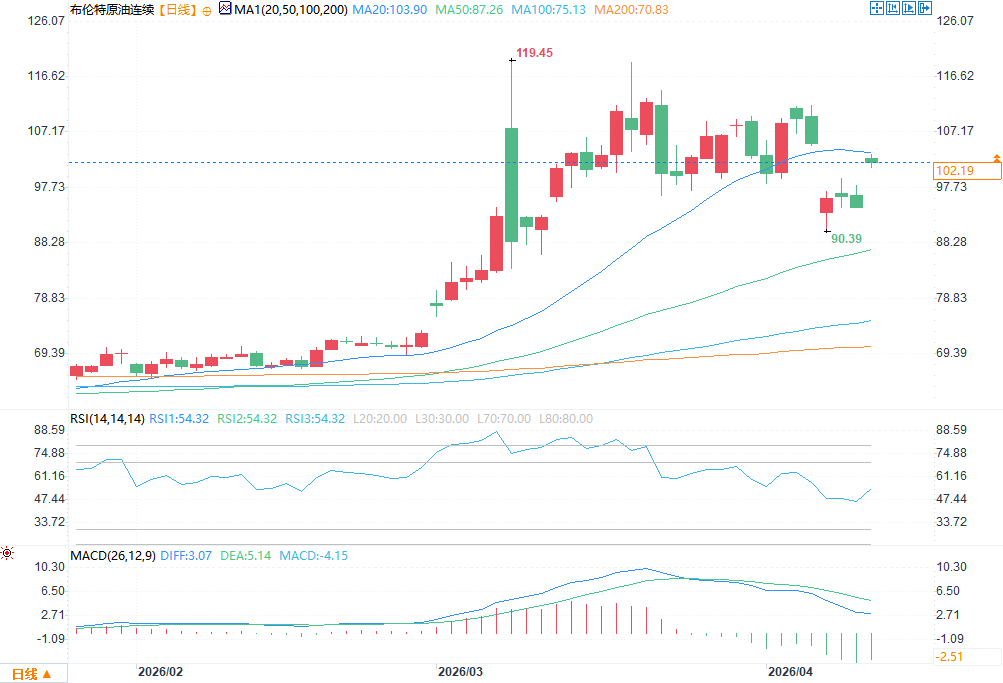
(Brent crude oil daily chart source: FX678)
From a technical chart perspective, Brent crude oil is currently trading within a wide and volatile range, exhibiting a clear equilibrium structure rather than a distinct unidirectional trend. Value zones overlap, and prices are primarily oscillating within a range, constantly being repriced based on changes in geopolitical risks. In this environment, breaking through key price levels often requires sufficiently strong confirmation signals, and subsequent momentum is typically weak.
Implications for traders
The core change lies not in the total amount of oil, but in how control, access, and reliability interact in an increasingly volatile system. For traders, this means that clear, one-sided advantages are becoming increasingly difficult to maintain. In an environment where oil is still flowing but not fully secured, price fluctuations no longer reflect a consistent directional narrative, but rather a continuous dynamic repricing of risk, adjusting as new information emerges. This has several important implications:
A breakout without sufficient confirmation is unlikely to be sustained.
Prices tend to fluctuate within a range to adapt to changing conditions.
Reactions to headlines can be dramatic, but often lack staying power.
Trading opportunities will still arise, but the probability of them turning into trending markets is decreasing. Market confidence is weakening, while sensitivity to new events is increasing.
As a result, traders are no longer facing a market where one side can clearly dominate, but a complex environment where advantages are fragmented and constantly shifting. In such a market, maintaining flexible and strict risk control, as well as paying close attention to geopolitical dynamics, will be more crucial than simply chasing directional trends.
Reports indicate that the United States may soon impose restrictions on maritime traffic linked to Iranian ports, a move that differs from previous escalations. Given the already strained oil flows in the region, this measure will not bring the entire system to a standstill, but rather add additional burdens and alter its operation rather than completely halting it.
With a potential blockade set to take effect on Monday and the April 22 ceasefire deadline approaching, the market is facing not a single event, but a confluence of evolving risks. For some time, efforts to maintain stability and implement strategic pressure have focused on ensuring the smooth flow of the Strait of Hormuz, a vital global energy artery. However, with the breakdown of negotiations, the strategy appears to be shifting.
The U.S. military stated that it will impose a blockade on maritime traffic entering and leaving Iranian ports, but will allow other vessels not entering Iran to continue transiting the Strait of Hormuz. This move is no longer simply about ensuring stable passage, but rather about selectively restricting specific flows while maintaining the overall openness of the waterway, effectively introducing friction into the system.
Traditional markets typically react to geopolitical events by focusing on the risk of supply disruptions. However, the current situation points to a very different dynamic: oil continues to flow through the Strait of Hormuz, and the system as a whole remains operational—but under increasing pressure, with its efficiency and reliability gradually deteriorating. This introduces another form of pressure into the market:
Some routes face higher risks.
Some oil flows were delayed or restricted.
Transportation and insurance costs have risen significantly.
The system hasn't stopped operating, but it's far from efficient and smooth.
Why this is important: Beyond simply limiting supply at the logistical level, this shift in limiting advantages can also affect the distribution of benefits among stakeholders within the system. When oil transportation becomes unpredictable, the ability to gain an economic advantage by controlling or securing specific flows begins to diminish. This diminishing effect isn't due to the disappearance of oil, but rather the significant reduction in the certainty of obtaining it. Even when oil continues to flow, the ability to consistently profit from it becomes unreliable. In this context, the end result is not a complete supply disruption, but a decline in the reliability of the entire system. Control over flows no longer guarantees a clear competitive advantage.
Market Impact: A System No One Can Completely Win
The shift from stable access to restricted access is changing market behavior. Markets are no longer pricing in single supply shocks, but are beginning to reflect a more fragmented market structure:
Supply still exists, but access to it has become uneven.
Costs are rising, but transaction volume has not collapsed.
Risk diversification across different routes and participants
Oil prices no longer correspond to a single narrative, but rather respond differently to various entry conditions, risk exposures, and reliability levels.
In the short term, this environment is likely to maintain market instability. As long as no party can fully rely on secure transportation routes, the entire system will remain under strain. This could lead to:
Volatility has remained at a high level for a long time
The market is highly sensitive to geopolitical dynamics.
Increased uncertainty in transportation and pricing conditions
Without a clear solution, the system will not completely crash, but it will also be difficult to stabilize completely.
Technical Analysis: Brent crude oil is in a state of high volatility equilibrium.
(Brent crude oil daily chart source: FX678)
From a technical chart perspective, Brent crude oil is currently trading within a wide and volatile range, exhibiting a clear equilibrium structure rather than a distinct unidirectional trend. Value zones overlap, and prices are primarily oscillating within a range, constantly being repriced based on changes in geopolitical risks. In this environment, breaking through key price levels often requires sufficiently strong confirmation signals, and subsequent momentum is typically weak.
Implications for traders
The core change lies not in the total amount of oil, but in how control, access, and reliability interact in an increasingly volatile system. For traders, this means that clear, one-sided advantages are becoming increasingly difficult to maintain. In an environment where oil is still flowing but not fully secured, price fluctuations no longer reflect a consistent directional narrative, but rather a continuous dynamic repricing of risk, adjusting as new information emerges. This has several important implications:
A breakout without sufficient confirmation is unlikely to be sustained.
Prices tend to fluctuate within a range to adapt to changing conditions.
Reactions to headlines can be dramatic, but often lack staying power.
Trading opportunities will still arise, but the probability of them turning into trending markets is decreasing. Market confidence is weakening, while sensitivity to new events is increasing.
As a result, traders are no longer facing a market where one side can clearly dominate, but a complex environment where advantages are fragmented and constantly shifting. In such a market, maintaining flexible and strict risk control, as well as paying close attention to geopolitical dynamics, will be more crucial than simply chasing directional trends.
- Risk Warning and Disclaimer
- The market involves risk, and trading may not be suitable for all investors. This article is for reference only and does not constitute personal investment advice, nor does it take into account certain users’ specific investment objectives, financial situation, or other needs. Any investment decisions made based on this information are at your own risk.