A Comprehensive Analysis of the US Economic Report for 2026
2026-04-14 17:24:58
The White House officially released its 2026 economic report on Monday. The report, compiled annually by the President's Council of Economic Advisers and submitted to Congress, outlines 14 core issues of concern to American families, with a focus on trade and tax policies. It is also a key policy signal that Trump is sending to the outside world amid rising domestic discontent with the economy.
The report systematically reviewed Trump's governance during his first year back in the White House, providing a comprehensive overview of his economic achievements and subsequent policy plans.
In their report, Trump and the White House clearly stated that they had implemented several far-reaching economic reforms in their first year in office, and that the policy benefits would continue to be released during this term and beyond.
The government will uphold the "America First" principle, continue to fight for the interests of the American people, and deliver tangible policy results to achieve its governing goal of making America great again.
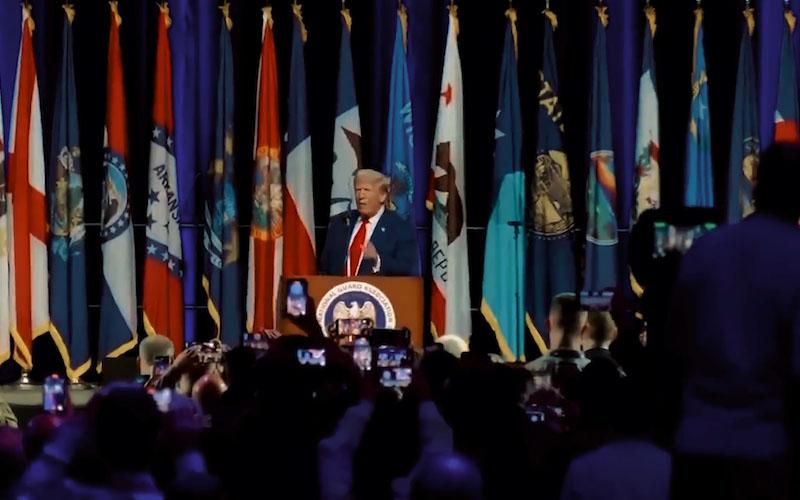
Tax reform is the core highlight of this economic report. The Great Good Act (OBBBA), passed on July 4, 2025, is an upgrade and continuation of the tax cut framework of Trump's first term in 2017.
As a core part of Trump's tax reform agenda after returning to the White House, the bill was finally passed in the House of Representatives after months of debate, marking a significant policy victory for the president and congressional Republicans.
The bill's tax cuts precisely target blue-collar workers and small businesses, not only establishing provisions such as tax exemptions for tips to support economically vulnerable groups, but also extending and strengthening the child tax credit policy, and retaining the low tax rates and high standard deductions of the first term.
From an economic perspective, these measures will effectively boost people's willingness to participate in labor, expand the labor supply, and thus provide strong impetus for GDP growth.
In his first year back in the White House, Trump made restructuring the international tariff and trade system a core focus of his work.
Following the release of the "Liberation Day" statement, the United States quickly reached trade and economic cooperation agreements with multiple economies around the world.
The report points out that unfair trade practices overseas and beggar-thy-neighbor industrial policies have long eroded the efficiency of the U.S. economy and harmed the interests of domestic workers and industries.
After Trump returns to the White House in January 2025, he will be tasked with addressing the public's demands to correct the imbalanced global trade system and restore trade policy to its essential purpose of serving American workers, industries, and national security.
The report also disclosed the US-EU economic framework, the US-Japan strategic trade and investment partnership, and trade arrangements with countries and regions such as the UK, South Korea, and India, directly addressing issues such as the outflow of domestic production capacity and corporate outsourcing caused by past trade frameworks.
The new trade policy has already shown tangible results, gradually reducing the United States' economic dependence on external economies and representing a significant step in the major trend of US manufacturing returning to the US.
Regarding defense spending, the Trump administration pushed the defense budget to a record high.
This year, Trump urged Congress to approve a defense budget of over $1.1 trillion, which would be used for both military deployments and to support large-scale immigration enforcement.
In its latest budget proposal for fiscal year 2027, the government proposed increasing military spending by approximately 40% compared to fiscal year 2026, reaching a total of $1.5 trillion.
This massive defense budget comes at the cost of cutting approximately $73 billion in domestic spending, affecting several core areas including healthcare, housing, agriculture, and education.
The report states that high defense spending is a necessary guarantee for maintaining U.S. national security and strengthening military deterrence capabilities. The government has effectively leveraged private capital entry through military spending reforms and deregulation of industry access, boosting the supply and demand vitality of the defense industry. The military manufacturing industry is also a type of manufacturing industry, and its development drives a series of supply chains, which in turn promotes further manufacturing networks.
However, due to insufficient disclosure of information regarding the conflict with Iran, members of both parties in the U.S. Congress remain skeptical about this defense budget expansion, and there is some uncertainty regarding the policy's implementation.
The report also covers a variety of economic agendas, including artificial intelligence deployment, housing support programs, energy-led strategies, the economic impact of DEI policies, and national health initiatives, and makes it clear that existing economic policies will be further deepened.
On the data front, the historic US government shutdown last fall led to a 0.4% decline in GDP compared to 2024. In 2025, corporate fixed investment became the core engine of GDP growth, while consumption and exports maintained steady growth, with only residential investment showing relatively weak performance.
Regarding future economic trends, the report predicts that the average annual growth rate of US real GDP will reach 3.0% over the next 11-year federal budget cycle, with inflation stabilizing and market interest rates gradually declining. The report also suggests that the US will likely continue to implement a combination of interest rate cuts and fiscal support, while high-tech companies will accelerate capital expenditures, reduce corporate financing costs, and develop the manufacturing sector.
Even if the Iranian conflict pushes up oil prices and puts short-term pressure on inflation, the US macroeconomy will still quickly return to a healthy and stable state in 2026, and the inflation rate will be in line with the Fed's policy objectives.
The report systematically reviewed Trump's governance during his first year back in the White House, providing a comprehensive overview of his economic achievements and subsequent policy plans.
In their report, Trump and the White House clearly stated that they had implemented several far-reaching economic reforms in their first year in office, and that the policy benefits would continue to be released during this term and beyond.
The government will uphold the "America First" principle, continue to fight for the interests of the American people, and deliver tangible policy results to achieve its governing goal of making America great again.
Core Tax Reform Measures: The "Grand and Beautiful Act" Implemented, Providing Targeted Tax Reduction Benefits
Tax reform is the core highlight of this economic report. The Great Good Act (OBBBA), passed on July 4, 2025, is an upgrade and continuation of the tax cut framework of Trump's first term in 2017.
As a core part of Trump's tax reform agenda after returning to the White House, the bill was finally passed in the House of Representatives after months of debate, marking a significant policy victory for the president and congressional Republicans.
The bill's tax cuts precisely target blue-collar workers and small businesses, not only establishing provisions such as tax exemptions for tips to support economically vulnerable groups, but also extending and strengthening the child tax credit policy, and retaining the low tax rates and high standard deductions of the first term.
From an economic perspective, these measures will effectively boost people's willingness to participate in labor, expand the labor supply, and thus provide strong impetus for GDP growth.
Trade System Restructuring: Promoting Fair Trade to Reshape the Global Economic and Trade Landscape
In his first year back in the White House, Trump made restructuring the international tariff and trade system a core focus of his work.
Following the release of the "Liberation Day" statement, the United States quickly reached trade and economic cooperation agreements with multiple economies around the world.
The report points out that unfair trade practices overseas and beggar-thy-neighbor industrial policies have long eroded the efficiency of the U.S. economy and harmed the interests of domestic workers and industries.
After Trump returns to the White House in January 2025, he will be tasked with addressing the public's demands to correct the imbalanced global trade system and restore trade policy to its essential purpose of serving American workers, industries, and national security.
The report also disclosed the US-EU economic framework, the US-Japan strategic trade and investment partnership, and trade arrangements with countries and regions such as the UK, South Korea, and India, directly addressing issues such as the outflow of domestic production capacity and corporate outsourcing caused by past trade frameworks.
The new trade policy has already shown tangible results, gradually reducing the United States' economic dependence on external economies and representing a significant step in the major trend of US manufacturing returning to the US.
Defense budget hits record high: military spending expands significantly while spending on people's livelihood is cut.
Regarding defense spending, the Trump administration pushed the defense budget to a record high.
This year, Trump urged Congress to approve a defense budget of over $1.1 trillion, which would be used for both military deployments and to support large-scale immigration enforcement.
In its latest budget proposal for fiscal year 2027, the government proposed increasing military spending by approximately 40% compared to fiscal year 2026, reaching a total of $1.5 trillion.
This massive defense budget comes at the cost of cutting approximately $73 billion in domestic spending, affecting several core areas including healthcare, housing, agriculture, and education.
The report states that high defense spending is a necessary guarantee for maintaining U.S. national security and strengthening military deterrence capabilities. The government has effectively leveraged private capital entry through military spending reforms and deregulation of industry access, boosting the supply and demand vitality of the defense industry. The military manufacturing industry is also a type of manufacturing industry, and its development drives a series of supply chains, which in turn promotes further manufacturing networks.
However, due to insufficient disclosure of information regarding the conflict with Iran, members of both parties in the U.S. Congress remain skeptical about this defense budget expansion, and there is some uncertainty regarding the policy's implementation.
Economic Review and Outlook: Short-term Disturbances Will Not Hinder Long-term Steady Growth
The report also covers a variety of economic agendas, including artificial intelligence deployment, housing support programs, energy-led strategies, the economic impact of DEI policies, and national health initiatives, and makes it clear that existing economic policies will be further deepened.
On the data front, the historic US government shutdown last fall led to a 0.4% decline in GDP compared to 2024. In 2025, corporate fixed investment became the core engine of GDP growth, while consumption and exports maintained steady growth, with only residential investment showing relatively weak performance.
Regarding future economic trends, the report predicts that the average annual growth rate of US real GDP will reach 3.0% over the next 11-year federal budget cycle, with inflation stabilizing and market interest rates gradually declining. The report also suggests that the US will likely continue to implement a combination of interest rate cuts and fiscal support, while high-tech companies will accelerate capital expenditures, reduce corporate financing costs, and develop the manufacturing sector.
Even if the Iranian conflict pushes up oil prices and puts short-term pressure on inflation, the US macroeconomy will still quickly return to a healthy and stable state in 2026, and the inflation rate will be in line with the Fed's policy objectives.
- Risk Warning and Disclaimer
- The market involves risk, and trading may not be suitable for all investors. This article is for reference only and does not constitute personal investment advice, nor does it take into account certain users’ specific investment objectives, financial situation, or other needs. Any investment decisions made based on this information are at your own risk.