Why did the epic oil supply shock fail to boost US inflation? The answer lies in demand.
2026-04-14 21:43:37
Inflation data released by the U.S. Bureau of Labor Statistics on Tuesday showed that the U.S. Producer Price Index (PPI) rose to 4% year-on-year in March, up from 3.4% in February, but significantly weaker than the market expectation of 4.6%. On a month-on-month basis, the PPI rose 0.5% in March, the same as in February and lower than the expected increase of 1.2%.
The core sub-indices also fell short of expectations. Excluding food and energy, the core PPI rose 3.8% year-on-year, lower than the market's forecast of 4.2%.
This weak inflation data strongly echoes the oil market report released by the International Energy Agency (IEA) on the same day—the oil supply disruptions caused by geopolitical conflicts in the Middle East are being offset by the escalating "demand destruction" effect, and the global oil and inflation markets are caught in a delicate balance of supply and demand.
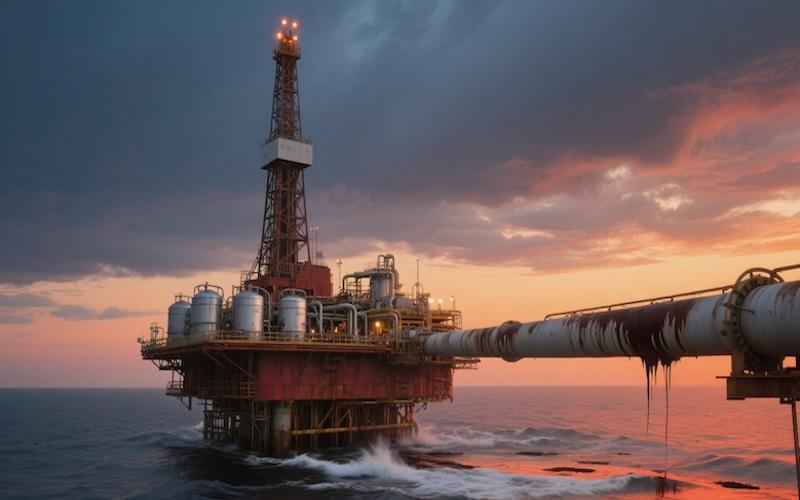
The IEA report clearly states that, affected by the US and Israeli military strikes against Iran, Iran has almost completely cut off shipping through the Strait of Hormuz since February 28. Coupled with attacks on Middle Eastern energy infrastructure, this has triggered the most severe oil supply disruption in history – with global daily oil supply losses reaching as high as 10.1 million barrels in March.
As the core passage for 20% of the world's oil shipping, the obstruction of the Strait of Hormuz directly triggered a surge in global natural gas and gasoline prices, and energy inflation pressures quickly spilled over.
In an effort to seize control of the Strait of Hormuz, Trump announced a complete blockade of Iranian ports on Sunday. This move, which followed the breakdown of the first round of talks between the US and Iran in Islamabad, further exacerbated uncertainty surrounding global energy security and hampered the supply stability of oil-dependent commodities.
However, the potential for a turnaround in the US-Iran negotiations has brought a slight easing to the supply side.
Reports indicate that the two sides are still in contact and discussing a second round of face-to-face negotiations, with Geneva, Switzerland, and Islamabad, Pakistan, being potential venues. The ceasefire period may also be extended.
Meanwhile, IEA Executive Director Fatih Birol revealed that the agency is assessing the situation and is prepared to release more oil reserves if necessary to stabilize market volatility.
The weaker-than-expected US PPI in March was primarily due to the weakening of the inflation transmission effect of rising energy prices by weak demand.
Although the Middle East conflict has driven up international oil prices in the short term, the weak global economic recovery and the precipitous drop in crude oil demand have significantly reduced the efficiency of energy cost transmission to the production end.
The moderate rise in core PPI further indicates that, after excluding energy fluctuations, inflationary pressures on the US production side have not intensified significantly, which forms a logical loop with the IEA report's judgment that "high oil prices have triggered demand destruction."
The market was initially worried that disruptions to crude oil supply would trigger a general rise in inflation, but actual data shows that weak demand has become a key variable in curbing excessive inflation.
In contrast to the severe shocks on the supply side, global crude oil demand is experiencing a precipitous decline.
The IEA's latest report has revised its 2026 global oil demand forecast down from an increase of 640,000 barrels per day to a contraction of 80,000 barrels per day, anticipating a fundamental reversal. The agency further estimates that global oil demand will decline by 1.5 million barrels per day in the second quarter of this year, marking the most severe single-quarter demand contraction since the COVID-19 pandemic.
The report states bluntly that "supply shortages and high oil prices continue to ferment, and the demand-damaging effect will spread globally," with the Middle East and Asia-Pacific regions being the most significantly impacted, and the consumption of naphtha, liquefied petroleum gas, and jet fuel among the categories experiencing the largest declines.
It is worth noting that while the Organization of the Petroleum Exporting Countries (OPEC) lowered its demand forecast for the second quarter, it maintained its full-year demand growth outlook, creating a clear divergence in expectations from the IEA.
Behind this divergence lies a difference in judgment regarding the sustainability of "demand destruction"—the IEA emphasizes the long-term impact of high oil prices and economic drag, while OPEC remains optimistic about the support of global economic recovery for demand.
However, judging from the US PPI data and oil price fluctuations, the reality of weak short-term demand has taken the lead, which has also caused the geopolitical premium in the crude oil market to continue to narrow.
The core contradiction in the current crude oil and inflation markets lies in the interplay between the "inflationary push from supply disruptions" and the "deflationary pull from weak demand." The IEA warns that if the Strait of Hormuz remains closed, the global energy market and economy will face months of systemic shock.
However, at the same time, the "demand destruction" effect has begun to suppress the upward momentum of oil prices, and the potential progress in the US-Iran negotiations has further reduced the probability of extreme geopolitical risks.
For inflation, this game directly leads to a decrease in the transmission efficiency of energy prices: although the disruption of crude oil supply caused a temporary rise in oil prices, weak demand and the filling of the gap by alternative supplies (such as the growth of Russian exports) made it difficult for oil prices to continue to soar, thus limiting the upside potential of inflation on the production side. This is the core logic behind the lower-than-expected US PPI in March.
Looking ahead, the resumption of navigation in the Strait of Hormuz, the progress of US-Iran negotiations, and the pace of IEA strategic reserve releases will be the three key variables affecting crude oil prices and inflation trends.
If a breakthrough is achieved in the negotiations and navigation in the strait resumes, the geopolitical premium for crude oil will fall rapidly, and inflationary pressures will be further alleviated.
If negotiations stall or the conflict escalates, oil prices may remain high and volatile, but weak demand will still limit its full transmission to inflation.
The divergence in expectations between OPEC and the IEA also indicates that volatility in the crude oil market will continue, and global inflation will exhibit moderate and differentiated characteristics amid this volatility—inflationary pressures will persist in energy-dependent economies, but an overall runaway surge is unlikely.
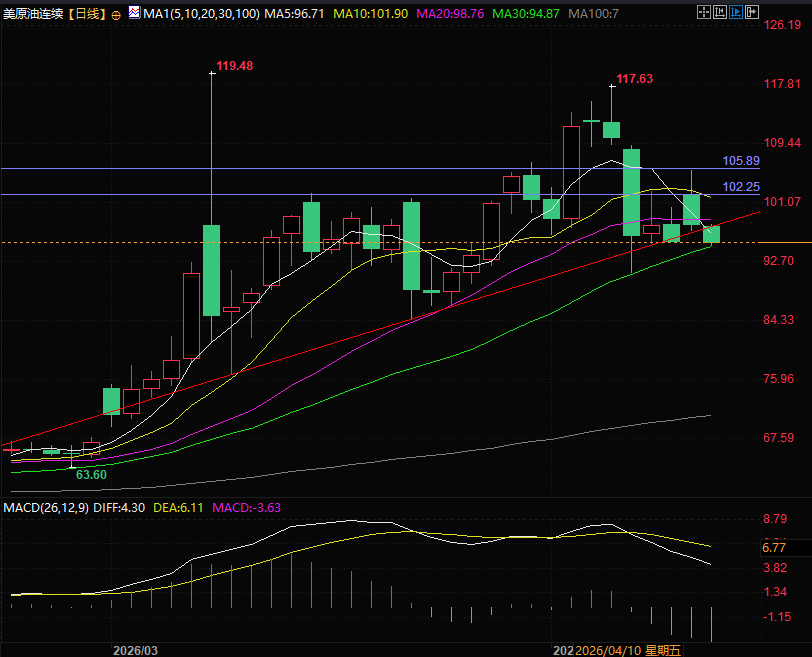
(WTI crude oil futures daily chart, source: EasyForex)
At 21:42 Beijing time, WTI crude oil futures contracts were trading at $95.30 per barrel.
The core sub-indices also fell short of expectations. Excluding food and energy, the core PPI rose 3.8% year-on-year, lower than the market's forecast of 4.2%.
This weak inflation data strongly echoes the oil market report released by the International Energy Agency (IEA) on the same day—the oil supply disruptions caused by geopolitical conflicts in the Middle East are being offset by the escalating "demand destruction" effect, and the global oil and inflation markets are caught in a delicate balance of supply and demand.
Crude oil supply: The Strait of Hormuz triggers an epic disruption
The IEA report clearly states that, affected by the US and Israeli military strikes against Iran, Iran has almost completely cut off shipping through the Strait of Hormuz since February 28. Coupled with attacks on Middle Eastern energy infrastructure, this has triggered the most severe oil supply disruption in history – with global daily oil supply losses reaching as high as 10.1 million barrels in March.
As the core passage for 20% of the world's oil shipping, the obstruction of the Strait of Hormuz directly triggered a surge in global natural gas and gasoline prices, and energy inflation pressures quickly spilled over.
In an effort to seize control of the Strait of Hormuz, Trump announced a complete blockade of Iranian ports on Sunday. This move, which followed the breakdown of the first round of talks between the US and Iran in Islamabad, further exacerbated uncertainty surrounding global energy security and hampered the supply stability of oil-dependent commodities.
However, the potential for a turnaround in the US-Iran negotiations has brought a slight easing to the supply side.
Reports indicate that the two sides are still in contact and discussing a second round of face-to-face negotiations, with Geneva, Switzerland, and Islamabad, Pakistan, being potential venues. The ceasefire period may also be extended.
Meanwhile, IEA Executive Director Fatih Birol revealed that the agency is assessing the situation and is prepared to release more oil reserves if necessary to stabilize market volatility.
Inflation data falls short of expectations: a direct reflection of obstructed energy price transmission.
The weaker-than-expected US PPI in March was primarily due to the weakening of the inflation transmission effect of rising energy prices by weak demand.
Although the Middle East conflict has driven up international oil prices in the short term, the weak global economic recovery and the precipitous drop in crude oil demand have significantly reduced the efficiency of energy cost transmission to the production end.
The moderate rise in core PPI further indicates that, after excluding energy fluctuations, inflationary pressures on the US production side have not intensified significantly, which forms a logical loop with the IEA report's judgment that "high oil prices have triggered demand destruction."
The market was initially worried that disruptions to crude oil supply would trigger a general rise in inflation, but actual data shows that weak demand has become a key variable in curbing excessive inflation.
On the demand side: "Disruptive effects" are emerging, with the IEA significantly lowering its forecasts.
In contrast to the severe shocks on the supply side, global crude oil demand is experiencing a precipitous decline.
The IEA's latest report has revised its 2026 global oil demand forecast down from an increase of 640,000 barrels per day to a contraction of 80,000 barrels per day, anticipating a fundamental reversal. The agency further estimates that global oil demand will decline by 1.5 million barrels per day in the second quarter of this year, marking the most severe single-quarter demand contraction since the COVID-19 pandemic.
The report states bluntly that "supply shortages and high oil prices continue to ferment, and the demand-damaging effect will spread globally," with the Middle East and Asia-Pacific regions being the most significantly impacted, and the consumption of naphtha, liquefied petroleum gas, and jet fuel among the categories experiencing the largest declines.
It is worth noting that while the Organization of the Petroleum Exporting Countries (OPEC) lowered its demand forecast for the second quarter, it maintained its full-year demand growth outlook, creating a clear divergence in expectations from the IEA.
Behind this divergence lies a difference in judgment regarding the sustainability of "demand destruction"—the IEA emphasizes the long-term impact of high oil prices and economic drag, while OPEC remains optimistic about the support of global economic recovery for demand.
However, judging from the US PPI data and oil price fluctuations, the reality of weak short-term demand has taken the lead, which has also caused the geopolitical premium in the crude oil market to continue to narrow.
Core Game: How will the crude oil market reshape the global inflation landscape?
The core contradiction in the current crude oil and inflation markets lies in the interplay between the "inflationary push from supply disruptions" and the "deflationary pull from weak demand." The IEA warns that if the Strait of Hormuz remains closed, the global energy market and economy will face months of systemic shock.
However, at the same time, the "demand destruction" effect has begun to suppress the upward momentum of oil prices, and the potential progress in the US-Iran negotiations has further reduced the probability of extreme geopolitical risks.
For inflation, this game directly leads to a decrease in the transmission efficiency of energy prices: although the disruption of crude oil supply caused a temporary rise in oil prices, weak demand and the filling of the gap by alternative supplies (such as the growth of Russian exports) made it difficult for oil prices to continue to soar, thus limiting the upside potential of inflation on the production side. This is the core logic behind the lower-than-expected US PPI in March.
Looking ahead, the resumption of navigation in the Strait of Hormuz, the progress of US-Iran negotiations, and the pace of IEA strategic reserve releases will be the three key variables affecting crude oil prices and inflation trends.
If a breakthrough is achieved in the negotiations and navigation in the strait resumes, the geopolitical premium for crude oil will fall rapidly, and inflationary pressures will be further alleviated.
If negotiations stall or the conflict escalates, oil prices may remain high and volatile, but weak demand will still limit its full transmission to inflation.
The divergence in expectations between OPEC and the IEA also indicates that volatility in the crude oil market will continue, and global inflation will exhibit moderate and differentiated characteristics amid this volatility—inflationary pressures will persist in energy-dependent economies, but an overall runaway surge is unlikely.
(WTI crude oil futures daily chart, source: EasyForex)
At 21:42 Beijing time, WTI crude oil futures contracts were trading at $95.30 per barrel.
- Risk Warning and Disclaimer
- The market involves risk, and trading may not be suitable for all investors. This article is for reference only and does not constitute personal investment advice, nor does it take into account certain users’ specific investment objectives, financial situation, or other needs. Any investment decisions made based on this information are at your own risk.