A dramatic reversal in the Strait of Hormuz in 24 hours: Iranian hardliners gain strong control, posing a severe test to Trump's peace agreement.
2026-04-20 09:24:51
In the Strait of Hormuz, a vital global energy artery, a dramatic policy reversal is profoundly exposing the complexity of Iran's internal power structure. Seemingly goodwill signals from the diplomatic front were quickly overturned by hardline military forces, highlighting not only the deep rift between the Iranian leadership and the Islamic Revolutionary Guard Corps, but also casting a shadow of uncertainty over the ongoing ceasefire negotiations. The entire incident occurred just as the US-Iran ceasefire agreement was about to expire, sparking widespread international concern about regional stability and energy security.
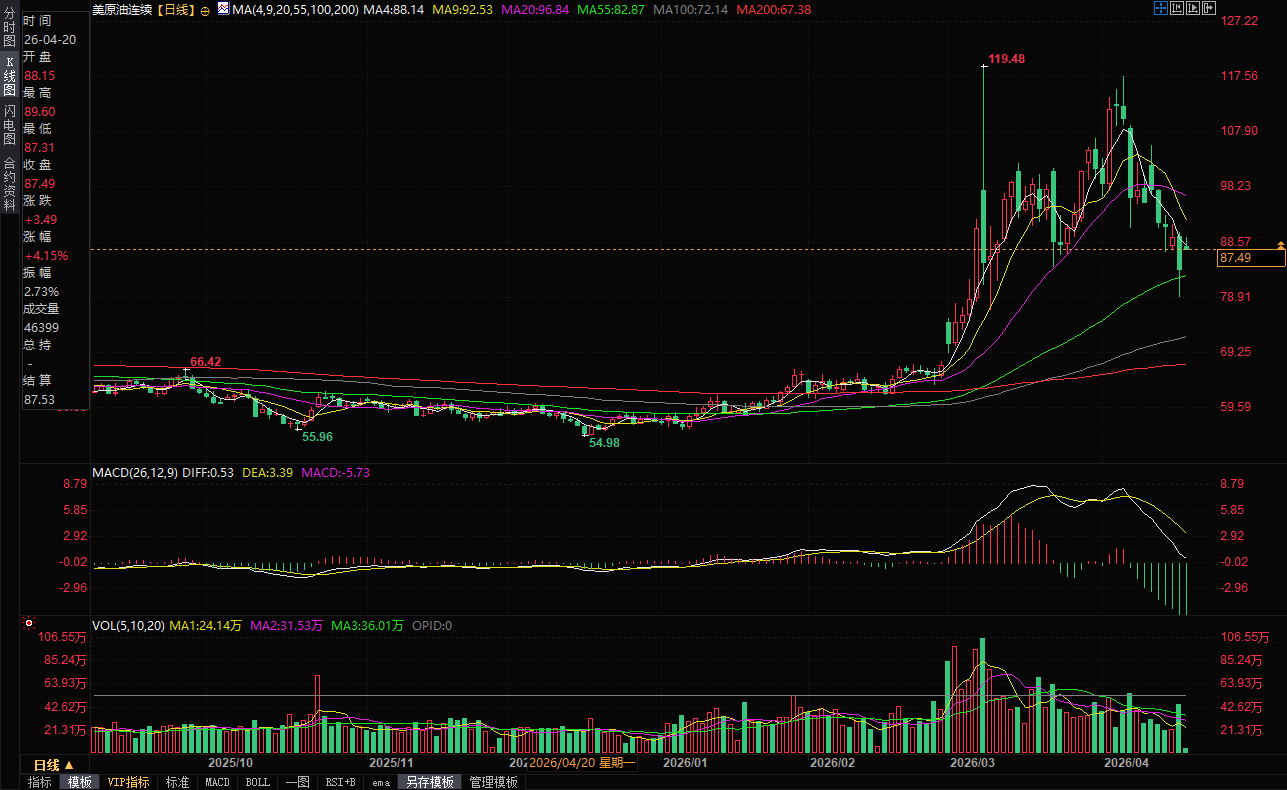
The incident began last Friday (April 17th) when Iranian Foreign Minister Abbas Araqchi publicly announced on his social media account that the Strait of Hormuz was "fully open" under the framework of the ceasefire in Lebanon, allowing merchant ships to pass through according to coordinated routes. This statement immediately had a significant impact on the international market, with oil prices falling sharply. US crude oil fell as much as 13% to $78.97 per barrel on Friday, a new low since March 10th, before closing at $84.00 per barrel, a weekly drop of 12%. US President Trump also quickly responded positively on social media, saying that this move brought positive progress to the negotiations.
Araghchi, a relatively pragmatic figure in Iran's diplomatic team, issued a statement that was interpreted by outsiders as an attempt to signal compromise before the ceasefire agreement expired. Those familiar with the negotiation process pointed out that this move was intended to respond to US concessions on issues such as the ceasefire in Lebanon, indicating that Iran had some interest in reaching an agreement. However, this diplomatic gesture failed to gain the approval of hardliners within the country and instead quickly triggered a strong backlash.
That same evening, the Islamic Revolutionary Guard Corps (IRGC) issued a stern warning to merchant ships in the Gulf via maritime radio, explicitly stating that the strait remained closed and any unauthorized passage would be considered a target of attack. Recordings indicated that the broadcast even mentioned the decision stemmed from an order from the Supreme Leader, not "a tweet." Media outlets affiliated with the IRGC immediately criticized Araghchi's communication style, while hardline lawmakers called for accountability, arguing that the statement was tantamount to handing a "gift" to the United States and directly contributed to the drop in oil prices.
The following day (April 18), Iran's Joint Military Command officially announced the restoration of strict control over the Strait of Hormuz. A report from the UK's Maritime Trade Operations Office indicated that several merchant ships encountered Revolutionary Guard gunboats near the coast of Oman and were opened fire. Although no casualties were reported, incidents such as damage to container ships and splashes of water were enough to force vessels attempting to pass to turn back.
The Revolutionary Guard Navy further warned shippers via radio that any unauthorized crossing of the strait would face a "severe response and destruction." A recording shared by a shipowner confirmed that his captain was strictly adhering to this instruction. Analysts point out that this move by the Revolutionary Guard not only publicly contradicts the Ministry of Foreign Affairs' statement but also reflects its substantial constraint on government decision-making during wartime.
A senior advisor to the Revolutionary Guard in Tehran revealed that the unit was strongly dissatisfied with Araghchi's announcement without prior coordination. Some observers believe that the Revolutionary Guard still hopes to seek compensation for losses incurred in the war through military means and firmly believes that it holds a certain advantage on the battlefield. This open disagreement indicates that, on the issue of control of key waterways, military hardliners have demonstrated actual influence that surpasses that of the diplomatic department.
Furthermore, the United States announced on Sunday (April 19) that it had seized an Iranian cargo ship attempting to breach its blockade; Iran responded by threatening retaliation. This makes it unlikely that the ceasefire between the two countries will last until the original deadline.
As a result, international oil prices opened sharply higher on Monday, with US crude oil rising more than 8% to $89.60 per barrel at one point. It is currently trading around $87.52 per barrel, up about 6% from last Friday's settlement price.
This incident is not an isolated event, but rather the latest manifestation of long-standing tensions within the Iranian leadership. Experts point out that the West traditionally believes Iran possesses a clear chain of command, meaning that decisions are made after negotiations by the Ministry of Foreign Affairs. However, in reality, in critical moments, military forces with firearms, drones, and speedboats often gain the upper hand.
Iranian affairs expert Mohammad Amsi analyzed that this structure makes diplomatic efforts vulnerable to being overturned by military action at crucial moments. Trita Parsi, executive vice president of the Quincy Institute for Governance, a Washington think tank, also warned that the growing resistance from hardliners to reaching an agreement with the United States poses a significant challenge to Iran's political system.
Meanwhile, Ali Vaez, director of the Iran project at the International Crisis Group, pointed out that the opposition also stemmed in part from the inconsistent stance within the United States—while Trump welcomed the opening of the Straits, he simultaneously announced that the blockade of Iranian ports would continue. This external factor further amplified the difficulties in coordinating within Iran.
Similar scenarios emerged early in the war. Iranian President Masoud Pezechyan apologized for attacks on neighboring Gulf states and promised to scale back, but this was immediately met with public condemnation from hardliners, and the commander of the Islamic Revolutionary Guard Corps denied the decision; the attacks continued. This series of events collectively reveals the consistent challenges facing Iran's decision-making system during wartime.
The underlying reason lies in the changes in Iran's leadership. Following the death of Supreme Leader Ali Khamenei in a war-related attack, his son Mojtaba Khamenei was appointed as his successor in early March, but has yet to make a public appearance. Under the decentralized system known as "Mosaic Defense," commanders have considerable autonomy, and the passing of the elder Khamenei further weakens the system's unity.
Saeed Gorka, an Iranian security expert at the University of Tennessee's Chattanooga campus, points out that infighting between different factions has begun to emerge due to the absence of a primary arbitrator. Sources familiar with the matter reveal that, following casualties among some members of the command structure, including the Supreme Leader, the Iranian leadership has sometimes struggled to maintain smooth internal communication, directly impacting the coordination of foreign policy.
The Strait of Hormuz, a crucial passage for approximately 20% of global oil and liquefied natural gas transport, is subject to frequent changes in control, directly impacting the international energy market. This incident not only adds uncertainty to the ceasefire negotiations but also highlights substantial obstacles facing Trump's efforts to achieve a definitive victory through concessions. While mediators indicated that both sides demonstrated some flexibility in the negotiations, the dominance of hardliners may limit the scope for compromise.
Overall, this dramatic policy shift within 24 hours is a microcosm of the power struggle between pragmatic diplomats and hardliners in Iran, and it also reflects the multiple constraints that any peace effort faces in a complex geopolitical environment. Whether future negotiations can break through depends on whether the parties can effectively bridge internal rifts and coordinate external positions, while the stability of the Strait of Hormuz will continue to be a key indicator of the regional peace process.
At 09:23 Beijing time, US crude oil is currently trading at $87.54 per barrel.
Brief flashes and rapid reversals of diplomatic goodwill signals
The incident began last Friday (April 17th) when Iranian Foreign Minister Abbas Araqchi publicly announced on his social media account that the Strait of Hormuz was "fully open" under the framework of the ceasefire in Lebanon, allowing merchant ships to pass through according to coordinated routes. This statement immediately had a significant impact on the international market, with oil prices falling sharply. US crude oil fell as much as 13% to $78.97 per barrel on Friday, a new low since March 10th, before closing at $84.00 per barrel, a weekly drop of 12%. US President Trump also quickly responded positively on social media, saying that this move brought positive progress to the negotiations.
Araghchi, a relatively pragmatic figure in Iran's diplomatic team, issued a statement that was interpreted by outsiders as an attempt to signal compromise before the ceasefire agreement expired. Those familiar with the negotiation process pointed out that this move was intended to respond to US concessions on issues such as the ceasefire in Lebanon, indicating that Iran had some interest in reaching an agreement. However, this diplomatic gesture failed to gain the approval of hardliners within the country and instead quickly triggered a strong backlash.
That same evening, the Islamic Revolutionary Guard Corps (IRGC) issued a stern warning to merchant ships in the Gulf via maritime radio, explicitly stating that the strait remained closed and any unauthorized passage would be considered a target of attack. Recordings indicated that the broadcast even mentioned the decision stemmed from an order from the Supreme Leader, not "a tweet." Media outlets affiliated with the IRGC immediately criticized Araghchi's communication style, while hardline lawmakers called for accountability, arguing that the statement was tantamount to handing a "gift" to the United States and directly contributed to the drop in oil prices.
The Islamic Revolutionary Guard Corps' operations highlight its military control.
The following day (April 18), Iran's Joint Military Command officially announced the restoration of strict control over the Strait of Hormuz. A report from the UK's Maritime Trade Operations Office indicated that several merchant ships encountered Revolutionary Guard gunboats near the coast of Oman and were opened fire. Although no casualties were reported, incidents such as damage to container ships and splashes of water were enough to force vessels attempting to pass to turn back.
The Revolutionary Guard Navy further warned shippers via radio that any unauthorized crossing of the strait would face a "severe response and destruction." A recording shared by a shipowner confirmed that his captain was strictly adhering to this instruction. Analysts point out that this move by the Revolutionary Guard not only publicly contradicts the Ministry of Foreign Affairs' statement but also reflects its substantial constraint on government decision-making during wartime.
A senior advisor to the Revolutionary Guard in Tehran revealed that the unit was strongly dissatisfied with Araghchi's announcement without prior coordination. Some observers believe that the Revolutionary Guard still hopes to seek compensation for losses incurred in the war through military means and firmly believes that it holds a certain advantage on the battlefield. This open disagreement indicates that, on the issue of control of key waterways, military hardliners have demonstrated actual influence that surpasses that of the diplomatic department.
Furthermore, the United States announced on Sunday (April 19) that it had seized an Iranian cargo ship attempting to breach its blockade; Iran responded by threatening retaliation. This makes it unlikely that the ceasefire between the two countries will last until the original deadline.
As a result, international oil prices opened sharply higher on Monday, with US crude oil rising more than 8% to $89.60 per barrel at one point. It is currently trading around $87.52 per barrel, up about 6% from last Friday's settlement price.
Internal power rifts and external negotiation dilemmas
This incident is not an isolated event, but rather the latest manifestation of long-standing tensions within the Iranian leadership. Experts point out that the West traditionally believes Iran possesses a clear chain of command, meaning that decisions are made after negotiations by the Ministry of Foreign Affairs. However, in reality, in critical moments, military forces with firearms, drones, and speedboats often gain the upper hand.
Iranian affairs expert Mohammad Amsi analyzed that this structure makes diplomatic efforts vulnerable to being overturned by military action at crucial moments. Trita Parsi, executive vice president of the Quincy Institute for Governance, a Washington think tank, also warned that the growing resistance from hardliners to reaching an agreement with the United States poses a significant challenge to Iran's political system.
Meanwhile, Ali Vaez, director of the Iran project at the International Crisis Group, pointed out that the opposition also stemmed in part from the inconsistent stance within the United States—while Trump welcomed the opening of the Straits, he simultaneously announced that the blockade of Iranian ports would continue. This external factor further amplified the difficulties in coordinating within Iran.
Similar scenarios emerged early in the war. Iranian President Masoud Pezechyan apologized for attacks on neighboring Gulf states and promised to scale back, but this was immediately met with public condemnation from hardliners, and the commander of the Islamic Revolutionary Guard Corps denied the decision; the attacks continued. This series of events collectively reveals the consistent challenges facing Iran's decision-making system during wartime.
Decentralized command system after the change of supreme leader
The underlying reason lies in the changes in Iran's leadership. Following the death of Supreme Leader Ali Khamenei in a war-related attack, his son Mojtaba Khamenei was appointed as his successor in early March, but has yet to make a public appearance. Under the decentralized system known as "Mosaic Defense," commanders have considerable autonomy, and the passing of the elder Khamenei further weakens the system's unity.
Saeed Gorka, an Iranian security expert at the University of Tennessee's Chattanooga campus, points out that infighting between different factions has begun to emerge due to the absence of a primary arbitrator. Sources familiar with the matter reveal that, following casualties among some members of the command structure, including the Supreme Leader, the Iranian leadership has sometimes struggled to maintain smooth internal communication, directly impacting the coordination of foreign policy.
Profound Impact of the Event and Future Trends
The Strait of Hormuz, a crucial passage for approximately 20% of global oil and liquefied natural gas transport, is subject to frequent changes in control, directly impacting the international energy market. This incident not only adds uncertainty to the ceasefire negotiations but also highlights substantial obstacles facing Trump's efforts to achieve a definitive victory through concessions. While mediators indicated that both sides demonstrated some flexibility in the negotiations, the dominance of hardliners may limit the scope for compromise.
Overall, this dramatic policy shift within 24 hours is a microcosm of the power struggle between pragmatic diplomats and hardliners in Iran, and it also reflects the multiple constraints that any peace effort faces in a complex geopolitical environment. Whether future negotiations can break through depends on whether the parties can effectively bridge internal rifts and coordinate external positions, while the stability of the Strait of Hormuz will continue to be a key indicator of the regional peace process.
At 09:23 Beijing time, US crude oil is currently trading at $87.54 per barrel.
- Risk Warning and Disclaimer
- The market involves risk, and trading may not be suitable for all investors. This article is for reference only and does not constitute personal investment advice, nor does it take into account certain users’ specific investment objectives, financial situation, or other needs. Any investment decisions made based on this information are at your own risk.