Improved UK employment data coupled with pressure on the yen caused the pound/yen exchange rate to fluctuate at high levels, encountering resistance at the 215 level.
2026-04-21 15:08:52
On Tuesday during the European session, the British pound against the Japanese yen (GBP/JPY) continued its consolidation trend, trading below the 215.00 level with limited overall volatility. Despite rebounding from its lows in the previous session, the upward momentum failed to continue, indicating a clear wait-and-see attitude in the market.

From a fundamental perspective, the latest UK employment data presented a mixed picture. The data showed that the unemployment rate fell to 4.9% , lower than the previous figure and market expectations, reflecting the continued resilience of the job market. Meanwhile, while wage data was slightly higher than expected, it showed an overall slowdown, with wage growth, including bonuses, falling to 3.8% , the lowest level in nearly five years. This indicates that although employment is stable, income growth momentum is weakening.
Furthermore, the number of people applying for unemployment benefits rose to 26,800 , higher than the previous figure and expectations, indicating that the labor market still faces some pressure. Overall, the employment data did not significantly change the market's judgment on the Bank of England's policy path, and the market still expects some room for future interest rate hikes, which provides support for the pound.
In contrast, the yen remains weak. Uncertainty surrounding energy supplies due to the situation in the Middle East is putting pressure on Japan, an energy-dependent economy, thus diminishing the yen's attractiveness. Meanwhile, expectations that the Bank of Japan will maintain its interest rates in the short term leave the yen lacking policy support.
However, the downside potential of the yen is also limited. On the one hand, the Bank of Japan has signaled the possibility of future interest rate hikes, especially given rising imported inflationary pressures; on the other hand, Japanese authorities remain highly vigilant about exchange rate fluctuations, and the market generally believes that a rapid depreciation of the yen could trigger intervention. This expectation has curbed excessive short-selling of the yen, thus limiting the upside potential of the pound against the yen.
From an overall perspective, the GBP/JPY pair is currently in a high range due to the combined effects of a relatively strong pound and temporary pressure on the yen, but the bullish momentum has weakened.
From a technical perspective, the daily chart shows the exchange rate maintaining an upward trend, but the pace of the rise has clearly slowed. The area around 215.50 forms short-term resistance , and multiple tests have failed to break through effectively, indicating strong selling pressure above. On the downside, 214.20 is the initial support level ; a break below this level could lead to further declines to the 213.00 or even 211.50 area . In terms of momentum indicators, the MACD has retreated from its high level, indicating weakening bullish momentum.
From a 4-hour chart perspective, the short-term trend shows a sideways consolidation structure, with prices fluctuating repeatedly within the 214-216 range. The moving average system is gradually flattening, indicating insufficient trend momentum. The RSI remains in the neutral zone, without obvious overbought or oversold signals, suggesting that the price will likely continue to trade within this range in the short term. A break above 215.50 could lead to further upward movement; a break below 214.20 could trigger a pullback.
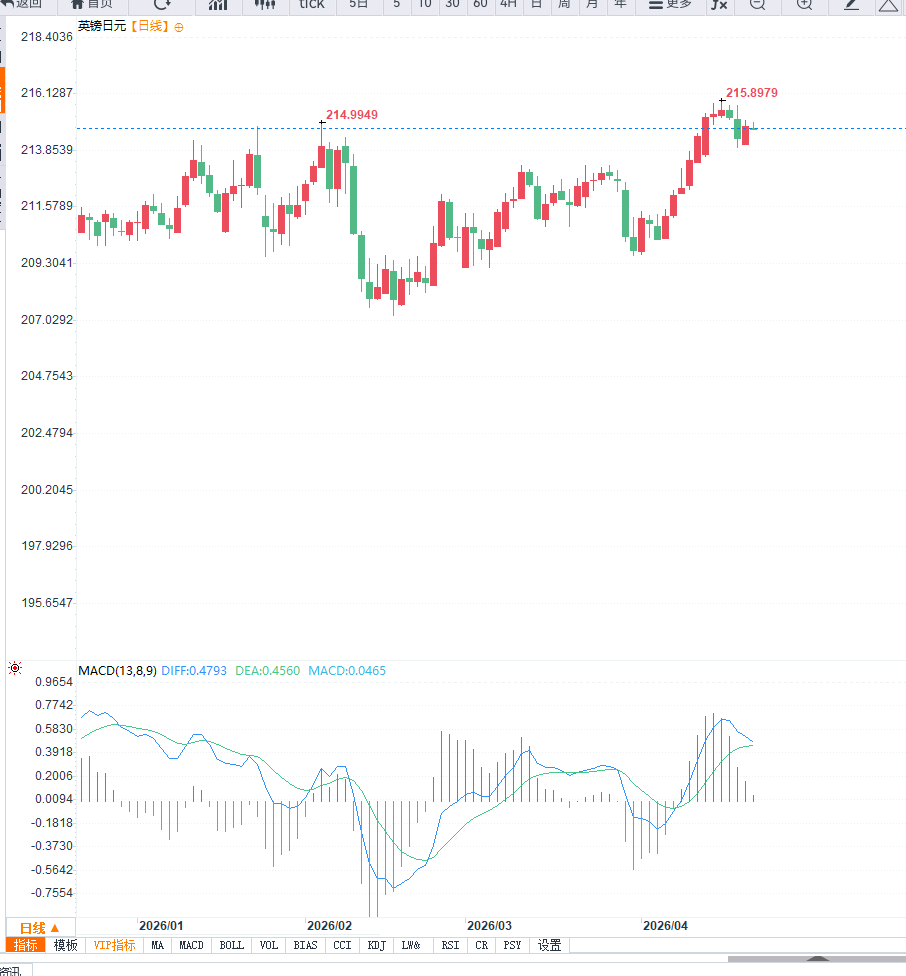
Overall, the pound/yen pair is currently consolidating at high levels, with the market lacking a clear direction and awaiting new fundamental catalysts.
Editor's Summary:
The British pound is expected to remain range-bound against the Japanese yen in the short term. While UK employment data provides some support, slowing wage growth limits upside potential. The yen is weak due to fundamental factors, but policy expectations and intervention risks are constraining its performance. Overall, the interplay of bullish and bearish factors has led to a consolidation phase in the exchange rate. Future movements will depend on macroeconomic data and geopolitical developments. Investors should pay close attention to the performance of the 215 level and the 214 support level to determine the subsequent direction.
From a fundamental perspective, the latest UK employment data presented a mixed picture. The data showed that the unemployment rate fell to 4.9% , lower than the previous figure and market expectations, reflecting the continued resilience of the job market. Meanwhile, while wage data was slightly higher than expected, it showed an overall slowdown, with wage growth, including bonuses, falling to 3.8% , the lowest level in nearly five years. This indicates that although employment is stable, income growth momentum is weakening.
Furthermore, the number of people applying for unemployment benefits rose to 26,800 , higher than the previous figure and expectations, indicating that the labor market still faces some pressure. Overall, the employment data did not significantly change the market's judgment on the Bank of England's policy path, and the market still expects some room for future interest rate hikes, which provides support for the pound.
In contrast, the yen remains weak. Uncertainty surrounding energy supplies due to the situation in the Middle East is putting pressure on Japan, an energy-dependent economy, thus diminishing the yen's attractiveness. Meanwhile, expectations that the Bank of Japan will maintain its interest rates in the short term leave the yen lacking policy support.
However, the downside potential of the yen is also limited. On the one hand, the Bank of Japan has signaled the possibility of future interest rate hikes, especially given rising imported inflationary pressures; on the other hand, Japanese authorities remain highly vigilant about exchange rate fluctuations, and the market generally believes that a rapid depreciation of the yen could trigger intervention. This expectation has curbed excessive short-selling of the yen, thus limiting the upside potential of the pound against the yen.
From an overall perspective, the GBP/JPY pair is currently in a high range due to the combined effects of a relatively strong pound and temporary pressure on the yen, but the bullish momentum has weakened.
From a technical perspective, the daily chart shows the exchange rate maintaining an upward trend, but the pace of the rise has clearly slowed. The area around 215.50 forms short-term resistance , and multiple tests have failed to break through effectively, indicating strong selling pressure above. On the downside, 214.20 is the initial support level ; a break below this level could lead to further declines to the 213.00 or even 211.50 area . In terms of momentum indicators, the MACD has retreated from its high level, indicating weakening bullish momentum.
From a 4-hour chart perspective, the short-term trend shows a sideways consolidation structure, with prices fluctuating repeatedly within the 214-216 range. The moving average system is gradually flattening, indicating insufficient trend momentum. The RSI remains in the neutral zone, without obvious overbought or oversold signals, suggesting that the price will likely continue to trade within this range in the short term. A break above 215.50 could lead to further upward movement; a break below 214.20 could trigger a pullback.
Overall, the pound/yen pair is currently consolidating at high levels, with the market lacking a clear direction and awaiting new fundamental catalysts.
Editor's Summary:
The British pound is expected to remain range-bound against the Japanese yen in the short term. While UK employment data provides some support, slowing wage growth limits upside potential. The yen is weak due to fundamental factors, but policy expectations and intervention risks are constraining its performance. Overall, the interplay of bullish and bearish factors has led to a consolidation phase in the exchange rate. Future movements will depend on macroeconomic data and geopolitical developments. Investors should pay close attention to the performance of the 215 level and the 214 support level to determine the subsequent direction.
- Risk Warning and Disclaimer
- The market involves risk, and trading may not be suitable for all investors. This article is for reference only and does not constitute personal investment advice, nor does it take into account certain users’ specific investment objectives, financial situation, or other needs. Any investment decisions made based on this information are at your own risk.