Extending the ceasefire ≠ lifting the blockade! Will oil prices withstand pressure and rally again?
2026-04-22 18:05:51
On Wednesday (April 22) during the Asian session, international oil prices rebounded after hitting a low, holding onto most of yesterday's gains. Brent crude rose 0.82% to trade around 94.00. Although Trump announced an extension of the ceasefire agreement on Wednesday morning without attaching a time limit, the situation remains unclear as the United States continues to blockade Iranian cruise ships in the Strait of Hormuz .
Iran launched a fire attack on two merchant ships in the Strait of Hormuz, a vital global energy artery, on Wednesday, escalating the standoff between the US and Iran to a new high and further stalling the already difficult ceasefire negotiations in Islamabad.
This morning raid, led by the Iranian Revolutionary Guard, saw the first container ship attacked without warning at 7:55 a.m. Although no casualties were reported, it, along with a second attack on a merchant ship several hours later, significantly increased the navigational risks along this critical waterway, causing the geopolitical risk premium to rise rapidly.
Iranian Foreign Ministry spokesman Bagaei said that Iran has not yet decided whether to participate in a new round of negotiations with the United States.
In a media interview, Bagae stated that Iran participated in the first round of negotiations with the United States with sincerity and a serious attitude, but the US showed a lukewarm attitude and lacked sincerity, and its position was inconsistent.
He stated that Iran has made it clear that it will participate in the negotiations in Islamabad, Pakistan, if it is in its national interest, but no decision has been made yet.
Bagaé stated that the US blockade of Iranian ports was an act of aggression, and that shooting at and seizing Iranian merchant ships was not the behavior expected of a country truly committed to a serious diplomatic process.
This conflict is not an isolated incident, but a direct escalation of the recent maritime confrontation between the US and Iran.
Last weekend, the United States seized an Iranian container ship in the Indian Ocean and intercepted oil tankers involved in Iranian oil trade, actions that became a major trigger for Iranian retaliation.
The two sides have conflicting accounts: the UK Maritime Trade Operations Centre (UKMTO) confirmed that the Revolutionary Guard opened fire without warning, while Iranian state media claimed that the cargo ship ignored multiple warnings and defined the attack as a "legitimate exercise of control over the Straits." This information game has further amplified market uncertainty.
Meanwhile, diplomatic negotiations between the US and Iran have stalled.
Although US President Trump previously extended the ceasefire agreement without attaching a time limit, leaving a window for Iran to submit a "unified negotiation plan," the core differences between the two sides have not yet been bridged.
The United States insists on maintaining the blockade of Iranian ports as a bargaining chip; Iran, on the other hand, strongly opposes this "unacceptable" move and lists it as a key reason for refusing to participate in the meeting.
The first round of negotiations in Islamabad on April 11-12 ended without results on issues such as nuclear enrichment programs, regional proxy issues, and control of the Strait of Hormuz. Although Pakistan has continued to mediate and released optimistic signals, Iran has not yet made a clear commitment to participate, and the "diplomatic window" called for by UN Secretary-General Guterres is at risk of shrinking.
Iran's hardline stance further highlights the risk of escalating conflict.
The day before the attack, the Revolutionary Guard publicly deployed missiles and launch systems for the first time during a ceasefire, and nationwide demonstrations highlighted a hardline stance against the US and Israel.
The Revolutionary Guard subsequently issued a strongly worded statement, vowing to "carry out unimaginable devastation on the enemy's remaining assets in the region," while the United States reiterated its determination to blockade, making the military standoff between the two sides increasingly clear.
The multi-point spread of regional conflicts has further complicated the situation.
The conflict between Lebanon and Israel, which broke out two days after the US-Israel war against Iraq, continues to escalate. On Wednesday, an Israeli drone strike on the Lebanese village of Jabur killed one person and injured two others. Although the Israeli military denied the attack, the repeated similar clashes since the ceasefire agreement took effect indicate that the situation in the Middle East has taken a dangerous turn, characterized by a "main line of confrontation plus the spread of conflict along secondary lines."
According to statistics, since the outbreak of the war, the cumulative number of casualties in Iran, Lebanon, Israel and the Gulf countries has exceeded 5,700, and the humanitarian crisis and geopolitical risks have expanded simultaneously.
The "double blockade" by Iran and the United States has further exacerbated supply disruptions. Data from the International Energy Agency (IEA) shows that global oil supply plummeted by 10.1 million barrels per day in March, with cumulative supply losses exceeding 360 million barrels.
The ongoing geopolitical conflict, uncertainties in cross-strait shipping, and the potential risk of a breakdown in negotiations will continue to provide strong support for oil prices, while the global energy supply chain and financial markets will continue to face pressure from the turmoil in the Middle East.
However, both sides are still exerting pressure on each other to increase their bargaining power. The geopolitical maneuvering ultimately serves to pave the way for negotiations. But oil prices, constrained by physical shortages and the passive depletion of global inventories, still have room for a rebound. The market is currently awaiting further developments in the narrative from the US regarding a unified negotiating stance within Iran.
As mentioned in previous articles, oil prices have significant technical support at 90 with high trading volume, while the current resistance levels are at 94 and 96.
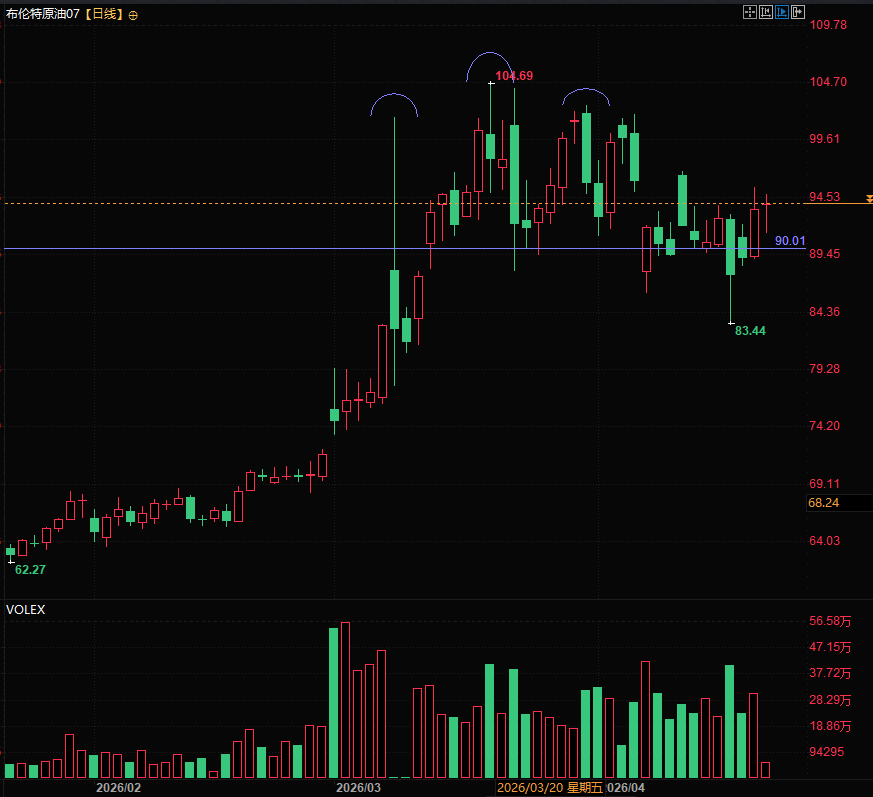
(Brent crude oil July contract daily chart, source: EasyForex)
At 18:02 Beijing time, the Brent crude oil July contract was trading at $94.12 per barrel.
Iran launched a fire attack on two merchant ships in the Strait of Hormuz, a vital global energy artery, on Wednesday, escalating the standoff between the US and Iran to a new high and further stalling the already difficult ceasefire negotiations in Islamabad.
This morning raid, led by the Iranian Revolutionary Guard, saw the first container ship attacked without warning at 7:55 a.m. Although no casualties were reported, it, along with a second attack on a merchant ship several hours later, significantly increased the navigational risks along this critical waterway, causing the geopolitical risk premium to rise rapidly.
Iranian Foreign Ministry spokesman Bagaei said that Iran has not yet decided whether to participate in a new round of negotiations with the United States.
In a media interview, Bagae stated that Iran participated in the first round of negotiations with the United States with sincerity and a serious attitude, but the US showed a lukewarm attitude and lacked sincerity, and its position was inconsistent.
He stated that Iran has made it clear that it will participate in the negotiations in Islamabad, Pakistan, if it is in its national interest, but no decision has been made yet.
Bagaé stated that the US blockade of Iranian ports was an act of aggression, and that shooting at and seizing Iranian merchant ships was not the behavior expected of a country truly committed to a serious diplomatic process.
Conflicting Accounts: The Trigger of Conflict and Information Game
This conflict is not an isolated incident, but a direct escalation of the recent maritime confrontation between the US and Iran.
Last weekend, the United States seized an Iranian container ship in the Indian Ocean and intercepted oil tankers involved in Iranian oil trade, actions that became a major trigger for Iranian retaliation.
The two sides have conflicting accounts: the UK Maritime Trade Operations Centre (UKMTO) confirmed that the Revolutionary Guard opened fire without warning, while Iranian state media claimed that the cargo ship ignored multiple warnings and defined the attack as a "legitimate exercise of control over the Straits." This information game has further amplified market uncertainty.
Negotiation deadlock remains unbroken: core differences and diplomatic mediation
Meanwhile, diplomatic negotiations between the US and Iran have stalled.
Although US President Trump previously extended the ceasefire agreement without attaching a time limit, leaving a window for Iran to submit a "unified negotiation plan," the core differences between the two sides have not yet been bridged.
The United States insists on maintaining the blockade of Iranian ports as a bargaining chip; Iran, on the other hand, strongly opposes this "unacceptable" move and lists it as a key reason for refusing to participate in the meeting.
The first round of negotiations in Islamabad on April 11-12 ended without results on issues such as nuclear enrichment programs, regional proxy issues, and control of the Strait of Hormuz. Although Pakistan has continued to mediate and released optimistic signals, Iran has not yet made a clear commitment to participate, and the "diplomatic window" called for by UN Secretary-General Guterres is at risk of shrinking.
Intensified Standoff: Military Deterrence and Stance Declaration
Iran's hardline stance further highlights the risk of escalating conflict.
The day before the attack, the Revolutionary Guard publicly deployed missiles and launch systems for the first time during a ceasefire, and nationwide demonstrations highlighted a hardline stance against the US and Israel.
The Revolutionary Guard subsequently issued a strongly worded statement, vowing to "carry out unimaginable devastation on the enemy's remaining assets in the region," while the United States reiterated its determination to blockade, making the military standoff between the two sides increasingly clear.
Regional tensions escalate: The Lebanon-Israel conflict further complicates the Middle East situation.
The multi-point spread of regional conflicts has further complicated the situation.
The conflict between Lebanon and Israel, which broke out two days after the US-Israel war against Iraq, continues to escalate. On Wednesday, an Israeli drone strike on the Lebanese village of Jabur killed one person and injured two others. Although the Israeli military denied the attack, the repeated similar clashes since the ceasefire agreement took effect indicate that the situation in the Middle East has taken a dangerous turn, characterized by a "main line of confrontation plus the spread of conflict along secondary lines."
According to statistics, since the outbreak of the war, the cumulative number of casualties in Iran, Lebanon, Israel and the Gulf countries has exceeded 5,700, and the humanitarian crisis and geopolitical risks have expanded simultaneously.
Summary and Technical Analysis:
The "double blockade" by Iran and the United States has further exacerbated supply disruptions. Data from the International Energy Agency (IEA) shows that global oil supply plummeted by 10.1 million barrels per day in March, with cumulative supply losses exceeding 360 million barrels.
The ongoing geopolitical conflict, uncertainties in cross-strait shipping, and the potential risk of a breakdown in negotiations will continue to provide strong support for oil prices, while the global energy supply chain and financial markets will continue to face pressure from the turmoil in the Middle East.
However, both sides are still exerting pressure on each other to increase their bargaining power. The geopolitical maneuvering ultimately serves to pave the way for negotiations. But oil prices, constrained by physical shortages and the passive depletion of global inventories, still have room for a rebound. The market is currently awaiting further developments in the narrative from the US regarding a unified negotiating stance within Iran.
As mentioned in previous articles, oil prices have significant technical support at 90 with high trading volume, while the current resistance levels are at 94 and 96.
(Brent crude oil July contract daily chart, source: EasyForex)
At 18:02 Beijing time, the Brent crude oil July contract was trading at $94.12 per barrel.
- Risk Warning and Disclaimer
- The market involves risk, and trading may not be suitable for all investors. This article is for reference only and does not constitute personal investment advice, nor does it take into account certain users’ specific investment objectives, financial situation, or other needs. Any investment decisions made based on this information are at your own risk.