Easing geopolitical tensions cannot mask the ongoing blockade; the tug-of-war between bulls and bears in the gold market intensifies once again.
2026-04-22 19:59:28
On Wednesday, April 22, the spot gold market traded amid complex geopolitical signals. US President Trump announced an indefinite extension of the ceasefire agreement with Iran, easing some concerns about military escalation. However, the Strait of Hormuz remains effectively closed, and attacks on two ships indicate the struggle for maritime control continues. Against this backdrop, spot gold rose 0.7% to $4,752.58 per ounce; June gold futures rose 1.2% to $4,774.60. Meanwhile, crude oil prices hovered around $100 per barrel, with the risk of energy supply disruptions remaining prominent.
Traders observed that the recent gold price rebound coincided with a recovery in other risk assets, indicating a marginal easing of liquidation pressures. WisdomTree commodity strategist Nitesh Shah pointed out that gold appears to be rebounding in tandem with most risk assets; gold faces liquidation when other assets are under pressure, but gains upward potential once that pressure eases.
Trump announced an indefinite extension of the ceasefire, temporarily shelving the threat of resuming military action, but simultaneously made it clear that the US naval blockade of Iranian maritime trade would continue. Iran has made it clear that dialogue will only begin after the blockade is lifted, and US Vice President Vance's cancellation of his trip to Pakistan for negotiations further highlights the uncertainty of the peace process. The attacks on two ships near the Strait of Hormuz occurred within hours of the ceasefire announcement, indicating that the aerial ceasefire has not extended to the maritime domain, and the struggle for control continues.
Traders are watching the impact of this "paused but unresolved" situation on gold pricing. In the short term, the decreased risk of escalating military conflict has boosted risk appetite, causing gold prices to rise in tandem with other assets such as stocks; however, the continued blockade and shipping safety incidents have maintained concerns about supply chain disruptions, preserving a safe-haven premium for gold. The UK's hosting of a military planning meeting with over 30 countries to discuss reopening the Channel indicates that international coordination efforts have begun, but short-term results are uncertain. Traders are monitoring actual navigation data across the Channel and subsequent diplomatic developments to determine whether safe-haven demand will persist.
The Strait of Hormuz, a vital global oil shipping route, is effectively closed, directly restricting supply and keeping crude oil prices high. Rising energy costs could push up global inflation expectations, and gold, as a traditional inflation hedge, should benefit from this. However, if high energy prices exacerbate the pressure on central banks to tighten monetary policy, it will suppress gold prices by increasing the opportunity cost of holding it.
With oil prices currently hovering around $100 per barrel, traders are focusing on changes in its correlation with gold. Historically, during energy crises, gold has often strengthened independently due to its inflation-hedging properties. However, in this current scenario, the improved risk appetite resulting from the extended ceasefire is offset by energy shortages, leading to a relatively moderate rebound in gold prices. Meetings in the UK and other countries aim to reopen the Channel, but in the short term, blockades and attacks could still amplify energy price volatility. Traders need to assess whether such transmission will alter global growth expectations, thereby affecting central bank interest rate paths and the long-term attractiveness of gold.
Federal Reserve nominee Kevin Warsh said on Tuesday that he made no commitments to President Trump regarding interest rate cuts and emphasized that he would maintain independent decision-making during the Senate confirmation process while pushing for broad central bank reforms. This statement added uncertainty to market interest rate expectations but did not change traders' general expectation of further easing over the next 12 months.
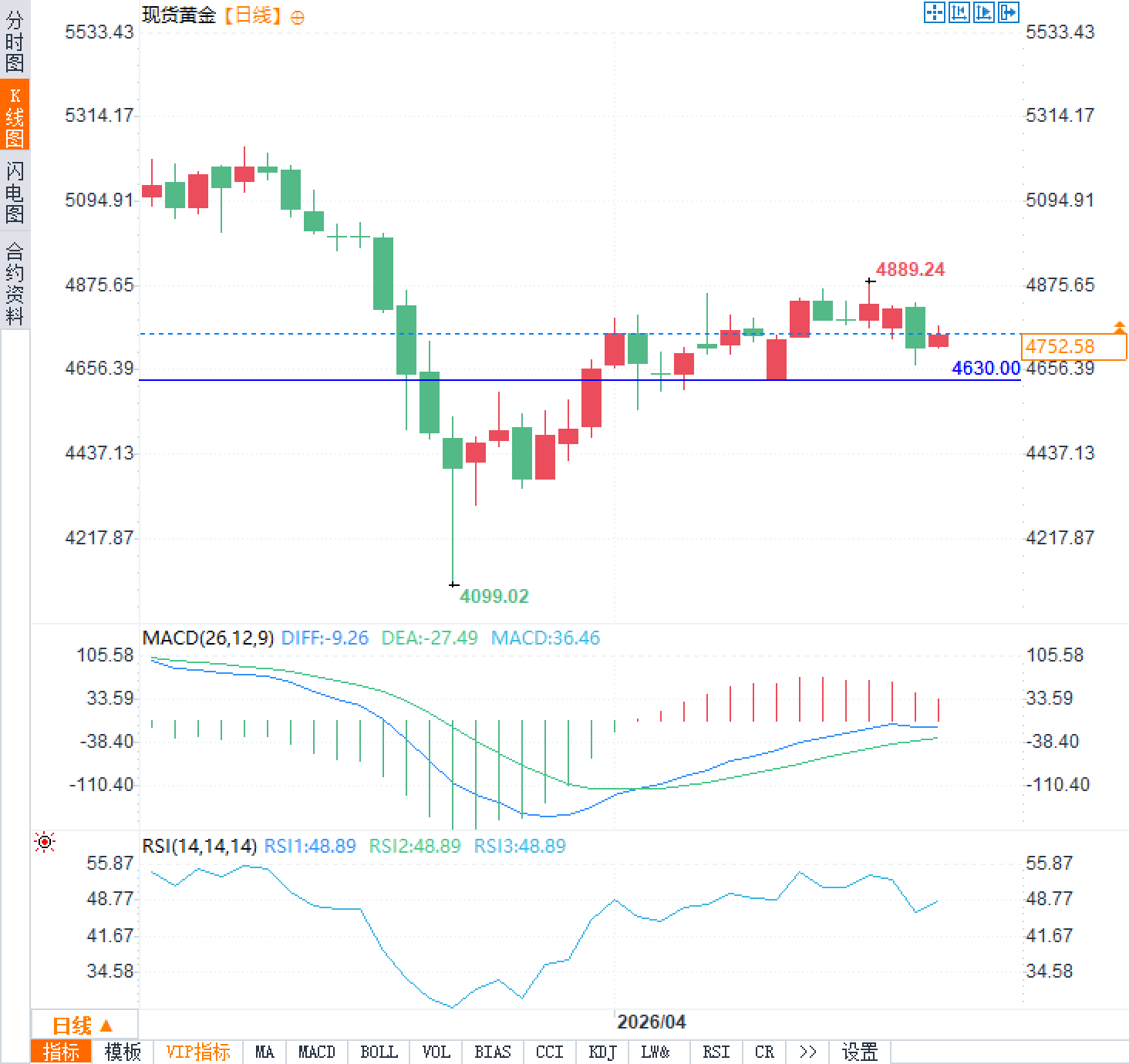
UBS analysts maintain a constructive outlook, believing that the low-interest-rate environment and a weaker dollar will drive gold prices to the $5,900 target by the end of the year. The decline in the dollar index directly reduces pressure on non-US dollar-denominated assets, providing pricing support for gold. Traders need to weigh how the balance between the Fed's independence and economic data will evolve: if energy inflationary pressures persist, the pace of rate cuts may be delayed; conversely, geopolitical easing coupled with improved data would strengthen expectations of further easing.
Traders observed that the recent gold price rebound coincided with a recovery in other risk assets, indicating a marginal easing of liquidation pressures. WisdomTree commodity strategist Nitesh Shah pointed out that gold appears to be rebounding in tandem with most risk assets; gold faces liquidation when other assets are under pressure, but gains upward potential once that pressure eases.
Geopolitical uncertainty under a ceasefire extension and the reaction of gold
Trump announced an indefinite extension of the ceasefire, temporarily shelving the threat of resuming military action, but simultaneously made it clear that the US naval blockade of Iranian maritime trade would continue. Iran has made it clear that dialogue will only begin after the blockade is lifted, and US Vice President Vance's cancellation of his trip to Pakistan for negotiations further highlights the uncertainty of the peace process. The attacks on two ships near the Strait of Hormuz occurred within hours of the ceasefire announcement, indicating that the aerial ceasefire has not extended to the maritime domain, and the struggle for control continues.
Traders are watching the impact of this "paused but unresolved" situation on gold pricing. In the short term, the decreased risk of escalating military conflict has boosted risk appetite, causing gold prices to rise in tandem with other assets such as stocks; however, the continued blockade and shipping safety incidents have maintained concerns about supply chain disruptions, preserving a safe-haven premium for gold. The UK's hosting of a military planning meeting with over 30 countries to discuss reopening the Channel indicates that international coordination efforts have begun, but short-term results are uncertain. Traders are monitoring actual navigation data across the Channel and subsequent diplomatic developments to determine whether safe-haven demand will persist.
Energy supply chain constraints and the transmission path of inflation expectations
The Strait of Hormuz, a vital global oil shipping route, is effectively closed, directly restricting supply and keeping crude oil prices high. Rising energy costs could push up global inflation expectations, and gold, as a traditional inflation hedge, should benefit from this. However, if high energy prices exacerbate the pressure on central banks to tighten monetary policy, it will suppress gold prices by increasing the opportunity cost of holding it.
With oil prices currently hovering around $100 per barrel, traders are focusing on changes in its correlation with gold. Historically, during energy crises, gold has often strengthened independently due to its inflation-hedging properties. However, in this current scenario, the improved risk appetite resulting from the extended ceasefire is offset by energy shortages, leading to a relatively moderate rebound in gold prices. Meetings in the UK and other countries aim to reopen the Channel, but in the short term, blockades and attacks could still amplify energy price volatility. Traders need to assess whether such transmission will alter global growth expectations, thereby affecting central bank interest rate paths and the long-term attractiveness of gold.
Monetary policy signals support gold prices
Federal Reserve nominee Kevin Warsh said on Tuesday that he made no commitments to President Trump regarding interest rate cuts and emphasized that he would maintain independent decision-making during the Senate confirmation process while pushing for broad central bank reforms. This statement added uncertainty to market interest rate expectations but did not change traders' general expectation of further easing over the next 12 months.
UBS analysts maintain a constructive outlook, believing that the low-interest-rate environment and a weaker dollar will drive gold prices to the $5,900 target by the end of the year. The decline in the dollar index directly reduces pressure on non-US dollar-denominated assets, providing pricing support for gold. Traders need to weigh how the balance between the Fed's independence and economic data will evolve: if energy inflationary pressures persist, the pace of rate cuts may be delayed; conversely, geopolitical easing coupled with improved data would strengthen expectations of further easing.
Frequently Asked Questions
Question 1: What impact will the continued closure of the Strait of Hormuz have on the long-term pricing of gold?
A: The closure of the strait pushes up energy costs and strengthens inflation expectations, theoretically supporting gold's hedging properties; however, if this leads to persistently high interest rates or slower growth, it will be constrained by changes in opportunity cost and risk appetite. Traders are focused on whether this energy transmission will alter global supply chain expectations and the pace of central bank policy.
Question 2: How will expectations regarding the Federal Reserve's policies shape the future outlook for gold?
A: Warsh emphasized that independence has not changed market expectations for future interest rate cuts, and the weakening dollar has provided upward momentum for gold prices. Analysts have given a year-end target of $5,900, the core logic being that an easing path reduces holding costs, but energy inflation variables need continuous assessment.
- Risk Warning and Disclaimer
- The market involves risk, and trading may not be suitable for all investors. This article is for reference only and does not constitute personal investment advice, nor does it take into account certain users’ specific investment objectives, financial situation, or other needs. Any investment decisions made based on this information are at your own risk.