Iran seizes ships in retaliation against the blockade, while the US goes against public opinion and confronts it head-on. Who will back down first?
2026-04-22 21:54:45
Iran's Revolutionary Guard Corps (IRGC) launched a military strike on three merchant ships in the Strait of Hormuz on Wednesday, seizing two of them and taking them into Iran. The third ship was taken into custody after "running aground" off the Iranian coast. The incident has further escalated tensions along the world's vital energy shipping route, and plunged the already difficult US-Iran ceasefire negotiations into a deeper stalemate.

The British military's Maritime Trade Operations Centre confirmed that the attack began on Wednesday morning when the Iranian Revolutionary Guard opened fire on a container ship in the Strait of Hormuz, followed by a swift attack on a second vessel.
Iranian state media revealed that one of the detained vessels had ties to Israel, while the other was deemed to "endanger maritime security" for not possessing a valid navigation permit. The Revolutionary Guard emphasized that maintaining order in the Strait of Hormuz is an "inviolable red line," and this action was a response to "illegal navigation."
This raid occurred less than 24 hours after US President Trump announced an extension of the US-Iran ceasefire agreement without mentioning a timeframe.
Previously, the ceasefire agreement, which was scheduled to expire on Wednesday, had raised concerns about a "restart of the war." Although Trump extended the ceasefire at the behest of Pakistan, he made it clear that he would continue to maintain the full blockade of Iranian ports and demand that Iran submit an "acceptable negotiating proposal."
Iran responded with a tough stance. The Revolutionary Guard issued a statement after the attack, vowing to "carry out unimaginable devastation to the enemy's remaining assets in the region," and held a large-scale rally the previous evening to publicly display missiles and launchers, directly confronting the previous US and Israeli airstrikes against Iran's ballistic missile arsenal.
The timing of the resumption of US-Iran negotiations remains undecided, and the struggle between the two sides over navigation rights in the Strait of Hormuz has become the key to breaking the deadlock.
Iran views the strait as a strategic trump card—as the only passage connecting the Persian Gulf to the high seas, it carries 20% of the world's oil and gas shipments, and Iran's ability to control the waterway gives it significant leverage in negotiations.
Iran's previously proposed "Ten-Point Plan" explicitly demanded that high "passage fees" be levied on ships passing through the strait to replace war reparations for post-war reconstruction. This demand was interpreted by the outside world as a core measure in the struggle for dominance over the strait.
The United States, however, insisted on "full opening of the Strait of Hormuz" as a prerequisite for a ceasefire and refused to accept Iran's "rules of the trade" demands. The huge differences between the two sides on their core demands led to a standstill in the negotiations.
The head of the Iranian delegation to Egypt stated clearly that "a negotiating delegation will not be sent to Pakistan until the United States lifts the blockade," while Pakistan confirmed that it is still waiting for a clear response from Tehran regarding the dispatch of a delegation.
Although the ceasefire agreement temporarily halted US and Israeli airstrikes against Iran and Iranian missile attacks on Israel, the ongoing conflict in the Strait of Hormuz and previous US interceptions of Iranian vessels highlight that maritime risks have not been eliminated.
Analysts point out that a ceasefire lacking substantial diplomatic consensus is like a "fragile ceasefire," and as long as the core contradiction between the blockade and the right of navigation remains unresolved, the risk of waterway disruption will persist for a long time.
The turmoil in the Strait of Hormuz has had a severe impact on global energy markets. Following Wednesday's attacks, the international benchmark Brent crude oil price surged to nearly $100 per barrel, an increase of over 35% compared to before the outbreak of the war on February 28th. The price also saw a record monthly increase of 52.66% in March alone, the largest monthly increase in history.
A recent report from the International Energy Agency (IEA) shows that daily oil shipments through the Strait of Hormuz have plummeted from 20 million barrels to 3.8 million barrels since the outbreak of the conflict, resulting in a cumulative loss of over 360 million barrels in global oil supply, which may exceed 440 million barrels in April.
Although countries such as Saudi Arabia and the UAE have activated alternative oil transport routes, this can only make up for part of the gap. Global refineries have been forced to reduce processing volumes due to raw material shortages, and refining capacity in Asia has been reduced by 6 million barrels per day.
The impact of energy supply disruptions has extended far beyond the Middle East, with soaring global natural gas prices driving up the costs of various commodities, including food and industrial products, and putting inflationary pressure on many countries.
Experts warn that if the Strait of Hormuz remains turbulent, the global economic recovery cycle will be significantly prolonged, and it could even trigger the risk of the most severe economic recession since the pandemic.
In addition, refined oil prices also surged, with Singapore middle distillate prices hitting a record high of US$290 per barrel.
The spillover effects of the US-Iran confrontation continue to manifest in Lebanon.
Following the first round of airstrikes against Iran by the United States and Israel, fierce clashes broke out between Israel and Hezbollah, which is supported by Iran, in Lebanon. Although the two sides reached a 10-day temporary ceasefire agreement, illegal attacks continued to occur.
On Wednesday morning, an Israeli drone strike on the Lebanese village of Jabur killed one person and injured two others. The Israeli military subsequently denied the allegations.
This is the fourth violation of the ceasefire since it took effect, and Hezbollah also announced its first counterattack since the ceasefire on Tuesday, highlighting the continued tension in the proxy war.
To date, the conflict, which began on February 28, has caused a devastating humanitarian cost.
Iranian officials have confirmed at least 3,375 deaths in the country, including 310 students and teachers, and nearly 3.5 million people have been displaced.
The death toll in Lebanon has surpassed 2,290, in Israel 23, and in the Gulf Arab states more than 10. In addition, 15 Israeli soldiers and 13 US servicemen have been killed in the regional conflict, and the military involvement and casualties among the US, Israel, and Iran continue to escalate.
Currently, the US and Iran are still in a state of "extreme tug-of-war": the US says it will not let Iran pass unless it agrees to negotiations, but Iran is unlikely to accept the negotiation conditions, and even if it does accept them, it is difficult to reach a consensus domestically. What to do? The Strait of Hormuz is the bargaining chip . Will Iran stop selling oil and its foreign exchange reserves run out first, affecting its military funds and high-end equipment, or will the US be unable to withstand the pressure of rising global energy prices first?
The United States appears to be in a dilemma: failing to achieve any results would be considered a defeat, but other methods besides negotiations are even less likely to yield results. However, if Iran does not accept the conditions proposed by the United States in negotiations, the United States cannot achieve a major victory, and the midterm elections will be a difficult hurdle to overcome.
The situation is such that talks have failed, but not talking means there's no fighting. In the later stages, it will come down to who will back down first. Everyone is putting maximum pressure on the other side. But in reality, those who have nothing to lose are not afraid of those who have something to lose. Iran has an 80% wheat self-sufficiency rate, 43% of its population is engaged in agriculture, and its military self-sufficiency rate exceeds 90%. The lack of oil revenue may actually narrow the gap between the rich and the poor.
In contrast, the United States faces challenges such as the midterm elections and congressional constraints related to a war lasting 60-90 days. These are clearly defined milestones that significantly hinder further U.S. military operations.
It's possible that the US is truly out of options this time. Whether Iran will offer a way out later, and whether the US will end with a symbolic victory, remains to be seen in the financial markets. Meanwhile, the market continues to present an optimistic picture. The new high of the Nasdaq index indicates that as long as there are no serious geopolitical risks, the story of AI's rapid growth is not over. At the same time, the fact that oil prices did not fall significantly after the rebound despite the continuation of the ceasefire also suggests that global energy prices are unlikely to see a substantial correction in the short term due to the influence of the Taiwan Strait.
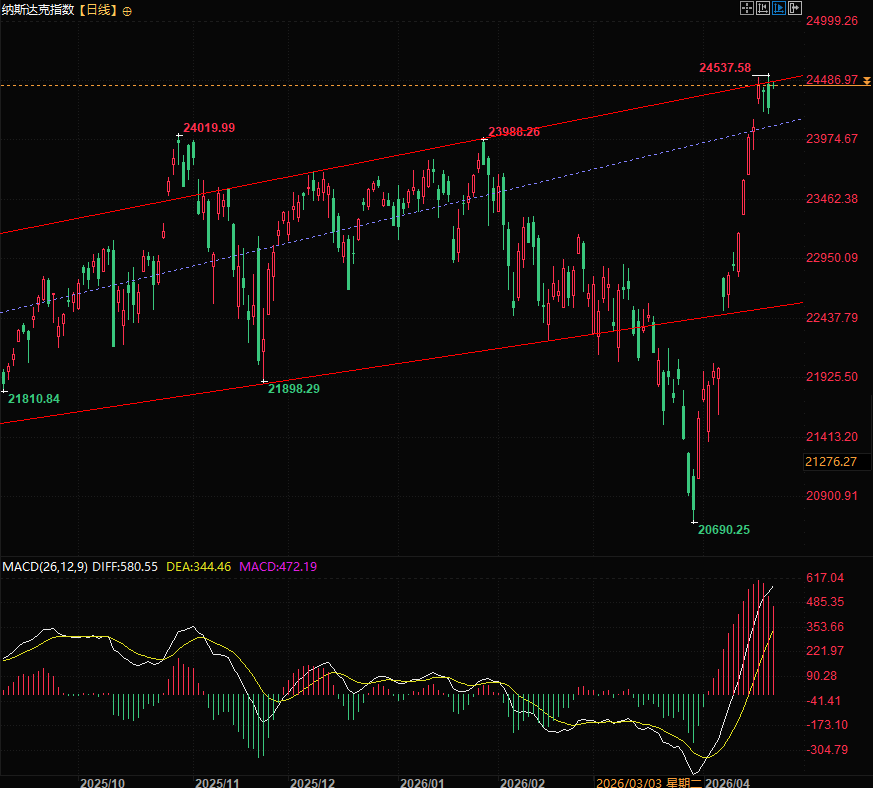
(Nasdaq daily chart, source: EasyForex)
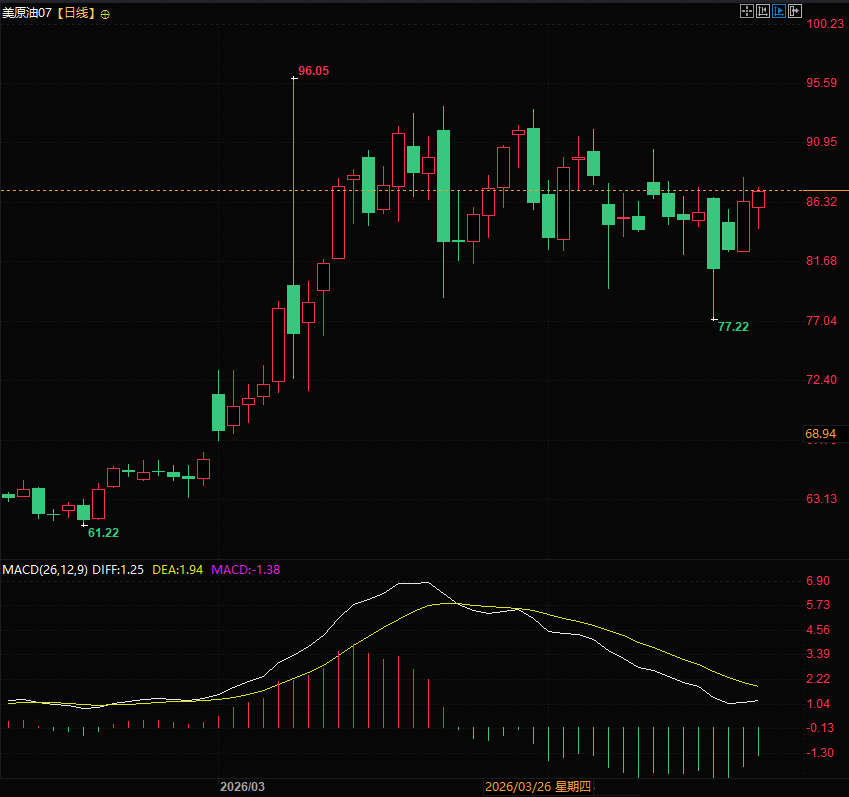
(WTI crude oil July contract daily chart, source: FX678's subsidiary EasyForex)
Details of the attack: Britain confirmed firing, Iran stated it was "in response to illegal air traffic".
The British military's Maritime Trade Operations Centre confirmed that the attack began on Wednesday morning when the Iranian Revolutionary Guard opened fire on a container ship in the Strait of Hormuz, followed by a swift attack on a second vessel.
Iranian state media revealed that one of the detained vessels had ties to Israel, while the other was deemed to "endanger maritime security" for not possessing a valid navigation permit. The Revolutionary Guard emphasized that maintaining order in the Strait of Hormuz is an "inviolable red line," and this action was a response to "illegal navigation."
Hard standoff after ceasefire extension
This raid occurred less than 24 hours after US President Trump announced an extension of the US-Iran ceasefire agreement without mentioning a timeframe.
Previously, the ceasefire agreement, which was scheduled to expire on Wednesday, had raised concerns about a "restart of the war." Although Trump extended the ceasefire at the behest of Pakistan, he made it clear that he would continue to maintain the full blockade of Iranian ports and demand that Iran submit an "acceptable negotiating proposal."
Iran responded with a tough stance. The Revolutionary Guard issued a statement after the attack, vowing to "carry out unimaginable devastation to the enemy's remaining assets in the region," and held a large-scale rally the previous evening to publicly display missiles and launchers, directly confronting the previous US and Israeli airstrikes against Iran's ballistic missile arsenal.
Negotiation deadlock: The core game between blockade and air traffic rights
The timing of the resumption of US-Iran negotiations remains undecided, and the struggle between the two sides over navigation rights in the Strait of Hormuz has become the key to breaking the deadlock.
Iran views the strait as a strategic trump card—as the only passage connecting the Persian Gulf to the high seas, it carries 20% of the world's oil and gas shipments, and Iran's ability to control the waterway gives it significant leverage in negotiations.
Core Disagreement: The Conflict Between Toll Fees and Full Openness
Iran's previously proposed "Ten-Point Plan" explicitly demanded that high "passage fees" be levied on ships passing through the strait to replace war reparations for post-war reconstruction. This demand was interpreted by the outside world as a core measure in the struggle for dominance over the strait.
The United States, however, insisted on "full opening of the Strait of Hormuz" as a prerequisite for a ceasefire and refused to accept Iran's "rules of the trade" demands. The huge differences between the two sides on their core demands led to a standstill in the negotiations.
Negotiations stalled: Iran refused to send a delegation, Pakistan awaits response.
The head of the Iranian delegation to Egypt stated clearly that "a negotiating delegation will not be sent to Pakistan until the United States lifts the blockade," while Pakistan confirmed that it is still waiting for a clear response from Tehran regarding the dispatch of a delegation.
Although the ceasefire agreement temporarily halted US and Israeli airstrikes against Iran and Iranian missile attacks on Israel, the ongoing conflict in the Strait of Hormuz and previous US interceptions of Iranian vessels highlight that maritime risks have not been eliminated.
Analysts point out that a ceasefire lacking substantial diplomatic consensus is like a "fragile ceasefire," and as long as the core contradiction between the blockade and the right of navigation remains unresolved, the risk of waterway disruption will persist for a long time.
Global Shock: Energy Crisis and its Economic Repercussions
The turmoil in the Strait of Hormuz has had a severe impact on global energy markets. Following Wednesday's attacks, the international benchmark Brent crude oil price surged to nearly $100 per barrel, an increase of over 35% compared to before the outbreak of the war on February 28th. The price also saw a record monthly increase of 52.66% in March alone, the largest monthly increase in history.
The supply gap is widening: alternative routes are unlikely to fill the energy gap.
A recent report from the International Energy Agency (IEA) shows that daily oil shipments through the Strait of Hormuz have plummeted from 20 million barrels to 3.8 million barrels since the outbreak of the conflict, resulting in a cumulative loss of over 360 million barrels in global oil supply, which may exceed 440 million barrels in April.
Although countries such as Saudi Arabia and the UAE have activated alternative oil transport routes, this can only make up for part of the gap. Global refineries have been forced to reduce processing volumes due to raw material shortages, and refining capacity in Asia has been reduced by 6 million barrels per day.
Economic Domino Effect: Inflationary Pressures and Recession Risks
The impact of energy supply disruptions has extended far beyond the Middle East, with soaring global natural gas prices driving up the costs of various commodities, including food and industrial products, and putting inflationary pressure on many countries.
Experts warn that if the Strait of Hormuz remains turbulent, the global economic recovery cycle will be significantly prolonged, and it could even trigger the risk of the most severe economic recession since the pandemic.
In addition, refined oil prices also surged, with Singapore middle distillate prices hitting a record high of US$290 per barrel.
Conflict Spillover: Proxy Battles in the Lebanese Battlefield
The spillover effects of the US-Iran confrontation continue to manifest in Lebanon.
Following the first round of airstrikes against Iran by the United States and Israel, fierce clashes broke out between Israel and Hezbollah, which is supported by Iran, in Lebanon. Although the two sides reached a 10-day temporary ceasefire agreement, illegal attacks continued to occur.
On Wednesday morning, an Israeli drone strike on the Lebanese village of Jabur killed one person and injured two others. The Israeli military subsequently denied the allegations.
This is the fourth violation of the ceasefire since it took effect, and Hezbollah also announced its first counterattack since the ceasefire on Tuesday, highlighting the continued tension in the proxy war.
Humanitarian crisis: Casualties and displacement in multiple countries
To date, the conflict, which began on February 28, has caused a devastating humanitarian cost.
Iranian officials have confirmed at least 3,375 deaths in the country, including 310 students and teachers, and nearly 3.5 million people have been displaced.
The death toll in Lebanon has surpassed 2,290, in Israel 23, and in the Gulf Arab states more than 10. In addition, 15 Israeli soldiers and 13 US servicemen have been killed in the regional conflict, and the military involvement and casualties among the US, Israel, and Iran continue to escalate.
Outlook: A Peace Dilemma Under Extreme Tension
Currently, the US and Iran are still in a state of "extreme tug-of-war": the US says it will not let Iran pass unless it agrees to negotiations, but Iran is unlikely to accept the negotiation conditions, and even if it does accept them, it is difficult to reach a consensus domestically. What to do? The Strait of Hormuz is the bargaining chip . Will Iran stop selling oil and its foreign exchange reserves run out first, affecting its military funds and high-end equipment, or will the US be unable to withstand the pressure of rising global energy prices first?
The United States appears to be in a dilemma: failing to achieve any results would be considered a defeat, but other methods besides negotiations are even less likely to yield results. However, if Iran does not accept the conditions proposed by the United States in negotiations, the United States cannot achieve a major victory, and the midterm elections will be a difficult hurdle to overcome.
The situation is such that talks have failed, but not talking means there's no fighting. In the later stages, it will come down to who will back down first. Everyone is putting maximum pressure on the other side. But in reality, those who have nothing to lose are not afraid of those who have something to lose. Iran has an 80% wheat self-sufficiency rate, 43% of its population is engaged in agriculture, and its military self-sufficiency rate exceeds 90%. The lack of oil revenue may actually narrow the gap between the rich and the poor.
In contrast, the United States faces challenges such as the midterm elections and congressional constraints related to a war lasting 60-90 days. These are clearly defined milestones that significantly hinder further U.S. military operations.
It's possible that the US is truly out of options this time. Whether Iran will offer a way out later, and whether the US will end with a symbolic victory, remains to be seen in the financial markets. Meanwhile, the market continues to present an optimistic picture. The new high of the Nasdaq index indicates that as long as there are no serious geopolitical risks, the story of AI's rapid growth is not over. At the same time, the fact that oil prices did not fall significantly after the rebound despite the continuation of the ceasefire also suggests that global energy prices are unlikely to see a substantial correction in the short term due to the influence of the Taiwan Strait.
(Nasdaq daily chart, source: EasyForex)
(WTI crude oil July contract daily chart, source: FX678's subsidiary EasyForex)
- Risk Warning and Disclaimer
- The market involves risk, and trading may not be suitable for all investors. This article is for reference only and does not constitute personal investment advice, nor does it take into account certain users’ specific investment objectives, financial situation, or other needs. Any investment decisions made based on this information are at your own risk.