Oil price forecaster appears after selling 400 million in the first 15 minutes of the news?
2026-04-23 15:31:15
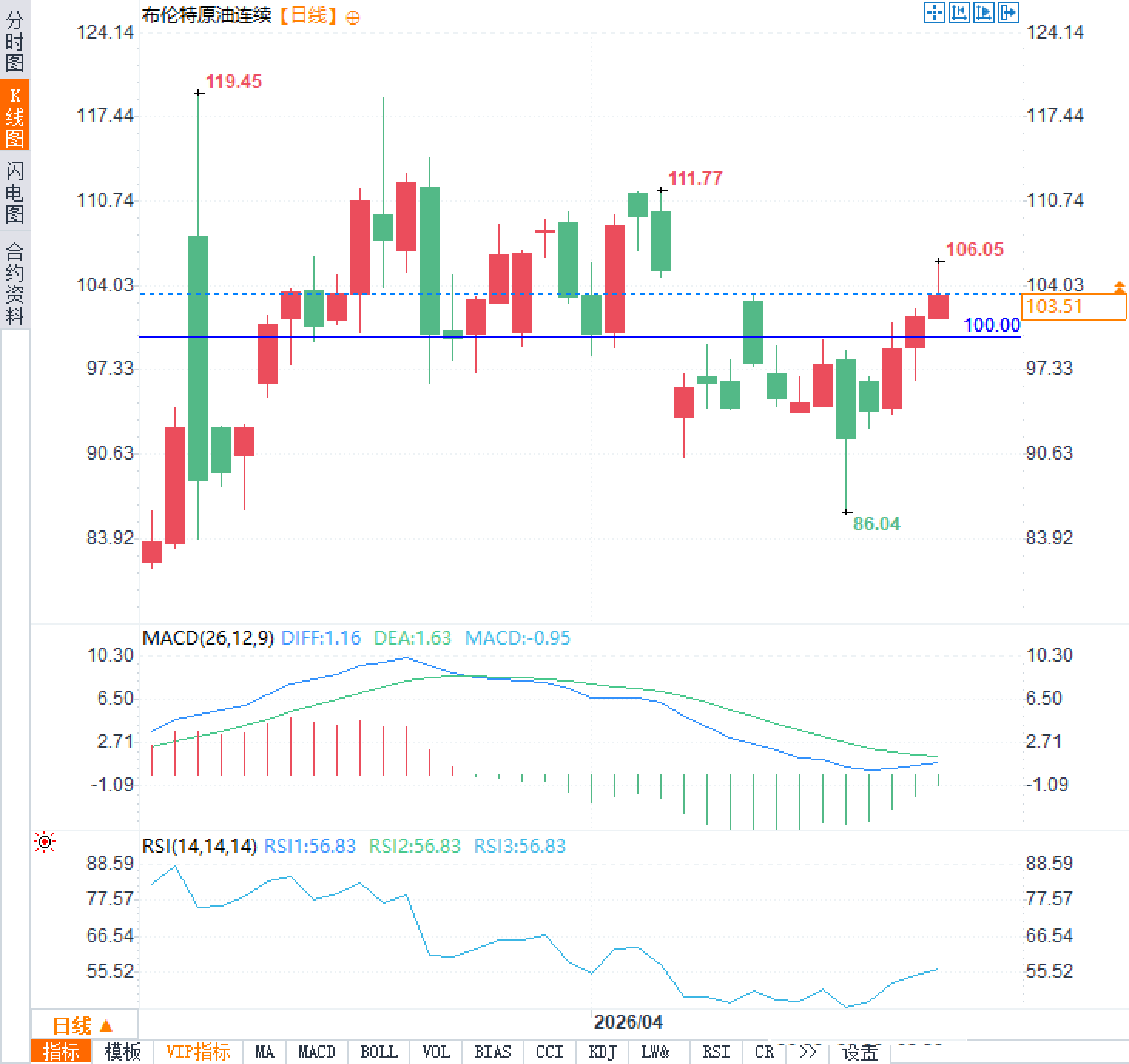
On Thursday, April 23, crude oil traded around $103 per barrel. As the situation in the Middle East evolved, traders continued to adjust their expectations for supply stability. Yesterday, US President Trump announced an indefinite extension of the ceasefire agreement with Iran. Fifteen minutes before this announcement, large sell orders flooded the Brent crude futures market, totaling $430 million. This was the third such precisely timed large-scale targeted trade this month, with a substantial cumulative bet. Market liquidity is already thin after settlement, and such events further highlight the high sensitivity of oil prices to policy dynamics. Currently, Brent crude prices have rebounded after a brief pullback and are trading in the $103 per barrel range.

Between 02:54 and 02:56 Beijing time, the market recorded 4,260 sell orders. Based on the Brent crude oil futures price at the time, the total value was approximately $430 million. These transactions occurred during the low-volume period after the daily settlement price was determined. Typically, market liquidity is extremely limited at this time. While large orders did not trigger a dramatic immediate shock, their effects quickly became apparent after the announcement. Oil prices dipped slightly from $100.91/barrel to $100.66/barrel. After the ceasefire extension was announced, futures contracts briefly touched a low of $96.83/barrel before gradually stabilizing around $99.2/barrel. The thin liquidity characteristic of the post-settlement period makes the execution cost of such large orders relatively low, while also amplifying the importance of trading timing. Professional traders often rely on deep models of event-driven price movements and predictions of potential changes in the global energy supply chain when positioning themselves in this environment.
Similar precise bets have occurred multiple times this month, totaling over $2.1 billion, and together with a large transaction in March, demonstrate a clear consistency in direction. All trades were completed very shortly before major geopolitical policy announcements, and all pointed towards a decline in oil prices, reflecting traders' consensus on the positive impact of a ceasefire.
These events comprised four large-scale targeted bets, totaling approximately $3 billion. Each trade was executed within the pre-announcement window and completed in low-volume conditions, indicating that participants had a thorough understanding of the market's microstructure. The cumulative effect intensified short-term oil price volatility, but the overall price discovery process remained relatively efficient, and the subsequent pullback after the announcements showed that the market quickly absorbed the positive news.
The Strait of Hormuz, a crucial global oil shipping route, sees approximately 20 million barrels of crude oil pass through daily, accounting for about 20% of seaborne oil trade. Any potential uncertainty can drive up risk premiums, leading to amplified short-term price volatility. The extended ceasefire has helped alleviate short-term supply concerns, pushing prices back from their highs, but the market still needs to focus on long-term stability. Oil price dynamics are not only driven by single events but are also closely related to global inventory levels, changes in demand, and policy adjustments by major oil-producing countries. Currently, the price range is around $103 per barrel, reflecting a balance between fundamental support and event-driven risks. When analyzing such market conditions, traders often focus on quantitative assessments of the probability of supply chain disruptions and changes in the futures curve structure.
U.S. authorities are investigating similar trades on March 23 and April 7, focusing on the correlation between the timing of the trades and policy announcements. The Intercontinental Exchange (ICE) has not yet commented. Such investigations aim to maintain transparency and fairness in the futures market, ensuring all participants have equal access to information. The overall market liquidity during event-driven periods also provides regulators with a window into the situation. While multiple precise bets did not cause systemic disruption, they serve as a reminder to participants to be mindful of the proper flow of information.
Details of precise betting transactions
Between 02:54 and 02:56 Beijing time, the market recorded 4,260 sell orders. Based on the Brent crude oil futures price at the time, the total value was approximately $430 million. These transactions occurred during the low-volume period after the daily settlement price was determined. Typically, market liquidity is extremely limited at this time. While large orders did not trigger a dramatic immediate shock, their effects quickly became apparent after the announcement. Oil prices dipped slightly from $100.91/barrel to $100.66/barrel. After the ceasefire extension was announced, futures contracts briefly touched a low of $96.83/barrel before gradually stabilizing around $99.2/barrel. The thin liquidity characteristic of the post-settlement period makes the execution cost of such large orders relatively low, while also amplifying the importance of trading timing. Professional traders often rely on deep models of event-driven price movements and predictions of potential changes in the global energy supply chain when positioning themselves in this environment.
A review of events this month
Similar precise bets have occurred multiple times this month, totaling over $2.1 billion, and together with a large transaction in March, demonstrate a clear consistency in direction. All trades were completed very shortly before major geopolitical policy announcements, and all pointed towards a decline in oil prices, reflecting traders' consensus on the positive impact of a ceasefire.
| date | Bets (in US dollars) | Major Announcements |
|---|---|---|
| March 23 | 5 | Delaying the threat of attacks on Iranian power facilities |
| April 7 | 9.5 | Announce a two-week ceasefire |
| April 17 | 7.6 | Iranian Foreign Minister says Straits open for merchant ship passage |
| April 22 | 4.3 | Trump announces indefinite extension of ceasefire |
Geopolitical factors and crude oil pricing mechanisms
The Strait of Hormuz, a crucial global oil shipping route, sees approximately 20 million barrels of crude oil pass through daily, accounting for about 20% of seaborne oil trade. Any potential uncertainty can drive up risk premiums, leading to amplified short-term price volatility. The extended ceasefire has helped alleviate short-term supply concerns, pushing prices back from their highs, but the market still needs to focus on long-term stability. Oil price dynamics are not only driven by single events but are also closely related to global inventory levels, changes in demand, and policy adjustments by major oil-producing countries. Currently, the price range is around $103 per barrel, reflecting a balance between fundamental support and event-driven risks. When analyzing such market conditions, traders often focus on quantitative assessments of the probability of supply chain disruptions and changes in the futures curve structure.
Regulatory Dynamics and Market Fairness
U.S. authorities are investigating similar trades on March 23 and April 7, focusing on the correlation between the timing of the trades and policy announcements. The Intercontinental Exchange (ICE) has not yet commented. Such investigations aim to maintain transparency and fairness in the futures market, ensuring all participants have equal access to information. The overall market liquidity during event-driven periods also provides regulators with a window into the situation. While multiple precise bets did not cause systemic disruption, they serve as a reminder to participants to be mindful of the proper flow of information.
Frequently Asked Questions
Question 1: What characteristics of the crude oil market do these precise betting events reflect?
A: The fact that multiple large sell orders occurred within a very short period before the announcement of major geopolitical policies indicates that traders are highly sensitive to information flows. Although large transactions during periods of low liquidity did not cause drastic fluctuations, oil prices fell rapidly after the announcements, highlighting the dominant role of changing expectations in pricing.
Question 2: What are the key focuses of regulatory investigations into such transactions?
A: U.S. authorities are investigating similar transactions on March 23 and April 7, primarily focusing on whether there was any advantageous trading based on non-public information. Such investigations aim to maintain fairness in the futures market and prevent potential market manipulation.
- Risk Warning and Disclaimer
- The market involves risk, and trading may not be suitable for all investors. This article is for reference only and does not constitute personal investment advice, nor does it take into account certain users’ specific investment objectives, financial situation, or other needs. Any investment decisions made based on this information are at your own risk.