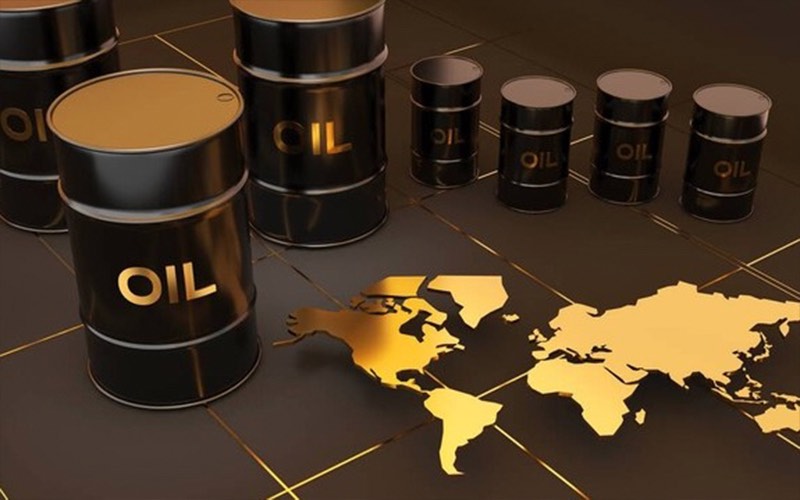
April 24th Financial Breakfast: Iranian negotiator resigns; Trump retains military option against Iran; gold price may test $4650; oil price rises over 4%.
2026-04-24 07:23:45
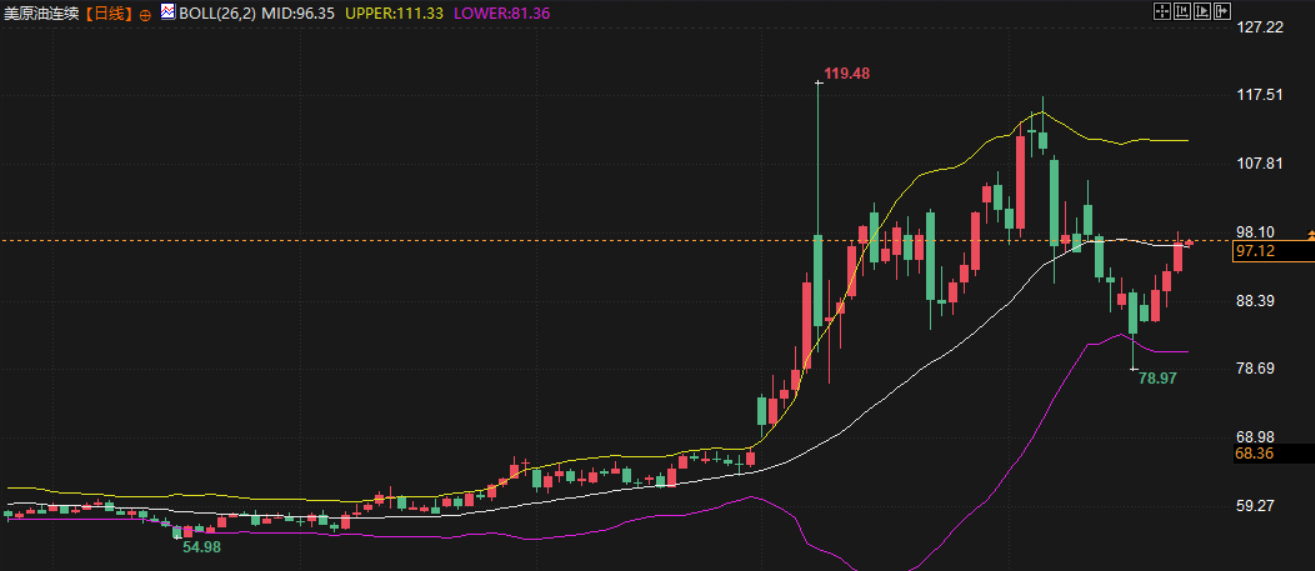
On Friday (April 24, Beijing time) in early Asian trading, spot gold was trading around $4,687 per ounce, and may test the $4,650 per ounce level during the day. US-Iran negotiations have stalled, with the Iranian negotiator resigning. Trump stated that he "does not want to rush things" with Iran and still retains the military option. Benefiting from renewed tensions in Iran, oil prices rose by more than 4%, with US crude oil trading above $97 per barrel.

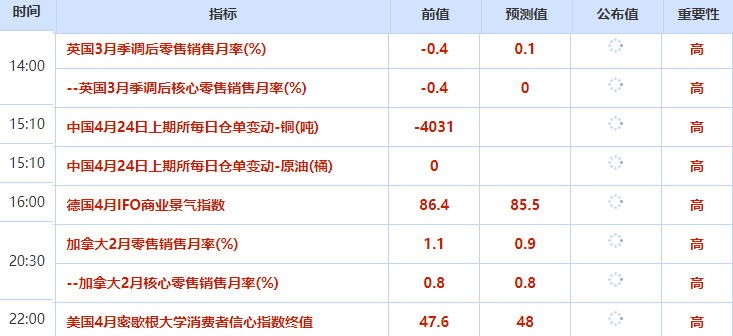
U.S. stocks closed lower on Thursday in volatile trading, with the Dow Jones Industrial Average down 0.36%, the S&P 500 down 0.41%, and the Nasdaq Composite down 0.89%, mainly due to fading hopes for a quick resolution to the conflict in Iran, mixed corporate earnings reports, and renewed concerns about artificial intelligence disrupting the software industry.
Regarding the situation in Iran, oil prices remained high, exacerbating inflation concerns, as Tehran tightened its control over the Strait of Hormuz, the speaker withdrew from the negotiating team, and reports of airstrikes within the country surfaced. Economic data showed a slight increase in initial jobless claims last week, but the rise in the S&P Global US Composite PMI was mainly due to companies accumulating inventory amid supply shortages and price increases.
Earnings season has been strong so far, but individual stocks have diverged significantly: IBM fell 8.25% due to weak software business, and ServiceNow plummeted 17.75% due to delays in Middle East contracts, dragging down the S&P 500 Software & Services Index for its biggest single-day drop since the end of January; Tesla's stock fell 3.56% after lowering its annual spending plan, and Avis Budget plunged about 48.38% after a meme-like surge; while Texas Instruments surged 19.43% on optimistic revenue forecasts, marking its biggest single-day gain in over 25 years.
Gold prices recovered some of their earlier losses on Thursday, with spot gold closing down 0.3% at $4,722.02 an ounce, after falling as much as 1% to a low of $4,683.84 during the session. U.S. gold futures fell 0.2% to $4,738.50.
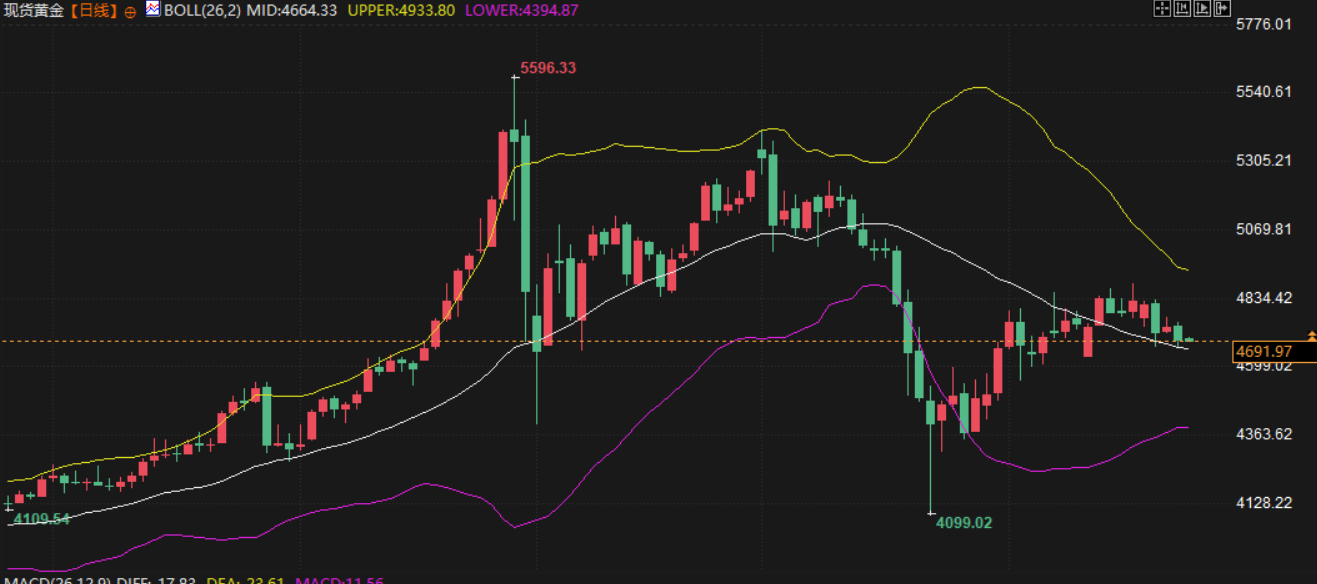
The rebound in gold prices was mainly driven by two factors: first, news that Lebanon and Israel might extend their ceasefire agreement—the US hosted the second meeting between the two countries' special envoys on Thursday, with Beirut seeking an extension of the ceasefire, following an Israeli airstrike that killed at least five people the previous day; and second, a decline in US Treasury yields from their intraday highs after the release of last week's initial jobless claims data, reducing the opportunity cost of holding non-yielding gold. Data showed that initial jobless claims for the week ending April 18 increased by 6,000 to 214,000, higher than the market expectation of 210,000.
TD Securities commodities strategist Daniel Ghali said the market was driven by early signs of a potential breakthrough in the Lebanese ceasefire agreement, coinciding with the release of economic data. Meanwhile, the Iran war pushed up oil prices as US-Iran peace talks stalled and trade restrictions in the Strait of Hormuz remained in place.
In other precious metals, spot silver fell 2.3% to $75.91, platinum fell 2.7% to $2018.10, and palladium fell 4.1% to $1482.41, all hitting their lowest levels in more than a week.
Oil prices jumped more than 4% on Thursday, rising as much as $5 during the session, mainly due to concerns about supply disruptions sparked by power struggles within Iran and reports of airstrikes. Brent crude futures settled at $106.41 a barrel, up 4.57%; U.S. crude futures settled at $97 a barrel, up 4.45%.
According to Israeli radio reports, Iran's chief negotiator, Mohammad Ghalibaf, has resigned. He led a team negotiating with the United States through Pakistan as a mediator to end the war, and his resignation is seen as a victory for Iranian hardliners. Meanwhile, Iranian news agencies reported that Tehran's air defense system is intercepting targets over the city, following reports of a drone attack on a base in Iraq housing Iranian Kurdish militants opposing Tehran. Iran also released video footage of commandos boarding a large cargo ship, demonstrating its further tightening of control over the Strait of Hormuz.
US President Trump posted on social media that he had ordered the US Navy to sink any ships laying mines in the Strait. John Kilduff, a partner at Again Capital, said the market was swayed by alternating news, with investors worried that oil prices would reset to higher levels should supply conditions worsen.
Although Trump extended the ceasefire at the request of Pakistani mediators, Iran and the United States continue to restrict shipping through the Strait of Hormuz, which carried about 20% of the world's oil supply before the war broke out on February 28. Trump claimed that the United States had "complete control" of the strait and said it would be "tightly sealed off" until an agreement was reached with Iran.
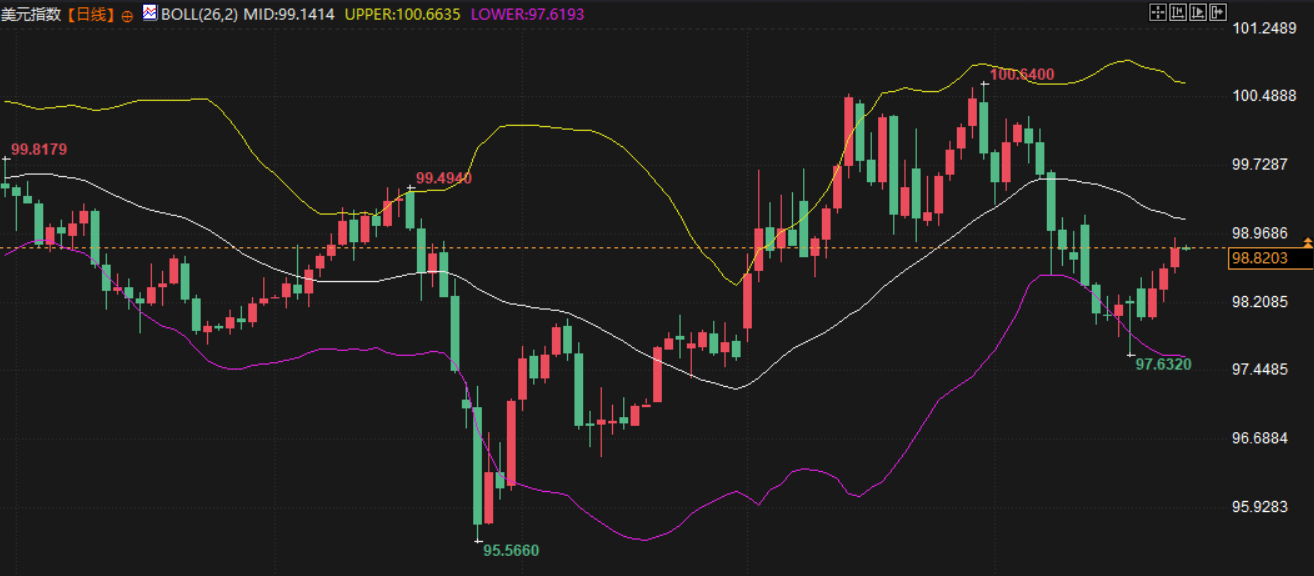
The dollar index rose slightly on Thursday, gaining 0.11% to 98.73, and is on track for a weekly gain, mainly due to escalating tensions between Iran and the United States, which have dampened hopes for a peaceful ceasefire. Iran released video footage of a special forces raid on a giant cargo ship demonstrating its control over the Strait of Hormuz, while Israel warned it was prepared to resume attacks. Market uncertainty about the duration of the ceasefire fueled safe-haven demand, driving the dollar higher.
The euro fell 0.08% against the dollar to 1.1694, its first weekly decline in four weeks, expected to be 0.6%; the pound fell 0.16% to 1.3477; and the yen edged down 0.04% against the dollar to 159.55, nearing the 160 intervention level.
On the economic data front, initial jobless claims in the US rose slightly, but the labor market remained stable, with only 24% of the market pricing in a Federal Reserve rate cut before the end of the year. In contrast, the European Central Bank is expected to keep interest rates unchanged on April 30 but may raise them in June. The Swiss National Bank announced increased intervention in the foreign exchange market to curb the appreciation of the Swiss franc.
Trump says ceasefire between Israel and Lebanon extended for 3 weeks
US President Donald Trump announced via social media on April 23 that the temporary ceasefire agreement between Israel and Lebanon would be extended for three weeks. He also stated that the US had held talks with senior representatives from Israel and Lebanon at the White House, and that the meetings "went well." He added that he looked forward to hosting Israeli Prime Minister Benjamin Netanyahu and Lebanese President Michel Aoun in the near future. (CCTV International News)
Sources say the US is preparing a new operational plan targeting Iran's Hormuz defense line.
According to multiple sources, US military officials are developing a new operational plan to strike Iranian military forces in the Strait of Hormuz should the current ceasefire agreement between the US and Iran break down. Sources say that among various potential targets, this plan focuses on dynamic, ad-hoc strikes against Iranian operational capabilities in the Strait of Hormuz, the southern Arabian Gulf, and the Gulf of Oman. Targets include Iranian small high-speed attack boats, mine-laying vessels, and various asymmetric warfare equipment. It is through these assets that Iran has been able to blockade these key waterways and thus exert pressure on the US. In the first month-long air campaign, while the US targeted the Iranian navy, most targets were far from the strait, paving the way for subsequent strikes deeper into Iranian territory. This new operational plan will focus on more concentrated and intensive air strikes along these strategic waterways.
Trump says he "doesn't want to rush things" with Iran and still reserves the military option.
On March 23 local time, US President Trump stated that he "does not want to rush things" as negotiations with Iran continue, emphasizing that the Iranian leadership is currently in a state of "instability." In an interview at the White House, he said that although the conflict has exceeded the previously set four-to-six-week timeline, the US has made "decisive progress through military means" in the first four weeks. He added that they are currently awaiting an agreement, and "if the other side is unwilling to reach an agreement, we will take action through military means." Trump revealed that the US has struck approximately 75% of Iranian targets and claimed that Iran may have redeployed its military forces during the two-week ceasefire period. He also pointed out that due to the blockade, Iran has found it difficult to conduct normal business activities and is currently "in a state of instability." Trump further stated that the US hopes to reach a "lasting agreement," saying it "can be reached now," but will continue negotiations depending on the conditions. He declared that the US has "complete control" of the Strait of Hormuz, which will reopen after an agreement is reached or "other circumstances" occur. (CCTV News)
The USS George H.W. Bush aircraft carrier is approaching the Middle East; Trump says "time is running out."
The U.S. Central Command posted a photo on social media on the 23rd, stating that the Nimitz-class nuclear-powered aircraft carrier USS George H.W. Bush was sailing in the Indian Ocean within its area of responsibility. U.S. President Trump commented, "The countdown is on." According to the U.S. military, the Central Command's area of responsibility covers the Persian Gulf, the Red Sea, the Gulf of Oman, and the Arabian Sea in the northwestern Indian Ocean. The USS George H.W. Bush carrier strike group departed from Naval Station Norfolk, Virginia, on March 31st, rounding the Cape of Good Hope before heading to the Middle East. According to the U.S. military newspaper *Army Times*, the USS George H.W. Bush carrier strike group includes several destroyers and a total of more than 5,000 personnel. Currently, the U.S. Navy's USS Abraham Lincoln and USS Ford carrier strike groups are deployed in the Red Sea and the northern Arabian Sea, respectively. According to U.S. media reports, the USS George H.W. Bush is likely to replace the USS Ford. During the transition period, the U.S. military is expected to have a three-carrier deployment in the Middle East, consisting of the USS George H.W. Bush, USS Ford, and USS Abraham Lincoln. (Xinhua)
Trump's eagerness to extricate himself from the Iran war may result in a weaker binding force in the new nuclear agreement than the previous one.
US President Donald Trump has repeatedly stated that his war with Iran was to prevent Tehran from acquiring nuclear weapons. However, on the crucial nuclear issue, the agreement he may ultimately reach could be worse than the one he abandoned during his first term. Sources familiar with the matter reveal that with the US-Iran ceasefire negotiations temporarily stalled, the Trump administration is scrambling to find alternatives to avoid restarting the market-disrupting and allied-criticized war. These sources say that as the urgency to reach an agreement intensifies, they doubt the administration has the time or leverage to insist on a complex and nuanced monitoring mechanism similar to that of the 2015 Iran nuclear deal (JCPOA). Trump's national security team may ultimately accept a nuclear agreement that appears more ambitious on paper but is less binding in practice than the 2015 JCPOA, despite Trump repeatedly calling the JCPOA "the worst deal in history."
Iran's Ministry of Defense: Continued production of equipment to defend against any threat
A spokesman for Iran's Ministry of Defense stated on the 23rd that Iran's defense equipment production has never ceased, and the Ministry is fully committed to meeting the various needs of the Iranian armed forces under different conditions, including preparedness, combat, and ceasefire. The Iranian Mehr News Agency quoted the spokesman's statement as saying that US President Trump's remarks are hypocritical and capricious, and the world has seen through them. To counter any new threats, the production and supply of Iranian defense equipment and weapons has never been interrupted and will never be interrupted; "The Iranian Ministry of Defense possesses strategic reserves to deal with all situations." (Xinhua)
US aircraft carrier sails to the Middle East, Trump issues "sink order," Iran unveils seven retaliatory plans.
On March 23 local time, as the standoff between the US and Iran escalated in the Strait of Hormuz, the US Navy's nuclear-powered aircraft carrier USS George H.W. Bush was sailing towards the Middle East. While the ceasefire between the US and Iran has been maintained, the timing of a new round of negotiations remains unclear. Pakistani diplomats stated that US-Iran negotiations have "reached a stalemate," while US President Trump declared that "Iran has no time" and ordered the US military to sink any ships that have laid mines in the Strait of Hormuz. The Israeli Defense Minister stated that Iran is prepared to resume hostilities and is awaiting the US's "green light." Meanwhile, given its loss of trust in the US's sincerity in negotiations, Iran has developed a targeted countermeasure plan against "possible" military action by the US and its allies. (CCTV)
The probability of the Federal Reserve cutting interest rates by a cumulative 25 basis points by December is 34.4%.
According to CME's "FedWatch": The probability of the Fed raising interest rates by 25 basis points in April is 1%, and the probability of keeping rates unchanged is 99%. The probability of the Fed cutting rates by a cumulative 25 basis points by June is 2.6%, the probability of keeping rates unchanged is 96.4%, and the probability of a cumulative 25 basis point rate hike is 1%. The probability of the Fed cutting rates by a cumulative 25 basis points by December is 34.4%, the probability of keeping rates unchanged is 64.9%, and the probability of a cumulative 25 basis point rate hike is 0.7%.
Trump plans to invite Putin to the G20 summit in the US.
According to the Washington Post, U.S. government officials said Thursday that the United States intends to invite President Putin to the G20 leaders' summit scheduled for December at the Trump Doral Golf Resort in Miami, although no invitation has yet been sent. The State Department said in a statement that Trump "has made it clear that the United States is focused on hosting a successful and productive summit and welcomes Russia's participation in all G20 meetings." A senior U.S. government official briefed the media, saying, "No formal invitation has been sent yet, but Russia is a G20 member and will be invited to the ministerial meetings and leaders' summit."
London Clearing House: The renminbi is expected to surpass the yen to become the second most actively traded currency against the US dollar in the foreign exchange options market.
The London Clearing House (LCH) says the renminbi is poised to surpass the yen to become the second most actively traded currency against the dollar in the foreign exchange options market. Andrew Batchelor, head of LCH’s ForexClear division, says the USD/CNH currency pair could rise to second place, after the euro/dollar, when the Bank for International Settlements (BIS) releases its next triennial survey in 2028.
A spokesperson for the Department of Consumption Promotion of the Ministry of Commerce discussed the situation of my country's consumer market in the first quarter of 2026.
Since the beginning of this year, the Ministry of Commerce has earnestly implemented the decisions and plans of the CPC Central Committee and the State Council. Driven by a series of policies and activities, including the trade-in program for old consumer goods, the "Happy Shopping Spring Festival" special event, and the pilot program for prize-winning invoices, the consumer market has achieved a stable start. In the first quarter, total retail sales of consumer goods reached 12.8 trillion yuan, a year-on-year increase of 2.4%, with the growth rate accelerating by 0.7 percentage points compared to the fourth quarter of last year. In March alone, total retail sales reached 4.2 trillion yuan, an increase of 1.7%. Per capita consumption expenditure of residents nationwide increased by 2.6% in real terms, and final consumption expenditure contributed 2.4 percentage points to GDP growth, laying a solid foundation for stable economic growth. (Ministry of Commerce)
Key Focus Today
stock market
U.S. stocks closed lower on Thursday in volatile trading, with the Dow Jones Industrial Average down 0.36%, the S&P 500 down 0.41%, and the Nasdaq Composite down 0.89%, mainly due to fading hopes for a quick resolution to the conflict in Iran, mixed corporate earnings reports, and renewed concerns about artificial intelligence disrupting the software industry.
Regarding the situation in Iran, oil prices remained high, exacerbating inflation concerns, as Tehran tightened its control over the Strait of Hormuz, the speaker withdrew from the negotiating team, and reports of airstrikes within the country surfaced. Economic data showed a slight increase in initial jobless claims last week, but the rise in the S&P Global US Composite PMI was mainly due to companies accumulating inventory amid supply shortages and price increases.
Earnings season has been strong so far, but individual stocks have diverged significantly: IBM fell 8.25% due to weak software business, and ServiceNow plummeted 17.75% due to delays in Middle East contracts, dragging down the S&P 500 Software & Services Index for its biggest single-day drop since the end of January; Tesla's stock fell 3.56% after lowering its annual spending plan, and Avis Budget plunged about 48.38% after a meme-like surge; while Texas Instruments surged 19.43% on optimistic revenue forecasts, marking its biggest single-day gain in over 25 years.
Gold Market
Gold prices recovered some of their earlier losses on Thursday, with spot gold closing down 0.3% at $4,722.02 an ounce, after falling as much as 1% to a low of $4,683.84 during the session. U.S. gold futures fell 0.2% to $4,738.50.
The rebound in gold prices was mainly driven by two factors: first, news that Lebanon and Israel might extend their ceasefire agreement—the US hosted the second meeting between the two countries' special envoys on Thursday, with Beirut seeking an extension of the ceasefire, following an Israeli airstrike that killed at least five people the previous day; and second, a decline in US Treasury yields from their intraday highs after the release of last week's initial jobless claims data, reducing the opportunity cost of holding non-yielding gold. Data showed that initial jobless claims for the week ending April 18 increased by 6,000 to 214,000, higher than the market expectation of 210,000.
TD Securities commodities strategist Daniel Ghali said the market was driven by early signs of a potential breakthrough in the Lebanese ceasefire agreement, coinciding with the release of economic data. Meanwhile, the Iran war pushed up oil prices as US-Iran peace talks stalled and trade restrictions in the Strait of Hormuz remained in place.
In other precious metals, spot silver fell 2.3% to $75.91, platinum fell 2.7% to $2018.10, and palladium fell 4.1% to $1482.41, all hitting their lowest levels in more than a week.
oil market
Oil prices jumped more than 4% on Thursday, rising as much as $5 during the session, mainly due to concerns about supply disruptions sparked by power struggles within Iran and reports of airstrikes. Brent crude futures settled at $106.41 a barrel, up 4.57%; U.S. crude futures settled at $97 a barrel, up 4.45%.
According to Israeli radio reports, Iran's chief negotiator, Mohammad Ghalibaf, has resigned. He led a team negotiating with the United States through Pakistan as a mediator to end the war, and his resignation is seen as a victory for Iranian hardliners. Meanwhile, Iranian news agencies reported that Tehran's air defense system is intercepting targets over the city, following reports of a drone attack on a base in Iraq housing Iranian Kurdish militants opposing Tehran. Iran also released video footage of commandos boarding a large cargo ship, demonstrating its further tightening of control over the Strait of Hormuz.
US President Trump posted on social media that he had ordered the US Navy to sink any ships laying mines in the Strait. John Kilduff, a partner at Again Capital, said the market was swayed by alternating news, with investors worried that oil prices would reset to higher levels should supply conditions worsen.
Although Trump extended the ceasefire at the request of Pakistani mediators, Iran and the United States continue to restrict shipping through the Strait of Hormuz, which carried about 20% of the world's oil supply before the war broke out on February 28. Trump claimed that the United States had "complete control" of the strait and said it would be "tightly sealed off" until an agreement was reached with Iran.
Foreign exchange market
The dollar index rose slightly on Thursday, gaining 0.11% to 98.73, and is on track for a weekly gain, mainly due to escalating tensions between Iran and the United States, which have dampened hopes for a peaceful ceasefire. Iran released video footage of a special forces raid on a giant cargo ship demonstrating its control over the Strait of Hormuz, while Israel warned it was prepared to resume attacks. Market uncertainty about the duration of the ceasefire fueled safe-haven demand, driving the dollar higher.
The euro fell 0.08% against the dollar to 1.1694, its first weekly decline in four weeks, expected to be 0.6%; the pound fell 0.16% to 1.3477; and the yen edged down 0.04% against the dollar to 159.55, nearing the 160 intervention level.
On the economic data front, initial jobless claims in the US rose slightly, but the labor market remained stable, with only 24% of the market pricing in a Federal Reserve rate cut before the end of the year. In contrast, the European Central Bank is expected to keep interest rates unchanged on April 30 but may raise them in June. The Swiss National Bank announced increased intervention in the foreign exchange market to curb the appreciation of the Swiss franc.
International News
Trump says ceasefire between Israel and Lebanon extended for 3 weeks
US President Donald Trump announced via social media on April 23 that the temporary ceasefire agreement between Israel and Lebanon would be extended for three weeks. He also stated that the US had held talks with senior representatives from Israel and Lebanon at the White House, and that the meetings "went well." He added that he looked forward to hosting Israeli Prime Minister Benjamin Netanyahu and Lebanese President Michel Aoun in the near future. (CCTV International News)
Sources say the US is preparing a new operational plan targeting Iran's Hormuz defense line.
According to multiple sources, US military officials are developing a new operational plan to strike Iranian military forces in the Strait of Hormuz should the current ceasefire agreement between the US and Iran break down. Sources say that among various potential targets, this plan focuses on dynamic, ad-hoc strikes against Iranian operational capabilities in the Strait of Hormuz, the southern Arabian Gulf, and the Gulf of Oman. Targets include Iranian small high-speed attack boats, mine-laying vessels, and various asymmetric warfare equipment. It is through these assets that Iran has been able to blockade these key waterways and thus exert pressure on the US. In the first month-long air campaign, while the US targeted the Iranian navy, most targets were far from the strait, paving the way for subsequent strikes deeper into Iranian territory. This new operational plan will focus on more concentrated and intensive air strikes along these strategic waterways.
Trump says he "doesn't want to rush things" with Iran and still reserves the military option.
On March 23 local time, US President Trump stated that he "does not want to rush things" as negotiations with Iran continue, emphasizing that the Iranian leadership is currently in a state of "instability." In an interview at the White House, he said that although the conflict has exceeded the previously set four-to-six-week timeline, the US has made "decisive progress through military means" in the first four weeks. He added that they are currently awaiting an agreement, and "if the other side is unwilling to reach an agreement, we will take action through military means." Trump revealed that the US has struck approximately 75% of Iranian targets and claimed that Iran may have redeployed its military forces during the two-week ceasefire period. He also pointed out that due to the blockade, Iran has found it difficult to conduct normal business activities and is currently "in a state of instability." Trump further stated that the US hopes to reach a "lasting agreement," saying it "can be reached now," but will continue negotiations depending on the conditions. He declared that the US has "complete control" of the Strait of Hormuz, which will reopen after an agreement is reached or "other circumstances" occur. (CCTV News)
The USS George H.W. Bush aircraft carrier is approaching the Middle East; Trump says "time is running out."
The U.S. Central Command posted a photo on social media on the 23rd, stating that the Nimitz-class nuclear-powered aircraft carrier USS George H.W. Bush was sailing in the Indian Ocean within its area of responsibility. U.S. President Trump commented, "The countdown is on." According to the U.S. military, the Central Command's area of responsibility covers the Persian Gulf, the Red Sea, the Gulf of Oman, and the Arabian Sea in the northwestern Indian Ocean. The USS George H.W. Bush carrier strike group departed from Naval Station Norfolk, Virginia, on March 31st, rounding the Cape of Good Hope before heading to the Middle East. According to the U.S. military newspaper *Army Times*, the USS George H.W. Bush carrier strike group includes several destroyers and a total of more than 5,000 personnel. Currently, the U.S. Navy's USS Abraham Lincoln and USS Ford carrier strike groups are deployed in the Red Sea and the northern Arabian Sea, respectively. According to U.S. media reports, the USS George H.W. Bush is likely to replace the USS Ford. During the transition period, the U.S. military is expected to have a three-carrier deployment in the Middle East, consisting of the USS George H.W. Bush, USS Ford, and USS Abraham Lincoln. (Xinhua)
Trump's eagerness to extricate himself from the Iran war may result in a weaker binding force in the new nuclear agreement than the previous one.
US President Donald Trump has repeatedly stated that his war with Iran was to prevent Tehran from acquiring nuclear weapons. However, on the crucial nuclear issue, the agreement he may ultimately reach could be worse than the one he abandoned during his first term. Sources familiar with the matter reveal that with the US-Iran ceasefire negotiations temporarily stalled, the Trump administration is scrambling to find alternatives to avoid restarting the market-disrupting and allied-criticized war. These sources say that as the urgency to reach an agreement intensifies, they doubt the administration has the time or leverage to insist on a complex and nuanced monitoring mechanism similar to that of the 2015 Iran nuclear deal (JCPOA). Trump's national security team may ultimately accept a nuclear agreement that appears more ambitious on paper but is less binding in practice than the 2015 JCPOA, despite Trump repeatedly calling the JCPOA "the worst deal in history."
Iran's Ministry of Defense: Continued production of equipment to defend against any threat
A spokesman for Iran's Ministry of Defense stated on the 23rd that Iran's defense equipment production has never ceased, and the Ministry is fully committed to meeting the various needs of the Iranian armed forces under different conditions, including preparedness, combat, and ceasefire. The Iranian Mehr News Agency quoted the spokesman's statement as saying that US President Trump's remarks are hypocritical and capricious, and the world has seen through them. To counter any new threats, the production and supply of Iranian defense equipment and weapons has never been interrupted and will never be interrupted; "The Iranian Ministry of Defense possesses strategic reserves to deal with all situations." (Xinhua)
US aircraft carrier sails to the Middle East, Trump issues "sink order," Iran unveils seven retaliatory plans.
On March 23 local time, as the standoff between the US and Iran escalated in the Strait of Hormuz, the US Navy's nuclear-powered aircraft carrier USS George H.W. Bush was sailing towards the Middle East. While the ceasefire between the US and Iran has been maintained, the timing of a new round of negotiations remains unclear. Pakistani diplomats stated that US-Iran negotiations have "reached a stalemate," while US President Trump declared that "Iran has no time" and ordered the US military to sink any ships that have laid mines in the Strait of Hormuz. The Israeli Defense Minister stated that Iran is prepared to resume hostilities and is awaiting the US's "green light." Meanwhile, given its loss of trust in the US's sincerity in negotiations, Iran has developed a targeted countermeasure plan against "possible" military action by the US and its allies. (CCTV)
The probability of the Federal Reserve cutting interest rates by a cumulative 25 basis points by December is 34.4%.
According to CME's "FedWatch": The probability of the Fed raising interest rates by 25 basis points in April is 1%, and the probability of keeping rates unchanged is 99%. The probability of the Fed cutting rates by a cumulative 25 basis points by June is 2.6%, the probability of keeping rates unchanged is 96.4%, and the probability of a cumulative 25 basis point rate hike is 1%. The probability of the Fed cutting rates by a cumulative 25 basis points by December is 34.4%, the probability of keeping rates unchanged is 64.9%, and the probability of a cumulative 25 basis point rate hike is 0.7%.
Trump plans to invite Putin to the G20 summit in the US.
According to the Washington Post, U.S. government officials said Thursday that the United States intends to invite President Putin to the G20 leaders' summit scheduled for December at the Trump Doral Golf Resort in Miami, although no invitation has yet been sent. The State Department said in a statement that Trump "has made it clear that the United States is focused on hosting a successful and productive summit and welcomes Russia's participation in all G20 meetings." A senior U.S. government official briefed the media, saying, "No formal invitation has been sent yet, but Russia is a G20 member and will be invited to the ministerial meetings and leaders' summit."
Domestic News
London Clearing House: The renminbi is expected to surpass the yen to become the second most actively traded currency against the US dollar in the foreign exchange options market.
The London Clearing House (LCH) says the renminbi is poised to surpass the yen to become the second most actively traded currency against the dollar in the foreign exchange options market. Andrew Batchelor, head of LCH’s ForexClear division, says the USD/CNH currency pair could rise to second place, after the euro/dollar, when the Bank for International Settlements (BIS) releases its next triennial survey in 2028.
A spokesperson for the Department of Consumption Promotion of the Ministry of Commerce discussed the situation of my country's consumer market in the first quarter of 2026.
Since the beginning of this year, the Ministry of Commerce has earnestly implemented the decisions and plans of the CPC Central Committee and the State Council. Driven by a series of policies and activities, including the trade-in program for old consumer goods, the "Happy Shopping Spring Festival" special event, and the pilot program for prize-winning invoices, the consumer market has achieved a stable start. In the first quarter, total retail sales of consumer goods reached 12.8 trillion yuan, a year-on-year increase of 2.4%, with the growth rate accelerating by 0.7 percentage points compared to the fourth quarter of last year. In March alone, total retail sales reached 4.2 trillion yuan, an increase of 1.7%. Per capita consumption expenditure of residents nationwide increased by 2.6% in real terms, and final consumption expenditure contributed 2.4 percentage points to GDP growth, laying a solid foundation for stable economic growth. (Ministry of Commerce)
- Risk Warning and Disclaimer
- The market involves risk, and trading may not be suitable for all investors. This article is for reference only and does not constitute personal investment advice, nor does it take into account certain users’ specific investment objectives, financial situation, or other needs. Any investment decisions made based on this information are at your own risk.