The Bank of Japan kept interest rates unchanged as expected, while three committee members proposed raising rates to 1.0%. The dollar fell nearly 40 points against the yen in the short term.
2026-04-28 11:27:02
The Bank of Japan (BOJ) decided to keep its short-term interest rate target unchanged at 0.75% at its monetary policy meeting that concluded on Tuesday (April 28) by a 6-3 vote, in line with market expectations. This marks the third consecutive meeting since the BOJ began its interest rate hike cycle in December 2025 that it has held rates steady. Three policy board members—Nakagawa, Takada, and Tamura—proposed raising the short-term interest rate target from 0.75% to 1.0%, but this proposal did not receive majority support.
Under the dual pressure of significantly upward revisions to inflation expectations and a continued weakening of the yen approaching the "intervention red line," the Bank of Japan's cautious stance highlights the policy dilemma caused by the escalation of the situation in the Middle East.
Following the interest rate decision, as of 11:20, the USD/JPY pair briefly fell nearly 40 points to around 159.16.
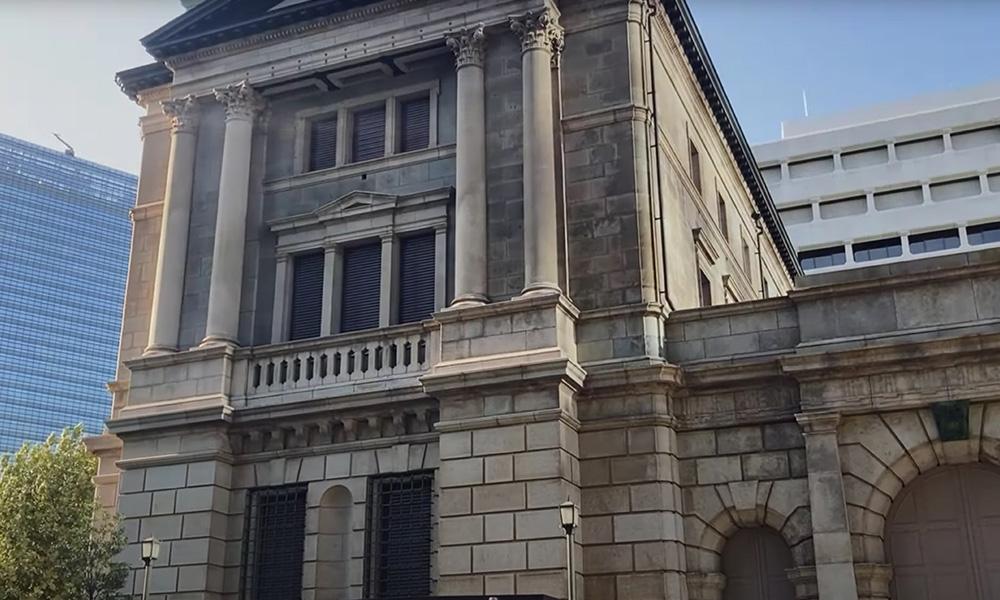
The Bank of Japan significantly revised its inflation forecasts upward in its "Outlook for the Economy and Prices" report released after its meeting. The median forecast for the year-on-year increase in the core consumer price index (excluding fresh food) for fiscal year 2026 was revised upward to 2.6% from 2.2% in January, and upward to 2.6% for fiscal year 2027 from 2.1% . The forecast for fiscal year 2028 is 2.2%. Notably, the inflation expectation for fiscal year 2026 is significantly higher than previous levels, reflecting that rising oil prices are accelerating their transmission to the prices of various goods and services.
Regarding economic forecasts, the Bank of Japan projects that real GDP growth in fiscal year 2026 may slow to 0.5%, significantly lower than the 1.0% forecast in January. The median forecasts for real GDP growth in fiscal years 2026, 2027, and 2028 are 0.5%, 0.7%, and 0.8%, respectively. The Bank of Japan noted that Japan's economic growth may slow in fiscal year 2026, mainly due to the squeeze on corporate and household incomes caused by high oil prices. However, as the adverse effects of high oil prices are expected to gradually weaken from fiscal year 2027 onwards, the economic growth rate will rise moderately.
In its risk report, the Bank of Japan specifically pointed out that the current rise in crude oil prices is more easily passed on to the prices of various goods and services than before, and the effects of a second round of price increases are expanding. The central bank emphasized the need to closely monitor whether inflation risks rise significantly and to prevent them from becoming a reality. At the same time, the central bank believes that its price stability objective has been largely achieved, and price risks have shifted to the upside.
Despite keeping interest rates unchanged, the 6-3 vote revealed a significant divergence of opinion within the policy committee regarding the pace of rate hikes. The three members who proposed raising rates believed that current price risks were significantly skewed to the upside and that the policy rate should be raised to near the neutral rate as soon as possible. The majority of members, however, preferred to wait for more economic data to assess the ultimate impact of the situation in the Middle East.
Prior to this interest rate decision, market pricing indicated that market expectations for an April rate hike had fallen sharply from over 70% at the end of March to less than 5%, while the probability of a June rate hike had risen to 65% to 68%. Ray Attrill, Head of FX Strategy at National Australia Bank, stated that the market's expectation of a rate hike in April was now less than 5%, whereas earlier this month the market had anticipated a rate hike by the Bank of Japan at this meeting. Ding Rui, Head of Japan Research at CICC Research Department, pointed out that given the continued uncertainty surrounding the Middle East situation and its yet-to-be-observed impact on the economy and inflation, the Bank of Japan may postpone its decision on further rate hikes until the June meeting.
Hours before the interest rate decision was announced, Japanese Finance Minister Satsuki Katayama issued a stern warning to the foreign exchange market, stating that the government was prepared to respond to currency market volatility around the clock. Katayama said, "I have consistently mentioned that we will take decisive action if necessary," adding that the government would remain highly vigilant regarding the upcoming "Golden Week" holiday, "We are prepared to respond around the clock."
The USD/JPY pair briefly fell to 159.16 after the policy decision was announced, but generally remained around 159.50, just shy of the 160 level that Japanese authorities are expected to use to intervene in the foreign exchange market in 2024.
Katayama Satsuki also cited market opinions, stating that the persistently high volatility of crude oil futures is seen as fueling speculation in the foreign exchange market. The increasing attention paid by Japanese authorities to the crude oil futures market indicates that their monitoring scope has expanded from the purely monetary sphere to a broader market.
Some economists remain skeptical about the effectiveness of the intervention. Kei Fujimoto, an economist at Sumitomo Mitsui Trust Asset Management, pointed out that the current weakness of the yen is driven more by economic fundamentals than by purely speculative factors, therefore the effect of foreign exchange market intervention may be limited. Volkmar Bauer, an analyst at Commerzbank, warned that if the Bank of Japan remains cautious about future interest rate hikes, warnings from the Ministry of Finance alone may "no longer be of much help," at which point the dollar/yen exchange rate could break through the 160 mark.
This interest rate decision coincides with a "super central bank week" in global markets. The Federal Reserve, the European Central Bank, the Bank of England, and the Bank of Canada will all announce their interest rate decisions this week. Against the backdrop of ongoing conflict in the Middle East, rising energy prices, and increased global economic uncertainty, the market widely expects these five central banks to hold rates steady at this round of meetings.
The evolving situation in the Middle East has become a key variable influencing central bank decisions. As of April 27, Brent crude oil futures for June delivery surged to $108.23, while WTI crude oil reached $96.37, influenced by tensions between the US and Iran and restrictions on shipping through the Strait of Hormuz. Analysts warn that if Iran were to completely blockade the Strait of Hormuz, oil prices could soar to $150 to $200 per barrel. Ray Attrill, head of foreign exchange strategy at National Australia Bank, stated, "Every central bank that met made it clear that the impact of the war on inflation and economic growth remains shrouded in uncertainty, giving them ample reason to remain on hold."
The Federal Open Market Committee (FOMC) will meet on April 29 and is expected to keep interest rates unchanged. Market focus will also be on the Senate's confirmation process for nominee Kevin Warsh, with the vote scheduled for the morning of April 30, Eastern Time.
In its statement, the Bank of Japan emphasized that it will continue to raise interest rates based on developments in the economy, prices, and financial markets, and will closely monitor the impact of developments in the Middle East on the economy and prices, carefully reviewing the timing and pace of policy adjustments. The central bank believes that, supported by various government measures such as fuel subsidies and other factors, financial conditions will remain accommodative, and the economy will be supported.
Citibank believes the Bank of Japan is likely to maintain its pace of raising interest rates approximately every six months, with the baseline scenario remaining unchanged in April and a rate hike in July. Analysts at Daiwa Institute of Research, however, warn that delaying rate hikes could have a severe impact on the Japanese economy through a combination of rising inflation and further yen depreciation, suggesting the Bank of Japan implement a "precautionary rate hike" to anchor inflation expectations and preserve policy space.
The Bank of Japan (BOJ) maintained its interest rate at 0.75% by a 6-3 vote, highlighting its policy caution amid geopolitical uncertainties in the Middle East. Inflation forecasts were significantly revised upward to 2.6%, while economic growth forecasts were lowered to 0.5%, indicating that the Japanese economy is facing "stagflation-like" pressures. The yen's approach to the intervention threshold of 160 and the impact of oil prices have created a policy dilemma, and the dissent from three committee members regarding a rate hike has increased uncertainty surrounding the June meeting. Market expectations for a June rate hike by the BOJ have risen to 65%, but the true signal of a policy shift may depend on the evolution of the Middle East situation. With Japanese inflation expectations reaching a ten-year high, the statements made by BOJ President Kazuo Ueda at the post-meeting press conference will be key to judging the future pace of policy.
Question 1: Why did the Bank of Japan choose to hold its policy unchanged despite a significant upward revision of inflation expectations?
The Bank of Japan believes that the main reason for rising inflation is imported factors from rising oil prices, rather than excessive domestic demand. The situation in the Middle East has led to extremely high uncertainty in oil prices, and an immediate interest rate hike could further suppress domestic demand and exacerbate the risk of economic downturn. The central bank hopes to confirm whether inflation has stabilized at around 2% before taking action; maintaining an accommodative monetary environment to support the economy is currently its priority.
Question 2: Why is there a disagreement within the Bank of Japan regarding the proposal by three committee members to raise interest rates to 1.0%?
Those advocating for an interest rate hike, including Nakagawa, Takada, and Tamura, argued that price risks had significantly shifted to the upside, and the transmission effect of rising oil prices was widening. They believed the policy rate should be adjusted to near the neutral level as much as possible. However, most members worried that a rate hike at this time might drag down economic growth and wanted to wait for the situation in the Middle East to become clearer before making a decision. This marks the first time since the Bank of Japan began its rate hike cycle that such a large number of dissenting votes have appeared.
Question 3: With the yen approaching the 160 mark, will the Japanese government intervene in the foreign exchange market again?
Japanese Finance Minister Satsuki Katayama has stated that Japan is prepared to intervene "around the clock." However, intervention faces two major constraints: first, the current weakness of the yen is largely based on economic fundamentals (oil price shocks, trade deficit), limiting the effectiveness of intervention; second, there is uncertainty regarding the US stance on intervention. Several institutions believe that if the yen breaks through 160 and the Bank of Japan does not release a clear hawkish signal, the probability of intervention will increase significantly, but the actual effect may fall short of expectations.
Question 4: How will the situation in the Middle East affect Japan's economic and monetary policy path?
The situation in the Middle East affects Japan through three channels: First, rising oil prices directly increase import costs, worsening the trade balance and squeezing corporate profits and household real income; second, energy-driven inflation forces the central bank to weigh the balance between curbing inflation and supporting growth; and third, geopolitical uncertainty makes businesses more cautious in their investment decisions. If the conflict in the Middle East continues, the Bank of Japan may be forced to postpone its interest rate hike plans, while facing a more severe challenge of stagflation.
Question 5: When is the Bank of Japan most likely to raise interest rates next?
Current market pricing indicates a roughly 65% probability of a rate hike in June. The spring wage negotiation data to be released in June is a key variable—if wage growth continues to expand, it indicates a virtuous cycle of wages and prices, providing ample justification for a rate hike. July is another potential window, consistent with Citibank's baseline scenario of "roughly one rate hike every six months." However, if the situation in the Middle East deteriorates further, the decision to raise rates may be postponed until the market stabilizes further.
At 11:25 Beijing time, the USD/JPY exchange rate is currently at 159.22/23.
Under the dual pressure of significantly upward revisions to inflation expectations and a continued weakening of the yen approaching the "intervention red line," the Bank of Japan's cautious stance highlights the policy dilemma caused by the escalation of the situation in the Middle East.
Following the interest rate decision, as of 11:20, the USD/JPY pair briefly fell nearly 40 points to around 159.16.
Inflation expectations have been revised upwards significantly, and the transmission effect of oil prices has expanded.
The Bank of Japan significantly revised its inflation forecasts upward in its "Outlook for the Economy and Prices" report released after its meeting. The median forecast for the year-on-year increase in the core consumer price index (excluding fresh food) for fiscal year 2026 was revised upward to 2.6% from 2.2% in January, and upward to 2.6% for fiscal year 2027 from 2.1% . The forecast for fiscal year 2028 is 2.2%. Notably, the inflation expectation for fiscal year 2026 is significantly higher than previous levels, reflecting that rising oil prices are accelerating their transmission to the prices of various goods and services.
Regarding economic forecasts, the Bank of Japan projects that real GDP growth in fiscal year 2026 may slow to 0.5%, significantly lower than the 1.0% forecast in January. The median forecasts for real GDP growth in fiscal years 2026, 2027, and 2028 are 0.5%, 0.7%, and 0.8%, respectively. The Bank of Japan noted that Japan's economic growth may slow in fiscal year 2026, mainly due to the squeeze on corporate and household incomes caused by high oil prices. However, as the adverse effects of high oil prices are expected to gradually weaken from fiscal year 2027 onwards, the economic growth rate will rise moderately.
In its risk report, the Bank of Japan specifically pointed out that the current rise in crude oil prices is more easily passed on to the prices of various goods and services than before, and the effects of a second round of price increases are expanding. The central bank emphasized the need to closely monitor whether inflation risks rise significantly and to prevent them from becoming a reality. At the same time, the central bank believes that its price stability objective has been largely achieved, and price risks have shifted to the upside.
Policy divergences have emerged, with the market focusing on the possibility of a June rate hike.
Despite keeping interest rates unchanged, the 6-3 vote revealed a significant divergence of opinion within the policy committee regarding the pace of rate hikes. The three members who proposed raising rates believed that current price risks were significantly skewed to the upside and that the policy rate should be raised to near the neutral rate as soon as possible. The majority of members, however, preferred to wait for more economic data to assess the ultimate impact of the situation in the Middle East.
Prior to this interest rate decision, market pricing indicated that market expectations for an April rate hike had fallen sharply from over 70% at the end of March to less than 5%, while the probability of a June rate hike had risen to 65% to 68%. Ray Attrill, Head of FX Strategy at National Australia Bank, stated that the market's expectation of a rate hike in April was now less than 5%, whereas earlier this month the market had anticipated a rate hike by the Bank of Japan at this meeting. Ding Rui, Head of Japan Research at CICC Research Department, pointed out that given the continued uncertainty surrounding the Middle East situation and its yet-to-be-observed impact on the economy and inflation, the Bank of Japan may postpone its decision on further rate hikes until the June meeting.
The yen is nearing the 160 intervention threshold, prompting the Finance Minister to issue a "24/7" warning.
Hours before the interest rate decision was announced, Japanese Finance Minister Satsuki Katayama issued a stern warning to the foreign exchange market, stating that the government was prepared to respond to currency market volatility around the clock. Katayama said, "I have consistently mentioned that we will take decisive action if necessary," adding that the government would remain highly vigilant regarding the upcoming "Golden Week" holiday, "We are prepared to respond around the clock."
The USD/JPY pair briefly fell to 159.16 after the policy decision was announced, but generally remained around 159.50, just shy of the 160 level that Japanese authorities are expected to use to intervene in the foreign exchange market in 2024.
Katayama Satsuki also cited market opinions, stating that the persistently high volatility of crude oil futures is seen as fueling speculation in the foreign exchange market. The increasing attention paid by Japanese authorities to the crude oil futures market indicates that their monitoring scope has expanded from the purely monetary sphere to a broader market.
Some economists remain skeptical about the effectiveness of the intervention. Kei Fujimoto, an economist at Sumitomo Mitsui Trust Asset Management, pointed out that the current weakness of the yen is driven more by economic fundamentals than by purely speculative factors, therefore the effect of foreign exchange market intervention may be limited. Volkmar Bauer, an analyst at Commerzbank, warned that if the Bank of Japan remains cautious about future interest rate hikes, warnings from the Ministry of Finance alone may "no longer be of much help," at which point the dollar/yen exchange rate could break through the 160 mark.
Middle East Situation and the Super Central Bank Week: Global Central Banks Take a Wait-and-See Approach
This interest rate decision coincides with a "super central bank week" in global markets. The Federal Reserve, the European Central Bank, the Bank of England, and the Bank of Canada will all announce their interest rate decisions this week. Against the backdrop of ongoing conflict in the Middle East, rising energy prices, and increased global economic uncertainty, the market widely expects these five central banks to hold rates steady at this round of meetings.
The evolving situation in the Middle East has become a key variable influencing central bank decisions. As of April 27, Brent crude oil futures for June delivery surged to $108.23, while WTI crude oil reached $96.37, influenced by tensions between the US and Iran and restrictions on shipping through the Strait of Hormuz. Analysts warn that if Iran were to completely blockade the Strait of Hormuz, oil prices could soar to $150 to $200 per barrel. Ray Attrill, head of foreign exchange strategy at National Australia Bank, stated, "Every central bank that met made it clear that the impact of the war on inflation and economic growth remains shrouded in uncertainty, giving them ample reason to remain on hold."
The Federal Open Market Committee (FOMC) will meet on April 29 and is expected to keep interest rates unchanged. Market focus will also be on the Senate's confirmation process for nominee Kevin Warsh, with the vote scheduled for the morning of April 30, Eastern Time.
Market Outlook: Policy Path Depends on Evolution of the Middle East Situation
In its statement, the Bank of Japan emphasized that it will continue to raise interest rates based on developments in the economy, prices, and financial markets, and will closely monitor the impact of developments in the Middle East on the economy and prices, carefully reviewing the timing and pace of policy adjustments. The central bank believes that, supported by various government measures such as fuel subsidies and other factors, financial conditions will remain accommodative, and the economy will be supported.
Citibank believes the Bank of Japan is likely to maintain its pace of raising interest rates approximately every six months, with the baseline scenario remaining unchanged in April and a rate hike in July. Analysts at Daiwa Institute of Research, however, warn that delaying rate hikes could have a severe impact on the Japanese economy through a combination of rising inflation and further yen depreciation, suggesting the Bank of Japan implement a "precautionary rate hike" to anchor inflation expectations and preserve policy space.
Editor's Summary:
The Bank of Japan (BOJ) maintained its interest rate at 0.75% by a 6-3 vote, highlighting its policy caution amid geopolitical uncertainties in the Middle East. Inflation forecasts were significantly revised upward to 2.6%, while economic growth forecasts were lowered to 0.5%, indicating that the Japanese economy is facing "stagflation-like" pressures. The yen's approach to the intervention threshold of 160 and the impact of oil prices have created a policy dilemma, and the dissent from three committee members regarding a rate hike has increased uncertainty surrounding the June meeting. Market expectations for a June rate hike by the BOJ have risen to 65%, but the true signal of a policy shift may depend on the evolution of the Middle East situation. With Japanese inflation expectations reaching a ten-year high, the statements made by BOJ President Kazuo Ueda at the post-meeting press conference will be key to judging the future pace of policy.
Frequently Asked Questions
Question 1: Why did the Bank of Japan choose to hold its policy unchanged despite a significant upward revision of inflation expectations?
The Bank of Japan believes that the main reason for rising inflation is imported factors from rising oil prices, rather than excessive domestic demand. The situation in the Middle East has led to extremely high uncertainty in oil prices, and an immediate interest rate hike could further suppress domestic demand and exacerbate the risk of economic downturn. The central bank hopes to confirm whether inflation has stabilized at around 2% before taking action; maintaining an accommodative monetary environment to support the economy is currently its priority.
Question 2: Why is there a disagreement within the Bank of Japan regarding the proposal by three committee members to raise interest rates to 1.0%?
Those advocating for an interest rate hike, including Nakagawa, Takada, and Tamura, argued that price risks had significantly shifted to the upside, and the transmission effect of rising oil prices was widening. They believed the policy rate should be adjusted to near the neutral level as much as possible. However, most members worried that a rate hike at this time might drag down economic growth and wanted to wait for the situation in the Middle East to become clearer before making a decision. This marks the first time since the Bank of Japan began its rate hike cycle that such a large number of dissenting votes have appeared.
Question 3: With the yen approaching the 160 mark, will the Japanese government intervene in the foreign exchange market again?
Japanese Finance Minister Satsuki Katayama has stated that Japan is prepared to intervene "around the clock." However, intervention faces two major constraints: first, the current weakness of the yen is largely based on economic fundamentals (oil price shocks, trade deficit), limiting the effectiveness of intervention; second, there is uncertainty regarding the US stance on intervention. Several institutions believe that if the yen breaks through 160 and the Bank of Japan does not release a clear hawkish signal, the probability of intervention will increase significantly, but the actual effect may fall short of expectations.
Question 4: How will the situation in the Middle East affect Japan's economic and monetary policy path?
The situation in the Middle East affects Japan through three channels: First, rising oil prices directly increase import costs, worsening the trade balance and squeezing corporate profits and household real income; second, energy-driven inflation forces the central bank to weigh the balance between curbing inflation and supporting growth; and third, geopolitical uncertainty makes businesses more cautious in their investment decisions. If the conflict in the Middle East continues, the Bank of Japan may be forced to postpone its interest rate hike plans, while facing a more severe challenge of stagflation.
Question 5: When is the Bank of Japan most likely to raise interest rates next?
Current market pricing indicates a roughly 65% probability of a rate hike in June. The spring wage negotiation data to be released in June is a key variable—if wage growth continues to expand, it indicates a virtuous cycle of wages and prices, providing ample justification for a rate hike. July is another potential window, consistent with Citibank's baseline scenario of "roughly one rate hike every six months." However, if the situation in the Middle East deteriorates further, the decision to raise rates may be postponed until the market stabilizes further.
At 11:25 Beijing time, the USD/JPY exchange rate is currently at 159.22/23.
- Risk Warning and Disclaimer
- The market involves risk, and trading may not be suitable for all investors. This article is for reference only and does not constitute personal investment advice, nor does it take into account certain users’ specific investment objectives, financial situation, or other needs. Any investment decisions made based on this information are at your own risk.