Crude oil trading alert: UAE's exit from OPEC raises supply concerns, oil prices may retest previous highs.
2026-04-30 09:10:57
International crude oil markets continued their strong performance in Asian trading on Thursday, with WTI crude oil prices rising to around $107.40, demonstrating the market's high sensitivity to supply-side shocks. The core driver of this rise was the further deterioration of the Middle East geopolitical situation, with the US maintaining a continued maritime blockade of Iran, significantly increasing the risks to oil transportation. The market generally believes that the Strait of Hormuz handles approximately 20% of global seaborne crude oil transport; any disruption to this waterway would directly impact the global energy supply chain and amplify price volatility.

US President Donald Trump made it clear that he would maintain the naval blockade against Iran until a nuclear agreement was reached, and refused to restore access to key shipping lanes. This statement reinforced market expectations of restricted energy transportation. Meanwhile, Iran warned that it might take "unprecedented military action" if the blockade continued, further exacerbating market uncertainty. The differences between the two sides on core issues remain unresolved, and geopolitical risk premiums continue to be priced into oil prices.
On another crucial supply-side variable, the UAE announced its formal withdrawal from OPEC on May 1st. This decision is particularly critical given the current energy crisis. As a major oil producer, the UAE's withdrawal not only weakens OPEC's coordination capabilities but also exposes the divergent interests among oil-producing nations. Previously, the UAE had suffered several weeks of missile and drone attacks from Iran, and this security pressure is considered a significant reason for its policy shift. There are widespread market concerns that widening rifts within OPEC could weaken its future production control capabilities, thereby increasing supply uncertainty.
Market reactions indicate a significant decline in investor risk appetite, with risk aversion driving funds into the energy market. The rapid rise in oil prices reflects not only short-term supply concerns but also a repricing of long-term energy landscape changes. With no significant improvement in demand, supply shocks have become the dominant factor, meaning that oil price movements are significantly more sensitive to geopolitical events.
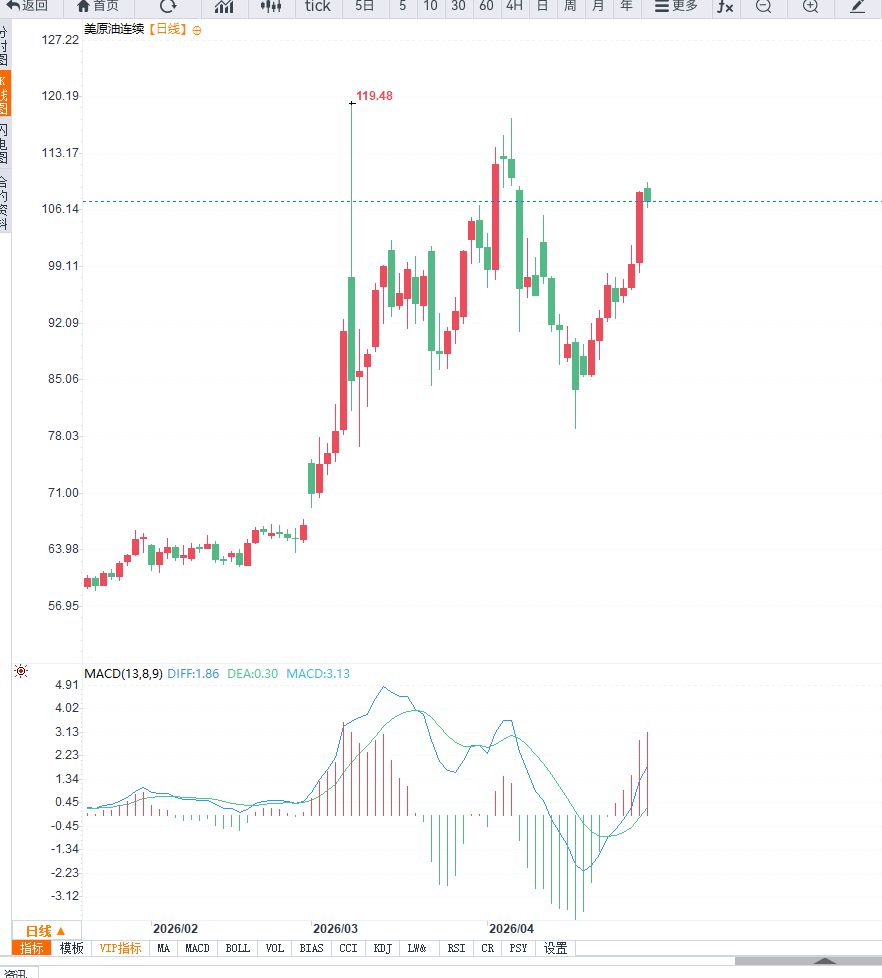
From a technical perspective, WTI crude oil prices are showing a clear upward trend on the daily chart. The price has broken through the key resistance level of around $100 and stabilized above $105, indicating continued strengthening of bullish momentum. In the short term, the upside resistance level to watch is around $112 , while the downside support levels are located in the $100 and $96 range. Regarding momentum indicators, the Relative Strength Index (RSI) remains in a high range, indicating some overbought conditions, but no clear top signal has yet appeared. On the 4-hour chart, oil prices maintain an upward oscillating structure, with short-term moving averages in a bullish alignment. If the price retraces to around $102 and finds support, it is expected to continue testing previous highs; however, a break below $100 could trigger a technical correction.
Editor's Summary:
The current rise in oil prices is essentially a result of the combined effects of geopolitical conflicts and supply system instability. The escalating situation in the Middle East and the emergence of internal rifts within OPEC have significantly diminished market confidence in crude oil supply. In the short term, oil prices will likely remain dominated by geopolitical events and will likely continue to fluctuate at high levels. However, from a medium- to long-term perspective, high oil prices may suppress demand growth, thus exerting downward pressure on prices. Investors need to pay close attention to changes in the Middle East situation and the policy moves of oil-producing countries to determine the future direction of oil prices.
US President Donald Trump made it clear that he would maintain the naval blockade against Iran until a nuclear agreement was reached, and refused to restore access to key shipping lanes. This statement reinforced market expectations of restricted energy transportation. Meanwhile, Iran warned that it might take "unprecedented military action" if the blockade continued, further exacerbating market uncertainty. The differences between the two sides on core issues remain unresolved, and geopolitical risk premiums continue to be priced into oil prices.
On another crucial supply-side variable, the UAE announced its formal withdrawal from OPEC on May 1st. This decision is particularly critical given the current energy crisis. As a major oil producer, the UAE's withdrawal not only weakens OPEC's coordination capabilities but also exposes the divergent interests among oil-producing nations. Previously, the UAE had suffered several weeks of missile and drone attacks from Iran, and this security pressure is considered a significant reason for its policy shift. There are widespread market concerns that widening rifts within OPEC could weaken its future production control capabilities, thereby increasing supply uncertainty.
Market reactions indicate a significant decline in investor risk appetite, with risk aversion driving funds into the energy market. The rapid rise in oil prices reflects not only short-term supply concerns but also a repricing of long-term energy landscape changes. With no significant improvement in demand, supply shocks have become the dominant factor, meaning that oil price movements are significantly more sensitive to geopolitical events.
From a technical perspective, WTI crude oil prices are showing a clear upward trend on the daily chart. The price has broken through the key resistance level of around $100 and stabilized above $105, indicating continued strengthening of bullish momentum. In the short term, the upside resistance level to watch is around $112 , while the downside support levels are located in the $100 and $96 range. Regarding momentum indicators, the Relative Strength Index (RSI) remains in a high range, indicating some overbought conditions, but no clear top signal has yet appeared. On the 4-hour chart, oil prices maintain an upward oscillating structure, with short-term moving averages in a bullish alignment. If the price retraces to around $102 and finds support, it is expected to continue testing previous highs; however, a break below $100 could trigger a technical correction.
Editor's Summary:
The current rise in oil prices is essentially a result of the combined effects of geopolitical conflicts and supply system instability. The escalating situation in the Middle East and the emergence of internal rifts within OPEC have significantly diminished market confidence in crude oil supply. In the short term, oil prices will likely remain dominated by geopolitical events and will likely continue to fluctuate at high levels. However, from a medium- to long-term perspective, high oil prices may suppress demand growth, thus exerting downward pressure on prices. Investors need to pay close attention to changes in the Middle East situation and the policy moves of oil-producing countries to determine the future direction of oil prices.
- Risk Warning and Disclaimer
- The market involves risk, and trading may not be suitable for all investors. This article is for reference only and does not constitute personal investment advice, nor does it take into account certain users’ specific investment objectives, financial situation, or other needs. Any investment decisions made based on this information are at your own risk.