The ECB decision is here! Interest rates remaining unchanged is a foregone conclusion; the real focus is on Lagarde!
2026-04-30 11:24:41
The European Central Bank (ECB) will announce its interest rate decision on Thursday (April 30), and maintaining the key deposit facility rate at 2% is almost a certainty. Market pricing indicates that investors only expect a 10% probability of a rate hike today, meaning the rate decision itself will not cause much of a stir. What truly affects the global foreign exchange market is the wording and tone of ECB President Christine Lagarde at the subsequent press conference. Whether she will release sufficiently hawkish signals to keep the possibility of a June rate hike credibly on the market table is the core focus of this meeting.
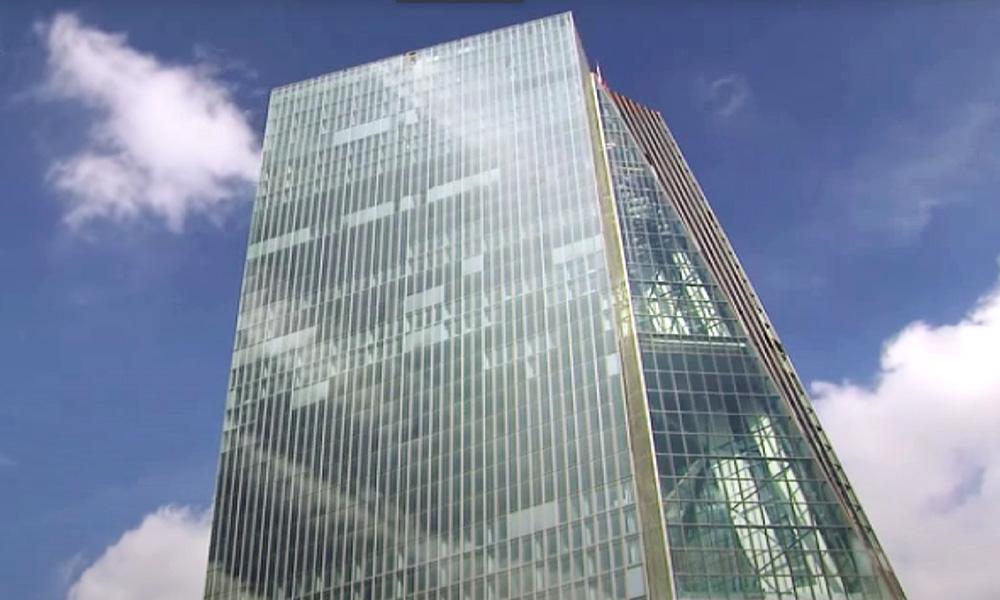
Although the European Central Bank's Governing Council will formally announce its interest rate decision on Thursday, almost all analysts expect the deposit facility rate to remain unchanged at 2%. The market's expectation of the first rate hike being in June stems from the complex economic situation in the Eurozone, which forces policymakers to exercise greater caution.
Economists at BNP Paribas have clearly stated that June is the most likely window for a 25-basis-point rate hike, and the market has already priced in a tightening of 20 to 40 basis points at the June meeting. In other words, the real value of today's meeting lies not in what is announced, but in how Lagarde paves the way for action six weeks from now.
The latest economic data released by the Eurozone presents policymakers with a typical picture of stagflation. On the one hand, the composite Purchasing Managers' Index (PMI) unexpectedly fell to 48.6 in April, returning to contraction territory, indicating that the momentum of the real economy is rapidly waning. On the other hand, inflationary pressures continue to intensify, especially the energy price shocks triggered by the Middle East conflict, which are directly pushing up price levels in the Eurozone through imports.
In its March staff forecasts, the European Central Bank revised its 2026 overall inflation forecast upward to 2.6%, while lowering its GDP growth forecast to 0.9%, the lowest growth level in the current forecast cycle. Continued tightening of bank lending standards and weak PMI data are exacerbating the Governing Council's concerns about economic growth, which may somewhat dampen the hawkish impulse to raise interest rates, even though inflation itself remains stubbornly high.
While signs of an economic slowdown cannot be ignored, the logic supporting the ECB's shift to a hawkish stance is equally compelling. Lagarde explicitly stated in late March that the ECB was prepared to raise interest rates even if the higher-than-expected inflation proved temporary.
She emphasized that if energy and food prices begin to trigger a second round of price effects—that is, a spiral of rising wages and prices—the central bank will not hesitate to take action.
Economists at BNP Paribas believe that unless energy prices continue to fall significantly in the coming weeks, upcoming economic data will likely support a 25-basis-point rate hike in June. Current market pricing indicates that the European Central Bank will have tightened rates by approximately 50 basis points by the end of 2026, meaning that the ECB may even outpace the Federal Reserve in terms of the pace of rate hikes.
TD Securities analysts have conducted a detailed analysis of possible scenarios tonight. They estimate there is about a 40% probability that Lagarde will adopt a hawkish stance—emphasizing rising inflation risks and suggesting the ECB will not wait indefinitely. In this scenario, the euro is expected to rise by about 0.20% against the dollar.
However, if the ECB keeps interest rates unchanged but does not make a clear commitment to action in June, only giving a vague and neutral statement, the euro could fall by about 0.30%, as the market would interpret any lack of commitment as an implicit resistance to pricing in current rate hikes.
Investors who are bullish on the euro in the long term hold a different view. They believe that once the war risk premium brought about by geopolitical conflicts gradually subsides, the interest rate differential between Europe and the US will become more favorable for the euro again. At that time, the euro/dollar exchange rate is expected to retest the high of 1.2078 reached so far this year. But before that, every word Lagarde says at the press conference carries far more weight than the interest rate figures announced at the Frankfurt headquarters.
In conclusion, the ECB meeting in April 2026 is essentially a "decision without suspense, but rhetoric full of suspense." The market has already fully priced in the 2% interest rate; the only factor truly driving the euro exchange rate will be how Lagarde balances growth concerns with inflationary pressures, and how she hints at or leaves open the possibility of a June rate hike. Investors will be closely watching her every word choice tonight Beijing time, because monetary policy communication in a stagflationary environment requires more precise phrasing than ever before.
Question 1: Why is the market almost certain that the European Central Bank will not raise interest rates today, and instead focusing on June?
A: Because current Eurozone economic data exhibits typical characteristics of stagflation—slowing growth coupled with high inflation. The April composite PMI fell to 48.6, indicating contraction, while bank lending standards continued to tighten. These factors gave the ECB ample reason to hold rates steady in April. The market's pricing in interest rate futures indicated a probability of only 10% for a rate hike, meaning investors generally believed that acting today was premature. In contrast, the June meeting provides policymakers with more time to observe energy price trends, developments in the Middle East, and whether a second round of inflationary effects has materialized, thus becoming a reasonable window for the market to price in the first rate hike.
Question 2: What is stagflation? Why is the current situation in the Eurozone described as "textbook stagflation"?
A: Stagflation refers to the simultaneous occurrence of economic stagnation or recession and inflation, a combination that poses a significant challenge for monetary policymakers. The current situation in the Eurozone is as follows: the composite PMI fell to 48.6 in April (below 50 indicates economic contraction), while the European Central Bank lowered its 2026 GDP growth forecast to 0.9% in March; simultaneously, the Middle East conflict has driven up energy prices, leading to an upward revision of the overall inflation rate to 2.6%. This means the central bank faces a dilemma—raising interest rates could curb inflation but further damage the already weak economy; not raising rates could allow inflation expectations to spiral out of control. It is precisely because growth and inflation are deteriorating in opposite directions that this is described as a "textbook" case of stagflation.
Question 3: What exactly does Lagarde's "hawkish signal" refer to? What key things has she said before?
A: A hawkish signal refers to wording by a central bank governor hinting at a future inclination to tighten monetary policy (i.e., raise interest rates). Lagarde clearly stated in late March that the ECB was prepared to raise interest rates even if higher-than-expected inflation proved temporary. She specifically warned that if rising energy and food prices began to trigger a second round of price effects—for example, unions demanding higher wages to compensate for lost purchasing power, and businesses passing on wage costs to consumers—then the central bank would not hesitate to act. The market is watching to see if she will reiterate or even strengthen this stance today, or soften her tone due to deteriorating economic data. If she emphasizes that "inflation risks are still rising" or that "June is an appropriate time to discuss interest rate hikes," that would be a typical hawkish signal.
Question 4: How exactly does the Middle East conflict affect the European Central Bank's interest rate decisions?
A: The Eurozone is a net energy importer, heavily reliant on external oil and gas supplies. The Middle East conflict has directly driven up international oil and gas prices, increasing the cost of energy imports for Europe. This affects policy decisions through two channels: firstly, by directly pushing up inflation, as energy prices are a key component of the consumer price index; and secondly, by indirectly dragging down economic growth by damaging real income and consumer confidence, as households and businesses need to allocate more of their budgets to energy spending. The European Central Bank lowered its 2026 GDP growth forecast to 0.9% in March, primarily due to the energy price shock from the Middle East conflict. Therefore, the evolving situation in the Middle East has simultaneously exacerbated both upside risks to inflation and downside risks to the economy, plunging the central bank into a deeper decision-making dilemma.
Question 5: What factors will determine the euro's performance in the coming months? What are the analysts' views?
A: TD Securities and other institutions believe that the main driver of the euro against the dollar in the short term is not the interest rate differential between Europe and the US, but rather broader global risk sentiment and oil price trends. The war risk premium is currently still suppressing the euro—that is, investors are demanding additional compensation for holding euros due to the uncertainty of the Middle East conflict. Once the geopolitical situation eases, this premium will subside, and the interest rate differential between Europe and the US will once again become the dominant factor. At that time, the euro is expected to continue to rise and test the year's high of 1.2078. However, if Lagarde's tone tonight is too ambiguous, causing the market to lower its expectations for a June rate hike, the euro may fall by about 0.30% in the short term. Furthermore, whether the June meeting actually results in a rate hike, and the pace of the Fed's synchronized actions, will also determine the euro's direction in the medium term.
At 11:23 Beijing time, the euro was trading at 1.1668/69 against the US dollar.
The interest rate decision is expected to be no surprise; the real battleground will be the June meeting.
Although the European Central Bank's Governing Council will formally announce its interest rate decision on Thursday, almost all analysts expect the deposit facility rate to remain unchanged at 2%. The market's expectation of the first rate hike being in June stems from the complex economic situation in the Eurozone, which forces policymakers to exercise greater caution.
Economists at BNP Paribas have clearly stated that June is the most likely window for a 25-basis-point rate hike, and the market has already priced in a tightening of 20 to 40 basis points at the June meeting. In other words, the real value of today's meeting lies not in what is announced, but in how Lagarde paves the way for action six weeks from now.
Stagflation looms over the Eurozone: contracting growth and sticky inflation go hand in hand.
The latest economic data released by the Eurozone presents policymakers with a typical picture of stagflation. On the one hand, the composite Purchasing Managers' Index (PMI) unexpectedly fell to 48.6 in April, returning to contraction territory, indicating that the momentum of the real economy is rapidly waning. On the other hand, inflationary pressures continue to intensify, especially the energy price shocks triggered by the Middle East conflict, which are directly pushing up price levels in the Eurozone through imports.
In its March staff forecasts, the European Central Bank revised its 2026 overall inflation forecast upward to 2.6%, while lowering its GDP growth forecast to 0.9%, the lowest growth level in the current forecast cycle. Continued tightening of bank lending standards and weak PMI data are exacerbating the Governing Council's concerns about economic growth, which may somewhat dampen the hawkish impulse to raise interest rates, even though inflation itself remains stubbornly high.
The hawks' arguments are equally solid: Lagarde's previous tough stance is facing scrutiny.
While signs of an economic slowdown cannot be ignored, the logic supporting the ECB's shift to a hawkish stance is equally compelling. Lagarde explicitly stated in late March that the ECB was prepared to raise interest rates even if the higher-than-expected inflation proved temporary.
She emphasized that if energy and food prices begin to trigger a second round of price effects—that is, a spiral of rising wages and prices—the central bank will not hesitate to take action.
Economists at BNP Paribas believe that unless energy prices continue to fall significantly in the coming weeks, upcoming economic data will likely support a 25-basis-point rate hike in June. Current market pricing indicates that the European Central Bank will have tightened rates by approximately 50 basis points by the end of 2026, meaning that the ECB may even outpace the Federal Reserve in terms of the pace of rate hikes.
Euro's trajectory depends on tone: Predicting market reactions under three scenarios
TD Securities analysts have conducted a detailed analysis of possible scenarios tonight. They estimate there is about a 40% probability that Lagarde will adopt a hawkish stance—emphasizing rising inflation risks and suggesting the ECB will not wait indefinitely. In this scenario, the euro is expected to rise by about 0.20% against the dollar.
However, if the ECB keeps interest rates unchanged but does not make a clear commitment to action in June, only giving a vague and neutral statement, the euro could fall by about 0.30%, as the market would interpret any lack of commitment as an implicit resistance to pricing in current rate hikes.
Investors who are bullish on the euro in the long term hold a different view. They believe that once the war risk premium brought about by geopolitical conflicts gradually subsides, the interest rate differential between Europe and the US will become more favorable for the euro again. At that time, the euro/dollar exchange rate is expected to retest the high of 1.2078 reached so far this year. But before that, every word Lagarde says at the press conference carries far more weight than the interest rate figures announced at the Frankfurt headquarters.
In summary: the interest rate decision has become background noise; Lagarde's press conference is the real stage.
In conclusion, the ECB meeting in April 2026 is essentially a "decision without suspense, but rhetoric full of suspense." The market has already fully priced in the 2% interest rate; the only factor truly driving the euro exchange rate will be how Lagarde balances growth concerns with inflationary pressures, and how she hints at or leaves open the possibility of a June rate hike. Investors will be closely watching her every word choice tonight Beijing time, because monetary policy communication in a stagflationary environment requires more precise phrasing than ever before.
Frequently Asked Questions
Question 1: Why is the market almost certain that the European Central Bank will not raise interest rates today, and instead focusing on June?
A: Because current Eurozone economic data exhibits typical characteristics of stagflation—slowing growth coupled with high inflation. The April composite PMI fell to 48.6, indicating contraction, while bank lending standards continued to tighten. These factors gave the ECB ample reason to hold rates steady in April. The market's pricing in interest rate futures indicated a probability of only 10% for a rate hike, meaning investors generally believed that acting today was premature. In contrast, the June meeting provides policymakers with more time to observe energy price trends, developments in the Middle East, and whether a second round of inflationary effects has materialized, thus becoming a reasonable window for the market to price in the first rate hike.
Question 2: What is stagflation? Why is the current situation in the Eurozone described as "textbook stagflation"?
A: Stagflation refers to the simultaneous occurrence of economic stagnation or recession and inflation, a combination that poses a significant challenge for monetary policymakers. The current situation in the Eurozone is as follows: the composite PMI fell to 48.6 in April (below 50 indicates economic contraction), while the European Central Bank lowered its 2026 GDP growth forecast to 0.9% in March; simultaneously, the Middle East conflict has driven up energy prices, leading to an upward revision of the overall inflation rate to 2.6%. This means the central bank faces a dilemma—raising interest rates could curb inflation but further damage the already weak economy; not raising rates could allow inflation expectations to spiral out of control. It is precisely because growth and inflation are deteriorating in opposite directions that this is described as a "textbook" case of stagflation.
Question 3: What exactly does Lagarde's "hawkish signal" refer to? What key things has she said before?
A: A hawkish signal refers to wording by a central bank governor hinting at a future inclination to tighten monetary policy (i.e., raise interest rates). Lagarde clearly stated in late March that the ECB was prepared to raise interest rates even if higher-than-expected inflation proved temporary. She specifically warned that if rising energy and food prices began to trigger a second round of price effects—for example, unions demanding higher wages to compensate for lost purchasing power, and businesses passing on wage costs to consumers—then the central bank would not hesitate to act. The market is watching to see if she will reiterate or even strengthen this stance today, or soften her tone due to deteriorating economic data. If she emphasizes that "inflation risks are still rising" or that "June is an appropriate time to discuss interest rate hikes," that would be a typical hawkish signal.
Question 4: How exactly does the Middle East conflict affect the European Central Bank's interest rate decisions?
A: The Eurozone is a net energy importer, heavily reliant on external oil and gas supplies. The Middle East conflict has directly driven up international oil and gas prices, increasing the cost of energy imports for Europe. This affects policy decisions through two channels: firstly, by directly pushing up inflation, as energy prices are a key component of the consumer price index; and secondly, by indirectly dragging down economic growth by damaging real income and consumer confidence, as households and businesses need to allocate more of their budgets to energy spending. The European Central Bank lowered its 2026 GDP growth forecast to 0.9% in March, primarily due to the energy price shock from the Middle East conflict. Therefore, the evolving situation in the Middle East has simultaneously exacerbated both upside risks to inflation and downside risks to the economy, plunging the central bank into a deeper decision-making dilemma.
Question 5: What factors will determine the euro's performance in the coming months? What are the analysts' views?
A: TD Securities and other institutions believe that the main driver of the euro against the dollar in the short term is not the interest rate differential between Europe and the US, but rather broader global risk sentiment and oil price trends. The war risk premium is currently still suppressing the euro—that is, investors are demanding additional compensation for holding euros due to the uncertainty of the Middle East conflict. Once the geopolitical situation eases, this premium will subside, and the interest rate differential between Europe and the US will once again become the dominant factor. At that time, the euro is expected to continue to rise and test the year's high of 1.2078. However, if Lagarde's tone tonight is too ambiguous, causing the market to lower its expectations for a June rate hike, the euro may fall by about 0.30% in the short term. Furthermore, whether the June meeting actually results in a rate hike, and the pace of the Fed's synchronized actions, will also determine the euro's direction in the medium term.
At 11:23 Beijing time, the euro was trading at 1.1668/69 against the US dollar.
- Risk Warning and Disclaimer
- The market involves risk, and trading may not be suitable for all investors. This article is for reference only and does not constitute personal investment advice, nor does it take into account certain users’ specific investment objectives, financial situation, or other needs. Any investment decisions made based on this information are at your own risk.