Why did the market breathe a sigh of relief when the European Central Bank kept interest rates unchanged? Is the Middle East crisis about to spread to the Eurozone?
2026-04-30 20:27:03
On Thursday (April 30), at 20:15 Beijing time, the European Central Bank announced its interest rate decision. The Governing Council decided to maintain the three key interest rates unchanged: the deposit facility rate at 2.00%, the main refinancing rate at 2.15%, and the marginal lending facility rate at 2.40%, fully in line with expectations.

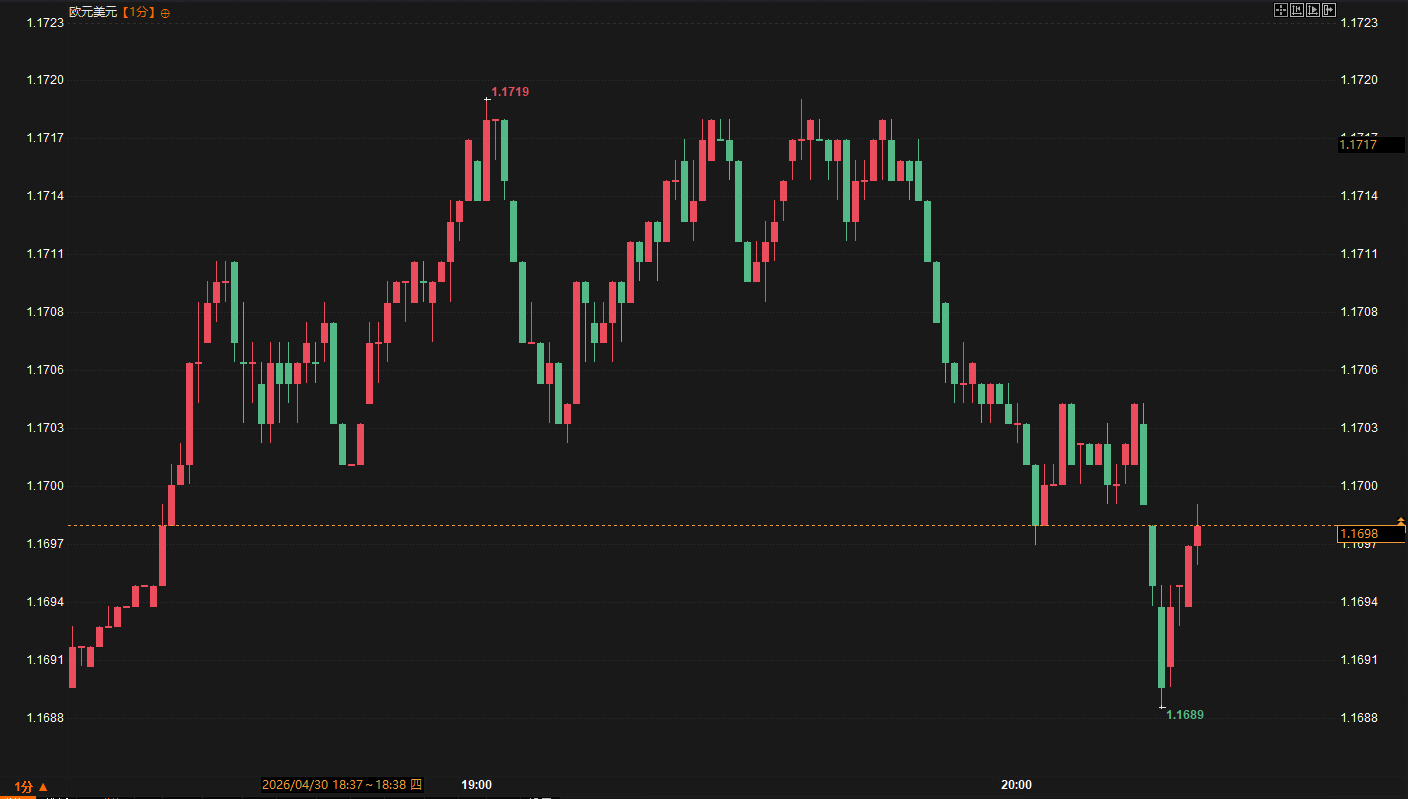
Prior to the announcement, the market widely expected the policy to remain unchanged, but the sharp rise in energy prices triggered by the Middle East situation exacerbated both upside risks to inflation and downside risks to growth. The euro traded cautiously against the dollar, fluctuating within its recent range before the decision. Following the decision, eurozone bond yields fell, with the yield on German two-year bonds extending its decline to approximately 6 basis points at 2.655%, reflecting the market's digestion of the policy remaining unchanged. The euro briefly fell 15 points against the dollar before recovering some of its losses.
The meeting was held against the backdrop of the impact of soaring energy prices caused by the Middle East conflict on the Eurozone economy. The European Central Bank noted that the latest economic data received were broadly in line with its previous assessment of the inflation outlook, but risk asymmetry had increased. The Committee emphasized that it would closely monitor the situation and adopt a data-dependent, meeting-by-meeting approach to policy decisions, without making any pre-commitments to a specific interest rate path.
The European Central Bank's statement combined cautious assessment with flexible positioning. It clearly stated that the Middle East wars have led to a sharp rise in energy prices, driving inflation and dampening economic sentiment. Its impact on medium-term inflation and economic activity depends on the strength and duration of the energy price shock, as well as the scale of indirect and second-round effects. The longer the wars continue and the longer energy prices remain high, the greater the potential impact on broader inflation and the economy.
On the fundamental front, the European Central Bank reiterated its commitment to stabilizing inflation at its medium-term target of 2%. Inflation was already close to the target when the Eurozone entered this period of rising energy prices, and the economy has shown resilience in recent quarters. Long-term inflation expectations remain well anchored, but shorter-term expectations have shifted significantly upward. The Governing Council stated that despite increased uncertainty, it remains well-positioned to address the current environment and is prepared to adjust all its instruments to achieve its price stability objective while maintaining the smooth transmission of monetary policy.
Regarding asset purchases, the APP and PEPP combination is declining at a measurable and predictable pace as the Eurosystem ceases to reinvest principal payments on maturing securities. This continues the previous path of gradual policy normalization.
Historically, when faced with similar geopolitical and energy shocks, the euro exchange rate has often initially faced downward pressure, but if the central bank emphasizes data dependence and its determination to combat inflation, it may find some support in the medium term. This decision maintained the status quo, in line with market expectations, and the euro did not experience significant fluctuations. Compared to the previous more stable risk assessment framework, this decision explicitly points out that both upside risks to inflation and downside risks to growth have strengthened, indicating that the policy balance is flexibly responding to uncertainty.
Latest quotes show that Eurozone bond yields fell after the decision, reflecting market acceptance of maintaining the status quo. The euro exchange rate saw limited short-term fluctuations, having a mild impact on Eurozone assets overall. Technically, the euro/dollar exchange rate maintained a range-bound trading pattern before and after the decision, with short-term bullish and bearish forces relatively balanced. The long-term trend still needs to be observed to gauge the actual impact of energy price transmission on the Eurozone's current account and financing conditions. Overall, this decision has a neutral to slightly cautious impact on the euro.
There was a certain discrepancy between the views of well-known institutions and retail investors before and after the decision. Prior to the decision, some institutions, such as ING, analyzed that the ECB would maintain its current stance, but might signal a move towards a subsequent meeting (such as in June). The market had already priced in some interest rate hikes this year, and some traders were concerned about whether there would be a more hawkish warning to support the euro. At the retail level, discussions focused more on the high probability of maintaining the current stance and the impact of energy prices on inflation. Overall sentiment was cautious, with some expecting data-dependent trends to dominate subsequent decisions.
Following the release of the resolution, institutional interpretations quickly shifted to the statement's emphasis on heightened risks and the flexibility of not pre-committing to a particular path. Most institutions believed that the assessment of both upward and downward risks to inflation strengthened the data-dependent framework and prevented premature locking in of the policy trajectory. The decline in Eurozone bond yields was in line with the pricing adjustment for maintaining the status quo. Institutional accounts and real-time information disseminators highlighted key points such as "keeping the three interest rates unchanged," "risks have intensified," and "data-dependent approach," while retail investors focused more on the facts stated in the statement, with some paying attention to the continued impact of the Middle East situation on energy prices. Overall sentiment was stable, with no significant divergence. Expectation discrepancies mainly stemmed from an initial underestimation of the strength of the risk statements and differences in the degree of emphasis placed on the statement's emphasis on "good positioning to address uncertainty": institutions focused more on medium- to long-term policy flexibility, while retail investors tended to focus on immediate fact-finding and sentiment feedback.
In the short term, the euro exchange rate is likely to continue its range-bound trading pattern, with the focus on the impact of subsequent economic data and the development of the Middle East situation on energy prices. If inflation data continues to reflect the pressure of a second round of inflation, policy signals may gradually reflect cautious adjustments; conversely, if signs of slowing growth strengthen, the data-dependent framework will provide a buffer. In the long term, the euro's price movement will continue to be influenced by a complex interplay of factors, including energy dynamics, the evolution of underlying inflation, and the strength of monetary policy transmission, exhibiting a gradual adaptation to uncertainty.
Q: What are the core considerations behind the European Central Bank's decision to keep interest rates unchanged?
The European Central Bank believes that the latest economic data received are broadly in line with its previous assessment of the inflation outlook, but both upside risks to inflation and downside risks to growth have intensified. The surge in energy prices due to the Middle East wars is a major driving factor. The Governing Council emphasized that it will adopt a data-dependent, meeting-by-meeting approach to decision-making, without making pre-commitments to a specific interest rate path, in order to flexibly address current uncertainties.
Q: What are the key points of the assessment of the impact of the Middle East war in the statement?
The statement points out that the war has driven up energy prices and dampened economic sentiment. Its impact on medium-term inflation and economic activity depends on the intensity and duration of the shock, as well as the scale of indirect and second-round effects. The longer the war lasts and the longer energy prices remain high, the greater the potential impact on broader inflation and the economy. Meanwhile, the Eurozone entered this period with inflation nearing its target, the economy demonstrating resilience, and long-term inflation expectations remaining well anchored.
Q: Why did Eurozone bond yields fall after the resolution?
The decision to keep interest rates unchanged was in line with broad market expectations. Coupled with the statement's emphasis on data-dependent flexibility, this reduced the certainty of short-term policy tightening. The yield on German two-year government bonds fell further, reflecting the market's digestion of the current policy situation and its consideration of downside risks to growth, leading to a corresponding rise in bond prices and a decline in yields.
Q: What are the main differences between institutional and retail investors' views before and after the resolution?
Prior to the resolution, institutions focused more on the probability of maintaining the status quo and the potential guidance of subsequent signals for meetings in June, with some analyses emphasizing the policy space that might arise from heightened risks. Retail investors, on the other hand, tended to focus on the outcome of maintaining the status quo and the direct impact of energy prices on inflation. After the resolution, institutions focused on the risk asymmetry and the flexible framework of not making prior commitments in the statement, while retail investors' views remained more at the level of factual statements. The overall expectation discrepancy stemmed from different levels of emphasis on the depth of risk descriptions and policy flexibility.
Q: What factors will mainly influence the future policy direction of the European Central Bank?
Future policies will strictly adhere to data-driven and meeting-by-meeting principles. Key indicators to watch include the inflation outlook and surrounding risks, economic and financial data, underlying inflation dynamics, and the strength of monetary policy transmission. The actual impact of the Middle East situation on energy prices, evidence of second-round effects, and the resilience of economic growth will be key variables. The Committee is clearly prepared to adjust all its tools to ensure inflation remains stable at the 2% target and to maintain smooth transmission.
Prior to the announcement, the market widely expected the policy to remain unchanged, but the sharp rise in energy prices triggered by the Middle East situation exacerbated both upside risks to inflation and downside risks to growth. The euro traded cautiously against the dollar, fluctuating within its recent range before the decision. Following the decision, eurozone bond yields fell, with the yield on German two-year bonds extending its decline to approximately 6 basis points at 2.655%, reflecting the market's digestion of the policy remaining unchanged. The euro briefly fell 15 points against the dollar before recovering some of its losses.
The meeting was held against the backdrop of the impact of soaring energy prices caused by the Middle East conflict on the Eurozone economy. The European Central Bank noted that the latest economic data received were broadly in line with its previous assessment of the inflation outlook, but risk asymmetry had increased. The Committee emphasized that it would closely monitor the situation and adopt a data-dependent, meeting-by-meeting approach to policy decisions, without making any pre-commitments to a specific interest rate path.
Deep interconnect analysis
The European Central Bank's statement combined cautious assessment with flexible positioning. It clearly stated that the Middle East wars have led to a sharp rise in energy prices, driving inflation and dampening economic sentiment. Its impact on medium-term inflation and economic activity depends on the strength and duration of the energy price shock, as well as the scale of indirect and second-round effects. The longer the wars continue and the longer energy prices remain high, the greater the potential impact on broader inflation and the economy.
On the fundamental front, the European Central Bank reiterated its commitment to stabilizing inflation at its medium-term target of 2%. Inflation was already close to the target when the Eurozone entered this period of rising energy prices, and the economy has shown resilience in recent quarters. Long-term inflation expectations remain well anchored, but shorter-term expectations have shifted significantly upward. The Governing Council stated that despite increased uncertainty, it remains well-positioned to address the current environment and is prepared to adjust all its instruments to achieve its price stability objective while maintaining the smooth transmission of monetary policy.
Regarding asset purchases, the APP and PEPP combination is declining at a measurable and predictable pace as the Eurosystem ceases to reinvest principal payments on maturing securities. This continues the previous path of gradual policy normalization.
Historically, when faced with similar geopolitical and energy shocks, the euro exchange rate has often initially faced downward pressure, but if the central bank emphasizes data dependence and its determination to combat inflation, it may find some support in the medium term. This decision maintained the status quo, in line with market expectations, and the euro did not experience significant fluctuations. Compared to the previous more stable risk assessment framework, this decision explicitly points out that both upside risks to inflation and downside risks to growth have strengthened, indicating that the policy balance is flexibly responding to uncertainty.
Latest quotes show that Eurozone bond yields fell after the decision, reflecting market acceptance of maintaining the status quo. The euro exchange rate saw limited short-term fluctuations, having a mild impact on Eurozone assets overall. Technically, the euro/dollar exchange rate maintained a range-bound trading pattern before and after the decision, with short-term bullish and bearish forces relatively balanced. The long-term trend still needs to be observed to gauge the actual impact of energy price transmission on the Eurozone's current account and financing conditions. Overall, this decision has a neutral to slightly cautious impact on the euro.
There was a certain discrepancy between the views of well-known institutions and retail investors before and after the decision. Prior to the decision, some institutions, such as ING, analyzed that the ECB would maintain its current stance, but might signal a move towards a subsequent meeting (such as in June). The market had already priced in some interest rate hikes this year, and some traders were concerned about whether there would be a more hawkish warning to support the euro. At the retail level, discussions focused more on the high probability of maintaining the current stance and the impact of energy prices on inflation. Overall sentiment was cautious, with some expecting data-dependent trends to dominate subsequent decisions.
Following the release of the resolution, institutional interpretations quickly shifted to the statement's emphasis on heightened risks and the flexibility of not pre-committing to a particular path. Most institutions believed that the assessment of both upward and downward risks to inflation strengthened the data-dependent framework and prevented premature locking in of the policy trajectory. The decline in Eurozone bond yields was in line with the pricing adjustment for maintaining the status quo. Institutional accounts and real-time information disseminators highlighted key points such as "keeping the three interest rates unchanged," "risks have intensified," and "data-dependent approach," while retail investors focused more on the facts stated in the statement, with some paying attention to the continued impact of the Middle East situation on energy prices. Overall sentiment was stable, with no significant divergence. Expectation discrepancies mainly stemmed from an initial underestimation of the strength of the risk statements and differences in the degree of emphasis placed on the statement's emphasis on "good positioning to address uncertainty": institutions focused more on medium- to long-term policy flexibility, while retail investors tended to focus on immediate fact-finding and sentiment feedback.
Trend Outlook
In the short term, the euro exchange rate is likely to continue its range-bound trading pattern, with the focus on the impact of subsequent economic data and the development of the Middle East situation on energy prices. If inflation data continues to reflect the pressure of a second round of inflation, policy signals may gradually reflect cautious adjustments; conversely, if signs of slowing growth strengthen, the data-dependent framework will provide a buffer. In the long term, the euro's price movement will continue to be influenced by a complex interplay of factors, including energy dynamics, the evolution of underlying inflation, and the strength of monetary policy transmission, exhibiting a gradual adaptation to uncertainty.
Frequently Asked Questions
Q: What are the core considerations behind the European Central Bank's decision to keep interest rates unchanged?
The European Central Bank believes that the latest economic data received are broadly in line with its previous assessment of the inflation outlook, but both upside risks to inflation and downside risks to growth have intensified. The surge in energy prices due to the Middle East wars is a major driving factor. The Governing Council emphasized that it will adopt a data-dependent, meeting-by-meeting approach to decision-making, without making pre-commitments to a specific interest rate path, in order to flexibly address current uncertainties.
Q: What are the key points of the assessment of the impact of the Middle East war in the statement?
The statement points out that the war has driven up energy prices and dampened economic sentiment. Its impact on medium-term inflation and economic activity depends on the intensity and duration of the shock, as well as the scale of indirect and second-round effects. The longer the war lasts and the longer energy prices remain high, the greater the potential impact on broader inflation and the economy. Meanwhile, the Eurozone entered this period with inflation nearing its target, the economy demonstrating resilience, and long-term inflation expectations remaining well anchored.
Q: Why did Eurozone bond yields fall after the resolution?
The decision to keep interest rates unchanged was in line with broad market expectations. Coupled with the statement's emphasis on data-dependent flexibility, this reduced the certainty of short-term policy tightening. The yield on German two-year government bonds fell further, reflecting the market's digestion of the current policy situation and its consideration of downside risks to growth, leading to a corresponding rise in bond prices and a decline in yields.
Q: What are the main differences between institutional and retail investors' views before and after the resolution?
Prior to the resolution, institutions focused more on the probability of maintaining the status quo and the potential guidance of subsequent signals for meetings in June, with some analyses emphasizing the policy space that might arise from heightened risks. Retail investors, on the other hand, tended to focus on the outcome of maintaining the status quo and the direct impact of energy prices on inflation. After the resolution, institutions focused on the risk asymmetry and the flexible framework of not making prior commitments in the statement, while retail investors' views remained more at the level of factual statements. The overall expectation discrepancy stemmed from different levels of emphasis on the depth of risk descriptions and policy flexibility.
Q: What factors will mainly influence the future policy direction of the European Central Bank?
Future policies will strictly adhere to data-driven and meeting-by-meeting principles. Key indicators to watch include the inflation outlook and surrounding risks, economic and financial data, underlying inflation dynamics, and the strength of monetary policy transmission. The actual impact of the Middle East situation on energy prices, evidence of second-round effects, and the resilience of economic growth will be key variables. The Committee is clearly prepared to adjust all its tools to ensure inflation remains stable at the 2% target and to maintain smooth transmission.
- Risk Warning and Disclaimer
- The market involves risk, and trading may not be suitable for all investors. This article is for reference only and does not constitute personal investment advice, nor does it take into account certain users’ specific investment objectives, financial situation, or other needs. Any investment decisions made based on this information are at your own risk.