













May 4th Financial Breakfast: Iran's "New Proposal" Unacceptable; Gold Price May Retest $4600; OPEC+ Slightly Increases Production; US Oil Faces Another Decisive Move Above $100.
2026-05-04 06:49:24
On Monday (May 4, Beijing time) in early Asian trading, spot gold was trading around $4,625.83 per ounce. Although the US indicated it would renegotiate with Iran, Iran stated that no negotiations could take place without the Supreme Leader's permission, and Trump declared Iran's "new proposal" unacceptable. Meanwhile, Russia stated that if Ukraine refused to reach an agreement, Russia would force it to accept it through special military action. US crude oil prices fell slightly, despite the seven major OPEC+ oil-producing countries deciding to increase daily crude oil production by 188,000 barrels in June. However, US crude oil prices remained above $100 per barrel.

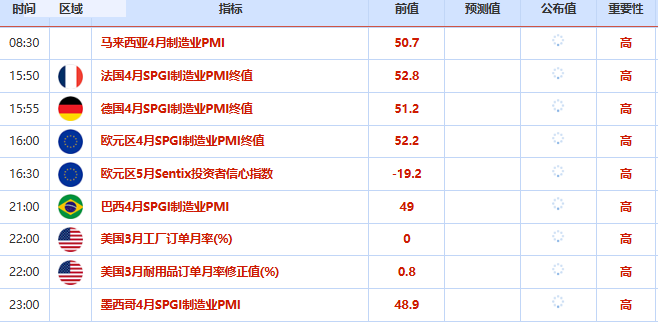
Boosted by strong earnings reports and a drop in oil prices, the S&P 500 and Nasdaq Composite indices closed at record highs on Friday, with technology stocks leading the gains in the Nasdaq. Both indices recorded their sixth consecutive weekly gains, marking their longest weekly winning streak since October 2024, and ending the week with their biggest monthly gains in years. The Dow Jones Industrial Average fell slightly by 0.31% to 49,499.27 points, the S&P 500 rose 0.29% to 7,230.12 points, and the Nasdaq Composite rose 0.89% to 25,114.44 points.
Last week's earnings season was strong, with 83% of S&P 500 companies reporting earnings that exceeded expectations. Analysts expect first-quarter earnings to grow 27.8% year-over-year, the largest earnings increase since the fourth quarter of 2021. Apple's stock rose 3.3% on strong earnings guidance, Atlassian surged 29.6% after raising its annual forecast, boosting software stocks, while Roblox plummeted 18.3% after significantly lowering its booking forecast. ExxonMobil and Chevron fell 1.0% and 1.4% respectively, as profits were dragged down by the situation in the Middle East.
On the economic data front, U.S. manufacturing activity expanded for the fourth consecutive month in April, but the price paid index jumped to a four-year high, exacerbating inflation concerns. On the geopolitical front, Iran's submission of new negotiating proposals to Washington caused crude oil prices to fall, easing some of the pressure from supply disruptions.
Spot gold rose 0.1% to $4,627.63 an ounce on Friday, after falling to a low of $4,559.48 during the session, but still fell 1.7% for the week; U.S. gold futures rose 0.4% to $4,649.60. Oil prices fell, boosting gold prices as they recovered from their losses, influenced by Iran's latest negotiating proposal to the U.S. and the prospect of easing tensions.
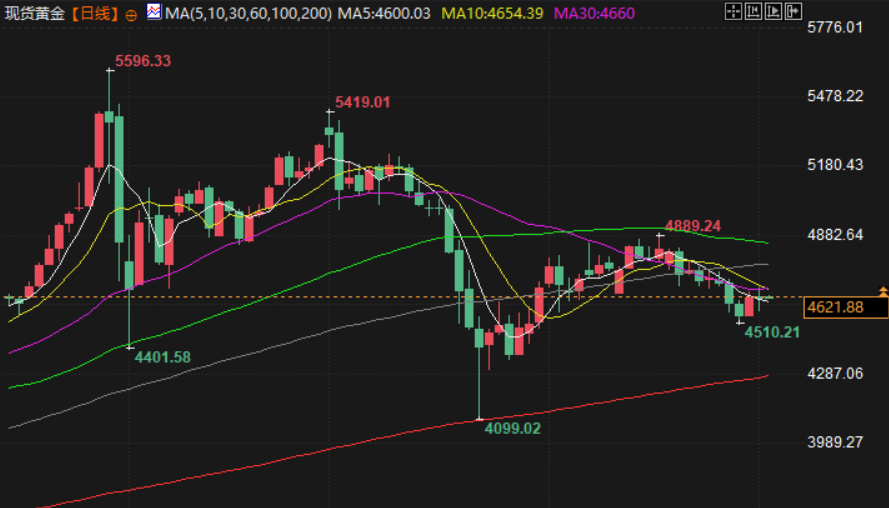
Analysts pointed out that positive news about ending the war with Iran helped gold recover from its early losses. If the war ends, it may prompt the Federal Reserve to restart interest rate cuts, leading to a depreciation of the dollar, which would be beneficial to gold prices. The dollar index weakened that day, making dollar-denominated gold cheaper for buyers holding other currencies.
In other precious metals, spot silver rose 3% to $75.91 per ounce, platinum rose 0.3% to $1,992.05, and palladium rose 0.6% to $1,532.79.
Oil prices plunged on Friday, with July Brent crude futures settling at $108.17 a barrel, down 2.02%, and U.S. crude futures settling at $101.94 a barrel, down 2.98%, influenced by Iran's proposal to Pakistani mediators for new peace talks with the United States.
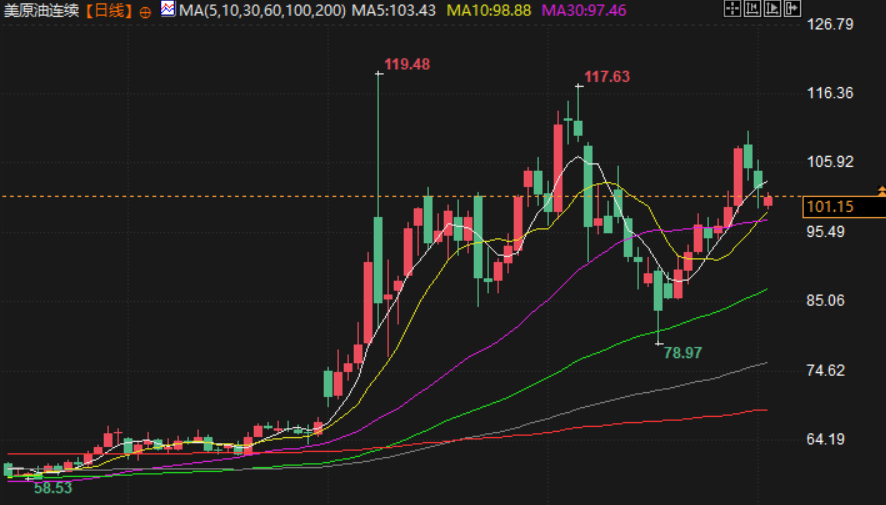
However, due to the closure of the Strait of Hormuz caused by the US-Israeli attacks on Iran (disrupting about one-fifth of global oil transport), both major contracts still recorded a gain of about 2.95% last week. The June Brent contract touched a high of $126.41 per barrel on Thursday, its highest level since March 2022. Analysts at Price Futures Group said that Iran's negotiating proposals gave the market hope that the US might have a way out; although a ceasefire has been reached between the two sides since April 8, an advisor to the UAE president pointed out that any unilateral arrangements made by Tehran regarding the Strait of Hormuz are not credible, and there is deep distrust among the parties.
A partner at Again Capital believes that oil price fluctuations depend on the prospects for resolving the conflict, and the current situation is at a stalemate.
Reports of Japanese authorities intervening in the market to support the yen caused the dollar to fall by about 1.7% against the yen, the largest weekly drop since February. On Friday, the yen fell from around 157.1 to 155.49 before rebounding slightly to 157.04, a gain of 0.26%. According to sources, Japanese authorities bought yen after it fell to 160.7 yen to the dollar on Thursday (a new low since July 2024). Bank of Japan data estimates that the intervention may have involved as much as 5.48 trillion yen (about $35 billion), slightly lower than the $36.8 billion in July 2024.
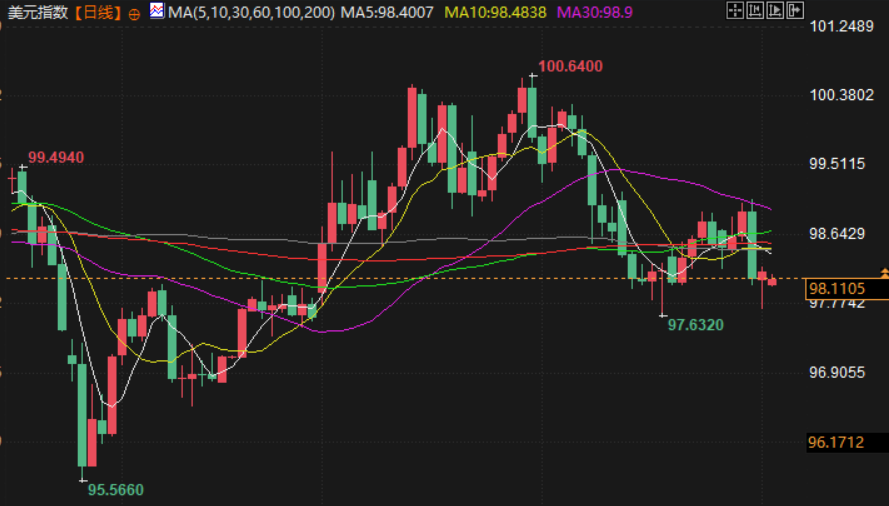
Japanese Finance Minister Jun Mimura stated that speculative positions remain significant, and the market remains wary of potential further intervention by the authorities, especially during next week's "Golden Week" holiday. Barclays analysts pointed out that if the USD/JPY exchange rate rebounds sharply to around 160, there is a risk of further intervention even during the holiday. However, Yuto Shinohara, senior strategist at Mesirow Currency Management, believes the sustainability of intervention is uncertain, and historically, without policy adjustments or interest rate hikes, the effects tend to gradually fade. The widening US-Japan interest rate differential, rising oil prices putting pressure on the yen, and the fact that market expectations for a Fed rate cut have largely disappeared while the expectation for a Bank of Japan rate hike in June is about two-thirds, all contribute to policy divergence that limits the yen's potential for continued appreciation.
In other currencies, the euro was unchanged at $1.1721, the pound fell 0.16% to $1.135803, on track to end a four-week winning streak, and the dollar fell slightly by 0.03% against the Swiss franc to 0.78150.
The probability of the Federal Reserve keeping interest rates unchanged in June is 92.8%.
According to CME's "FedWatch": The probability of the Federal Reserve keeping interest rates unchanged by June is 92.8%, and the probability of a cumulative rate cut of 25 basis points is 7.2%. The probability of the Federal Reserve keeping interest rates unchanged by July is 88.8%, the probability of a cumulative rate cut of 25 basis points is 10.9%, and the probability of a cumulative rate cut of 50 basis points is 0.3%. The probability of the Federal Reserve keeping interest rates unchanged by September is 83.0%, the probability of a cumulative rate cut of 25 basis points is 16.0%, and the probability of a cumulative rate cut of 50 basis points is 1.0%.
Trump: The US will launch its freedom of navigation operation in the Strait of Hormuz on Monday morning, Middle East time.
US President Trump posted on social media that countries around the world—the vast majority of whom are not involved in the current open, intense, and well-known Middle East conflict—have appealed to the United States for assistance in rescuing their ships trapped in the Strait of Hormuz. These countries are neutral and innocent bystanders, having no connection to the situation. For the interests of Iran, the Middle East, and the United States, Trump stated that he has informed these countries that the US will guide their ships safely out of the restricted waterway, allowing them to resume normal shipping operations. Trump reiterated that the region where these ships are located has no connection to the current situation in the Middle East. He has instructed US representatives to inform the relevant countries that the US will make every effort to escort the ships and crew safely out of the Strait of Hormuz. All relevant countries have stated that their ships will not return until navigation is safe and the situation is completely stable. He announced that this mission, codenamed "Operation Freedom of Navigation," will officially begin on Monday morning Middle East time. Trump stated that US representatives are engaged in very positive communication and dialogue with Iran, and these consultations are expected to lead to a highly constructive and positive outcome for all parties. The initial purpose of the ship diversion operation was simply to rescue completely innocent civilians, businesses, and related countries—victims caught in the crossfire of the situation. This was a humanitarian initiative undertaken by the United States, Middle Eastern countries, and especially on behalf of Iran. Many of the ships were on the verge of running out of food and supplies necessary for the crew's health and hygiene. Trump stated that this action would greatly demonstrate goodwill from all parties and resolve the deadlock that had persisted for months. He threatened that if anyone obstructed this humanitarian operation in any way, the United States would have no choice but to respond with force.
Since the outbreak of the war with Iran, gasoline prices in the United States have surged by nearly 50%.
Data from the American Automobile Association (AAA) shows that the average price of regular-grade gasoline in the United States is currently $4.45 per gallon. Gasoline prices rose 35 cents in a single week, and have increased by a total of $1.47 since February 28, representing a 49.3% increase since the outbreak of the conflict.
Trump called Iran's "new proposal" unacceptable.
On the evening of May 3 local time, US President Trump stated in a phone interview that Iran's new proposal was unacceptable. Trump said, "This is unacceptable to me. I've looked at it, I've looked at everything—it's unacceptable." In addition, Trump reiterated in the interview his call for Israeli President Herzog to pardon Israeli Prime Minister Netanyahu, who is facing allegations of corruption. (CCTV News)
Media reports reveal details of Iran's latest negotiation proposal
According to Al Jazeera, Iran's latest negotiation proposal, released this afternoon (May 3rd) local time, comprises three phases. The first phase includes: "transforming the ceasefire into a comprehensive ceasefire within 30 days," "establishing principles for building an international mechanism to ensure the war does not resume," "achieving a ceasefire in all regions with both sides committing not to violate it again, including all of Iran's regional allies and Israel," "gradually lifting the blockade on Iranian ports in a manner appropriate to the gradual opening of the Strait of Hormuz," "Iran's responsibility for clearing mines," "readjusting Iran's previous proposals regarding compensation," and "the US withdrawing from waters surrounding Iran and ceasing new troop buildup." The second phase includes: "discussing a complete halt to uranium enrichment for a period of up to 15 years," and "resuming uranium enrichment activities according to the zero-stockpiling principle after the stipulated period expires." The proposal opposes the dismantling or destruction of Iran's nuclear facilities, and for its existing highly enriched uranium stockpile, it proposes transferring it overseas or diluting the enrichment level. Furthermore, the proposal also addresses the gradual lifting of economic sanctions against Iran. In the third phase, Iran will hold strategic talks with regional countries to discuss how to build a security system covering the entire region. (CCTV International News)
Major oil-producing countries announced production increases for the third consecutive month.
The Organization of the Petroleum Exporting Countries (OPEC) issued a statement on June 3rd, announcing that its seven major oil-producing members, known as "OPEC+", have decided to increase daily crude oil production by 188,000 barrels in June. This is the first decision made by "OPEC+" since the UAE's formal withdrawal, and the third consecutive month of announced production increases. Representatives from Saudi Arabia, Russia, Iraq, Kuwait, Kazakhstan, Algeria, and Oman held an online meeting that day to discuss the situation and prospects of the international oil market. The statement following the meeting said that the seven participating countries decided to increase production on top of the voluntary production cuts announced in April 2023. The statement also said that participating countries will carefully maintain market stability and flexibly adjust production according to market conditions. The seven "OPEC+" member countries will continue to hold monthly meetings to assess market conditions, compliance, and compensation matters. The next meeting will be held on June 7th. The UAE formally withdrew from OPEC and "OPEC+" on May 1st. Analysts believe that the UAE's withdrawal may further exacerbate the continued decline in the market influence of OPEC and "OPEC+".
The Trump administration's halt to wind power approvals affected approximately 165 projects.
The Trump administration has halted onshore wind power development in the United States, citing national security concerns, marking a significant escalation in Trump's battle against renewable energy. According to the Clean Energy Association and sources familiar with the matter, the U.S. Department of Defense is suspending approvals for approximately 165 onshore wind power projects on private land. These include wind farms awaiting final approval, projects in the middle of negotiations, and some projects that typically do not require Department of Defense oversight. Of the affected projects, 35 have completed negotiations and are awaiting Department of Defense approval. Developers and consultants indicate that more projects are now facing stagnation: 30 have completed negotiations and received verbal approval, awaiting written confirmation; approximately 50 projects are in the negotiation process; and another 50 projects were previously likely declared risk-free. These wind farms could generate 30 megawatts of electricity, enough to power 15 million homes. (CCTV)
Iran's Islamic Revolutionary Guard Corps: Gives the Pentagon a deadline to lift the blockade
On the afternoon of March 3 local time, the Iranian Islamic Revolutionary Guard Corps announced that it had given the Pentagon a final deadline to lift the blockade against Iran. (CCTV News)
Peskov: If Ukraine refuses to reach an agreement, Russia will force it to accept it through special military action.
On May 3, local time, Russian Presidential Press Secretary Dmitry Peskov stated that if Ukraine is unwilling to reach an agreement, Russia will use sustained and intensified military action until a "victory" is achieved to force it to accept it. Peskov emphasized that achieving the goal through a peace agreement—namely, resolving the Ukrainian issue through negotiations—remains a priority for Russia. Peskov stated that despite facing a "serious energy crisis," Russia's interests will be protected. He pointed out that Ukraine's attacks on Russian oil infrastructure will trigger a greater oil shortage, while Russian companies and the treasury will actually see increased revenue due to rising fuel prices. Peskov also revealed that Russian President Vladimir Putin and US President Donald Trump made similar assessments of Ukraine's actions during a phone call. Peskov warned that Ukraine's attacks on Russian oil infrastructure could lead to further increases in oil prices. (CCTV News)
A senior Iranian official revealed the latest details of the Iran-US negotiations: no negotiations may be conducted without the Supreme Leader's permission.
On May 3, local time, Mojitaba Zarei, a member of the Iranian Parliament's National Security and Foreign Policy Committee, revealed new details of the Islamabad talks on social media. Zarei stated that the Islamabad negotiations were based on the permission of Iran's Supreme Leader. In addition to obtaining permission, the content of the negotiations must also be conducted within the framework of the Supreme Leader's approval: when the US side wanted to discuss nuclear technology issues, they were informed that the Supreme Leader had prohibited the delegation from discussing technical details on this issue; from now on, decisions in this regard will be made entirely by the Supreme Leader. Furthermore, the head of the Atomic Energy Organization of Iran was prohibited from joining the negotiating team. (CCTV News)
May Day box office surpasses 500 million
According to data from online platforms, as of May 3, the total box office revenue for 2026 (including pre-sales) has exceeded 13.4 billion yuan. The box office revenue for the May Day holiday (including pre-sales) has surpassed 500 million yuan, with an average ticket price of 36.8 yuan, the lowest in nearly four years. (CCTV News)
The world's largest single-unit floating offshore wind power platform has been installed.
The China Three Gorges Corporation announced on March 3 that the "Three Gorges Navigator," the world's largest single-unit floating offshore wind power platform with a capacity of 16 megawatts, developed and constructed under the group's leadership, was successfully installed in the waters off Yangjiang, Guangdong Province, on the evening of March 2. This marks a breakthrough for my country in the field of deep-sea floating wind power technology. (Xinhua)
Key Focus Today
stock market
Boosted by strong earnings reports and a drop in oil prices, the S&P 500 and Nasdaq Composite indices closed at record highs on Friday, with technology stocks leading the gains in the Nasdaq. Both indices recorded their sixth consecutive weekly gains, marking their longest weekly winning streak since October 2024, and ending the week with their biggest monthly gains in years. The Dow Jones Industrial Average fell slightly by 0.31% to 49,499.27 points, the S&P 500 rose 0.29% to 7,230.12 points, and the Nasdaq Composite rose 0.89% to 25,114.44 points.
Last week's earnings season was strong, with 83% of S&P 500 companies reporting earnings that exceeded expectations. Analysts expect first-quarter earnings to grow 27.8% year-over-year, the largest earnings increase since the fourth quarter of 2021. Apple's stock rose 3.3% on strong earnings guidance, Atlassian surged 29.6% after raising its annual forecast, boosting software stocks, while Roblox plummeted 18.3% after significantly lowering its booking forecast. ExxonMobil and Chevron fell 1.0% and 1.4% respectively, as profits were dragged down by the situation in the Middle East.
On the economic data front, U.S. manufacturing activity expanded for the fourth consecutive month in April, but the price paid index jumped to a four-year high, exacerbating inflation concerns. On the geopolitical front, Iran's submission of new negotiating proposals to Washington caused crude oil prices to fall, easing some of the pressure from supply disruptions.
Gold Market
Spot gold rose 0.1% to $4,627.63 an ounce on Friday, after falling to a low of $4,559.48 during the session, but still fell 1.7% for the week; U.S. gold futures rose 0.4% to $4,649.60. Oil prices fell, boosting gold prices as they recovered from their losses, influenced by Iran's latest negotiating proposal to the U.S. and the prospect of easing tensions.
Analysts pointed out that positive news about ending the war with Iran helped gold recover from its early losses. If the war ends, it may prompt the Federal Reserve to restart interest rate cuts, leading to a depreciation of the dollar, which would be beneficial to gold prices. The dollar index weakened that day, making dollar-denominated gold cheaper for buyers holding other currencies.
In other precious metals, spot silver rose 3% to $75.91 per ounce, platinum rose 0.3% to $1,992.05, and palladium rose 0.6% to $1,532.79.
oil market
Oil prices plunged on Friday, with July Brent crude futures settling at $108.17 a barrel, down 2.02%, and U.S. crude futures settling at $101.94 a barrel, down 2.98%, influenced by Iran's proposal to Pakistani mediators for new peace talks with the United States.
However, due to the closure of the Strait of Hormuz caused by the US-Israeli attacks on Iran (disrupting about one-fifth of global oil transport), both major contracts still recorded a gain of about 2.95% last week. The June Brent contract touched a high of $126.41 per barrel on Thursday, its highest level since March 2022. Analysts at Price Futures Group said that Iran's negotiating proposals gave the market hope that the US might have a way out; although a ceasefire has been reached between the two sides since April 8, an advisor to the UAE president pointed out that any unilateral arrangements made by Tehran regarding the Strait of Hormuz are not credible, and there is deep distrust among the parties.
A partner at Again Capital believes that oil price fluctuations depend on the prospects for resolving the conflict, and the current situation is at a stalemate.
Foreign exchange market
Reports of Japanese authorities intervening in the market to support the yen caused the dollar to fall by about 1.7% against the yen, the largest weekly drop since February. On Friday, the yen fell from around 157.1 to 155.49 before rebounding slightly to 157.04, a gain of 0.26%. According to sources, Japanese authorities bought yen after it fell to 160.7 yen to the dollar on Thursday (a new low since July 2024). Bank of Japan data estimates that the intervention may have involved as much as 5.48 trillion yen (about $35 billion), slightly lower than the $36.8 billion in July 2024.
Japanese Finance Minister Jun Mimura stated that speculative positions remain significant, and the market remains wary of potential further intervention by the authorities, especially during next week's "Golden Week" holiday. Barclays analysts pointed out that if the USD/JPY exchange rate rebounds sharply to around 160, there is a risk of further intervention even during the holiday. However, Yuto Shinohara, senior strategist at Mesirow Currency Management, believes the sustainability of intervention is uncertain, and historically, without policy adjustments or interest rate hikes, the effects tend to gradually fade. The widening US-Japan interest rate differential, rising oil prices putting pressure on the yen, and the fact that market expectations for a Fed rate cut have largely disappeared while the expectation for a Bank of Japan rate hike in June is about two-thirds, all contribute to policy divergence that limits the yen's potential for continued appreciation.
In other currencies, the euro was unchanged at $1.1721, the pound fell 0.16% to $1.135803, on track to end a four-week winning streak, and the dollar fell slightly by 0.03% against the Swiss franc to 0.78150.
International News
The probability of the Federal Reserve keeping interest rates unchanged in June is 92.8%.
According to CME's "FedWatch": The probability of the Federal Reserve keeping interest rates unchanged by June is 92.8%, and the probability of a cumulative rate cut of 25 basis points is 7.2%. The probability of the Federal Reserve keeping interest rates unchanged by July is 88.8%, the probability of a cumulative rate cut of 25 basis points is 10.9%, and the probability of a cumulative rate cut of 50 basis points is 0.3%. The probability of the Federal Reserve keeping interest rates unchanged by September is 83.0%, the probability of a cumulative rate cut of 25 basis points is 16.0%, and the probability of a cumulative rate cut of 50 basis points is 1.0%.
Trump: The US will launch its freedom of navigation operation in the Strait of Hormuz on Monday morning, Middle East time.
US President Trump posted on social media that countries around the world—the vast majority of whom are not involved in the current open, intense, and well-known Middle East conflict—have appealed to the United States for assistance in rescuing their ships trapped in the Strait of Hormuz. These countries are neutral and innocent bystanders, having no connection to the situation. For the interests of Iran, the Middle East, and the United States, Trump stated that he has informed these countries that the US will guide their ships safely out of the restricted waterway, allowing them to resume normal shipping operations. Trump reiterated that the region where these ships are located has no connection to the current situation in the Middle East. He has instructed US representatives to inform the relevant countries that the US will make every effort to escort the ships and crew safely out of the Strait of Hormuz. All relevant countries have stated that their ships will not return until navigation is safe and the situation is completely stable. He announced that this mission, codenamed "Operation Freedom of Navigation," will officially begin on Monday morning Middle East time. Trump stated that US representatives are engaged in very positive communication and dialogue with Iran, and these consultations are expected to lead to a highly constructive and positive outcome for all parties. The initial purpose of the ship diversion operation was simply to rescue completely innocent civilians, businesses, and related countries—victims caught in the crossfire of the situation. This was a humanitarian initiative undertaken by the United States, Middle Eastern countries, and especially on behalf of Iran. Many of the ships were on the verge of running out of food and supplies necessary for the crew's health and hygiene. Trump stated that this action would greatly demonstrate goodwill from all parties and resolve the deadlock that had persisted for months. He threatened that if anyone obstructed this humanitarian operation in any way, the United States would have no choice but to respond with force.
Since the outbreak of the war with Iran, gasoline prices in the United States have surged by nearly 50%.
Data from the American Automobile Association (AAA) shows that the average price of regular-grade gasoline in the United States is currently $4.45 per gallon. Gasoline prices rose 35 cents in a single week, and have increased by a total of $1.47 since February 28, representing a 49.3% increase since the outbreak of the conflict.
Trump called Iran's "new proposal" unacceptable.
On the evening of May 3 local time, US President Trump stated in a phone interview that Iran's new proposal was unacceptable. Trump said, "This is unacceptable to me. I've looked at it, I've looked at everything—it's unacceptable." In addition, Trump reiterated in the interview his call for Israeli President Herzog to pardon Israeli Prime Minister Netanyahu, who is facing allegations of corruption. (CCTV News)
Media reports reveal details of Iran's latest negotiation proposal
According to Al Jazeera, Iran's latest negotiation proposal, released this afternoon (May 3rd) local time, comprises three phases. The first phase includes: "transforming the ceasefire into a comprehensive ceasefire within 30 days," "establishing principles for building an international mechanism to ensure the war does not resume," "achieving a ceasefire in all regions with both sides committing not to violate it again, including all of Iran's regional allies and Israel," "gradually lifting the blockade on Iranian ports in a manner appropriate to the gradual opening of the Strait of Hormuz," "Iran's responsibility for clearing mines," "readjusting Iran's previous proposals regarding compensation," and "the US withdrawing from waters surrounding Iran and ceasing new troop buildup." The second phase includes: "discussing a complete halt to uranium enrichment for a period of up to 15 years," and "resuming uranium enrichment activities according to the zero-stockpiling principle after the stipulated period expires." The proposal opposes the dismantling or destruction of Iran's nuclear facilities, and for its existing highly enriched uranium stockpile, it proposes transferring it overseas or diluting the enrichment level. Furthermore, the proposal also addresses the gradual lifting of economic sanctions against Iran. In the third phase, Iran will hold strategic talks with regional countries to discuss how to build a security system covering the entire region. (CCTV International News)
Major oil-producing countries announced production increases for the third consecutive month.
The Organization of the Petroleum Exporting Countries (OPEC) issued a statement on June 3rd, announcing that its seven major oil-producing members, known as "OPEC+", have decided to increase daily crude oil production by 188,000 barrels in June. This is the first decision made by "OPEC+" since the UAE's formal withdrawal, and the third consecutive month of announced production increases. Representatives from Saudi Arabia, Russia, Iraq, Kuwait, Kazakhstan, Algeria, and Oman held an online meeting that day to discuss the situation and prospects of the international oil market. The statement following the meeting said that the seven participating countries decided to increase production on top of the voluntary production cuts announced in April 2023. The statement also said that participating countries will carefully maintain market stability and flexibly adjust production according to market conditions. The seven "OPEC+" member countries will continue to hold monthly meetings to assess market conditions, compliance, and compensation matters. The next meeting will be held on June 7th. The UAE formally withdrew from OPEC and "OPEC+" on May 1st. Analysts believe that the UAE's withdrawal may further exacerbate the continued decline in the market influence of OPEC and "OPEC+".
The Trump administration's halt to wind power approvals affected approximately 165 projects.
The Trump administration has halted onshore wind power development in the United States, citing national security concerns, marking a significant escalation in Trump's battle against renewable energy. According to the Clean Energy Association and sources familiar with the matter, the U.S. Department of Defense is suspending approvals for approximately 165 onshore wind power projects on private land. These include wind farms awaiting final approval, projects in the middle of negotiations, and some projects that typically do not require Department of Defense oversight. Of the affected projects, 35 have completed negotiations and are awaiting Department of Defense approval. Developers and consultants indicate that more projects are now facing stagnation: 30 have completed negotiations and received verbal approval, awaiting written confirmation; approximately 50 projects are in the negotiation process; and another 50 projects were previously likely declared risk-free. These wind farms could generate 30 megawatts of electricity, enough to power 15 million homes. (CCTV)
Iran's Islamic Revolutionary Guard Corps: Gives the Pentagon a deadline to lift the blockade
On the afternoon of March 3 local time, the Iranian Islamic Revolutionary Guard Corps announced that it had given the Pentagon a final deadline to lift the blockade against Iran. (CCTV News)
Peskov: If Ukraine refuses to reach an agreement, Russia will force it to accept it through special military action.
On May 3, local time, Russian Presidential Press Secretary Dmitry Peskov stated that if Ukraine is unwilling to reach an agreement, Russia will use sustained and intensified military action until a "victory" is achieved to force it to accept it. Peskov emphasized that achieving the goal through a peace agreement—namely, resolving the Ukrainian issue through negotiations—remains a priority for Russia. Peskov stated that despite facing a "serious energy crisis," Russia's interests will be protected. He pointed out that Ukraine's attacks on Russian oil infrastructure will trigger a greater oil shortage, while Russian companies and the treasury will actually see increased revenue due to rising fuel prices. Peskov also revealed that Russian President Vladimir Putin and US President Donald Trump made similar assessments of Ukraine's actions during a phone call. Peskov warned that Ukraine's attacks on Russian oil infrastructure could lead to further increases in oil prices. (CCTV News)
A senior Iranian official revealed the latest details of the Iran-US negotiations: no negotiations may be conducted without the Supreme Leader's permission.
On May 3, local time, Mojitaba Zarei, a member of the Iranian Parliament's National Security and Foreign Policy Committee, revealed new details of the Islamabad talks on social media. Zarei stated that the Islamabad negotiations were based on the permission of Iran's Supreme Leader. In addition to obtaining permission, the content of the negotiations must also be conducted within the framework of the Supreme Leader's approval: when the US side wanted to discuss nuclear technology issues, they were informed that the Supreme Leader had prohibited the delegation from discussing technical details on this issue; from now on, decisions in this regard will be made entirely by the Supreme Leader. Furthermore, the head of the Atomic Energy Organization of Iran was prohibited from joining the negotiating team. (CCTV News)
Domestic News
May Day box office surpasses 500 million
According to data from online platforms, as of May 3, the total box office revenue for 2026 (including pre-sales) has exceeded 13.4 billion yuan. The box office revenue for the May Day holiday (including pre-sales) has surpassed 500 million yuan, with an average ticket price of 36.8 yuan, the lowest in nearly four years. (CCTV News)
The world's largest single-unit floating offshore wind power platform has been installed.
The China Three Gorges Corporation announced on March 3 that the "Three Gorges Navigator," the world's largest single-unit floating offshore wind power platform with a capacity of 16 megawatts, developed and constructed under the group's leadership, was successfully installed in the waters off Yangjiang, Guangdong Province, on the evening of March 2. This marks a breakthrough for my country in the field of deep-sea floating wind power technology. (Xinhua)
- Risk Warning and Disclaimer
- The market involves risk, and trading may not be suitable for all investors. This article is for reference only and does not constitute personal investment advice, nor does it take into account certain users’ specific investment objectives, financial situation, or other needs. Any investment decisions made based on this information are at your own risk.

