Crude oil trading alert: The US and Iran remain in a stalemate and negotiation phase; short-term high-level fluctuations suggest a cautious approach.
2026-05-04 09:49:11
Key influencing factors (fundamentals)
Oil prices experienced a period of high-level fluctuations followed by a sharp decline last week: Influenced by Iran's submission of a peace negotiation proposal to Pakistan, Brent crude fell 2.13% to $108.78 per barrel on Friday, while WTI crude fell 2.76% to $102.50 per barrel. However, both contracts still accumulated gains throughout the week, with the June Brent contract reaching a high of $126.41 (a new high since March 2022).
The core driving factors include:
1. Geopolitical Conflict and Strait of Hormuz Blockade (Dominant Bullish Factor): Since the US-Israel attack on Iran in late February, the Strait of Hormuz blockade has disrupted approximately 20% of global oil/LNG transportation, severely hindering exports from Gulf oil-producing countries (Saudi Arabia, Iraq, Kuwait, etc.). This supply disruption has pushed oil prices to a four-year high and triggered potential jet fuel shortages and global inflationary pressures. This is the core support for the current oil price surge.
2. Negotiation Expectations (Negative Pressure): Iran's latest 14-point proposal (including US troop withdrawal, lifting of blockade, unfreezing of assets, compensation, and lifting of sanctions) postpones nuclear negotiations, aiming to resolve the shipping deadlock first. The US has responded through Pakistan. Although Trump stated that the "costs are not enough" and maintained a tough stance, he still indicated that he is reviewing the proposal and announced on Monday that he would provide "humanitarian" assistance to rescue the stranded ships. These signals bring a glimmer of hope for peace.
3. Symbolic Production Increase by OPEC+: OPEC+ agreed to increase production by 188,000 barrels per day in June (for the third consecutive month), with Saudi Arabia's quota rising to 10.291 million barrels per day. However, due to the Straits blockade, the actual increase is unlikely to materialize. It is more of a signal to the market of "organizational control" and "being ready to increase supply at any time," with limited impact on physical supply.
4. Other factors: Trump faces pressure from the midterm elections (high oil prices are pushing up gasoline costs), and the UAE's withdrawal from OPEC and mutual distrust among various parties also increase uncertainty.
Technical Analysis
1. Price Range: Brent crude oil prices fell rapidly from a recent high of $126.41 to around $108, a drop of approximately 14%. Last Friday's large bearish candlestick indicates significant profit-taking and the negative impact of negotiations.
2. Trend Assessment: The market is expected to remain in a high-level consolidation phase in the short term. Until geopolitical risks are resolved, support levels to watch are $105-$100 (a psychological level + a retracement of previous gains); resistance levels are $126 and $130. The moving average system may show a golden cross followed by a high-level divergence signal.
3. Volatility: Volatile due to events, with significant differences between highs and lows within a week, suitable for swing trading but high risk.
Transaction Alerts
1. Short-term cautious outlook: If negotiations achieve substantial progress (signals of the Strait reopening), oil prices could fall rapidly; if Trump takes a hard line or the conflict escalates, oil prices could return to $120+. Pay attention to the follow-up to this week's OPEC+ meeting and actual interactions between the US and Iran.
2. Risk Management: Strict stop-loss orders and controlled position size. Geopolitical events present extremely high uncertainty; avoid heavy, one-sided positions. Monitor US inventory data, the dollar's performance, and Trump's Truth Social statements as leading indicators.
3. Strategy Recommendations: Consider a small long position around $105-$108 (due to ongoing tensions), or consider shorting at higher levels (due to progress in negotiations), but focus on small-position swing trading. In the long term, if the Strait reopens, the resumption of supply will suppress oil prices; conversely, prices will remain high.
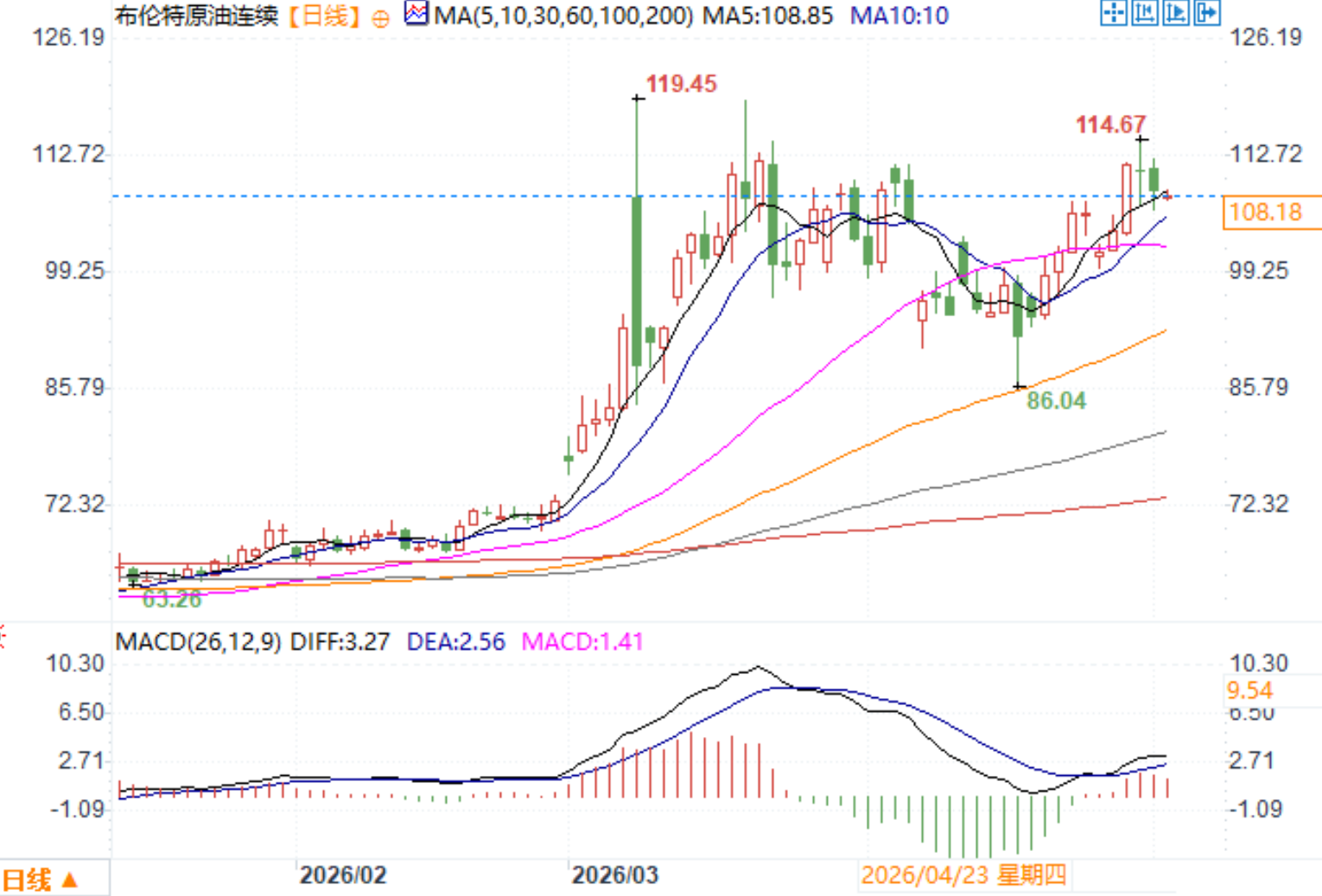
Brent crude oil daily chart source: EasyForex
At 9:39 AM Beijing time on May 4th, Brent crude oil futures were trading at $108.18 per barrel.
- Risk Warning and Disclaimer
- The market involves risk, and trading may not be suitable for all investors. This article is for reference only and does not constitute personal investment advice, nor does it take into account certain users’ specific investment objectives, financial situation, or other needs. Any investment decisions made based on this information are at your own risk.