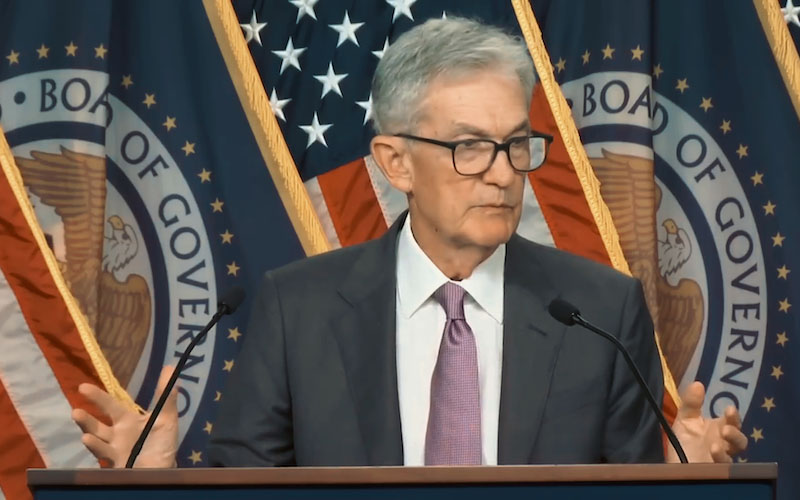
The world's five major central banks held their rates steady; Ning Wan's statement is the truth.
2026-05-04 13:53:11
Last week, the Federal Reserve, the European Central Bank, the Bank of England, the Bank of Japan, and the Bank of Canada simultaneously announced that they would maintain their interest rates unchanged. This collective decision was not accidental, but rather the result of a consensus reached by major central banks around the world. The core principle is clear and unambiguous: it is better to lag behind in policy action than to make a wrong decision.
The current global energy shock is sudden and its dissipation may be as rapid as its onset. Faced with this uncertainty, policymakers worldwide are choosing to remain on the sidelines, awaiting a true response from the economy, rather than blindly adjusting policies based on market news. The market's core focus is not on whether energy prices will rise—facts have already proven that price increases are inevitable—but rather on whether this shock can be sustained, whether it will transmit to wage levels, service prices, and affect inflation expectations. Currently, there is still very limited evidence to support this.
Economic data presents a clear divergence. Lagging hard economic indicators show that economic activity has not deteriorated significantly, and inflation has only risen slightly. However, forward-looking soft indicators based on market surveys signal increased inflation risks and weakening economic momentum. But policymakers have consistently maintained that survey data alone is insufficient to support policy adjustments and are unwilling to use it as the basis for decision-making.
While inflation in most economies has risen to alarming levels, it has not yet reached a point where policy intervention is necessary. Economic activity indicators have weakened slightly, but have not shown a clear recessionary trend. Until the data provides a clear narrative, major central banks are refusing to take premature action and maintaining a wait-and-see approach.
The central bank's ambiguous policy stance stems from the unique nature of this round of energy shocks, best exemplified by the price movement of Brent crude oil. Following the outbreak of the Russia-Ukraine conflict, Brent crude oil prices jumped rapidly, subsequently fluctuating between $90 and $110 per barrel. The market had worried about prices climbing further to $130 or even $150, but these extreme tail risks ultimately did not materialize. Although oil prices were high, they did not continue to rise, and the impact was far less severe than initially expected by the market.
Rising energy prices inherently possess stagflationary characteristics, pushing up inflation while simultaneously squeezing real incomes, suppressing market demand, and dragging down economic growth, creating a thorny policy dilemma. Currently, it's impossible to determine whether rising inflation or economic downturn will dominate, directly leading central banks worldwide to postpone policy adjustments.
The policy debate within the central bank is gradually becoming clearer. One group of officials advocates for proactive action to demonstrate a firm stance on controlling inflation, anchoring market inflation expectations, and avoiding a repeat of the runaway inflation seen in 2021-2022. The other group insists on waiting for clearer economic data, arguing that monetary policy should focus on the macroeconomic outlook rather than simply guiding market sentiment. Most officials hold a centrist position, but the current mainstream opinion still leans towards waiting.
There is another unspoken practical consideration: central banks are extremely wary of policy reversals and must do everything in their power to avoid decision-making errors . If they raise interest rates first and then are forced to lower them again just a few months later, it will not only be seen as a policy mistake, but it will also seriously damage the central bank's credibility and weaken the actual effectiveness of monetary policy.
Long-term interest rates are determined by market expectations of policy interest rates over the next few years. Once the market believes that policy adjustments are only temporary measures, their impact on long-term interest rates will be greatly reduced, thereby blocking the transmission path of monetary policy to the real economy.
The energy shock remains shrouded in mystery, and the central bank is hesitant to act hastily.
The current global energy shock is sudden and its dissipation may be as rapid as its onset. Faced with this uncertainty, policymakers worldwide are choosing to remain on the sidelines, awaiting a true response from the economy, rather than blindly adjusting policies based on market news. The market's core focus is not on whether energy prices will rise—facts have already proven that price increases are inevitable—but rather on whether this shock can be sustained, whether it will transmit to wage levels, service prices, and affect inflation expectations. Currently, there is still very limited evidence to support this.
Economic data presents a clear divergence. Lagging hard economic indicators show that economic activity has not deteriorated significantly, and inflation has only risen slightly. However, forward-looking soft indicators based on market surveys signal increased inflation risks and weakening economic momentum. But policymakers have consistently maintained that survey data alone is insufficient to support policy adjustments and are unwilling to use it as the basis for decision-making.
While inflation in most economies has risen to alarming levels, it has not yet reached a point where policy intervention is necessary. Economic activity indicators have weakened slightly, but have not shown a clear recessionary trend. Until the data provides a clear narrative, major central banks are refusing to take premature action and maintaining a wait-and-see approach.
Oil prices are stabilizing, but the stagflation dilemma is making decision-making more difficult.
The central bank's ambiguous policy stance stems from the unique nature of this round of energy shocks, best exemplified by the price movement of Brent crude oil. Following the outbreak of the Russia-Ukraine conflict, Brent crude oil prices jumped rapidly, subsequently fluctuating between $90 and $110 per barrel. The market had worried about prices climbing further to $130 or even $150, but these extreme tail risks ultimately did not materialize. Although oil prices were high, they did not continue to rise, and the impact was far less severe than initially expected by the market.
Rising energy prices inherently possess stagflationary characteristics, pushing up inflation while simultaneously squeezing real incomes, suppressing market demand, and dragging down economic growth, creating a thorny policy dilemma. Currently, it's impossible to determine whether rising inflation or economic downturn will dominate, directly leading central banks worldwide to postpone policy adjustments.
Internal divisions are becoming increasingly apparent, and policy inconsistencies are the biggest concern.
The policy debate within the central bank is gradually becoming clearer. One group of officials advocates for proactive action to demonstrate a firm stance on controlling inflation, anchoring market inflation expectations, and avoiding a repeat of the runaway inflation seen in 2021-2022. The other group insists on waiting for clearer economic data, arguing that monetary policy should focus on the macroeconomic outlook rather than simply guiding market sentiment. Most officials hold a centrist position, but the current mainstream opinion still leans towards waiting.
There is another unspoken practical consideration: central banks are extremely wary of policy reversals and must do everything in their power to avoid decision-making errors . If they raise interest rates first and then are forced to lower them again just a few months later, it will not only be seen as a policy mistake, but it will also seriously damage the central bank's credibility and weaken the actual effectiveness of monetary policy.
Long-term interest rates are determined by market expectations of policy interest rates over the next few years. Once the market believes that policy adjustments are only temporary measures, their impact on long-term interest rates will be greatly reduced, thereby blocking the transmission path of monetary policy to the real economy.
- Risk Warning and Disclaimer
- The market involves risk, and trading may not be suitable for all investors. This article is for reference only and does not constitute personal investment advice, nor does it take into account certain users’ specific investment objectives, financial situation, or other needs. Any investment decisions made based on this information are at your own risk.