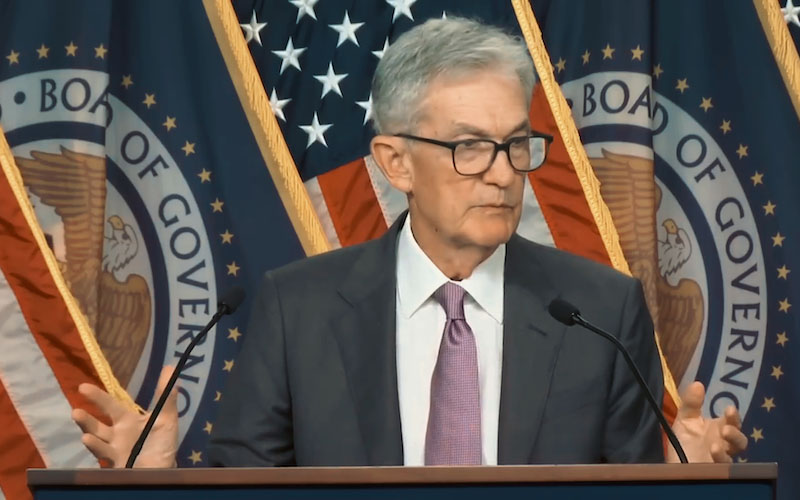
The new Federal Reserve chairman is pushing for contentious decision-making, and it's rare for so many to disagree; his wish may be fulfilled.
2026-05-04 13:32:46
Inaugural Federal Reserve Chairman Kevin Warsh stated clearly during his confirmation hearing that he hopes future interest rate decision meetings will be more open and unconventional, allowing committee members to engage in heated debates and ultimately reach higher-quality economic decisions. This statement now appears to be becoming a reality.
Over the past week, the Federal Open Market Committee (FOMC) has shown significant disagreement on its policy statement, with three members objecting to wording that suggested a bias towards interest rate cuts. Cleveland Fed President Beth Hammack, Minneapolis Fed President Neel Kashkari, and Dallas Fed President Lorie Logan all argued that the policy language should be adjusted, shifting the Fed's stance from favoring rate cuts to maintaining interest rates at a more neutral level.
In addition, Federal Reserve Governor Stephen Miran also dissented from the committee's decision to keep the benchmark interest rate unchanged, advocating for an immediate 25-basis-point rate cut. Such a number of dissents have not occurred in Federal Reserve decisions since October 1992, when the central bank had not yet begun publishing meeting results in real time.
Meanwhile, outgoing Federal Reserve Chairman Jerome Powell broke with tradition by deciding to remain on the Federal Reserve Board of Governors after his term ends next month. He may serve as a governor until early 2028.
North American economist Thomas Ryan pointed out: "Although Powell said he would keep a low profile as a governor, this means that the extremely dovish Milan will have to leave. This will push the overall composition of the FOMC to a more hawkish direction and make it more difficult for the incoming Warsh to push for interest rate cuts in the short term."
The dissent from the three regional Fed presidents is essentially sending a signal to Warsh. Warsh had previously hinted at a preference for an accommodative policy, but the three presidents expressed clear concern about the current inflation situation. Currently, US inflation remains more than one percentage point above the Fed's target, while the combined pressure from soaring oil prices and tariffs is compounded.
PCE rose 3.5% year-on-year in March, up from 2.8% in February. Excluding volatile energy and food prices, core PCE rose 3.2% year-on-year, up from 3% in February.
At the press conference, Powell pointed out that no one is currently calling for an interest rate hike, and most members do not want to change the dovish wording in the statement. However, he also emphasized that "the Committee's middle position is moving towards a more neutral position." This means that although not explicitly stated in the policy statement, most Committee members are actually gradually moving away from a position strongly favoring interest rate cuts.
"This means that the range of committee members who support a more balanced representation of the risks of the dual mandate is broader than the three dissenting members with voting rights mentioned above," said Matt Luzzetti, chief U.S. economist at Deutsche Bank.
During his confirmation hearing last month, Warsh offered his views on the Fed's current preference for the core PCE inflation indicator. He argued that this indicator only provides a rough picture of inflation and preferred the use of "trimmed averages" because such indicators can effectively remove outliers.
Warsh stated that by looking at the subtracted average, the underlying inflation trend has "improved" and looks "quite favorable" overall. However, former Cleveland Fed President Loretta Mester cautioned against this, noting that these indicators should be used with extreme caution because they tend to be downward biased, and the Cleveland Fed is one of the main institutions providing such subtracted average indicators.
Loretta Mester stated, "Given the downward bias, now seems like a particularly inappropriate time to switch to using an exclusion indicator." This also suggests that Warsh may face considerable internal resistance if he pushes for reform of the inflation framework.
The current inflation situation has become more complex. For the past five years, prices have risen faster than the Federal Reserve's 2% target. Tariffs have pushed up commodity prices, and soaring oil prices have brought the latest shock, while inflation in the services sector, which is not directly affected by tariffs, has shown strong stickiness since last year.
Before his nomination, Warsh believed that artificial intelligence would significantly boost productivity, thereby helping to suppress inflation and create room for the Federal Reserve to cut interest rates. During his hearing, while he mentioned artificial intelligence, he did not fully reiterate his previous views. He only stated that artificial intelligence and the "innovation cycle" could improve price conditions over time, easing inflationary pressures on the Federal Reserve. At the same time, he also cautioned that artificial intelligence could impact the job market, which the Federal Reserve must fully consider when formulating interest rate policy.
Warsh concluded, "If central banks could have a good family debate, I think they would make better decisions. And if they made mistakes, they would be able to correct them more quickly."
The FOMC has seen a rare occurrence with multiple dissenting members.
Over the past week, the Federal Open Market Committee (FOMC) has shown significant disagreement on its policy statement, with three members objecting to wording that suggested a bias towards interest rate cuts. Cleveland Fed President Beth Hammack, Minneapolis Fed President Neel Kashkari, and Dallas Fed President Lorie Logan all argued that the policy language should be adjusted, shifting the Fed's stance from favoring rate cuts to maintaining interest rates at a more neutral level.
In addition, Federal Reserve Governor Stephen Miran also dissented from the committee's decision to keep the benchmark interest rate unchanged, advocating for an immediate 25-basis-point rate cut. Such a number of dissents have not occurred in Federal Reserve decisions since October 1992, when the central bank had not yet begun publishing meeting results in real time.
Meanwhile, outgoing Federal Reserve Chairman Jerome Powell broke with tradition by deciding to remain on the Federal Reserve Board of Governors after his term ends next month. He may serve as a governor until early 2028.
North American economist Thomas Ryan pointed out: "Although Powell said he would keep a low profile as a governor, this means that the extremely dovish Milan will have to leave. This will push the overall composition of the FOMC to a more hawkish direction and make it more difficult for the incoming Warsh to push for interest rate cuts in the short term."
The shift in the middle ground sends an important signal.
The dissent from the three regional Fed presidents is essentially sending a signal to Warsh. Warsh had previously hinted at a preference for an accommodative policy, but the three presidents expressed clear concern about the current inflation situation. Currently, US inflation remains more than one percentage point above the Fed's target, while the combined pressure from soaring oil prices and tariffs is compounded.
PCE rose 3.5% year-on-year in March, up from 2.8% in February. Excluding volatile energy and food prices, core PCE rose 3.2% year-on-year, up from 3% in February.
At the press conference, Powell pointed out that no one is currently calling for an interest rate hike, and most members do not want to change the dovish wording in the statement. However, he also emphasized that "the Committee's middle position is moving towards a more neutral position." This means that although not explicitly stated in the policy statement, most Committee members are actually gradually moving away from a position strongly favoring interest rate cuts.
"This means that the range of committee members who support a more balanced representation of the risks of the dual mandate is broader than the three dissenting members with voting rights mentioned above," said Matt Luzzetti, chief U.S. economist at Deutsche Bank.
Warsh advocates for reforming the inflation measurement framework.
During his confirmation hearing last month, Warsh offered his views on the Fed's current preference for the core PCE inflation indicator. He argued that this indicator only provides a rough picture of inflation and preferred the use of "trimmed averages" because such indicators can effectively remove outliers.
Warsh stated that by looking at the subtracted average, the underlying inflation trend has "improved" and looks "quite favorable" overall. However, former Cleveland Fed President Loretta Mester cautioned against this, noting that these indicators should be used with extreme caution because they tend to be downward biased, and the Cleveland Fed is one of the main institutions providing such subtracted average indicators.
Loretta Mester stated, "Given the downward bias, now seems like a particularly inappropriate time to switch to using an exclusion indicator." This also suggests that Warsh may face considerable internal resistance if he pushes for reform of the inflation framework.
The current inflation situation has become more complex. For the past five years, prices have risen faster than the Federal Reserve's 2% target. Tariffs have pushed up commodity prices, and soaring oil prices have brought the latest shock, while inflation in the services sector, which is not directly affected by tariffs, has shown strong stickiness since last year.
Before his nomination, Warsh believed that artificial intelligence would significantly boost productivity, thereby helping to suppress inflation and create room for the Federal Reserve to cut interest rates. During his hearing, while he mentioned artificial intelligence, he did not fully reiterate his previous views. He only stated that artificial intelligence and the "innovation cycle" could improve price conditions over time, easing inflationary pressures on the Federal Reserve. At the same time, he also cautioned that artificial intelligence could impact the job market, which the Federal Reserve must fully consider when formulating interest rate policy.
Warsh concluded, "If central banks could have a good family debate, I think they would make better decisions. And if they made mistakes, they would be able to correct them more quickly."
- Risk Warning and Disclaimer
- The market involves risk, and trading may not be suitable for all investors. This article is for reference only and does not constitute personal investment advice, nor does it take into account certain users’ specific investment objectives, financial situation, or other needs. Any investment decisions made based on this information are at your own risk.