The rebound in the yen put pressure on the pound, leading to a sharp correction against the yen. Could this be a short-term peak?
2026-05-06 16:18:29
On Wednesday morning in Europe, the pound rebounded against the yen after a sharp correction, with the pair quickly recovering from an intraday low of 210.75 to around 212.65. Previously, the pair had touched above 214.20, a high for the week, but subsequently fell rapidly, dropping nearly 350 pips in a single day, indicating significantly increased market volatility.

The core driver of this sharp decline in the yen's exchange rate stemmed from expectations of potential intervention in the foreign exchange market by Japan. Previously, the Japanese Ministry of Finance had intervened after the yen fell below the key psychological level of 160 against the US dollar. Market data estimates suggest that Japanese authorities used approximately 5.48 trillion yen (about US$35 billion) to support the yen's exchange rate. This move significantly altered market expectations of a one-sided depreciation of the yen and has made investors highly vigilant about further intervention.
Against this backdrop, the market generally believes that if the yen depreciates rapidly again, the Japanese authorities may intervene in the market once more. This expectation itself supports the yen and puts downward pressure on the pound against the yen. Therefore, even without official confirmation, "intervention expectations" have become an important variable affecting exchange rates .
Meanwhile, the easing of geopolitical tensions also provided some support for the yen. As market expectations for potential peace progress increased, the yen's appeal as a traditional safe-haven asset improved. Although risk appetite improved, safe-haven funds did not completely withdraw from the market, allowing the yen to remain relatively resilient.
However, the pound is not entirely under pressure. The Bank of England recently signaled a hawkish stance, emphasizing that further interest rate hikes are possible if inflation remains stubborn. This position has provided some support for the pound, allowing it to stabilize and rebound quickly against the yen after a sharp correction.
A Bank of England official stated, "If inflationary pressures do not ease significantly, further tightening remains an option."
From an interest rate differential perspective, a clear policy divergence remains between the UK and Japan. The Bank of Japan maintains an accommodative policy stance, while the Bank of England maintains a tightening bias. This interest rate differential structure provides medium- to long-term support for the pound. Therefore, even if a short-term correction occurs, the interest rate advantage will limit the downside potential of the pound against the yen .
From a technical perspective, on the daily chart, the GBP/JPY pair experienced a significant pullback after reaching a high of 216.60 , a level that represents a recent high since 2008, indicating strong technical selling pressure. Currently, the exchange rate has retreated to near the 100-day moving average, but has not yet broken below it, suggesting that the medium-term uptrend has not been completely destroyed. Key support lies in the 210.50-210.00 range ; a break below this area could open up further downside potential. Resistance is located in the 214.00-215.00 area , which remains a crucial level for the bulls to overcome in the short term.
On the 4-hour chart, the exchange rate shows a technical rebound structure after a rapid decline, with short-term moving averages beginning to flatten, indicating that the market has entered a consolidation phase. The MACD indicator shows that bearish momentum has eased somewhat but is gradually weakening, suggesting that the short-term downward momentum may be nearing its end. If the exchange rate holds above 213.00, it may rebound further to test higher levels; if it falls below 212.00 again, there will still be downward pressure in the short term.
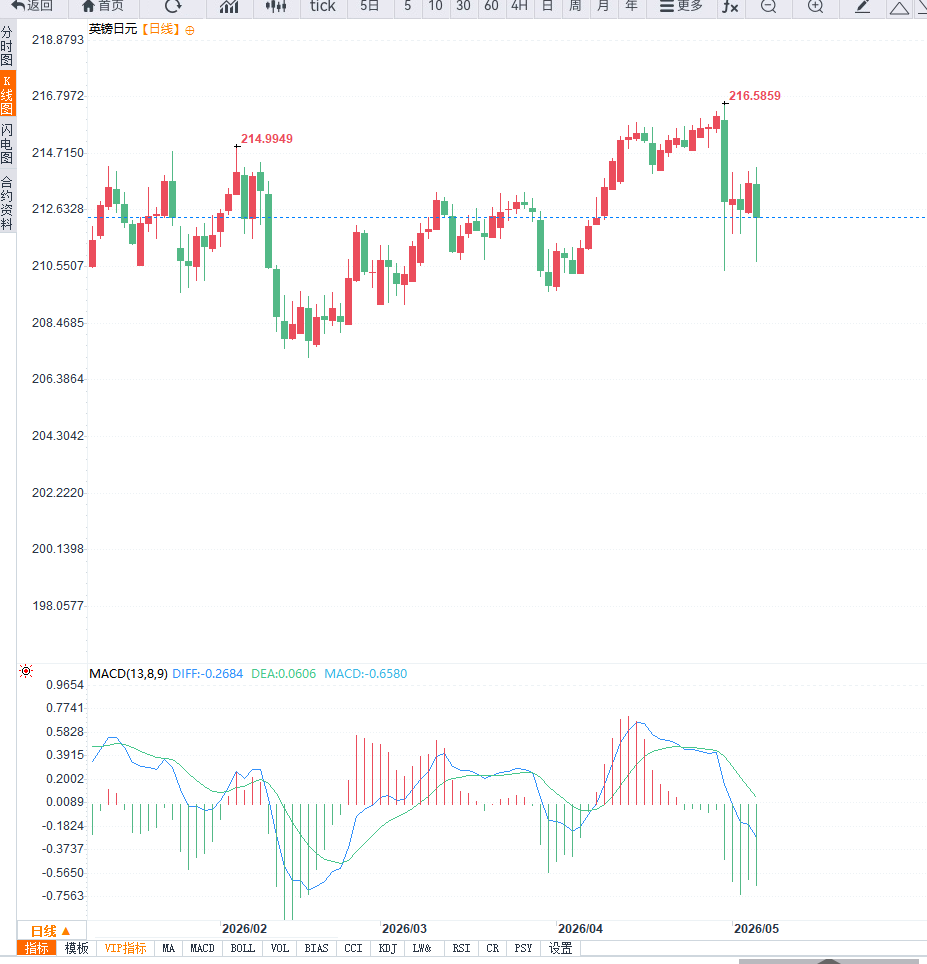
Overall, the current GBP/JPY exchange rate is driven by three main factors: first, expectations of potential Japanese intervention strengthen the yen's support; second, safe-haven demand provides additional buying; and third, the Bank of England's hawkish stance maintains the pound's resilience. Amid this interplay of multiple factors, the exchange rate may maintain a high-level consolidation pattern in the short term.
Editor's Summary:
The sharp fluctuations in the pound against the yen reflect the market's high sensitivity to policy intervention and interest rate differentials. Expectations of Japanese intervention are a key short-term variable, while the Bank of England's hawkish stance provides support for the pound. Future movements will depend on whether Japan actually intervenes and changes in global risk sentiment. Until the current trend is completely broken, the exchange rate may maintain a slightly bullish, volatile structure, but volatility may remain high, and investors should be wary of sudden risks driven by policy.
The core driver of this sharp decline in the yen's exchange rate stemmed from expectations of potential intervention in the foreign exchange market by Japan. Previously, the Japanese Ministry of Finance had intervened after the yen fell below the key psychological level of 160 against the US dollar. Market data estimates suggest that Japanese authorities used approximately 5.48 trillion yen (about US$35 billion) to support the yen's exchange rate. This move significantly altered market expectations of a one-sided depreciation of the yen and has made investors highly vigilant about further intervention.
Against this backdrop, the market generally believes that if the yen depreciates rapidly again, the Japanese authorities may intervene in the market once more. This expectation itself supports the yen and puts downward pressure on the pound against the yen. Therefore, even without official confirmation, "intervention expectations" have become an important variable affecting exchange rates .
Meanwhile, the easing of geopolitical tensions also provided some support for the yen. As market expectations for potential peace progress increased, the yen's appeal as a traditional safe-haven asset improved. Although risk appetite improved, safe-haven funds did not completely withdraw from the market, allowing the yen to remain relatively resilient.
However, the pound is not entirely under pressure. The Bank of England recently signaled a hawkish stance, emphasizing that further interest rate hikes are possible if inflation remains stubborn. This position has provided some support for the pound, allowing it to stabilize and rebound quickly against the yen after a sharp correction.
A Bank of England official stated, "If inflationary pressures do not ease significantly, further tightening remains an option."
From an interest rate differential perspective, a clear policy divergence remains between the UK and Japan. The Bank of Japan maintains an accommodative policy stance, while the Bank of England maintains a tightening bias. This interest rate differential structure provides medium- to long-term support for the pound. Therefore, even if a short-term correction occurs, the interest rate advantage will limit the downside potential of the pound against the yen .
From a technical perspective, on the daily chart, the GBP/JPY pair experienced a significant pullback after reaching a high of 216.60 , a level that represents a recent high since 2008, indicating strong technical selling pressure. Currently, the exchange rate has retreated to near the 100-day moving average, but has not yet broken below it, suggesting that the medium-term uptrend has not been completely destroyed. Key support lies in the 210.50-210.00 range ; a break below this area could open up further downside potential. Resistance is located in the 214.00-215.00 area , which remains a crucial level for the bulls to overcome in the short term.
On the 4-hour chart, the exchange rate shows a technical rebound structure after a rapid decline, with short-term moving averages beginning to flatten, indicating that the market has entered a consolidation phase. The MACD indicator shows that bearish momentum has eased somewhat but is gradually weakening, suggesting that the short-term downward momentum may be nearing its end. If the exchange rate holds above 213.00, it may rebound further to test higher levels; if it falls below 212.00 again, there will still be downward pressure in the short term.
Overall, the current GBP/JPY exchange rate is driven by three main factors: first, expectations of potential Japanese intervention strengthen the yen's support; second, safe-haven demand provides additional buying; and third, the Bank of England's hawkish stance maintains the pound's resilience. Amid this interplay of multiple factors, the exchange rate may maintain a high-level consolidation pattern in the short term.
Editor's Summary:
The sharp fluctuations in the pound against the yen reflect the market's high sensitivity to policy intervention and interest rate differentials. Expectations of Japanese intervention are a key short-term variable, while the Bank of England's hawkish stance provides support for the pound. Future movements will depend on whether Japan actually intervenes and changes in global risk sentiment. Until the current trend is completely broken, the exchange rate may maintain a slightly bullish, volatile structure, but volatility may remain high, and investors should be wary of sudden risks driven by policy.
- Risk Warning and Disclaimer
- The market involves risk, and trading may not be suitable for all investors. This article is for reference only and does not constitute personal investment advice, nor does it take into account certain users’ specific investment objectives, financial situation, or other needs. Any investment decisions made based on this information are at your own risk.