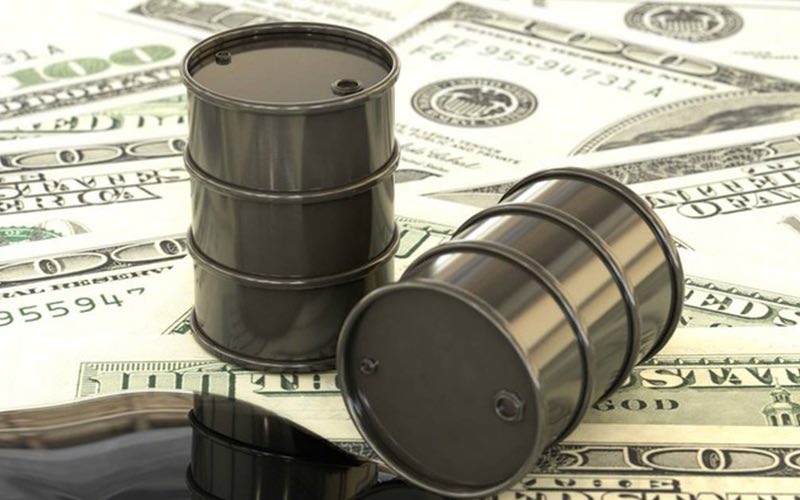
The ASEAN Summit confronts a major energy challenge: persistently high oil prices necessitate a coordinated regional response.
2026-05-07 09:34:50
The 2026 ASEAN Leaders' Summit officially opened this Thursday (May 7) in Cebu, Philippines. While regional conflicts far beyond Southeast Asia are expected to be a major topic of discussion, the energy supply shock triggered by the Middle East crisis is the most pressing challenge for ASEAN member states, which heavily rely on fuel imports. With energy and food security on the agenda for the region of nearly 700 million people, coordinating regional responses has become a key focus of the meeting.
Energy issues may crowd out discussion space for other regional disputes.
This summit will be attended by leaders, foreign ministers, and economy ministers from 11 member countries. Diplomats and analysts point out that the energy crisis is testing the Philippines' coordination capabilities as the rotating chair. Don McLain Gill, a geopolitical analyst at De La Salle University in Manila, said, "Planning to mitigate the economic shock may ultimately overshadow other pressing regional issues." He added that while issues such as the civil war in Myanmar and the Thai-Cambodian border dispute will be discussed, significant breakthroughs are unlikely.
The Philippines insists on a balanced agenda and strongly promotes an oil-sharing framework.
Philippine Foreign Ministry spokesman for ASEAN affairs, Dominic Xavier Imperial, emphasized that the impact of the US-Israel attacks on Iran would not dominate ASEAN discussions. "We will not sacrifice any issues; our commitment as chair remains unchanged," he said. Philippine Foreign Minister Theresa Lazaro stated that the two-day meeting would be attended by leaders and ministers of economy and foreign affairs. To address oil supply shortages caused by the Middle East conflict, foreign ministers held a special meeting prior to the main ASEAN summit, and the Philippines is actively pushing for the approval of an oil-sharing framework agreement.
The energy crisis has amplified the competitive landscape between the US and China in Southeast Asia.
Analysts point out that this conflict has exacerbated broader US-China competition in Southeast Asia. While Washington is preoccupied with conflicts in other regions, Beijing is attempting to position itself as a more reliable partner. Collin Koh, a researcher at the S. Rajaratnam School of International Studies in Singapore, stated, "The US will be seen as a destabilizing force, while China will be seen as a stabilizing force." Former Philippine diplomat Laura del Rosario also noted that the scale of this energy supply shock is unavoidable for any ASEAN country and may prompt ASEAN to take concrete actions beyond rhetoric.
Crisis breeds change, ASEAN's coordination capabilities face a major test
In conclusion, while the ASEAN Summit covered a wide range of topics, the energy crisis inevitably became the central theme throughout the summit. While addressing fuel shortages and inflationary pressures, the Philippines, as the rotating chair, also needs to strike a balance between internal disputes and external geopolitical maneuvering. Whether ASEAN can leverage this crisis to promote substantive regional cooperation will be a crucial test of its cohesion and ability to act.
Despite short-term fluctuations in oil prices, several international investment banks and institutions hold a bullish view on the average price for the whole of 2026. A report released by the World Bank at the end of April predicted that even if the severe supply disruptions caused by the Middle East conflict end in May, global energy prices will still surge by 24% in 2026, with the average price of Brent crude oil expected to reach $86 per barrel. Investment bank Barclays is even more aggressive, raising its Brent crude oil price forecast from $85 to $100, and warning that if the Strait of Hormuz remains blocked until the end of May, oil prices could reach $110.
The core factor supporting high oil prices is the supply-demand gap. Some analysts estimate that if Persian Gulf production only recovers to 70% by mid-year, it will result in a total oil supply loss of approximately 183 million barrels. Analysts at Everbright Futures point out that the decline in global oil inventories may continue until May or even longer.
At 09:32 Beijing time, Brent crude oil was trading at $101.79 per barrel.
The energy crisis is testing ASEAN, and geopolitical rivalry is brewing.
Energy issues may crowd out discussion space for other regional disputes.
This summit will be attended by leaders, foreign ministers, and economy ministers from 11 member countries. Diplomats and analysts point out that the energy crisis is testing the Philippines' coordination capabilities as the rotating chair. Don McLain Gill, a geopolitical analyst at De La Salle University in Manila, said, "Planning to mitigate the economic shock may ultimately overshadow other pressing regional issues." He added that while issues such as the civil war in Myanmar and the Thai-Cambodian border dispute will be discussed, significant breakthroughs are unlikely.
The Philippines insists on a balanced agenda and strongly promotes an oil-sharing framework.
Philippine Foreign Ministry spokesman for ASEAN affairs, Dominic Xavier Imperial, emphasized that the impact of the US-Israel attacks on Iran would not dominate ASEAN discussions. "We will not sacrifice any issues; our commitment as chair remains unchanged," he said. Philippine Foreign Minister Theresa Lazaro stated that the two-day meeting would be attended by leaders and ministers of economy and foreign affairs. To address oil supply shortages caused by the Middle East conflict, foreign ministers held a special meeting prior to the main ASEAN summit, and the Philippines is actively pushing for the approval of an oil-sharing framework agreement.
The energy crisis has amplified the competitive landscape between the US and China in Southeast Asia.
Analysts point out that this conflict has exacerbated broader US-China competition in Southeast Asia. While Washington is preoccupied with conflicts in other regions, Beijing is attempting to position itself as a more reliable partner. Collin Koh, a researcher at the S. Rajaratnam School of International Studies in Singapore, stated, "The US will be seen as a destabilizing force, while China will be seen as a stabilizing force." Former Philippine diplomat Laura del Rosario also noted that the scale of this energy supply shock is unavoidable for any ASEAN country and may prompt ASEAN to take concrete actions beyond rhetoric.
Crisis breeds change, ASEAN's coordination capabilities face a major test
In conclusion, while the ASEAN Summit covered a wide range of topics, the energy crisis inevitably became the central theme throughout the summit. While addressing fuel shortages and inflationary pressures, the Philippines, as the rotating chair, also needs to strike a balance between internal disputes and external geopolitical maneuvering. Whether ASEAN can leverage this crisis to promote substantive regional cooperation will be a crucial test of its cohesion and ability to act.
Multiple institutions are bullish on energy prices, with supply gaps supporting high levels.
Despite short-term fluctuations in oil prices, several international investment banks and institutions hold a bullish view on the average price for the whole of 2026. A report released by the World Bank at the end of April predicted that even if the severe supply disruptions caused by the Middle East conflict end in May, global energy prices will still surge by 24% in 2026, with the average price of Brent crude oil expected to reach $86 per barrel. Investment bank Barclays is even more aggressive, raising its Brent crude oil price forecast from $85 to $100, and warning that if the Strait of Hormuz remains blocked until the end of May, oil prices could reach $110.
The core factor supporting high oil prices is the supply-demand gap. Some analysts estimate that if Persian Gulf production only recovers to 70% by mid-year, it will result in a total oil supply loss of approximately 183 million barrels. Analysts at Everbright Futures point out that the decline in global oil inventories may continue until May or even longer.
At 09:32 Beijing time, Brent crude oil was trading at $101.79 per barrel.
- Risk Warning and Disclaimer
- The market involves risk, and trading may not be suitable for all investors. This article is for reference only and does not constitute personal investment advice, nor does it take into account certain users’ specific investment objectives, financial situation, or other needs. Any investment decisions made based on this information are at your own risk.