Easing tensions between the US and Iran led to a continuous decline in oil prices, putting pressure on the Canadian dollar and causing the USD/CAD exchange rate to fluctuate around 1.3630.
2026-05-07 10:16:26
The US dollar (USD/CAD) traded around 1.3630 in early Asian trading on Thursday, consolidating after a modest gain in the previous session. The Canadian dollar, a commodity currency, faced pressure as international crude oil prices fell for the third consecutive trading day, pushing the USD/CAD pair to remain at higher levels.

As one of the largest crude oil exporters to the United States, Canada's performance is typically directly influenced by international oil price movements. Currently, WTI crude oil prices have fallen to around $95.60 per barrel, and market expectations of a potential easing of tensions in the Middle East are weakening the price support previously provided by supply risks.
Iran has stated that the ceasefire agreement proposed by the United States is "still under consideration." Earlier market reports indicated that the US and Iran might be close to reaching an agreement, with the US submitting a one-page memorandum of understanding to Iran that included provisions for the gradual resumption of shipping through the Strait of Hormuz and the lifting of US blockades on Iranian ports. Detailed negotiations regarding the Iranian nuclear issue would proceed later.
The Strait of Hormuz handles approximately 20% of global seaborne crude oil transport. Market expectations of easing supply risks in the region have directly suppressed international oil prices.
Meanwhile, US President Trump issued a more hawkish statement. Trump said the US would launch a "higher-intensity" military operation if Iran rejected the peace agreement. However, Trump also emphasized that if Iran accepted the previously discussed terms of the agreement, the US military operation "could end."
The market generally believes that although the situation in the Middle East remains highly uncertain, the signals that both sides are willing to continue negotiations have alleviated market concerns about disruptions to global energy supplies to some extent.
For the Canadian dollar, falling oil prices typically mean weaker export revenue and support from the energy sector, thus putting significant short-term pressure on the Canadian dollar. Recently, after international oil prices retreated from their highs, commodity currencies have generally weakened, providing some support for the USD/CAD exchange rate.
However, the dollar also faces constraints. As market expectations rise for easing global inflationary pressures, investors are betting that the Federal Reserve may cut interest rates sooner rather than later, rather than maintaining a high-interest-rate policy in the long term.
Rising market expectations for a Federal Reserve rate cut limited further upside potential for the dollar index.
The market's focus has gradually shifted to the upcoming US employment data. If the US labor market continues to strengthen, it could push the dollar higher and further support the USD/CAD exchange rate; however, weak data could reinforce market expectations of a Federal Reserve rate cut, thus suppressing the dollar's performance.
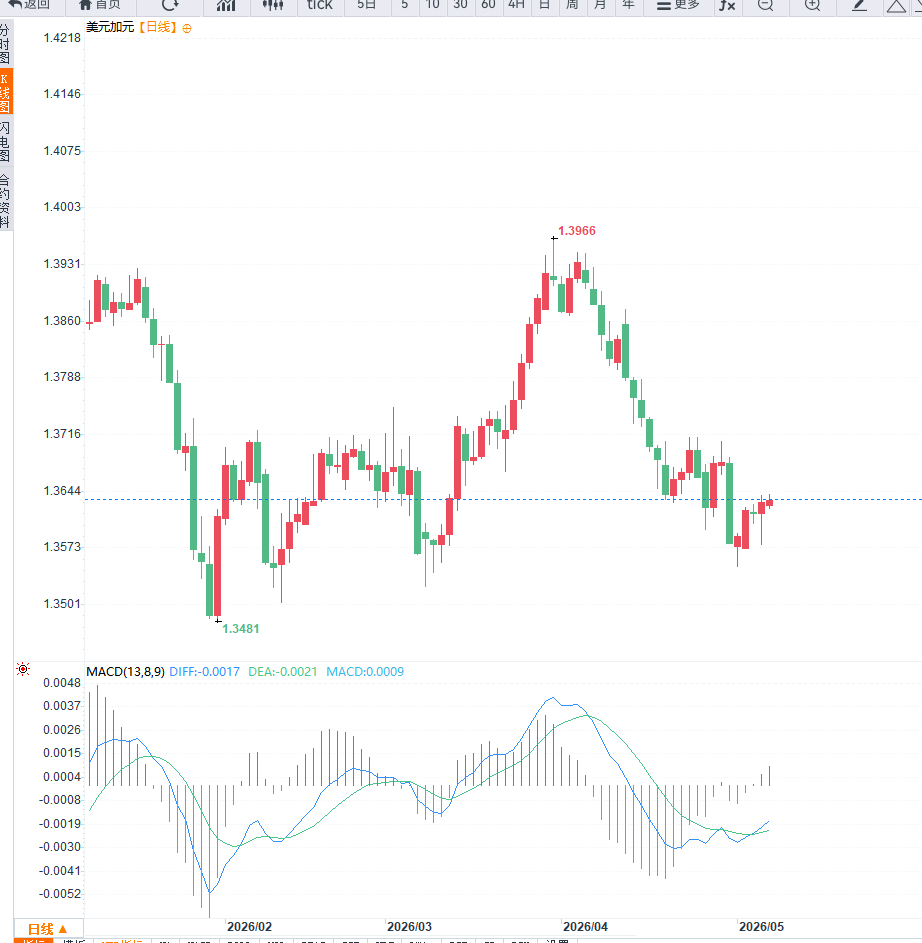
From a technical perspective, the USD/CAD pair maintains an overall bullish bias on the daily chart. The exchange rate recently found significant support around 1.3600 and rebounded, indicating continued short-term buying pressure. The 1.3660 area is currently a key short-term resistance zone ; a decisive break above this level could lead to further tests of the 1.3700 and 1.3745 areas.
Looking at the downside, 1.3600 has formed the first important support level. If this area is breached, a further pullback to around 1.3570 is possible. The daily MACD indicator is still running above the zero line, but the upward momentum has slowed, indicating that the market has entered a short-term consolidation phase at high levels.
The 4-hour chart shows the USD/CAD moving average system maintaining a slight upward divergence, with the RSI indicator in neutral to slightly bullish territory, indicating that short-term market sentiment remains biased towards the US dollar. However, as the market awaits US employment data and further news on the Middle East situation, the exchange rate may maintain a range-bound trading pattern in the short term.
Editor's Summary : The current USD/CAD exchange rate is primarily influenced by both the decline in international oil prices and expectations of a Federal Reserve rate cut. In the short term, if the situation in the Middle East continues to ease, international oil prices may face further downward pressure, weakening the Canadian dollar and supporting the USD/CAD pair at higher levels. However, if US economic data weakens and strengthens expectations of a Fed rate cut, the upside potential for the US dollar may be limited. Going forward, the market should focus on the developments in the Middle East, changes in international oil prices, and the impact of US employment data on market sentiment.
As one of the largest crude oil exporters to the United States, Canada's performance is typically directly influenced by international oil price movements. Currently, WTI crude oil prices have fallen to around $95.60 per barrel, and market expectations of a potential easing of tensions in the Middle East are weakening the price support previously provided by supply risks.
Iran has stated that the ceasefire agreement proposed by the United States is "still under consideration." Earlier market reports indicated that the US and Iran might be close to reaching an agreement, with the US submitting a one-page memorandum of understanding to Iran that included provisions for the gradual resumption of shipping through the Strait of Hormuz and the lifting of US blockades on Iranian ports. Detailed negotiations regarding the Iranian nuclear issue would proceed later.
The Strait of Hormuz handles approximately 20% of global seaborne crude oil transport. Market expectations of easing supply risks in the region have directly suppressed international oil prices.
Meanwhile, US President Trump issued a more hawkish statement. Trump said the US would launch a "higher-intensity" military operation if Iran rejected the peace agreement. However, Trump also emphasized that if Iran accepted the previously discussed terms of the agreement, the US military operation "could end."
The market generally believes that although the situation in the Middle East remains highly uncertain, the signals that both sides are willing to continue negotiations have alleviated market concerns about disruptions to global energy supplies to some extent.
For the Canadian dollar, falling oil prices typically mean weaker export revenue and support from the energy sector, thus putting significant short-term pressure on the Canadian dollar. Recently, after international oil prices retreated from their highs, commodity currencies have generally weakened, providing some support for the USD/CAD exchange rate.
However, the dollar also faces constraints. As market expectations rise for easing global inflationary pressures, investors are betting that the Federal Reserve may cut interest rates sooner rather than later, rather than maintaining a high-interest-rate policy in the long term.
Rising market expectations for a Federal Reserve rate cut limited further upside potential for the dollar index.
The market's focus has gradually shifted to the upcoming US employment data. If the US labor market continues to strengthen, it could push the dollar higher and further support the USD/CAD exchange rate; however, weak data could reinforce market expectations of a Federal Reserve rate cut, thus suppressing the dollar's performance.
From a technical perspective, the USD/CAD pair maintains an overall bullish bias on the daily chart. The exchange rate recently found significant support around 1.3600 and rebounded, indicating continued short-term buying pressure. The 1.3660 area is currently a key short-term resistance zone ; a decisive break above this level could lead to further tests of the 1.3700 and 1.3745 areas.
Looking at the downside, 1.3600 has formed the first important support level. If this area is breached, a further pullback to around 1.3570 is possible. The daily MACD indicator is still running above the zero line, but the upward momentum has slowed, indicating that the market has entered a short-term consolidation phase at high levels.
The 4-hour chart shows the USD/CAD moving average system maintaining a slight upward divergence, with the RSI indicator in neutral to slightly bullish territory, indicating that short-term market sentiment remains biased towards the US dollar. However, as the market awaits US employment data and further news on the Middle East situation, the exchange rate may maintain a range-bound trading pattern in the short term.
Editor's Summary : The current USD/CAD exchange rate is primarily influenced by both the decline in international oil prices and expectations of a Federal Reserve rate cut. In the short term, if the situation in the Middle East continues to ease, international oil prices may face further downward pressure, weakening the Canadian dollar and supporting the USD/CAD pair at higher levels. However, if US economic data weakens and strengthens expectations of a Fed rate cut, the upside potential for the US dollar may be limited. Going forward, the market should focus on the developments in the Middle East, changes in international oil prices, and the impact of US employment data on market sentiment.
- Risk Warning and Disclaimer
- The market involves risk, and trading may not be suitable for all investors. This article is for reference only and does not constitute personal investment advice, nor does it take into account certain users’ specific investment objectives, financial situation, or other needs. Any investment decisions made based on this information are at your own risk.