Expectations of Japanese intervention and the Bank of Japan's hawkish stance supported the yen, putting pressure on the USD/JPY pair, which hovered around the 156 level.
2026-05-07 10:25:37
The US dollar/Japanese yen (USD/JPY) pair remained range-bound in early Asian trading on Thursday. After rebounding from around 155.00 in the previous session, the pair is currently trading around 156.50, with relatively limited overall volatility.
Despite a technical rebound in the USD/JPY exchange rate from recent lows, concerns about potential renewed intervention by Japanese authorities continued to limit the rate's upside and keep the yen relatively strong.
Jun Mimura, Japan's Vice Minister for International Affairs and top foreign exchange official at the Ministry of Finance, reiterated verbal signals of government intervention, emphasizing that the government is closely monitoring foreign exchange market trends. The market believes that the Japanese government remains highly vigilant regarding the rapid depreciation of the yen.
Previously, market reports indicated that after the US dollar broke through the 160 mark against the Japanese yen, Japan may have used approximately 5.48 trillion yen (about US$35 billion) to buy yen in order to stabilize exchange rate fluctuations.
Market expectations that the Japanese government may continue to intervene in the foreign exchange market are becoming an important factor supporting the yen.
Meanwhile, the minutes of the Bank of Japan's (BoJ) March 18-19 meeting also released a hawkish signal. The minutes showed that many members believed that further interest rate hikes would remain an appropriate policy direction if the economic and inflation outlook met expectations.
The meeting minutes also indicated that the future pace of interest rate hikes will depend on factors such as wage growth, price trends, and changes in the situation in the Middle East. This suggests that the Bank of Japan has not ruled out the possibility of further tightening of its policy.
The Bank of Japan's current policy stance contrasts sharply with that of the Federal Reserve. As market expectations for further Fed rate hikes cool, while the Bank of Japan gradually signals its exit from ultra-loose monetary policy, the expected interest rate differential between Japan and the US is narrowing, providing significant support for the yen.
On the other hand, the US dollar remained weak overall. Market optimism regarding a potential agreement between the US and Iran reduced demand for the dollar as a safe haven.
US President Trump said on Wednesday that US-Iran negotiations had made progress in the past 24 hours, adding that Iran wanted an agreement. Furthermore, two US officials reported that the White House was close to reaching a one-page memorandum of understanding with Iran to push for an end to the current conflict.
As market risk sentiment improved, the attractiveness of the US dollar as a traditional safe-haven currency declined.
However, investors remain cautious about whether the US and Iran can ultimately reach a real agreement. Due to significant differences between the two sides on the Iranian nuclear issue, overall market sentiment remains cautious, causing the USD/JPY exchange rate to maintain a volatile trend in the short term.
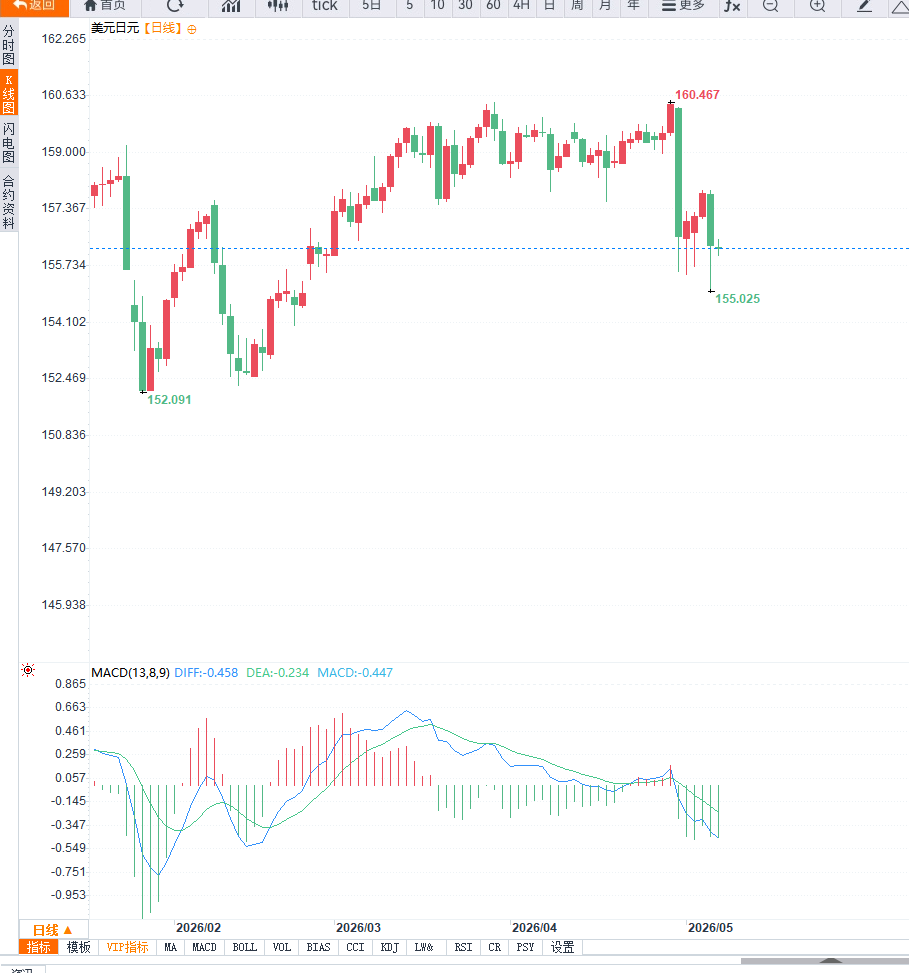
From a technical perspective, the USD/JPY daily chart shows that the exchange rate encountered strong selling pressure near the 160.00 level and quickly retreated, currently entering a phase of correction. The 155.00 area has recently formed significant technical support and is also a suspected area of Japanese intervention, making this level quite sensitive in the market.
The 156.80 to 157.20 area has formed a significant resistance zone on the daily chart. If the price fails to break through this area effectively, it may fall back to test the 155.00 support level; if it breaks below 155.00, it may further decline to the 154.20 or even the 153.50 area.
The daily MACD indicator has formed a death cross from its high level, and the green momentum bars continue to expand, indicating that medium-term downward pressure still exists. The RSI indicator has fallen back to around 50, suggesting that the market has gradually returned to balance from its previous extremely overbought state.
If the USD/JPY pair fails to regain a foothold above 157.00, there remains a risk of further declines towards 155.00 in the short term.
From a comprehensive technical perspective, while the medium-to-long-term upward trend of USD/JPY has not completely ended, it has entered a clear short-term correction phase. The daily chart shows that bears are beginning to take control, while the 4-hour chart reflects insufficient short-term rebound momentum.
Editor's Summary : The current USD/JPY exchange rate is being influenced by both rising expectations of Japanese intervention and cooling expectations of a hawkish stance from the Federal Reserve. In the short term, the Bank of Japan's gradual release of hawkish signals, coupled with the Japanese government's continued warnings of exchange rate volatility risks, has significantly strengthened market support for the yen. Meanwhile, the easing of tensions between the US and Iran has reduced demand for the dollar as a safe haven, limiting the upside potential for USD/JPY. From a technical perspective, the exchange rate has transitioned from its previous strong upward trend to a high-level consolidation phase. Future market volatility may continue to intensify, and investors should pay close attention to US non-farm payroll data, the Bank of Japan's policy direction, and official Japanese intervention activities.
Despite a technical rebound in the USD/JPY exchange rate from recent lows, concerns about potential renewed intervention by Japanese authorities continued to limit the rate's upside and keep the yen relatively strong.
Jun Mimura, Japan's Vice Minister for International Affairs and top foreign exchange official at the Ministry of Finance, reiterated verbal signals of government intervention, emphasizing that the government is closely monitoring foreign exchange market trends. The market believes that the Japanese government remains highly vigilant regarding the rapid depreciation of the yen.
Previously, market reports indicated that after the US dollar broke through the 160 mark against the Japanese yen, Japan may have used approximately 5.48 trillion yen (about US$35 billion) to buy yen in order to stabilize exchange rate fluctuations.
Market expectations that the Japanese government may continue to intervene in the foreign exchange market are becoming an important factor supporting the yen.
Meanwhile, the minutes of the Bank of Japan's (BoJ) March 18-19 meeting also released a hawkish signal. The minutes showed that many members believed that further interest rate hikes would remain an appropriate policy direction if the economic and inflation outlook met expectations.
The meeting minutes also indicated that the future pace of interest rate hikes will depend on factors such as wage growth, price trends, and changes in the situation in the Middle East. This suggests that the Bank of Japan has not ruled out the possibility of further tightening of its policy.
The Bank of Japan's current policy stance contrasts sharply with that of the Federal Reserve. As market expectations for further Fed rate hikes cool, while the Bank of Japan gradually signals its exit from ultra-loose monetary policy, the expected interest rate differential between Japan and the US is narrowing, providing significant support for the yen.
On the other hand, the US dollar remained weak overall. Market optimism regarding a potential agreement between the US and Iran reduced demand for the dollar as a safe haven.
US President Trump said on Wednesday that US-Iran negotiations had made progress in the past 24 hours, adding that Iran wanted an agreement. Furthermore, two US officials reported that the White House was close to reaching a one-page memorandum of understanding with Iran to push for an end to the current conflict.
As market risk sentiment improved, the attractiveness of the US dollar as a traditional safe-haven currency declined.
However, investors remain cautious about whether the US and Iran can ultimately reach a real agreement. Due to significant differences between the two sides on the Iranian nuclear issue, overall market sentiment remains cautious, causing the USD/JPY exchange rate to maintain a volatile trend in the short term.
From a technical perspective, the USD/JPY daily chart shows that the exchange rate encountered strong selling pressure near the 160.00 level and quickly retreated, currently entering a phase of correction. The 155.00 area has recently formed significant technical support and is also a suspected area of Japanese intervention, making this level quite sensitive in the market.
The 156.80 to 157.20 area has formed a significant resistance zone on the daily chart. If the price fails to break through this area effectively, it may fall back to test the 155.00 support level; if it breaks below 155.00, it may further decline to the 154.20 or even the 153.50 area.
The daily MACD indicator has formed a death cross from its high level, and the green momentum bars continue to expand, indicating that medium-term downward pressure still exists. The RSI indicator has fallen back to around 50, suggesting that the market has gradually returned to balance from its previous extremely overbought state.
If the USD/JPY pair fails to regain a foothold above 157.00, there remains a risk of further declines towards 155.00 in the short term.
From a comprehensive technical perspective, while the medium-to-long-term upward trend of USD/JPY has not completely ended, it has entered a clear short-term correction phase. The daily chart shows that bears are beginning to take control, while the 4-hour chart reflects insufficient short-term rebound momentum.
Editor's Summary : The current USD/JPY exchange rate is being influenced by both rising expectations of Japanese intervention and cooling expectations of a hawkish stance from the Federal Reserve. In the short term, the Bank of Japan's gradual release of hawkish signals, coupled with the Japanese government's continued warnings of exchange rate volatility risks, has significantly strengthened market support for the yen. Meanwhile, the easing of tensions between the US and Iran has reduced demand for the dollar as a safe haven, limiting the upside potential for USD/JPY. From a technical perspective, the exchange rate has transitioned from its previous strong upward trend to a high-level consolidation phase. Future market volatility may continue to intensify, and investors should pay close attention to US non-farm payroll data, the Bank of Japan's policy direction, and official Japanese intervention activities.
- Risk Warning and Disclaimer
- The market involves risk, and trading may not be suitable for all investors. This article is for reference only and does not constitute personal investment advice, nor does it take into account certain users’ specific investment objectives, financial situation, or other needs. Any investment decisions made based on this information are at your own risk.