Uncertainty surrounding the UK local elections weighed on the pound, causing the euro to stabilize and fluctuate around 0.8620 against the pound.
2026-05-07 16:15:27
The euro found some support against the pound (EUR/GBP) in early European trading on Thursday, but after rebounding to around 0.8650, it still faced significant resistance, with the market maintaining a cautious and volatile pattern overall.
Recent market risk sentiment has improved due to the possibility of a deal between the US and Iran, but investors remain cautious about the outcome of the UK local elections and the European economic outlook, which has led to increased short-term volatility in the euro against the pound.
In the UK, voters are participating in elections for 136 local councils in England, as well as the Scottish and Welsh parliaments. Markets widely expect the ruling Labour Party to suffer a significant setback in these local elections. The political uncertainty surrounding these elections is putting pressure on the pound.
Market concerns exist that a significant decline in the ruling party's approval rating could reignite doubts about the UK's fiscal stability and the direction of its subsequent economic policies, thereby impacting market assessments of the UK's economic prospects. Furthermore, the UK economy still faces challenges such as slowing growth, fiscal pressures, and uneven inflation, leading investors to remain cautious about the pound overall.
On the other hand, the situation in the Middle East remains a key focus for the market. The market is awaiting Iran's formal response to the US peace proposal. The proposed agreement includes a gradual resumption of shipping through the Strait of Hormuz and an easing of some blockade measures, but key disputes, such as the Iranian nuclear issue, have not yet been finalized.
While the market remains somewhat optimistic about a potential easing of tensions, significant uncertainties surrounding the details of the agreement have kept international oil prices at high levels. These high oil prices continue to exert inflationary pressure on the European and British economies. For the euro, the latest economic data from the Eurozone has been relatively positive. German factory orders rose 5% month-on-month in March, significantly exceeding market expectations of 1%, and following a 1.4% increase in February. This data reflects a temporary improvement in demand in German manufacturing and has alleviated some market concerns about a slowdown in the Eurozone economy.
However, the strong data did not significantly boost the euro. The market is currently more focused on subsequent Eurozone retail sales data and statements from European Central Bank officials regarding the future path of monetary policy. If the ECB maintains a hawkish stance, it could provide further support for the euro; however, weak Eurozone consumption data could limit the euro's upside potential.
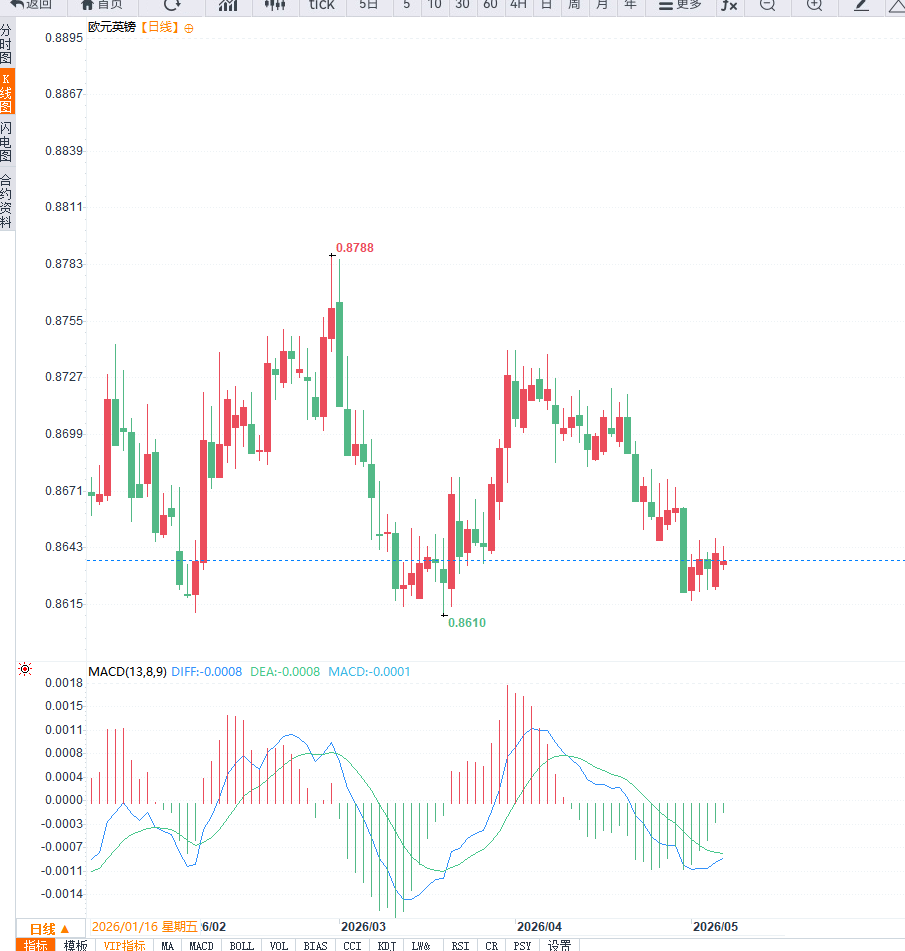
From a technical perspective, the EUR/GBP daily chart shows that after breaking below the key support level of 0.8650, the exchange rate is currently attempting a technical correction, but the overall rebound strength remains limited. The price is currently trading near the medium- to long-term moving averages, indicating that the market is still in a consolidation phase. The 0.8650 area has become a significant resistance level on the daily chart. A decisive break above 0.8650 could lead to further gains towards 0.8685 and the 0.8720 areas.
On the downside, the 0.8620 level forms the first significant support zone. A break below this level could lead to further retracements to the 0.8590 and 0.8560 areas. The daily MACD indicator is currently hovering near the zero line, with limited upward momentum, indicating uncertainty about the market's medium-term direction. The RSI indicator remains around 50, suggesting a temporary balance between bullish and bearish forces.
From a technical perspective, the euro/pound exchange rate is expected to remain range-bound in the medium term. The daily chart shows the pair attempting to stabilize, while the 4-hour chart reflects a lack of clear direction in the short term.
Editor's Summary : The current euro/pound exchange rate is primarily influenced by both "UK political uncertainty" and "improving European economic data." In the short term, the UK local election results may increase market concerns about the UK's fiscal and political stability, thus putting pressure on the pound. However, uncertainty in the Middle East and high international oil prices also limit further upside potential for the euro. From a technical perspective, the euro/pound exchange rate is currently still in a range-bound trading phase, and market volatility may continue to increase. Investors should pay close attention to the UK local election results, the European Central Bank's policy statements, and changes in Eurozone economic data.
Recent market risk sentiment has improved due to the possibility of a deal between the US and Iran, but investors remain cautious about the outcome of the UK local elections and the European economic outlook, which has led to increased short-term volatility in the euro against the pound.
In the UK, voters are participating in elections for 136 local councils in England, as well as the Scottish and Welsh parliaments. Markets widely expect the ruling Labour Party to suffer a significant setback in these local elections. The political uncertainty surrounding these elections is putting pressure on the pound.
Market concerns exist that a significant decline in the ruling party's approval rating could reignite doubts about the UK's fiscal stability and the direction of its subsequent economic policies, thereby impacting market assessments of the UK's economic prospects. Furthermore, the UK economy still faces challenges such as slowing growth, fiscal pressures, and uneven inflation, leading investors to remain cautious about the pound overall.
On the other hand, the situation in the Middle East remains a key focus for the market. The market is awaiting Iran's formal response to the US peace proposal. The proposed agreement includes a gradual resumption of shipping through the Strait of Hormuz and an easing of some blockade measures, but key disputes, such as the Iranian nuclear issue, have not yet been finalized.
While the market remains somewhat optimistic about a potential easing of tensions, significant uncertainties surrounding the details of the agreement have kept international oil prices at high levels. These high oil prices continue to exert inflationary pressure on the European and British economies. For the euro, the latest economic data from the Eurozone has been relatively positive. German factory orders rose 5% month-on-month in March, significantly exceeding market expectations of 1%, and following a 1.4% increase in February. This data reflects a temporary improvement in demand in German manufacturing and has alleviated some market concerns about a slowdown in the Eurozone economy.
However, the strong data did not significantly boost the euro. The market is currently more focused on subsequent Eurozone retail sales data and statements from European Central Bank officials regarding the future path of monetary policy. If the ECB maintains a hawkish stance, it could provide further support for the euro; however, weak Eurozone consumption data could limit the euro's upside potential.
From a technical perspective, the EUR/GBP daily chart shows that after breaking below the key support level of 0.8650, the exchange rate is currently attempting a technical correction, but the overall rebound strength remains limited. The price is currently trading near the medium- to long-term moving averages, indicating that the market is still in a consolidation phase. The 0.8650 area has become a significant resistance level on the daily chart. A decisive break above 0.8650 could lead to further gains towards 0.8685 and the 0.8720 areas.
On the downside, the 0.8620 level forms the first significant support zone. A break below this level could lead to further retracements to the 0.8590 and 0.8560 areas. The daily MACD indicator is currently hovering near the zero line, with limited upward momentum, indicating uncertainty about the market's medium-term direction. The RSI indicator remains around 50, suggesting a temporary balance between bullish and bearish forces.
From a technical perspective, the euro/pound exchange rate is expected to remain range-bound in the medium term. The daily chart shows the pair attempting to stabilize, while the 4-hour chart reflects a lack of clear direction in the short term.
Editor's Summary : The current euro/pound exchange rate is primarily influenced by both "UK political uncertainty" and "improving European economic data." In the short term, the UK local election results may increase market concerns about the UK's fiscal and political stability, thus putting pressure on the pound. However, uncertainty in the Middle East and high international oil prices also limit further upside potential for the euro. From a technical perspective, the euro/pound exchange rate is currently still in a range-bound trading phase, and market volatility may continue to increase. Investors should pay close attention to the UK local election results, the European Central Bank's policy statements, and changes in Eurozone economic data.
- Risk Warning and Disclaimer
- The market involves risk, and trading may not be suitable for all investors. This article is for reference only and does not constitute personal investment advice, nor does it take into account certain users’ specific investment objectives, financial situation, or other needs. Any investment decisions made based on this information are at your own risk.