The Pound Sterling's Doom and Death Situation: 0.6% GDP Growth a "Bull Trap"? Unveiling the 3 Killer Moves Behind the Strengthening Dollar.
2026-05-15 21:59:00
On Friday, May 15th, the British pound continued to face downward pressure against the US dollar, hovering around 1.3340 during the North American session. The US dollar index was supported by robust US retail sales growth. While the UK's first-quarter GDP grew by 0.6% quarter-on-quarter, exceeding some expectations, domestic political dynamics coupled with transatlantic monetary policy divergence made it difficult for the pound to sustain a rebound.
U.S. retail sales rose 0.5% month-over-month in April, in line with market expectations and continuing the previous strong momentum. This data indicates that consumer spending continues to drive economic growth, while also increasing market expectations for a tightening of Federal Reserve policy. Some pricing data suggests that the probability of a Fed rate hike in 2026 has risen to approximately 37%-50%, a significant increase from previous levels. The dollar index consequently hit a three-week high.
This backdrop directly weighs on the pound against the dollar. Traders are focused on the possibility that the Federal Reserve will maintain higher interest rates for an extended period, while the Bank of England's policy path remains relatively dovish, causing the interest rate differential between the two countries to continue to favor the dollar. The pound is unlikely to escape the pressure of a strong dollar in the short term.
The UK's GDP grew by 0.6% quarter-on-quarter in the first quarter, the fastest pace in four quarters, with services output rising by 0.8% being the main contributor. The production sector and construction also recorded positive growth, indicating a degree of economic resilience.
However, the market has questioned the sustainability of this data. Historical data shows that the UK economy often exhibits a strong start to the quarter followed by a decline in momentum. Some analysts point out that seasonal factors or data adjustments may amplify the first-quarter performance. Coupled with energy price fluctuations due to geopolitical factors, the uncertainty facing the UK economy has not significantly eased.
This comparison highlights the relatively strong current growth, but also serves as a reminder to traders to be wary of the risk of subsequent data revisions.
The domestic political situation in the UK has put additional pressure on the pound. Manchester Mayor Andy Burnham recently announced his challenge to incumbent Prime Minister Kyle Starmer, and he enjoys high net approval ratings within the Labour Party, particularly among the left wing. This development has exacerbated uncertainty within the ruling party, directly impacting market confidence in the continuity of UK policy.
Political uncertainty often transmits to exchange rates through risk premiums. As a high-beta currency, the pound sterling is more susceptible to pressure during periods of fluctuating risk appetite. Traders need to closely monitor developments in the UK political arena, as any signals of leadership changes can trigger sharp short-term volatility.
The Bank of England kept its interest rate unchanged at 3.75% in April, with the 8-1 vote indicating internal division. One member favored raising the rate to 4%. Despite the Middle East situation pushing up energy prices and potentially transmitting inflation, the Bank of England emphasized the need to observe the sustainability of the shock and its secondary effects.
In contrast, US data supports the Federal Reserve's policy leaning more towards a restrictive stance. In the Eurozone, European Central Bank President Christine Lagarde previously stated her readiness to tighten policy if necessary to control inflation. The interest rate differentials between the US and Europe, and between the US and the UK, remain at levels favorable to the dollar, further supporting dollar bulls.
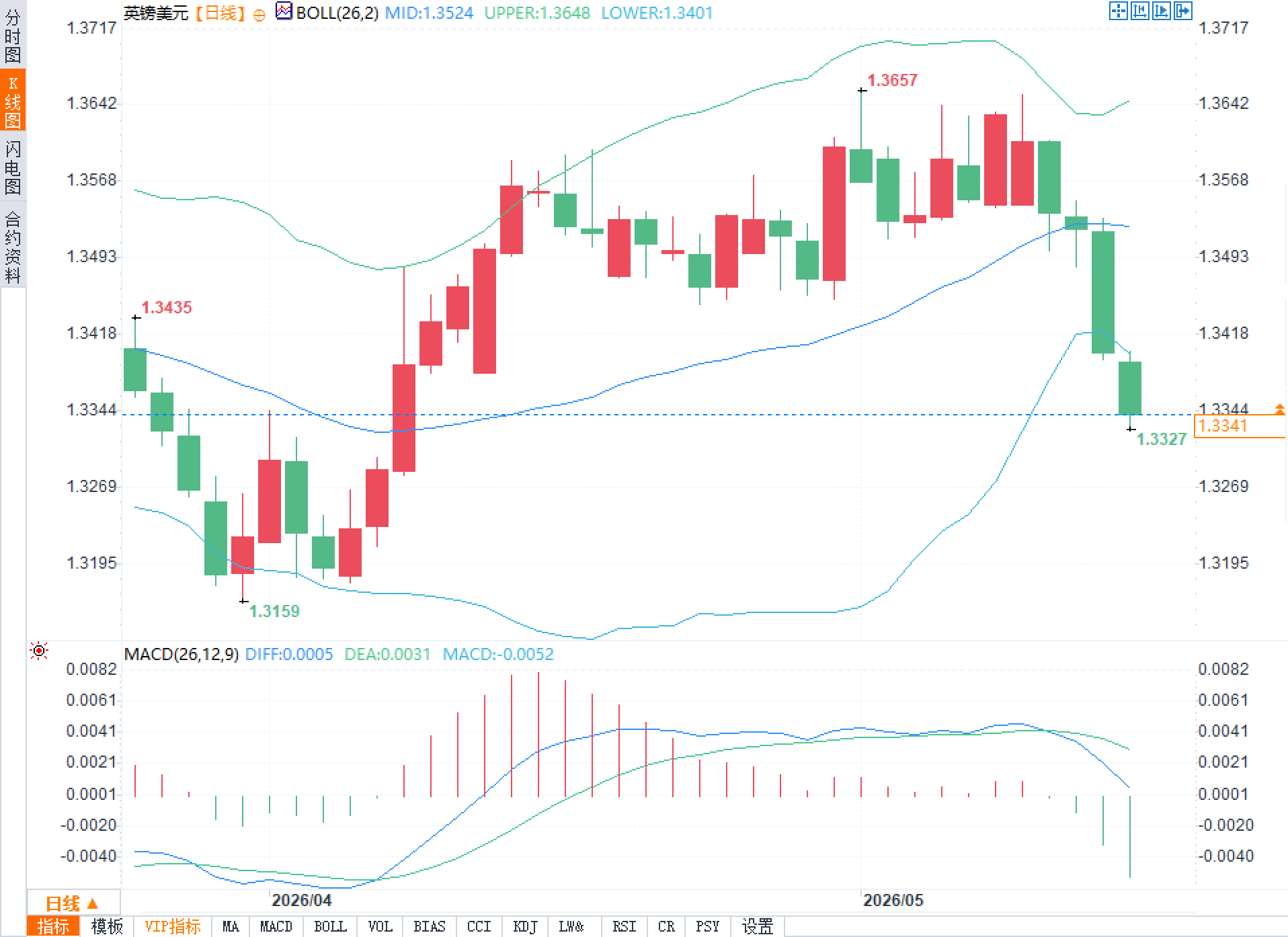
The core driver of the pound's movement against the dollar lies in the difference in policy expectations rather than any single economic data point. Traders should focus on communication between the two central banks and the subsequent release of economic indicators.
Frequently Asked Questions
US economic data strengthens support for the dollar.
U.S. retail sales rose 0.5% month-over-month in April, in line with market expectations and continuing the previous strong momentum. This data indicates that consumer spending continues to drive economic growth, while also increasing market expectations for a tightening of Federal Reserve policy. Some pricing data suggests that the probability of a Fed rate hike in 2026 has risen to approximately 37%-50%, a significant increase from previous levels. The dollar index consequently hit a three-week high.
This backdrop directly weighs on the pound against the dollar. Traders are focused on the possibility that the Federal Reserve will maintain higher interest rates for an extended period, while the Bank of England's policy path remains relatively dovish, causing the interest rate differential between the two countries to continue to favor the dollar. The pound is unlikely to escape the pressure of a strong dollar in the short term.
Interpretation and Limitations of UK Economic Growth Data
The UK's GDP grew by 0.6% quarter-on-quarter in the first quarter, the fastest pace in four quarters, with services output rising by 0.8% being the main contributor. The production sector and construction also recorded positive growth, indicating a degree of economic resilience.
However, the market has questioned the sustainability of this data. Historical data shows that the UK economy often exhibits a strong start to the quarter followed by a decline in momentum. Some analysts point out that seasonal factors or data adjustments may amplify the first-quarter performance. Coupled with energy price fluctuations due to geopolitical factors, the uncertainty facing the UK economy has not significantly eased.
| period | UK GDP grew quarter-on-quarter | Main driver |
|---|---|---|
| First quarter of 2026 | +0.6% | Services sector +0.8% |
| Fourth quarter of 2025 | +0.1%-0.2% | Production department |
Domestic political factors in the UK exacerbate the volatility of the pound.
The domestic political situation in the UK has put additional pressure on the pound. Manchester Mayor Andy Burnham recently announced his challenge to incumbent Prime Minister Kyle Starmer, and he enjoys high net approval ratings within the Labour Party, particularly among the left wing. This development has exacerbated uncertainty within the ruling party, directly impacting market confidence in the continuity of UK policy.
Political uncertainty often transmits to exchange rates through risk premiums. As a high-beta currency, the pound sterling is more susceptible to pressure during periods of fluctuating risk appetite. Traders need to closely monitor developments in the UK political arena, as any signals of leadership changes can trigger sharp short-term volatility.
Monetary policy divergence dominates the pound's exchange rate against the dollar.
The Bank of England kept its interest rate unchanged at 3.75% in April, with the 8-1 vote indicating internal division. One member favored raising the rate to 4%. Despite the Middle East situation pushing up energy prices and potentially transmitting inflation, the Bank of England emphasized the need to observe the sustainability of the shock and its secondary effects.
In contrast, US data supports the Federal Reserve's policy leaning more towards a restrictive stance. In the Eurozone, European Central Bank President Christine Lagarde previously stated her readiness to tighten policy if necessary to control inflation. The interest rate differentials between the US and Europe, and between the US and the UK, remain at levels favorable to the dollar, further supporting dollar bulls.
The core driver of the pound's movement against the dollar lies in the difference in policy expectations rather than any single economic data point. Traders should focus on communication between the two central banks and the subsequent release of economic indicators.
Frequently Asked Questions
Question 1: Why did the UK's 0.6% GDP growth in the first quarter fail to effectively boost the pound against the dollar?
A: Although the growth data exceeded some expectations, the market had already priced in some of the positive impact, and the US dollar strengthened due to robust US retail sales and rising expectations of interest rate hikes. Political uncertainty further offset the positive impact of the economic data, making it difficult for the pound to sustain its rebound.
Question 2: What is the long-term impact of the policy divergence between the Federal Reserve and the Bank of England on the pound sterling against the dollar?
A: A wide interest rate differential between the two countries is favorable for the US dollar. If the probability of a Fed rate hike persists while the Bank of England remains cautious, the pound/dollar exchange rate may face structural downward pressure. Traders need to pay attention to the guidance of inflation path and labor market data on central bank policy decisions.
Question 3: How do domestic political events in the UK affect currency trading strategies?
A: Leadership uncertainty increases risk premiums and can easily trigger short-term volatility. Traders can assess risk by paying attention to opinion polls, party dynamics, and statements on relevant economic policies.
- Risk Warning and Disclaimer
- The market involves risk, and trading may not be suitable for all investors. This article is for reference only and does not constitute personal investment advice, nor does it take into account certain users’ specific investment objectives, financial situation, or other needs. Any investment decisions made based on this information are at your own risk.