UAE nuclear power plant attacked by drones; Trump issues ultimatum; oil prices hit a two-week high; gold prices fall to a six-week low.
2026-05-18 09:10:28
The escalating stalemate in the Iran-Iraq war has taken another dramatic turn. Just as the international community was attempting to implement a ceasefire agreement, the UAE and Saudi Arabia were almost simultaneously attacked by drones. A key nuclear power plant in the UAE caught fire as a result of the attack, while Saudi Arabia successfully intercepted several drones that had infiltrated from Iraq. This series of events not only exacerbated tensions in the Gulf region but also prompted US President Trump to issue another strong warning to Iran, stating that "time is running out" for Tehran. Simultaneously, the global oil market rallied, with Brent and US crude futures prices both hitting two-week highs.
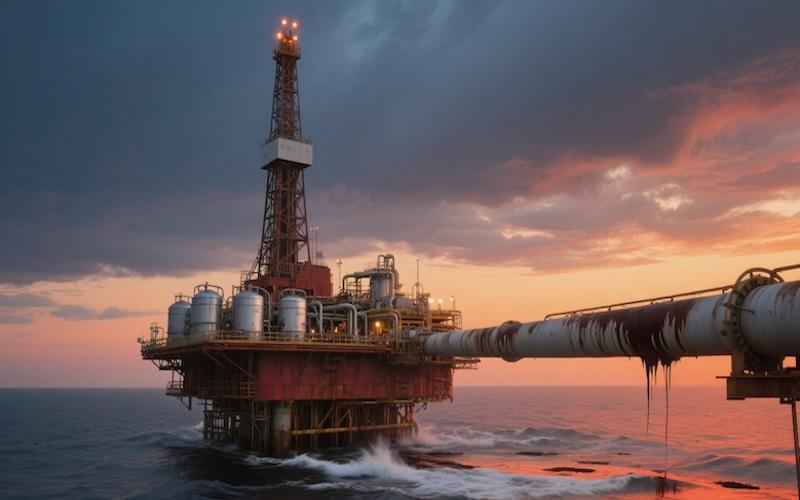
According to a statement released by UAE officials on Sunday (May 17), the Barakah nuclear power plant in the country was attacked by a drone, causing a fire. UAE officials stated that the drone successfully penetrated some air defense systems and struck a generator outside the inner perimeter of the nuclear power plant. Fortunately, the attack did not cause direct damage to the core safety areas of the nuclear power plant, nor did it result in any radioactive material leakage. The UAE Federal Nuclear Regulatory Authority subsequently confirmed in a statement that the overall safety condition of the nuclear power plant remains good, and radiation levels are completely within normal ranges.
The UAE further stated that in addition to the drone that struck the generator, two other drones were "successfully shot down" by air defense forces. According to the Ministry of Defense's initial assessment, these drones took off from the direction of the UAE's "western border" to carry out the attack, but the Ministry of Defense did not provide further evidence or explanation for this claim. The UAE government strongly condemned the act, calling it a "terrorist attack," and emphasized that the country has the full legal right to take appropriate response measures. A diplomatic advisor to the UAE president specifically pointed out that regardless of whether the attack was orchestrated by the "main perpetrator" or by proxy armed forces supported by them, this action represents a dangerous escalation of the regional situation. Currently, the UAE is conducting an in-depth investigation into the specific source of the drone attacks.
Around the same time, Saudi Arabia also reported a similar aerial threat. Saudi officials stated that its air defense forces successfully intercepted three drones, which were confirmed to have entered Saudi territory from Iraqi airspace. Saudi Arabia issued a stern warning, stating that it would take all necessary actions and measures to counter any attempt to infringe upon its national sovereignty and territorial security. Although large-scale hostilities during the conflict with Iran have significantly decreased since the ceasefire agreement took effect in April, drone launches from Iraq towards Saudi Arabia, Kuwait, and other Gulf states continue to occur.
Although the US-Iran ceasefire agreement has been in effect for over five weeks, a significant gap remains between the core demands of both sides, effectively stalling diplomatic efforts. Faced with this impasse, US President Trump issued a strongly worded statement on his self-created social media platform, Truth Social. He addressed Iran, saying, "Time is running out for Iran. They had better act quickly, or they will have nothing. Every second counts!" This statement is widely interpreted as an ultimatum.
According to the US political news website Axios, Trump is expected to meet with his senior national security advisory team on Tuesday to discuss potential military action against Iran. It is noteworthy that Trump met with leaders of major Asian powers earlier this week but failed to obtain clear signals of assistance in resolving the current conflict. Prior to this, Trump had publicly threatened to resume military strikes against Iran if it did not agree to a new agreement.
Faced with increasing pressure from the United States, Iran has not backed down. A senior spokesman for the Iranian Armed Forces, Abufazl Shekarchi, responded on Sunday, stating that if Trump actually carries out his threats, the US will "face a new, aggressive, and unexpected situation, and get bogged down in a quagmire of its own making." Iranian Foreign Ministry spokesman Esmail Bagaei accused the US and Israel of attempting to shift blame for the destabilization of the global energy market onto other countries after "launching unprovoked military aggression against Iran." Iranian officials have previously warned on multiple occasions that unpredictable "unexpected situations" could arise in the region.
The attack on the nuclear power plant has drawn serious concern from the International Atomic Energy Agency (IAEA). The agency confirmed that emergency diesel generators are currently supplying power to Unit 3 of the Baraka nuclear power plant. The IAEA issued a statement calling on all parties involved to exercise "maximum military restraint" in any area surrounding nuclear power plants and stated that it will continue to closely monitor developments. This statement reflects the international community's deep concern that nuclear facilities could become targets of military attacks.
The drone attacks, coupled with the ongoing diplomatic impasse, have directly impacted the global oil market. On Monday in Asian trading, international oil prices continued their upward trend. As of 09:00, Brent crude futures were up 1.86%, having touched a high of $111.31, the highest level since May 5th. Meanwhile, West Texas Intermediate (WTI) crude futures for June delivery rose nearly 2%, reaching a new high since May 4th at $107.67 per barrel. Market analysts pointed out that these drone attacks send a clear warning signal: if the United States or Israel launches another attack on Iran, Iran or its proxy forces in the region are likely to launch more similar attacks on energy facilities and critical infrastructure in the Gulf region.
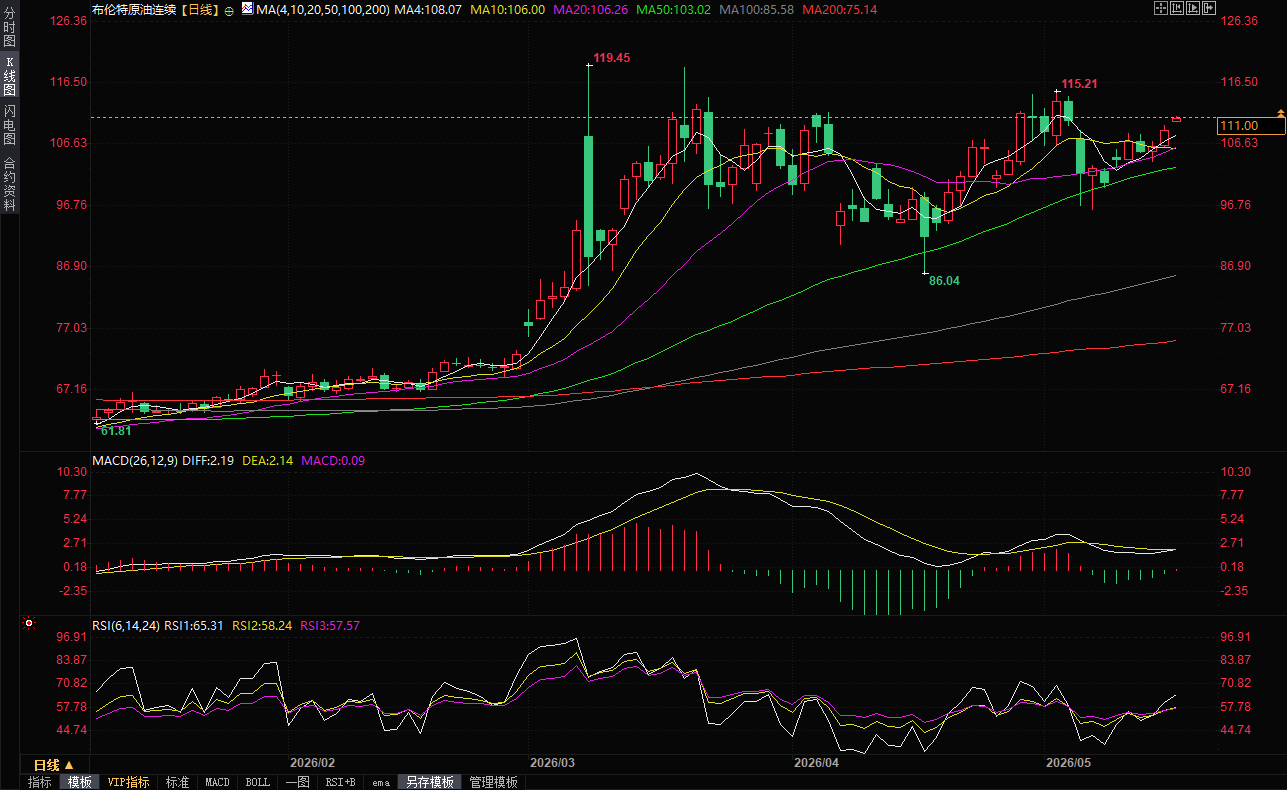
(Brent crude oil daily chart, source: EasyForex)
Rising oil prices have exacerbated inflation concerns and increased pressure on the Federal Reserve to raise interest rates this year. Currently, interest rate futures have largely eliminated expectations of a Fed rate cut during the year-end holiday, while the probability of a rate hike has risen to around 50%. As a result, the US dollar index has risen for five consecutive trading days, reaching a high of 99.41 in Asian trading on Monday, the highest level since April 8. Spot gold came under pressure and fell, dropping to around $4,480 in Asian trading on Monday, a new low since March 31.
In conclusion, the near-simultaneous drone intrusions into the UAE and Saudi Arabia, particularly the attack on the UAE's nuclear power plant, have further jeopardized the already fragile ceasefire in the Iran-Iraq conflict. US President Trump's hardline rhetoric and Iran's uncompromising stance have diminished hopes for a diplomatic solution. Meanwhile, the resulting rise in international oil prices reflects widespread market concerns about a further escalation of the conflict. The coming days, especially the outcome of Trump's meeting with his national security team, will be a key variable determining the direction of the situation in the region.
Question 1: Following the drone attack on the Barakah nuclear power plant in the UAE, did a nuclear leak occur? What impact did it have on the surrounding environment and the safety of residents?
Answer: According to a joint statement from the UAE government and the Federal Nuclear Regulatory Authority, the attack did not result in any radioactive material leakage. The target was only a generator outside the perimeter of the nuclear power plant, not the reactor itself. Following the attack, the radiation safety level of the nuclear power plant remained normal, and there were no casualties. The International Atomic Energy Agency also confirmed that the nuclear power plant is in good safety condition, and emergency diesel generators are supplying power to Unit 3. Therefore, there is currently no need to worry about the risk of nuclear leakage.
Question 2: Who is behind these drone attacks? Have the UAE and Saudi Arabia identified the source?
Answer: As of now, the UAE has stated that it is still investigating the specific source of the attack. UAE officials only indicated that two of the downed drones took off from the country's "western border," but did not provide further details. Saudi Arabia, on the other hand, explicitly stated that the three drones it intercepted flew into Iraqi airspace. Although Iran has not directly claimed responsibility for the attack, given that Iran has repeatedly targeted the UAE and other Gulf states hosting US military bases since the start of the Iran-Iraq War, there is widespread suspicion that Iran or its supported proxy forces are behind this incident.
Question 3: What exactly does Trump mean by saying "Iran's time is running out"? Is the United States about to launch a new round of military strikes against Iran?
Answer: Trump's statement is an ultimatum to Iran, intended to pressure it into making concessions on the nuclear agreement or ceasefire terms as soon as possible. According to Axios, Trump plans to meet with his senior national security advisor to specifically discuss military action against Iran. This means the US is indeed seriously considering the possibility of resuming military strikes. However, as of now, there is no conclusive evidence that military action has been approved. Trump's remarks are more of a maximum pressure tactic, aimed at gaining the upper hand in diplomatic negotiations.
Question 4: Why did the drone attack on the UAE nuclear power plant cause a sharp rise in international oil prices?
Answer: The main reason is the sharp increase in market concerns about the security of energy supplies in the Strait of Hormuz and the Gulf region. The UAE and Saudi Arabia are the world's largest oil producers and exporters, and any attack on their energy or nuclear infrastructure could trigger a chain reaction, leading to disruptions in crude oil supplies or transportation. Furthermore, the ongoing diplomatic stalemate and the continued hardline rhetoric from both the US and Iran have led investors to widely anticipate a further escalation of the conflict, thus pushing up risk premiums and driving up oil prices.
Question 5: Wasn't a ceasefire agreement reached previously? Why are drone attacks still occurring?
Answer: Indeed, since the ceasefire agreement took effect in April, large-scale direct military confrontations during the Iranian conflict have significantly decreased. However, the ceasefire agreement does not completely prohibit low-intensity attacks by proxy forces or non-state actors. The drones that flew from Iraq towards Saudi Arabia and the drone that attacked the UAE nuclear power plant were likely carried out by proxy forces supported by Iran. These "grey zone" operations allow Iran to maintain pressure on its adversaries while nominally distancing itself from the ceasefire agreement, thus avoiding direct liability for breach. Therefore, the fragility of the ceasefire agreement was fully exposed in this incident.
At 09:08 Beijing time, Brent crude oil was trading at $111.16 per barrel.
I. Drone Attack: A Terrifying Moment at a UAE Nuclear Power Plant
According to a statement released by UAE officials on Sunday (May 17), the Barakah nuclear power plant in the country was attacked by a drone, causing a fire. UAE officials stated that the drone successfully penetrated some air defense systems and struck a generator outside the inner perimeter of the nuclear power plant. Fortunately, the attack did not cause direct damage to the core safety areas of the nuclear power plant, nor did it result in any radioactive material leakage. The UAE Federal Nuclear Regulatory Authority subsequently confirmed in a statement that the overall safety condition of the nuclear power plant remains good, and radiation levels are completely within normal ranges.
The UAE further stated that in addition to the drone that struck the generator, two other drones were "successfully shot down" by air defense forces. According to the Ministry of Defense's initial assessment, these drones took off from the direction of the UAE's "western border" to carry out the attack, but the Ministry of Defense did not provide further evidence or explanation for this claim. The UAE government strongly condemned the act, calling it a "terrorist attack," and emphasized that the country has the full legal right to take appropriate response measures. A diplomatic advisor to the UAE president specifically pointed out that regardless of whether the attack was orchestrated by the "main perpetrator" or by proxy armed forces supported by them, this action represents a dangerous escalation of the regional situation. Currently, the UAE is conducting an in-depth investigation into the specific source of the drone attacks.
II. Saudi Arabia's air defense system intensifies: Intercepts 3 drones from Iraq.
Around the same time, Saudi Arabia also reported a similar aerial threat. Saudi officials stated that its air defense forces successfully intercepted three drones, which were confirmed to have entered Saudi territory from Iraqi airspace. Saudi Arabia issued a stern warning, stating that it would take all necessary actions and measures to counter any attempt to infringe upon its national sovereignty and territorial security. Although large-scale hostilities during the conflict with Iran have significantly decreased since the ceasefire agreement took effect in April, drone launches from Iraq towards Saudi Arabia, Kuwait, and other Gulf states continue to occur.
III. Diplomatic deadlock remains unbroken: Trump issues ultimatum-like warning
Although the US-Iran ceasefire agreement has been in effect for over five weeks, a significant gap remains between the core demands of both sides, effectively stalling diplomatic efforts. Faced with this impasse, US President Trump issued a strongly worded statement on his self-created social media platform, Truth Social. He addressed Iran, saying, "Time is running out for Iran. They had better act quickly, or they will have nothing. Every second counts!" This statement is widely interpreted as an ultimatum.
According to the US political news website Axios, Trump is expected to meet with his senior national security advisory team on Tuesday to discuss potential military action against Iran. It is noteworthy that Trump met with leaders of major Asian powers earlier this week but failed to obtain clear signals of assistance in resolving the current conflict. Prior to this, Trump had publicly threatened to resume military strikes against Iran if it did not agree to a new agreement.
IV. Iran's Strong Response: Warning of Possible "Unexpected Situations"
Faced with increasing pressure from the United States, Iran has not backed down. A senior spokesman for the Iranian Armed Forces, Abufazl Shekarchi, responded on Sunday, stating that if Trump actually carries out his threats, the US will "face a new, aggressive, and unexpected situation, and get bogged down in a quagmire of its own making." Iranian Foreign Ministry spokesman Esmail Bagaei accused the US and Israel of attempting to shift blame for the destabilization of the global energy market onto other countries after "launching unprovoked military aggression against Iran." Iranian officials have previously warned on multiple occasions that unpredictable "unexpected situations" could arise in the region.
V. International Community Concerns: The International Atomic Energy Agency Calls for Restraint
The attack on the nuclear power plant has drawn serious concern from the International Atomic Energy Agency (IAEA). The agency confirmed that emergency diesel generators are currently supplying power to Unit 3 of the Baraka nuclear power plant. The IAEA issued a statement calling on all parties involved to exercise "maximum military restraint" in any area surrounding nuclear power plants and stated that it will continue to closely monitor developments. This statement reflects the international community's deep concern that nuclear facilities could become targets of military attacks.
VI. Global oil market reacts sharply: Oil prices climb to a two-week high
The drone attacks, coupled with the ongoing diplomatic impasse, have directly impacted the global oil market. On Monday in Asian trading, international oil prices continued their upward trend. As of 09:00, Brent crude futures were up 1.86%, having touched a high of $111.31, the highest level since May 5th. Meanwhile, West Texas Intermediate (WTI) crude futures for June delivery rose nearly 2%, reaching a new high since May 4th at $107.67 per barrel. Market analysts pointed out that these drone attacks send a clear warning signal: if the United States or Israel launches another attack on Iran, Iran or its proxy forces in the region are likely to launch more similar attacks on energy facilities and critical infrastructure in the Gulf region.
(Brent crude oil daily chart, source: EasyForex)
Rising oil prices have exacerbated inflation concerns and increased pressure on the Federal Reserve to raise interest rates this year. Currently, interest rate futures have largely eliminated expectations of a Fed rate cut during the year-end holiday, while the probability of a rate hike has risen to around 50%. As a result, the US dollar index has risen for five consecutive trading days, reaching a high of 99.41 in Asian trading on Monday, the highest level since April 8. Spot gold came under pressure and fell, dropping to around $4,480 in Asian trading on Monday, a new low since March 31.
Summarize
In conclusion, the near-simultaneous drone intrusions into the UAE and Saudi Arabia, particularly the attack on the UAE's nuclear power plant, have further jeopardized the already fragile ceasefire in the Iran-Iraq conflict. US President Trump's hardline rhetoric and Iran's uncompromising stance have diminished hopes for a diplomatic solution. Meanwhile, the resulting rise in international oil prices reflects widespread market concerns about a further escalation of the conflict. The coming days, especially the outcome of Trump's meeting with his national security team, will be a key variable determining the direction of the situation in the region.
Frequently Asked Questions
Question 1: Following the drone attack on the Barakah nuclear power plant in the UAE, did a nuclear leak occur? What impact did it have on the surrounding environment and the safety of residents?
Answer: According to a joint statement from the UAE government and the Federal Nuclear Regulatory Authority, the attack did not result in any radioactive material leakage. The target was only a generator outside the perimeter of the nuclear power plant, not the reactor itself. Following the attack, the radiation safety level of the nuclear power plant remained normal, and there were no casualties. The International Atomic Energy Agency also confirmed that the nuclear power plant is in good safety condition, and emergency diesel generators are supplying power to Unit 3. Therefore, there is currently no need to worry about the risk of nuclear leakage.
Question 2: Who is behind these drone attacks? Have the UAE and Saudi Arabia identified the source?
Answer: As of now, the UAE has stated that it is still investigating the specific source of the attack. UAE officials only indicated that two of the downed drones took off from the country's "western border," but did not provide further details. Saudi Arabia, on the other hand, explicitly stated that the three drones it intercepted flew into Iraqi airspace. Although Iran has not directly claimed responsibility for the attack, given that Iran has repeatedly targeted the UAE and other Gulf states hosting US military bases since the start of the Iran-Iraq War, there is widespread suspicion that Iran or its supported proxy forces are behind this incident.
Question 3: What exactly does Trump mean by saying "Iran's time is running out"? Is the United States about to launch a new round of military strikes against Iran?
Answer: Trump's statement is an ultimatum to Iran, intended to pressure it into making concessions on the nuclear agreement or ceasefire terms as soon as possible. According to Axios, Trump plans to meet with his senior national security advisor to specifically discuss military action against Iran. This means the US is indeed seriously considering the possibility of resuming military strikes. However, as of now, there is no conclusive evidence that military action has been approved. Trump's remarks are more of a maximum pressure tactic, aimed at gaining the upper hand in diplomatic negotiations.
Question 4: Why did the drone attack on the UAE nuclear power plant cause a sharp rise in international oil prices?
Answer: The main reason is the sharp increase in market concerns about the security of energy supplies in the Strait of Hormuz and the Gulf region. The UAE and Saudi Arabia are the world's largest oil producers and exporters, and any attack on their energy or nuclear infrastructure could trigger a chain reaction, leading to disruptions in crude oil supplies or transportation. Furthermore, the ongoing diplomatic stalemate and the continued hardline rhetoric from both the US and Iran have led investors to widely anticipate a further escalation of the conflict, thus pushing up risk premiums and driving up oil prices.
Question 5: Wasn't a ceasefire agreement reached previously? Why are drone attacks still occurring?
Answer: Indeed, since the ceasefire agreement took effect in April, large-scale direct military confrontations during the Iranian conflict have significantly decreased. However, the ceasefire agreement does not completely prohibit low-intensity attacks by proxy forces or non-state actors. The drones that flew from Iraq towards Saudi Arabia and the drone that attacked the UAE nuclear power plant were likely carried out by proxy forces supported by Iran. These "grey zone" operations allow Iran to maintain pressure on its adversaries while nominally distancing itself from the ceasefire agreement, thus avoiding direct liability for breach. Therefore, the fragility of the ceasefire agreement was fully exposed in this incident.
At 09:08 Beijing time, Brent crude oil was trading at $111.16 per barrel.
- Risk Warning and Disclaimer
- The market involves risk, and trading may not be suitable for all investors. This article is for reference only and does not constitute personal investment advice, nor does it take into account certain users’ specific investment objectives, financial situation, or other needs. Any investment decisions made based on this information are at your own risk.