Widening policy disagreements within the Bank of England put downward pressure on the pound.
2026-05-18 13:17:12
Bank of England Deputy Governor Sarah Breeden recently stated that, given the current global geopolitical tensions and the escalating energy crisis, the Bank of England should not rush to take new interest rate actions but should maintain a "prudent" and "patient" policy stance.
Brident made these remarks during a meeting with business executives in southwest England. She emphasized that the UK economy is currently facing multiple challenges, including rising energy prices, soaring bond yields, and renewed pressure on the cost of living for residents. Therefore, the central bank needs more time to observe changes in the economic situation rather than adjusting policy prematurely.
Brident made it clear that the Bank of England "does not need to rush into action." This statement was seen by the market as a clear indication of a dovish stance, and also showed that the internal divisions within the Bank of England regarding the future direction of monetary policy are widening.
At the April policy meeting, Brident and a majority of committee members supported keeping the benchmark interest rate unchanged at 3.75%. However, Bank of England Chief Economist Huw Pill supported further rate hikes to address persistent inflationary pressures. With international energy prices continuing to rise, markets are beginning to worry that UK inflation may rebound. Particularly against the backdrop of escalating tensions in the Middle East, high international oil and natural gas prices are further exacerbating the risk of imported inflation in the UK. Rising energy costs are pushing up UK inflationary pressures again.
As one of the economies heavily reliant on energy imports, the UK is significantly impacted by changes in energy prices, which have a substantial influence on business operating costs and household consumption expenditures. The recent resurgence of living costs for British households is also raising market concerns about a potential further slowdown in economic growth. In her speech, Brident repeatedly mentioned the issues of business financing costs and household debt pressures, and expressed concern about the recent rise in bond yields. The market believes she is inclined to avoid tightening policy too quickly, which could cause additional shocks to the UK economy.
Meanwhile, voices within the Bank of England supporting further interest rate hikes are gradually increasing. Some officials worry that if energy prices continue to rise and drive inflation back up, the Bank of England may have to adopt a more hawkish stance. The divide between hawks and doves within the Bank of England is widening. Market performance shows that after Briden's speech, bets on further interest rate hikes by the Bank of England cooled somewhat, putting some pressure on the pound in the short term. Investors are beginning to reassess the future path of UK interest rates and are focusing on whether the Bank of England will maintain current interest rate levels for an extended period.
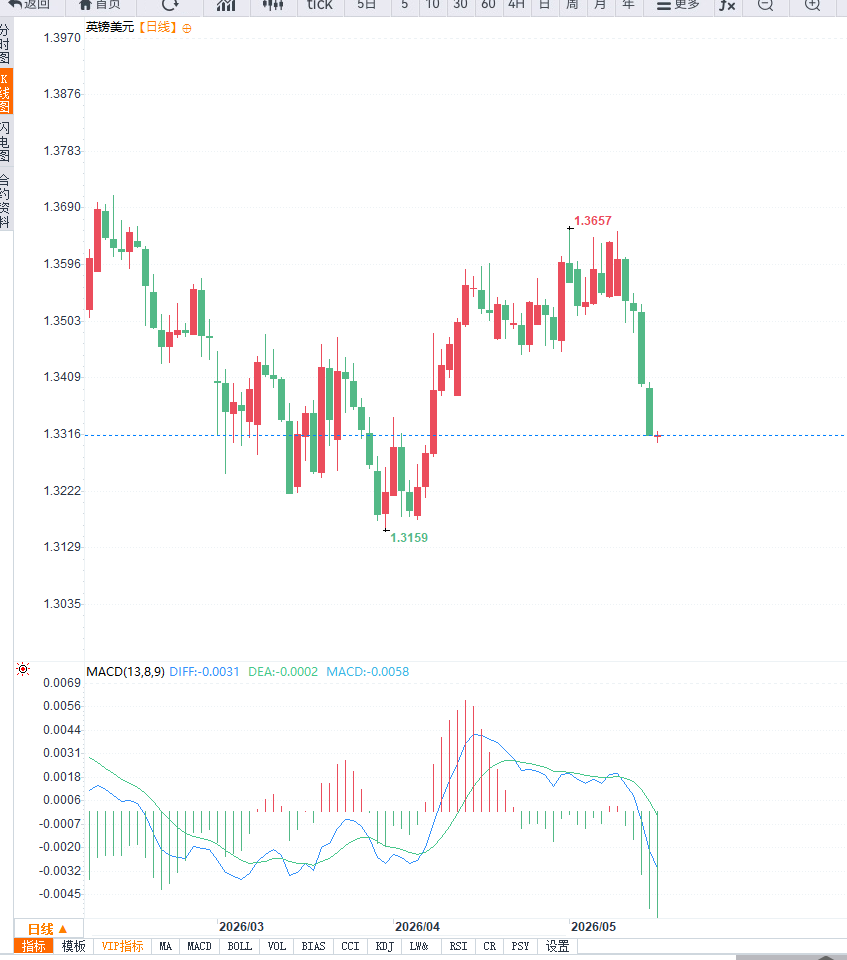
From a technical perspective, the GBP/USD pair has maintained a slightly bearish trend recently. On the daily chart, it has been declining continuously, approaching previous lows. A break below the key short-term support level of 1.3290 could accelerate the downward movement. Looking at the 4-hour chart, the pound's short-term momentum has slowed. The MACD indicator is gradually approaching the zero line, indicating weakening market direction, while the RSI indicator is in neutral territory, suggesting cautious short-term sentiment. If subsequent UK inflation data continues to rise, the market may re-bet on a Bank of England rate hike; however, if economic data weakens further, the pound may continue to face pressure.
In addition, the market is also focused on the selection of the future governor of the Bank of England. Brident is considered one of the leading contenders to succeed Andrew Bailey in two years, and therefore his policy stance is also being closely watched by the financial markets.
Editor's Summary:
The Bank of England is currently facing a complex balancing act between inflationary pressures and the risk of an economic slowdown. Bretton's dovish signals suggest that some policymakers are more concerned about the impact of high interest rates on the economy and household spending than simply focusing on inflation. However, with rising energy prices and ongoing global geopolitical risks, there is still a possibility that UK inflation will rebound. In the short term, policy disagreements within the Bank of England may continue to widen, potentially keeping the pound sterling highly volatile. Going forward, the market will focus on UK inflation data, wage growth, and changes in the Bank of England's internal policy stance.
Brident made these remarks during a meeting with business executives in southwest England. She emphasized that the UK economy is currently facing multiple challenges, including rising energy prices, soaring bond yields, and renewed pressure on the cost of living for residents. Therefore, the central bank needs more time to observe changes in the economic situation rather than adjusting policy prematurely.
Brident made it clear that the Bank of England "does not need to rush into action." This statement was seen by the market as a clear indication of a dovish stance, and also showed that the internal divisions within the Bank of England regarding the future direction of monetary policy are widening.
At the April policy meeting, Brident and a majority of committee members supported keeping the benchmark interest rate unchanged at 3.75%. However, Bank of England Chief Economist Huw Pill supported further rate hikes to address persistent inflationary pressures. With international energy prices continuing to rise, markets are beginning to worry that UK inflation may rebound. Particularly against the backdrop of escalating tensions in the Middle East, high international oil and natural gas prices are further exacerbating the risk of imported inflation in the UK. Rising energy costs are pushing up UK inflationary pressures again.
As one of the economies heavily reliant on energy imports, the UK is significantly impacted by changes in energy prices, which have a substantial influence on business operating costs and household consumption expenditures. The recent resurgence of living costs for British households is also raising market concerns about a potential further slowdown in economic growth. In her speech, Brident repeatedly mentioned the issues of business financing costs and household debt pressures, and expressed concern about the recent rise in bond yields. The market believes she is inclined to avoid tightening policy too quickly, which could cause additional shocks to the UK economy.
Meanwhile, voices within the Bank of England supporting further interest rate hikes are gradually increasing. Some officials worry that if energy prices continue to rise and drive inflation back up, the Bank of England may have to adopt a more hawkish stance. The divide between hawks and doves within the Bank of England is widening. Market performance shows that after Briden's speech, bets on further interest rate hikes by the Bank of England cooled somewhat, putting some pressure on the pound in the short term. Investors are beginning to reassess the future path of UK interest rates and are focusing on whether the Bank of England will maintain current interest rate levels for an extended period.
From a technical perspective, the GBP/USD pair has maintained a slightly bearish trend recently. On the daily chart, it has been declining continuously, approaching previous lows. A break below the key short-term support level of 1.3290 could accelerate the downward movement. Looking at the 4-hour chart, the pound's short-term momentum has slowed. The MACD indicator is gradually approaching the zero line, indicating weakening market direction, while the RSI indicator is in neutral territory, suggesting cautious short-term sentiment. If subsequent UK inflation data continues to rise, the market may re-bet on a Bank of England rate hike; however, if economic data weakens further, the pound may continue to face pressure.
In addition, the market is also focused on the selection of the future governor of the Bank of England. Brident is considered one of the leading contenders to succeed Andrew Bailey in two years, and therefore his policy stance is also being closely watched by the financial markets.
Editor's Summary:
The Bank of England is currently facing a complex balancing act between inflationary pressures and the risk of an economic slowdown. Bretton's dovish signals suggest that some policymakers are more concerned about the impact of high interest rates on the economy and household spending than simply focusing on inflation. However, with rising energy prices and ongoing global geopolitical risks, there is still a possibility that UK inflation will rebound. In the short term, policy disagreements within the Bank of England may continue to widen, potentially keeping the pound sterling highly volatile. Going forward, the market will focus on UK inflation data, wage growth, and changes in the Bank of England's internal policy stance.
- Risk Warning and Disclaimer
- The market involves risk, and trading may not be suitable for all investors. This article is for reference only and does not constitute personal investment advice, nor does it take into account certain users’ specific investment objectives, financial situation, or other needs. Any investment decisions made based on this information are at your own risk.