Japan's finance minister stated at the G7 that he was prepared to intervene in the foreign exchange market at any time; a nearly 10 trillion yen defense effort failed to prevent the yen from approaching the 160 mark.
2026-05-19 11:07:44
Japanese Finance Minister Satsuki Katayama stated clearly on Monday (May 18) during the G7 finance ministers' meeting that Japan is prepared to respond to excessive volatility in the foreign exchange market at any time. He also emphasized that in its intervention actions of buying yen and selling dollars, Japan will carefully avoid pushing up US Treasury yields. This statement comes as the dollar-yen exchange rate once again approaches the key 160 yen level, fueling market expectations for a second round of intervention by Japanese authorities.
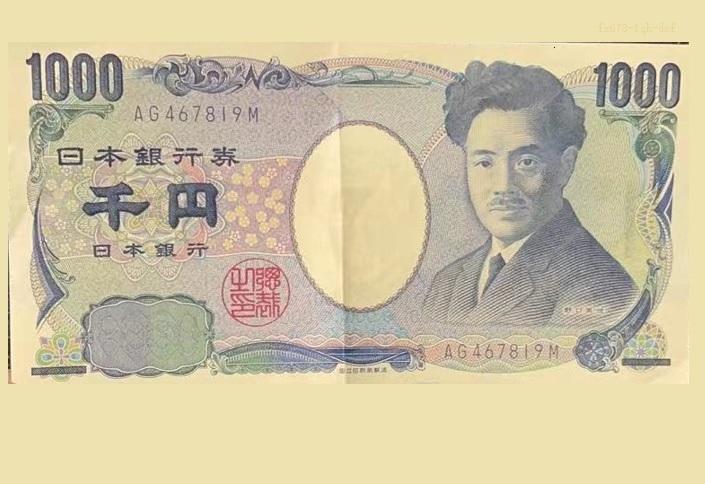
According to data disclosed by the Bank of Japan, since launching a new round of yen intervention on April 30, Tokyo may have injected nearly 10 trillion yen (approximately US$63 billion). Analysts point out that this intervention was implemented in two phases—approximately 5 trillion yen was injected on April 30, and an additional 5 trillion yen was injected in the first week of May. This marks Japan's first intervention in the foreign exchange market since 2024 and is the largest currency stabilization operation in recent years.
The intervention measures achieved some short-term results. The intervention on April 30th caused the yen to surge 3% against the dollar within 30 minutes, jumping from 160.7 to 155; after another intervention on May 6th, the yen jumped 1.8% within 30 minutes. However, as subsequent market arbitrage trading resurfaced and Middle East geopolitical risks continued to drive demand for the dollar as a safe haven, the rebound from the intervention quickly diminished. As of the Asian morning session on May 19th, the dollar/yen pair touched the 159.00 level and was last trading around 158.94, having given back more than half of its gains since the intervention. It is on track for its seventh consecutive trading day of gains this week.
Another focus of market attention is the source of funds for Japan's intervention in the foreign exchange market. Japan's foreign exchange reserves are approximately $1.4 trillion, but about 80% of them are held in the form of US Treasury bonds, leaving only about $160 billion in readily available cash deposits. The latest data from the US Treasury Department shows that as of the end of March, Japan held approximately $1.19 trillion in US Treasury bonds, a decrease of about $48 billion from the previous month, but it remains the largest foreign holder of US Treasury bonds.
In theory, Japan could raise the necessary dollar funds for intervention by selling US Treasury bonds. However, a senior official from Japan's Ministry of Finance explicitly stated that selling US Treasury bonds could push up US Treasury yields, further strengthening the dollar exchange rate and exacerbating downward pressure on the yen, thus having the opposite effect. The official added that Japan's foreign exchange reserves remain fully liquid, including cash deposits and maturing assets and interest income, and the authorities will minimize unexpected market impacts while ensuring effective action.
Judging from the current trend in the US Treasury market, the above concerns are not unfounded. As of the close of trading in New York on May 18, the yield on the 10-year US Treasury note was 4.6073%, and the yield on the 30-year US Treasury note was 5.1407%. In the previous few trading days, the yield on the 10-year US Treasury note had risen to 4.631% and 4.59%, respectively, reaching nearly a year's high.
On the first day of the G7 finance ministers' meeting in Paris, Satsuki Katayama told the ministers that the continued volatility in oil prices had had a ripple effect on exchange rates and government bond yields. She pointed out that the causes of exchange rate fluctuations included the geopolitical situation in the Middle East and speculative activities, but the meeting did not specifically discuss the issue of Japanese intervention in the foreign exchange market.
As a country heavily reliant on energy imports, Japan faces even more severe imported inflationary pressures amid rising international oil prices. The increased oil prices have further weakened the yen's purchasing power, while simultaneously pushing up import costs and worsening Japan's terms of trade.
The signals from the G7 finance ministers' meeting suggest that Japan's strategy of stabilizing the yen through verbal intervention and market expectation management will not change in the short term. Katayama Satsuki's reiteration of his readiness to take appropriate measures indicates that the psychological barrier of 160 yen remains a red line closely guarded by the authorities. If the exchange rate breaks through this level, a new round of larger-scale intervention is highly likely to follow quickly. However, the problem lies in the diminishing marginal effect of intervention—the nearly 10 trillion yen injection has only brought a short-term rebound, and the current depreciation trend of the yen has not been fundamentally reversed. A deeper contradiction lies in the fact that the Bank of Japan, constrained by a government debt ratio exceeding 260%, has extremely limited room for interest rate hikes; while the Federal Reserve's stance of maintaining high interest rates remains firm, and the US-Japan interest rate differential remains at nearly 300 basis points. Before the interest rate differential narrows, any intervention can only be a stopgap measure. For Japan, the greater challenge lies in finding a balance between foreign exchange intervention and stabilizing the US Treasury market, avoiding a chain reaction triggered by selling US Treasury bonds that would lead to a surge in yields, thus falling into a vicious cycle of "intervention pushing up US Treasury yields—rising US Treasury yields pushing up the dollar—further pressure on the yen."
Q: Why has Japan's large-scale intervention in the foreign exchange market failed to reverse the yen's depreciation trend in a lasting manner?
A: Japan's intervention this time has involved nearly 10 trillion yen, which has indeed had a short-term effect on boosting the yen. However, the yen's depreciation is driven by multiple structural factors. First, the monetary policy divergence between the US and Japan persists—the Federal Reserve's benchmark interest rate remains high, while the Bank of Japan's rate is only 0.75%, resulting in an interest rate differential of nearly 300 basis points, continuously incentivizing carry trade (borrowing low-interest yen to buy high-interest dollars). Second, as a major energy importer, Japan's trade deficit has widened due to the Middle East situation pushing up oil prices, further weakening the yen's purchasing power. Third, the intervention relies on depleting foreign exchange reserves, but of the $1.4 trillion in foreign exchange reserves, only about $160 billion is available in cash, limiting its sustainability. These fundamental factors determine that the intervention can only "smooth out short-term fluctuations" and cannot reverse the long-term trend.
Q: Why is Japan worried about selling US Treasury bonds when it uses its foreign exchange reserves to intervene in the foreign exchange market?
A: About 80% of Japan's foreign exchange reserves are in illiquid assets such as US Treasury bonds. Theoretically, selling US Treasury bonds could quickly generate US dollars for intervention. However, this would trigger two negative transmission chains: First, a large-scale sale of US Treasury bonds would push up US Treasury yields, which in turn would attract funds to flow into dollar assets, further pushing up the dollar exchange rate and exacerbating the depreciation of the yen. Second, a surge in US Treasury yields would directly impact the US government's financing costs. US Treasury Secretary Bessant has already identified the 10-year US Treasury yield as his most closely watched financial indicator, and a large-scale sale by Japan could provoke dissatisfaction from the US and lead to diplomatic friction.
Q: What is the US attitude towards Japan's intervention in the foreign exchange market?
A: The US stance is clearly contradictory. On the one hand, US Treasury Secretary Bessen has repeatedly criticized Japan's intervention practices publicly, emphasizing that the yen's depreciation should be addressed by raising interest rates rather than selling US Treasury bonds. He even expressed a tough stance to Japanese Finance Minister Satsuki Katayama during the Davos Forum in January of this year. On the other hand, the US and Japan have recently agreed that "excessive exchange rate volatility is undesirable." Essentially, the US is concerned that Japan's sale of US Treasury bonds will push up its domestic borrowing costs and exacerbate inflationary pressures, but this does not mean that the US will prevent Japan from intervening by "buying yen and selling dollars."
Q: If the yen breaks through the 160 mark, what will Japan do next?
A: Once the yen effectively breaks through the 160 mark, the market generally expects the Japanese authorities to implement large-scale intervention again. The measures may include: (1) continuing to use foreign exchange reserves to buy yen. Citi Research estimates that the total investment in this round of intervention may eventually reach 30 trillion yen; (2) simultaneously strengthening verbal intervention to influence market expectations by releasing strong policy signals; (3) raising funds by selling short-term US Treasury bonds instead of long-term bonds when necessary to control the impact on long-term yields. However, it is worth noting that the yen may only rebound briefly after the intervention and then fall back again - the trend from the end of April to the beginning of May has fully illustrated this point.
Q: What are the actual effects of the continued depreciation of the yen on the Japanese economy and ordinary people?
A: The continued depreciation of the yen has a significantly differentiated impact on different groups in Japan. Importers (especially energy and raw material importers) face a sharp increase in costs, directly squeezing profit margins and pushing up domestic prices. Ordinary consumers therefore bear imported inflationary pressures, leading to higher living costs. Export-oriented manufacturing companies (such as automobile and electronics companies) benefit from increased profit repatriation. From a macroeconomic perspective, the trade deficit may further widen, while the current account surplus continues to narrow. Because Japan is heavily reliant on imported energy and food, the negative impact of the yen's depreciation is spreading more broadly to the people's livelihood, which is one of the core reasons why the Japanese authorities are willing to incur huge costs to intervene in the exchange rate.
At 11:06 Beijing time, the USD/JPY exchange rate is currently at 158.97/98.
With a cumulative investment of nearly 10 trillion yen, the effectiveness of the intervention has rapidly diminished.
According to data disclosed by the Bank of Japan, since launching a new round of yen intervention on April 30, Tokyo may have injected nearly 10 trillion yen (approximately US$63 billion). Analysts point out that this intervention was implemented in two phases—approximately 5 trillion yen was injected on April 30, and an additional 5 trillion yen was injected in the first week of May. This marks Japan's first intervention in the foreign exchange market since 2024 and is the largest currency stabilization operation in recent years.
The intervention measures achieved some short-term results. The intervention on April 30th caused the yen to surge 3% against the dollar within 30 minutes, jumping from 160.7 to 155; after another intervention on May 6th, the yen jumped 1.8% within 30 minutes. However, as subsequent market arbitrage trading resurfaced and Middle East geopolitical risks continued to drive demand for the dollar as a safe haven, the rebound from the intervention quickly diminished. As of the Asian morning session on May 19th, the dollar/yen pair touched the 159.00 level and was last trading around 158.94, having given back more than half of its gains since the intervention. It is on track for its seventh consecutive trading day of gains this week.
The double dilemma of US Treasury yields
Another focus of market attention is the source of funds for Japan's intervention in the foreign exchange market. Japan's foreign exchange reserves are approximately $1.4 trillion, but about 80% of them are held in the form of US Treasury bonds, leaving only about $160 billion in readily available cash deposits. The latest data from the US Treasury Department shows that as of the end of March, Japan held approximately $1.19 trillion in US Treasury bonds, a decrease of about $48 billion from the previous month, but it remains the largest foreign holder of US Treasury bonds.
In theory, Japan could raise the necessary dollar funds for intervention by selling US Treasury bonds. However, a senior official from Japan's Ministry of Finance explicitly stated that selling US Treasury bonds could push up US Treasury yields, further strengthening the dollar exchange rate and exacerbating downward pressure on the yen, thus having the opposite effect. The official added that Japan's foreign exchange reserves remain fully liquid, including cash deposits and maturing assets and interest income, and the authorities will minimize unexpected market impacts while ensuring effective action.
Judging from the current trend in the US Treasury market, the above concerns are not unfounded. As of the close of trading in New York on May 18, the yield on the 10-year US Treasury note was 4.6073%, and the yield on the 30-year US Treasury note was 5.1407%. In the previous few trading days, the yield on the 10-year US Treasury note had risen to 4.631% and 4.59%, respectively, reaching nearly a year's high.
The G7 meeting focused on exchange rate fluctuations, with the transmission of oil price increases exacerbating the predicament.
On the first day of the G7 finance ministers' meeting in Paris, Satsuki Katayama told the ministers that the continued volatility in oil prices had had a ripple effect on exchange rates and government bond yields. She pointed out that the causes of exchange rate fluctuations included the geopolitical situation in the Middle East and speculative activities, but the meeting did not specifically discuss the issue of Japanese intervention in the foreign exchange market.
As a country heavily reliant on energy imports, Japan faces even more severe imported inflationary pressures amid rising international oil prices. The increased oil prices have further weakened the yen's purchasing power, while simultaneously pushing up import costs and worsening Japan's terms of trade.
Editor's Summary
The signals from the G7 finance ministers' meeting suggest that Japan's strategy of stabilizing the yen through verbal intervention and market expectation management will not change in the short term. Katayama Satsuki's reiteration of his readiness to take appropriate measures indicates that the psychological barrier of 160 yen remains a red line closely guarded by the authorities. If the exchange rate breaks through this level, a new round of larger-scale intervention is highly likely to follow quickly. However, the problem lies in the diminishing marginal effect of intervention—the nearly 10 trillion yen injection has only brought a short-term rebound, and the current depreciation trend of the yen has not been fundamentally reversed. A deeper contradiction lies in the fact that the Bank of Japan, constrained by a government debt ratio exceeding 260%, has extremely limited room for interest rate hikes; while the Federal Reserve's stance of maintaining high interest rates remains firm, and the US-Japan interest rate differential remains at nearly 300 basis points. Before the interest rate differential narrows, any intervention can only be a stopgap measure. For Japan, the greater challenge lies in finding a balance between foreign exchange intervention and stabilizing the US Treasury market, avoiding a chain reaction triggered by selling US Treasury bonds that would lead to a surge in yields, thus falling into a vicious cycle of "intervention pushing up US Treasury yields—rising US Treasury yields pushing up the dollar—further pressure on the yen."
Frequently Asked Questions
Q: Why has Japan's large-scale intervention in the foreign exchange market failed to reverse the yen's depreciation trend in a lasting manner?
A: Japan's intervention this time has involved nearly 10 trillion yen, which has indeed had a short-term effect on boosting the yen. However, the yen's depreciation is driven by multiple structural factors. First, the monetary policy divergence between the US and Japan persists—the Federal Reserve's benchmark interest rate remains high, while the Bank of Japan's rate is only 0.75%, resulting in an interest rate differential of nearly 300 basis points, continuously incentivizing carry trade (borrowing low-interest yen to buy high-interest dollars). Second, as a major energy importer, Japan's trade deficit has widened due to the Middle East situation pushing up oil prices, further weakening the yen's purchasing power. Third, the intervention relies on depleting foreign exchange reserves, but of the $1.4 trillion in foreign exchange reserves, only about $160 billion is available in cash, limiting its sustainability. These fundamental factors determine that the intervention can only "smooth out short-term fluctuations" and cannot reverse the long-term trend.
Q: Why is Japan worried about selling US Treasury bonds when it uses its foreign exchange reserves to intervene in the foreign exchange market?
A: About 80% of Japan's foreign exchange reserves are in illiquid assets such as US Treasury bonds. Theoretically, selling US Treasury bonds could quickly generate US dollars for intervention. However, this would trigger two negative transmission chains: First, a large-scale sale of US Treasury bonds would push up US Treasury yields, which in turn would attract funds to flow into dollar assets, further pushing up the dollar exchange rate and exacerbating the depreciation of the yen. Second, a surge in US Treasury yields would directly impact the US government's financing costs. US Treasury Secretary Bessant has already identified the 10-year US Treasury yield as his most closely watched financial indicator, and a large-scale sale by Japan could provoke dissatisfaction from the US and lead to diplomatic friction.
Q: What is the US attitude towards Japan's intervention in the foreign exchange market?
A: The US stance is clearly contradictory. On the one hand, US Treasury Secretary Bessen has repeatedly criticized Japan's intervention practices publicly, emphasizing that the yen's depreciation should be addressed by raising interest rates rather than selling US Treasury bonds. He even expressed a tough stance to Japanese Finance Minister Satsuki Katayama during the Davos Forum in January of this year. On the other hand, the US and Japan have recently agreed that "excessive exchange rate volatility is undesirable." Essentially, the US is concerned that Japan's sale of US Treasury bonds will push up its domestic borrowing costs and exacerbate inflationary pressures, but this does not mean that the US will prevent Japan from intervening by "buying yen and selling dollars."
Q: If the yen breaks through the 160 mark, what will Japan do next?
A: Once the yen effectively breaks through the 160 mark, the market generally expects the Japanese authorities to implement large-scale intervention again. The measures may include: (1) continuing to use foreign exchange reserves to buy yen. Citi Research estimates that the total investment in this round of intervention may eventually reach 30 trillion yen; (2) simultaneously strengthening verbal intervention to influence market expectations by releasing strong policy signals; (3) raising funds by selling short-term US Treasury bonds instead of long-term bonds when necessary to control the impact on long-term yields. However, it is worth noting that the yen may only rebound briefly after the intervention and then fall back again - the trend from the end of April to the beginning of May has fully illustrated this point.
Q: What are the actual effects of the continued depreciation of the yen on the Japanese economy and ordinary people?
A: The continued depreciation of the yen has a significantly differentiated impact on different groups in Japan. Importers (especially energy and raw material importers) face a sharp increase in costs, directly squeezing profit margins and pushing up domestic prices. Ordinary consumers therefore bear imported inflationary pressures, leading to higher living costs. Export-oriented manufacturing companies (such as automobile and electronics companies) benefit from increased profit repatriation. From a macroeconomic perspective, the trade deficit may further widen, while the current account surplus continues to narrow. Because Japan is heavily reliant on imported energy and food, the negative impact of the yen's depreciation is spreading more broadly to the people's livelihood, which is one of the core reasons why the Japanese authorities are willing to incur huge costs to intervene in the exchange rate.
At 11:06 Beijing time, the USD/JPY exchange rate is currently at 158.97/98.
- Risk Warning and Disclaimer
- The market involves risk, and trading may not be suitable for all investors. This article is for reference only and does not constitute personal investment advice, nor does it take into account certain users’ specific investment objectives, financial situation, or other needs. Any investment decisions made based on this information are at your own risk.