Cooling UK inflation reinforces expectations of interest rate cuts, putting downward pressure on the pound against the dollar.
2026-05-20 15:29:57
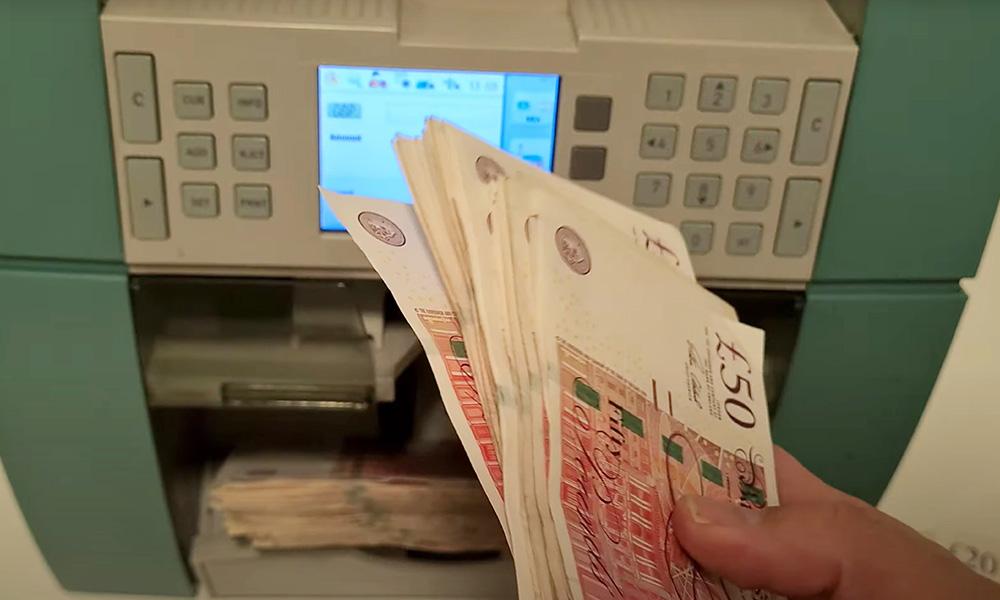
The pound weakened significantly during Wednesday's European trading session, falling to around 1.3375 against the dollar. The core reason for the sell-off was the release of the latest UK inflation data, which came in below market expectations across the board, prompting investors to renew their bets on future interest rate cuts by the Bank of England. Data released by the UK Office for National Statistics showed that the UK's Consumer Price Index (CPI) rose 2.8% year-on-year in April, significantly lower than the market expectation of 3%, and also lower than March's 3.3%.
Meanwhile, core inflation data, which is closely watched by the Bank of England, also cooled significantly. Excluding highly volatile categories such as food, energy, and tobacco, the core CPI rose 2.5% year-on-year, lower than the previous 3.1% and also below market expectations of 2.6%. On a monthly basis, the April CPI rose 0.7%, also lower than the market expectation of 0.9%. Following the data release, the market quickly lowered its expectations that the Bank of England would maintain high interest rates. Because inflation cooled faster than the market anticipated, investors began to believe that the Bank of England may have more room to cut interest rates in the coming months to alleviate pressure on UK economic growth.
Previously, the market had been concerned about the stickiness of UK inflation, but the latest data shows that price pressures in the UK are easing significantly, reducing the policy pressure on the Bank of England. At the same time, the UK economy itself has recently shown signs of slowing down. A cooling job market, weak consumer spending, and cautious business investment have all increased market concerns about the UK economic outlook.
The market is currently focused on the UK's May Markit Purchasing Managers' Index (PMI) and retail sales data to be released later this week, hoping to further assess whether the UK's economic momentum continues to weaken. If subsequent economic data continues to be weak, market expectations for an earlier interest rate cut by the Bank of England may intensify, further dragging down the pound's performance. Besides factors within the UK itself, the recent continued strength of the US dollar is also a significant reason for the pressure on GBP/USD.
The US dollar index is currently hovering around 99.40, having risen for several consecutive trading days. Market expectations that the Federal Reserve will maintain high interest rates or even raise them further are driving the dollar's overall strength. Continued tensions in the Middle East and restrictions on energy transport through the Strait of Hormuz have kept international oil prices high. Rising energy prices have reignited global inflation concerns and led the market to re-bet on the Federal Reserve potentially maintaining a hawkish stance.
The yield on 10-year US Treasury bonds has risen above 4.68%, while the yield on 30-year bonds is approaching 5.20%, reaching a near 19-year high. This high-yield environment further enhances the attractiveness of dollar assets while suppressing the performance of non-US currencies, including the British pound. The market is currently awaiting the minutes of the Federal Reserve's April meeting, hoping to glean more clues about the Fed's future interest rate path. If the minutes continue to release hawkish signals, the dollar may strengthen further, thus continuing to put pressure on GBP/USD.
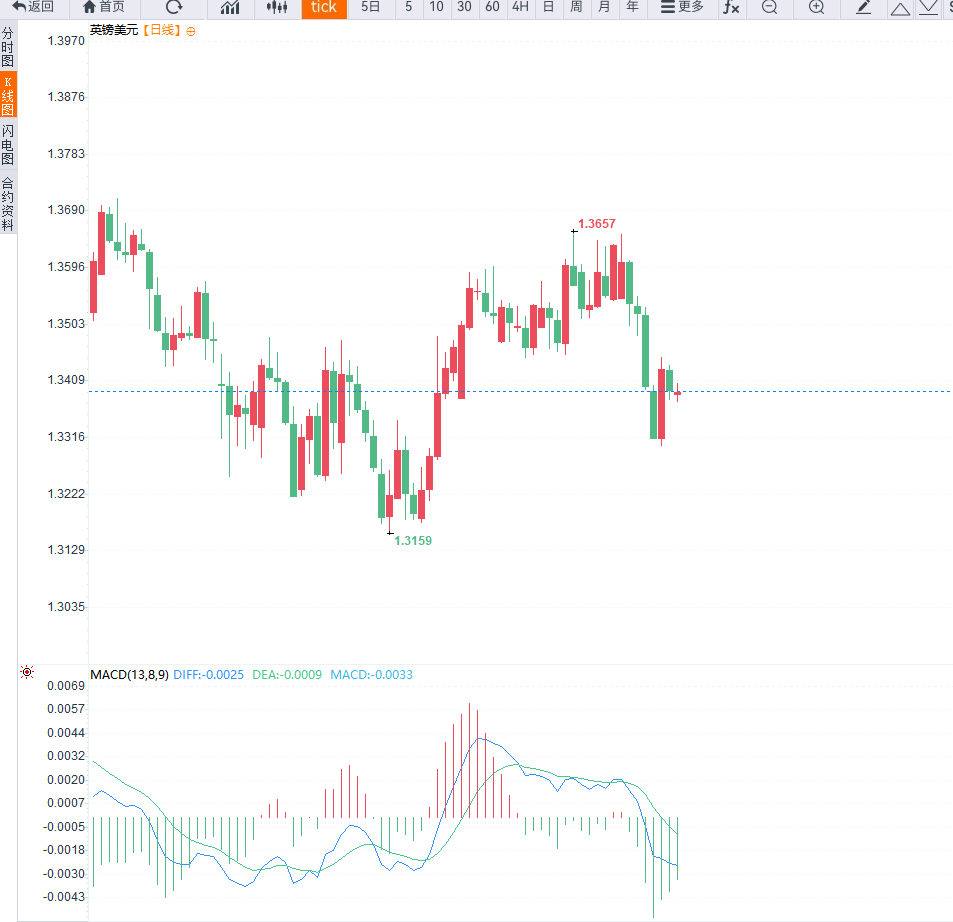
From a technical perspective, the GBP/USD daily chart structure has weakened again. After encountering resistance around 1.3530, the exchange rate has continued to decline, breaking through several short-term support levels. The daily chart shows that recent highs for GBP/USD have been consistently lower, reflecting weakening buying power. Simultaneously, the exchange rate has broken below short-term moving average support, indicating a shift towards a bearish short-term trend. Currently, GBP/USD is approaching the important support area around 1.3350, which also coincides with the lower edge of the recent consolidation range.
The daily Relative Strength Index (RSI) has currently fallen back to around 45, indicating that market momentum is tilting towards the downside, but it has not yet entered oversold territory, so the exchange rate still has room for further decline. On the upside, 1.3450 has become the first key resistance area. This level was previously an important support level, but has now turned into a short-term resistance area. Further resistance lies in the 1.3530-1.3540 area, corresponding to the May high and also a significant watershed in the current medium-term trend. On the downside, if GBP/USD breaks below 1.3350, the market may further test the 1.3300 or even 1.3175 area, which corresponds to the important low area formed in late March to early April.
However, given the already rapid short-term decline in the pound, if the subsequent Fed meeting minutes are less hawkish than the market expected, GBP/USD may experience a technical rebound correction.
Overall, the current GBP/USD exchange rate is facing a dual pressure structure: rising expectations of a UK interest rate cut and a strong US dollar. The future market direction will largely depend on subsequent UK economic data, Federal Reserve policy expectations, and changes in global risk sentiment.
Editor's Summary : The British pound market is currently facing significant renewed pressure. Cooling UK inflation data has reinforced market expectations for future interest rate cuts by the Bank of England, while the US dollar continues to strengthen, supported by high US Treasury yields and hawkish expectations from the Federal Reserve. From a market structure perspective, GBP/USD has entered a short-term bearish correction phase. If subsequent UK economic data continues to be weak, and the Federal Reserve maintains a hawkish stance, the pound may further test key support levels. Technically, the area around 1.3350 will be a crucial short-term defense level, while 1.3450 will be a key resistance level for a potential bullish counterattack. Going forward, the market will need to focus on the impact of UK PMI, retail sales data, and the Federal Reserve meeting minutes on market expectations.
Meanwhile, core inflation data, which is closely watched by the Bank of England, also cooled significantly. Excluding highly volatile categories such as food, energy, and tobacco, the core CPI rose 2.5% year-on-year, lower than the previous 3.1% and also below market expectations of 2.6%. On a monthly basis, the April CPI rose 0.7%, also lower than the market expectation of 0.9%. Following the data release, the market quickly lowered its expectations that the Bank of England would maintain high interest rates. Because inflation cooled faster than the market anticipated, investors began to believe that the Bank of England may have more room to cut interest rates in the coming months to alleviate pressure on UK economic growth.
Previously, the market had been concerned about the stickiness of UK inflation, but the latest data shows that price pressures in the UK are easing significantly, reducing the policy pressure on the Bank of England. At the same time, the UK economy itself has recently shown signs of slowing down. A cooling job market, weak consumer spending, and cautious business investment have all increased market concerns about the UK economic outlook.
The market is currently focused on the UK's May Markit Purchasing Managers' Index (PMI) and retail sales data to be released later this week, hoping to further assess whether the UK's economic momentum continues to weaken. If subsequent economic data continues to be weak, market expectations for an earlier interest rate cut by the Bank of England may intensify, further dragging down the pound's performance. Besides factors within the UK itself, the recent continued strength of the US dollar is also a significant reason for the pressure on GBP/USD.
The US dollar index is currently hovering around 99.40, having risen for several consecutive trading days. Market expectations that the Federal Reserve will maintain high interest rates or even raise them further are driving the dollar's overall strength. Continued tensions in the Middle East and restrictions on energy transport through the Strait of Hormuz have kept international oil prices high. Rising energy prices have reignited global inflation concerns and led the market to re-bet on the Federal Reserve potentially maintaining a hawkish stance.
The yield on 10-year US Treasury bonds has risen above 4.68%, while the yield on 30-year bonds is approaching 5.20%, reaching a near 19-year high. This high-yield environment further enhances the attractiveness of dollar assets while suppressing the performance of non-US currencies, including the British pound. The market is currently awaiting the minutes of the Federal Reserve's April meeting, hoping to glean more clues about the Fed's future interest rate path. If the minutes continue to release hawkish signals, the dollar may strengthen further, thus continuing to put pressure on GBP/USD.
From a technical perspective, the GBP/USD daily chart structure has weakened again. After encountering resistance around 1.3530, the exchange rate has continued to decline, breaking through several short-term support levels. The daily chart shows that recent highs for GBP/USD have been consistently lower, reflecting weakening buying power. Simultaneously, the exchange rate has broken below short-term moving average support, indicating a shift towards a bearish short-term trend. Currently, GBP/USD is approaching the important support area around 1.3350, which also coincides with the lower edge of the recent consolidation range.
The daily Relative Strength Index (RSI) has currently fallen back to around 45, indicating that market momentum is tilting towards the downside, but it has not yet entered oversold territory, so the exchange rate still has room for further decline. On the upside, 1.3450 has become the first key resistance area. This level was previously an important support level, but has now turned into a short-term resistance area. Further resistance lies in the 1.3530-1.3540 area, corresponding to the May high and also a significant watershed in the current medium-term trend. On the downside, if GBP/USD breaks below 1.3350, the market may further test the 1.3300 or even 1.3175 area, which corresponds to the important low area formed in late March to early April.
However, given the already rapid short-term decline in the pound, if the subsequent Fed meeting minutes are less hawkish than the market expected, GBP/USD may experience a technical rebound correction.
Overall, the current GBP/USD exchange rate is facing a dual pressure structure: rising expectations of a UK interest rate cut and a strong US dollar. The future market direction will largely depend on subsequent UK economic data, Federal Reserve policy expectations, and changes in global risk sentiment.
Editor's Summary : The British pound market is currently facing significant renewed pressure. Cooling UK inflation data has reinforced market expectations for future interest rate cuts by the Bank of England, while the US dollar continues to strengthen, supported by high US Treasury yields and hawkish expectations from the Federal Reserve. From a market structure perspective, GBP/USD has entered a short-term bearish correction phase. If subsequent UK economic data continues to be weak, and the Federal Reserve maintains a hawkish stance, the pound may further test key support levels. Technically, the area around 1.3350 will be a crucial short-term defense level, while 1.3450 will be a key resistance level for a potential bullish counterattack. Going forward, the market will need to focus on the impact of UK PMI, retail sales data, and the Federal Reserve meeting minutes on market expectations.
- Risk Warning and Disclaimer
- The market involves risk, and trading may not be suitable for all investors. This article is for reference only and does not constitute personal investment advice, nor does it take into account certain users’ specific investment objectives, financial situation, or other needs. Any investment decisions made based on this information are at your own risk.