Strategists say gold and silver have seen sufficient short-term gains, and warn of a global debt crisis.
2026-05-21 11:31:32
A senior macro strategist has issued a significant prediction: the global financial system is mired in debt, and a massive wave of deflation is imminent. Following the crisis, central banks worldwide have been forced to massively release liquidity to rescue the market, but this massive money printing will fuel hyperinflation, creating an intractable economic deadlock.
The market will likely see one last surge in the short term, presenting a golden opportunity for precious metals to rise. After the crisis, major asset classes will have a historic opportunity to buy at the bottom, and the financial market landscape will be completely reshaped.
David Hunter, chief macro strategist at Reverse Macro Advisors, presents a market projection that differs entirely from mainstream Wall Street investment views. He believes the decades-long bull market in capital markets is about to experience its final rapid surge, with the peak expected around Labor Day in the United States. After this surge, the market will face a deflationary crash with a drop of up to 80%. Before this crash, the equity market and precious metals still possess ample upward momentum.
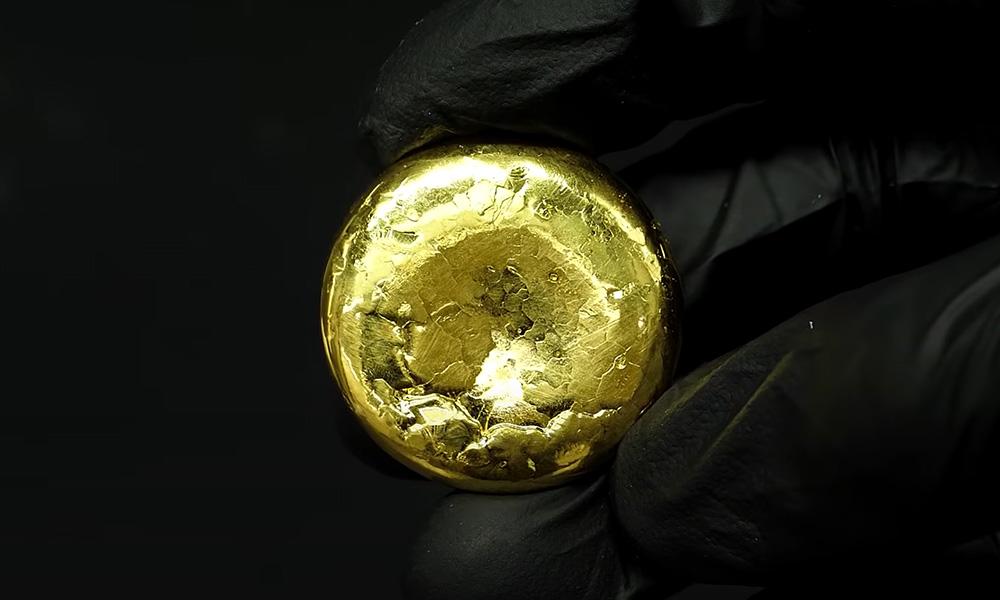
The S&P 500 index is currently fluctuating at high levels, while gold, after two years of continuous gains, has stabilized in its high-level range. Industry experts predict that before the stock market reverses, gold may surge to $6,800 per ounce, while silver's upward momentum is even more rapid, with a target price of $180 per ounce. Analysts also indicate that the strength of silver's price increase is likely to exceed expectations, and in extreme market conditions, it may even break through $250 per ounce.
The impending financial risks are not originating in the US market, and are fundamentally different from previous financial crises. The risks lurking in the Japanese market are the most prominent , with current Japanese interest rates and government bond yields continuing to climb, reaching multi-year highs. Decades of a zero-interest-rate policy have fostered massive market leverage, and with the tightening of monetary policy, previously hidden financial loopholes have been fully exposed.
If inflation and interest rates rise in tandem in regions like Asia and Europe, the massive leverage system reliant on low interest rates will collapse rapidly, triggering a global chain reaction. In addition, the private equity and private lending sectors also harbor hidden risks . Many pension funds have heavily invested in these assets to mitigate market volatility; however, these assets have not yet withstood the test of a complete economic cycle, making them a significant potential source of market turmoil.
When a deflationary crisis spreads across the board and the banking sector faces operational difficulties, central banks around the world will inevitably introduce strong measures to rescue the market. Even though major central banks have previously stated that they will strictly control easing policies, large-scale money printing remains the only way to deal with the financial system on the verge of collapse.
Market estimates suggest that global central banks could inject as much as $50 trillion in liquidity, significantly expanding the Federal Reserve's balance sheet alone. This massive influx of liquidity will directly fuel hyperinflation, with global inflation projected to soar to 25 percent by the early 2030s, accompanied by high interest rates. Global debt is already enormous and is expected to surge further after the crisis. In a high-interest-rate environment, the burden of debt payments will completely exceed the capacity of many countries, creating an irreconcilable economic problem.
With the debt system completely collapsing under pressure, the economic crisis that follows will be far more destructive than the Great Depression of the 1930s. Existing global financial rules may need to be completely overturned and rebuilt, and a series of chain reactions at the social level will be triggered. The future development is full of uncertainty.
From an investment perspective, a short-term market crash could create a once-in-a-generation opportunity to buy at low prices. During a deflationary shock, gold will experience a deep correction, with prices potentially halved. However, after this short-term adjustment, the long-term high-inflation environment will continue to boost precious metals, and in the long run, gold has the potential to reach $20,000 per ounce.
Overall, the capital market is in the final euphoria of a bull market. After the short-term surge ends, a global deflationary crisis will inevitably arrive. The hidden dangers of high leverage overseas and the massive global debt are the core triggers for this crisis. The excessive money supply resulting from central bank bailouts will further distort market logic and fuel a new round of inflation. Investors can seize the short-term opportunity presented by rising precious metal prices, while simultaneously hedging their risks in advance and patiently waiting for a market crash before investing in high-quality long-term assets.
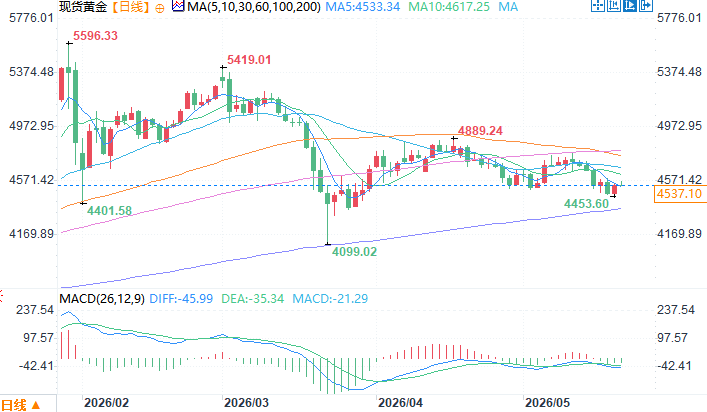
Spot gold daily chart source: EasyForex
At 11:31 AM Beijing time on May 21, spot gold was trading at $4536.10 per ounce.
The market will likely see one last surge in the short term, presenting a golden opportunity for precious metals to rise. After the crisis, major asset classes will have a historic opportunity to buy at the bottom, and the financial market landscape will be completely reshaped.
Precious metals have ample room for short-term gains as the market nears its peak.
David Hunter, chief macro strategist at Reverse Macro Advisors, presents a market projection that differs entirely from mainstream Wall Street investment views. He believes the decades-long bull market in capital markets is about to experience its final rapid surge, with the peak expected around Labor Day in the United States. After this surge, the market will face a deflationary crash with a drop of up to 80%. Before this crash, the equity market and precious metals still possess ample upward momentum.
The S&P 500 index is currently fluctuating at high levels, while gold, after two years of continuous gains, has stabilized in its high-level range. Industry experts predict that before the stock market reverses, gold may surge to $6,800 per ounce, while silver's upward momentum is even more rapid, with a target price of $180 per ounce. Analysts also indicate that the strength of silver's price increase is likely to exceed expectations, and in extreme market conditions, it may even break through $250 per ounce.
The crisis did not originate in the United States; the hidden dangers of high leverage erupted overseas.
The impending financial risks are not originating in the US market, and are fundamentally different from previous financial crises. The risks lurking in the Japanese market are the most prominent , with current Japanese interest rates and government bond yields continuing to climb, reaching multi-year highs. Decades of a zero-interest-rate policy have fostered massive market leverage, and with the tightening of monetary policy, previously hidden financial loopholes have been fully exposed.
If inflation and interest rates rise in tandem in regions like Asia and Europe, the massive leverage system reliant on low interest rates will collapse rapidly, triggering a global chain reaction. In addition, the private equity and private lending sectors also harbor hidden risks . Many pension funds have heavily invested in these assets to mitigate market volatility; however, these assets have not yet withstood the test of a complete economic cycle, making them a significant potential source of market turmoil.
The forced massive money printing to rescue the market has created a high-inflation dilemma that is difficult to resolve.
When a deflationary crisis spreads across the board and the banking sector faces operational difficulties, central banks around the world will inevitably introduce strong measures to rescue the market. Even though major central banks have previously stated that they will strictly control easing policies, large-scale money printing remains the only way to deal with the financial system on the verge of collapse.
Market estimates suggest that global central banks could inject as much as $50 trillion in liquidity, significantly expanding the Federal Reserve's balance sheet alone. This massive influx of liquidity will directly fuel hyperinflation, with global inflation projected to soar to 25 percent by the early 2030s, accompanied by high interest rates. Global debt is already enormous and is expected to surge further after the crisis. In a high-interest-rate environment, the burden of debt payments will completely exceed the capacity of many countries, creating an irreconcilable economic problem.
The impact of the crisis far exceeds that of the Great Depression, highlighting long-term investment opportunities.
With the debt system completely collapsing under pressure, the economic crisis that follows will be far more destructive than the Great Depression of the 1930s. Existing global financial rules may need to be completely overturned and rebuilt, and a series of chain reactions at the social level will be triggered. The future development is full of uncertainty.
From an investment perspective, a short-term market crash could create a once-in-a-generation opportunity to buy at low prices. During a deflationary shock, gold will experience a deep correction, with prices potentially halved. However, after this short-term adjustment, the long-term high-inflation environment will continue to boost precious metals, and in the long run, gold has the potential to reach $20,000 per ounce.
Summarize
Overall, the capital market is in the final euphoria of a bull market. After the short-term surge ends, a global deflationary crisis will inevitably arrive. The hidden dangers of high leverage overseas and the massive global debt are the core triggers for this crisis. The excessive money supply resulting from central bank bailouts will further distort market logic and fuel a new round of inflation. Investors can seize the short-term opportunity presented by rising precious metal prices, while simultaneously hedging their risks in advance and patiently waiting for a market crash before investing in high-quality long-term assets.
Spot gold daily chart source: EasyForex
At 11:31 AM Beijing time on May 21, spot gold was trading at $4536.10 per ounce.
- Risk Warning and Disclaimer
- The market involves risk, and trading may not be suitable for all investors. This article is for reference only and does not constitute personal investment advice, nor does it take into account certain users’ specific investment objectives, financial situation, or other needs. Any investment decisions made based on this information are at your own risk.