The pound sterling rose against the dollar before retreating; be wary of another accelerated decline.
2026-05-26 14:47:43
The British pound (GBP/USD) edged lower in Asian trading on Tuesday after breaking through the psychological level of 1.3500 and reaching a near one-and-a-half-week high, prompting some profit-taking. Currently hovering around 1.3485 , the renewed safe-haven buying of the US dollar is a key reason for the short-term pressure on GBP/USD.
Global markets remain focused on the evolving situation in the Middle East. Previously, negotiations between the US and Iran regarding a ceasefire agreement and the reopening of the Strait of Hormuz briefly boosted market risk appetite, causing a temporary weakening of the US dollar and a sustained rebound in the British pound against the dollar. However, the situation subsequently became volatile again. On Monday, the US military launched a "self-defense strike" on southern Iran, targeting missile launch sites. Markets are concerned that the nearly three-month-long tensions between the US and Iran may escalate again.
With the Strait of Hormuz handling approximately 20% of global seaborne crude oil transport, investors are concerned that a deterioration in the Middle East could again disrupt global energy supplies and drive up international oil prices. This anxiety has quickly fueled risk aversion in the market, leading to a renewed flow of funds into dollar assets. The dollar index has therefore rebounded from its lows of more than a week prior, putting pressure on non-dollar currencies, including the British pound.
Meanwhile, the rebound in international oil prices has also intensified market concerns about the risks of inflation in the United States. Investors believe that if energy prices continue to rise, the Federal Reserve may need to maintain high interest rates for a longer period to prevent inflation from spiraling out of control again.
Recent US economic data has remained resilient overall, particularly employment and consumption figures, which have further cooled market expectations for a near-term interest rate cut by the Federal Reserve. Some institutions have even begun to reconsider the possibility of further rate hikes this year. The high-interest-rate environment has pushed up US Treasury yields and enhanced the attractiveness of dollar assets, thus exerting temporary downward pressure on the pound against the dollar.
However, the pound is not entirely without support. The Bank of England's overall stance has remained hawkish recently, with several officials from both the European Central Bank and the Bank of England stating that rising energy prices could reignite inflationary pressures in Europe, thus requiring a cautious approach to monetary policy. The market currently anticipates a low probability of a significant interest rate cut by the Bank of England in the near term, which has limited the pound's decline to some extent.
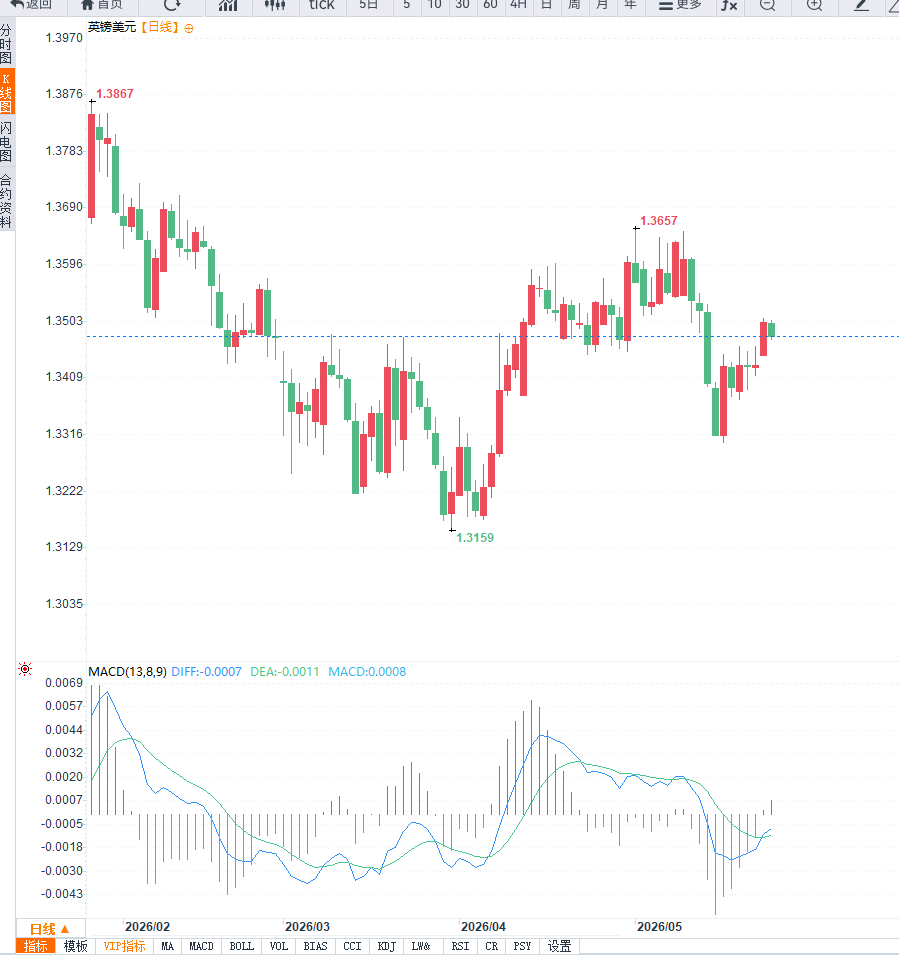
From the daily chart, the GBP/USD pair has rebounded from a low near 1.3300 and is approaching the 1.3500 level again. The first major resistance level is currently at 1.3517 , corresponding to the 61.8% Fibonacci retracement level; further resistance lies at 1.3575 and the previous high of 1.3649 . A decisive break above 1.3517 could open up further upside potential and a retest of the month's high. On the downside, the first key support level is around 1.3476 , while the 200-period EMA is around 1.3460 , providing significant support. A break below this level could lead to further tests of 1.3435 and the 1.3384 area.
Overall, the current trend of the British pound against the US dollar is mainly influenced by three factors: "demand for the US dollar as a safe haven", "expectations of high interest rates from the Federal Reserve", and "changes in the situation in the Middle East". Short-term market volatility may continue to remain high.
Editor's Summary : The recent movement of the pound against the dollar reflects the market's search for a balance between safe-haven demand for the dollar and hawkish expectations from the Bank of England. Renewed tensions in the Middle East have driven a dollar rebound, while rising energy prices have reinforced market expectations that the Federal Reserve will maintain high interest rates for an extended period, thus putting pressure on the pound. However, the Bank of England's policy stance remains relatively hawkish, and the overall technical picture remains bullish, providing some short-term support for the pound against the dollar. Future exchange rate movements will largely depend on US inflation data, developments in the Middle East, and evolution of global risk sentiment.
Global markets remain focused on the evolving situation in the Middle East. Previously, negotiations between the US and Iran regarding a ceasefire agreement and the reopening of the Strait of Hormuz briefly boosted market risk appetite, causing a temporary weakening of the US dollar and a sustained rebound in the British pound against the dollar. However, the situation subsequently became volatile again. On Monday, the US military launched a "self-defense strike" on southern Iran, targeting missile launch sites. Markets are concerned that the nearly three-month-long tensions between the US and Iran may escalate again.
With the Strait of Hormuz handling approximately 20% of global seaborne crude oil transport, investors are concerned that a deterioration in the Middle East could again disrupt global energy supplies and drive up international oil prices. This anxiety has quickly fueled risk aversion in the market, leading to a renewed flow of funds into dollar assets. The dollar index has therefore rebounded from its lows of more than a week prior, putting pressure on non-dollar currencies, including the British pound.
Meanwhile, the rebound in international oil prices has also intensified market concerns about the risks of inflation in the United States. Investors believe that if energy prices continue to rise, the Federal Reserve may need to maintain high interest rates for a longer period to prevent inflation from spiraling out of control again.
Recent US economic data has remained resilient overall, particularly employment and consumption figures, which have further cooled market expectations for a near-term interest rate cut by the Federal Reserve. Some institutions have even begun to reconsider the possibility of further rate hikes this year. The high-interest-rate environment has pushed up US Treasury yields and enhanced the attractiveness of dollar assets, thus exerting temporary downward pressure on the pound against the dollar.
However, the pound is not entirely without support. The Bank of England's overall stance has remained hawkish recently, with several officials from both the European Central Bank and the Bank of England stating that rising energy prices could reignite inflationary pressures in Europe, thus requiring a cautious approach to monetary policy. The market currently anticipates a low probability of a significant interest rate cut by the Bank of England in the near term, which has limited the pound's decline to some extent.
From the daily chart, the GBP/USD pair has rebounded from a low near 1.3300 and is approaching the 1.3500 level again. The first major resistance level is currently at 1.3517 , corresponding to the 61.8% Fibonacci retracement level; further resistance lies at 1.3575 and the previous high of 1.3649 . A decisive break above 1.3517 could open up further upside potential and a retest of the month's high. On the downside, the first key support level is around 1.3476 , while the 200-period EMA is around 1.3460 , providing significant support. A break below this level could lead to further tests of 1.3435 and the 1.3384 area.
Overall, the current trend of the British pound against the US dollar is mainly influenced by three factors: "demand for the US dollar as a safe haven", "expectations of high interest rates from the Federal Reserve", and "changes in the situation in the Middle East". Short-term market volatility may continue to remain high.
Editor's Summary : The recent movement of the pound against the dollar reflects the market's search for a balance between safe-haven demand for the dollar and hawkish expectations from the Bank of England. Renewed tensions in the Middle East have driven a dollar rebound, while rising energy prices have reinforced market expectations that the Federal Reserve will maintain high interest rates for an extended period, thus putting pressure on the pound. However, the Bank of England's policy stance remains relatively hawkish, and the overall technical picture remains bullish, providing some short-term support for the pound against the dollar. Future exchange rate movements will largely depend on US inflation data, developments in the Middle East, and evolution of global risk sentiment.
- Risk Warning and Disclaimer
- The market involves risk, and trading may not be suitable for all investors. This article is for reference only and does not constitute personal investment advice, nor does it take into account certain users’ specific investment objectives, financial situation, or other needs. Any investment decisions made based on this information are at your own risk.