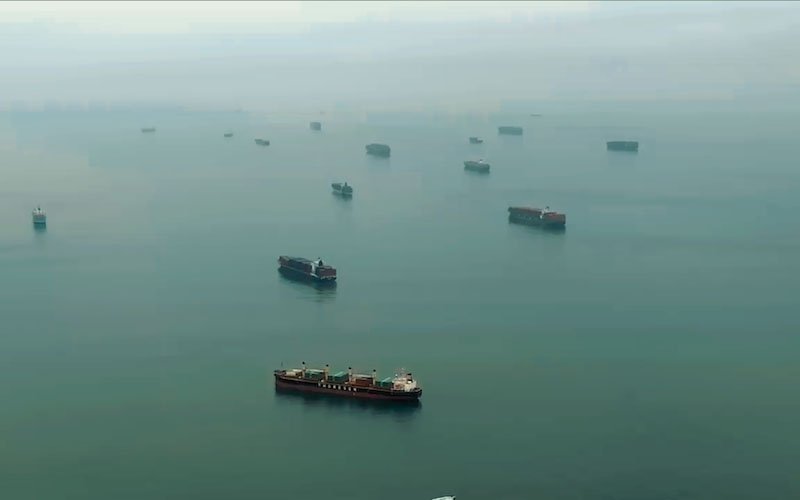
The suspension of shipping routes across the strait will impact Asia's energy landscape, and Venezuela's oil supply may face long-term challenges.
2026-05-27 10:56:02
With the situation in Iran at an impasse and negotiations for navigation in the Strait of Hormuz making little progress, the global oil trade artery is blocked.
As a core consumer market for Gulf oil and gas, Asia has been severely impacted, with energy prices soaring and inventories nearing critical levels. Countries in the region are accelerating the development of their domestic clean energy resources while actively exploring new overseas sources. India has been most severely affected, increasing its crude oil imports from Venezuela, while the United States has seized the opportunity to control the local oil industry and reshape the global supply chain, prompting Asian countries to re-evaluate regional cooperation and external strategic dependence.

The Strait of Hormuz carries nearly one-fifth of the world's crude oil shipments. The long-term closure of this waterway has dealt a severe blow to Asia, which is heavily reliant on Gulf oil and gas, leading to a comprehensive rise in regional energy prices and a decline in global crude oil inventories to dangerous levels. To mitigate the crisis, Asian countries have taken action, accelerating the construction of their domestic clean energy infrastructure to reduce reliance on traditional fossil fuels, and actively seeking new trading partners to build diversified supply networks.
India was hit hardest, as 40% of its crude oil imports are transported via this route. The disruption directly pushed up domestic energy prices and inflation, caused the rupee to depreciate, and led to a withdrawal of foreign capital from the capital markets. Official Indian data shows that in the first four months of this year, more than $20 billion of foreign capital withdrew from the Indian stock market, the rupee hit a record low against the US dollar, and economic pressure increased sharply.
To alleviate the supply gap, India has significantly strengthened its energy cooperation with Venezuela.
Venezuela possesses the world's largest proven oil reserves, but its oil export industry has been sluggish for the past decade due to internal governance chaos, social unrest, and long-term sanctions. In the most recent quarter, Venezuela's crude oil exports to India increased by about 50%, making it India's third-largest crude oil supplier, after Russia and the UAE.
This round of export growth stems from two main factors: firstly, the increased spot demand spurred by the situation in Iran, and secondly, a close connection to changes in control of local industries. In January of this year, Venezuelan President Nicolas Maduro was taken into custody by the US, which subsequently seized control of the country's 303 billion barrels of crude oil resources. Reports indicate that the Trump administration is pushing for Venezuelan crude to return to the international market, aiming to reshape the global energy supply chain, weaken Iran's negotiating leverage, and further strengthen its own control over overseas oil resources.
Industry insiders generally believe that it is too early to determine whether Venezuela's oil industry has recovered, and India cannot rely on it as a long-term, stable source of supply.
Venezuela's aging and dilapidated oil-related infrastructure necessitates massive investments in restarting and maintaining the industry, making the economic recovery outlook highly uncertain . This also means that relying on Venezuelan crude oil can only provide temporary relief and cannot fundamentally solve the energy security problems of Asian countries.
The United States' deep intervention in the global energy market has exacerbated market volatility and brought profound geopolitical repercussions. Its actions in the Indo-Pacific region are gradually eroding Asian countries' trust in its strategic alliance, with India, Indonesia, and the Philippines all bearing heavy economic costs. Analysts at the East Asia Forum stated that this crisis has led to questions about the United States' security commitments.
Against the backdrop of an uncertain external environment, Asian countries can only jointly resist the long-term risks brought about by the shipping route crisis by deepening cooperation in areas such as security, energy, and finance, and promoting regional integration.
The Strait of Hormuz crisis thoroughly exposed the weakness of Asia's reliance on a single energy supply channel. While countries are actively seeking alternative sources and developing new energy sources, they will find it difficult to escape external constraints in the short term. The US's actions in using this crisis to control overseas oil and gas resources and dominate the supply chain have heightened the vigilance of countries in the region.
In the future, accelerating the transformation of the energy structure, strengthening cooperation within Asia, and building an independent and controllable supply system will become the common direction for countries in the region.
As a core consumer market for Gulf oil and gas, Asia has been severely impacted, with energy prices soaring and inventories nearing critical levels. Countries in the region are accelerating the development of their domestic clean energy resources while actively exploring new overseas sources. India has been most severely affected, increasing its crude oil imports from Venezuela, while the United States has seized the opportunity to control the local oil industry and reshape the global supply chain, prompting Asian countries to re-evaluate regional cooperation and external strategic dependence.
Shipping disruptions impact markets, plunging many Asian countries into energy crisis
The Strait of Hormuz carries nearly one-fifth of the world's crude oil shipments. The long-term closure of this waterway has dealt a severe blow to Asia, which is heavily reliant on Gulf oil and gas, leading to a comprehensive rise in regional energy prices and a decline in global crude oil inventories to dangerous levels. To mitigate the crisis, Asian countries have taken action, accelerating the construction of their domestic clean energy infrastructure to reduce reliance on traditional fossil fuels, and actively seeking new trading partners to build diversified supply networks.
India was hit hardest, as 40% of its crude oil imports are transported via this route. The disruption directly pushed up domestic energy prices and inflation, caused the rupee to depreciate, and led to a withdrawal of foreign capital from the capital markets. Official Indian data shows that in the first four months of this year, more than $20 billion of foreign capital withdrew from the Indian stock market, the rupee hit a record low against the US dollar, and economic pressure increased sharply.
Energy trade between India and Venezuela is rapidly heating up, with a shift towards South American sources.
To alleviate the supply gap, India has significantly strengthened its energy cooperation with Venezuela.
Venezuela possesses the world's largest proven oil reserves, but its oil export industry has been sluggish for the past decade due to internal governance chaos, social unrest, and long-term sanctions. In the most recent quarter, Venezuela's crude oil exports to India increased by about 50%, making it India's third-largest crude oil supplier, after Russia and the UAE.
This round of export growth stems from two main factors: firstly, the increased spot demand spurred by the situation in Iran, and secondly, a close connection to changes in control of local industries. In January of this year, Venezuelan President Nicolas Maduro was taken into custody by the US, which subsequently seized control of the country's 303 billion barrels of crude oil resources. Reports indicate that the Trump administration is pushing for Venezuelan crude to return to the international market, aiming to reshape the global energy supply chain, weaken Iran's negotiating leverage, and further strengthen its own control over overseas oil resources.
Potential risks remain, making long-term security difficult for Venezuela.
Industry insiders generally believe that it is too early to determine whether Venezuela's oil industry has recovered, and India cannot rely on it as a long-term, stable source of supply.
Venezuela's aging and dilapidated oil-related infrastructure necessitates massive investments in restarting and maintaining the industry, making the economic recovery outlook highly uncertain . This also means that relying on Venezuelan crude oil can only provide temporary relief and cannot fundamentally solve the energy security problems of Asian countries.
Trust dynamics shift, Asia accelerates regional collaboration
The United States' deep intervention in the global energy market has exacerbated market volatility and brought profound geopolitical repercussions. Its actions in the Indo-Pacific region are gradually eroding Asian countries' trust in its strategic alliance, with India, Indonesia, and the Philippines all bearing heavy economic costs. Analysts at the East Asia Forum stated that this crisis has led to questions about the United States' security commitments.
Against the backdrop of an uncertain external environment, Asian countries can only jointly resist the long-term risks brought about by the shipping route crisis by deepening cooperation in areas such as security, energy, and finance, and promoting regional integration.
Summarize
The Strait of Hormuz crisis thoroughly exposed the weakness of Asia's reliance on a single energy supply channel. While countries are actively seeking alternative sources and developing new energy sources, they will find it difficult to escape external constraints in the short term. The US's actions in using this crisis to control overseas oil and gas resources and dominate the supply chain have heightened the vigilance of countries in the region.
In the future, accelerating the transformation of the energy structure, strengthening cooperation within Asia, and building an independent and controllable supply system will become the common direction for countries in the region.
- Risk Warning and Disclaimer
- The market involves risk, and trading may not be suitable for all investors. This article is for reference only and does not constitute personal investment advice, nor does it take into account certain users’ specific investment objectives, financial situation, or other needs. Any investment decisions made based on this information are at your own risk.