The US dollar rose against the Canadian dollar for the third consecutive day, with the bulls accelerating their upward momentum?
2026-06-02 13:56:09
The US dollar (USD/CAD) maintained its upward trend in Asian trading on Tuesday, trading around 1.3840, marking its third consecutive day of gains and reaching a new recent high. Current market trading is primarily driven by increased demand for the US dollar as a safe haven and rising expectations that the Federal Reserve will maintain high interest rates.

The recent situation in the Middle East has continued to be a focus of global financial markets. Latest reports indicate that Iran has suspended indirect communication with the United States and plans to take further measures in response to the ongoing ceasefire dispute. Meanwhile, tensions around the Strait of Hormuz have escalated, significantly increasing market concerns about the security of global energy transportation.
Market concerns that disruptions to shipping through the Strait of Hormuz could create new uncertainties in global crude oil supply, potentially driving energy prices higher. For Canada, a major global energy exporter, rising oil prices should theoretically benefit the Canadian dollar. However, this market reaction has been somewhat different. While crude oil prices have remained high, the US dollar has benefited more from safe-haven buying and interest rate advantages, preventing the Canadian dollar from fully capitalizing on the energy market rally.
Current market capital flows are primarily concentrated in US dollar assets. As the situation in the Middle East deteriorates, global investors' risk appetite declines, and the US dollar continues to be favored as an international reserve currency and safe-haven asset. At the same time, the inflationary risks brought about by rising energy prices are also changing market perceptions of the Federal Reserve's future policy path.
As international oil prices rebound, markets are beginning to worry that the process of declining US inflation may be affected. Rising energy costs not only increase pressure on businesses but could also push consumer prices up again at a faster pace. Against this backdrop, investors are beginning to readjust their expectations for the Federal Reserve's monetary policy.
Market pricing indicates that some traders have begun betting on the possibility of further tightening by the Federal Reserve. As expectations of interest rate hikes rise, US Treasury yields remain high, providing additional support for the dollar. Market analysts believe that if energy prices continue to remain high, the Federal Reserve may need to maintain restrictive policies for a longer period, which would help the dollar remain strong.
However, the market is not entirely ignoring the potential positive factors for the Canadian dollar. As a major energy-exporting economy, Canada's economy typically benefits from high oil prices. If crude oil prices rise further in the future, Canadian export revenue is expected to increase, thereby improving the fundamentals of the Canadian dollar.
Furthermore, US President Trump recently stated that diplomatic negotiations between the US and Iran are ongoing, and an agreement to restore normal navigation in the Strait of Hormuz may be reached within the next week. This statement has alleviated market concerns about energy supply disruptions to some extent.
Trump also revealed that he had recently been directly involved in regional coordination efforts to prevent further escalation of the conflict. Although many uncertainties remain in the negotiations, the market still holds some hope for a diplomatic solution.
This week, the market will also see the release of US job openings data and the highly anticipated non-farm payroll report. The performance of the job market will directly influence market expectations regarding the Federal Reserve's future policies. If the employment data continues to be strong, it could further strengthen the dollar's advantage; conversely, if economic data shows signs of cooling, the USD/CAD pair may face downward pressure.
From the daily chart, the USD/CAD pair has rebounded steadily after stabilizing in the 1.3500 area, and is currently holding above the 1.3800 level again. The MACD indicator has formed a golden cross and continues to rise, indicating expanding bullish momentum. The RSI indicator is around 62, showing a slightly bullish market but not yet entering overbought territory. Key resistance levels to watch are 1.3880, 1.3950, and the psychological level of 1.4000; support levels are around 1.3780, 1.3700, and 1.3620. The overall trend remains one of slightly bullish consolidation.
Observing the 4-hour chart, the USD/CAD pair continues to move along a short-term upward channel, with the moving average system showing a bullish alignment. The MACD histogram has slowed somewhat, indicating a slight cooling in the short-term upward momentum, but the overall trend remains upward. The RSI indicator remains around 60, reflecting that the market still has room for further upward movement. If the price breaks through the 1.3880 resistance area, it may further challenge 1.3950; if it falls below the 1.3780 support, it may retrace to test the 1.3700 area, but the medium-term upward trend remains intact.
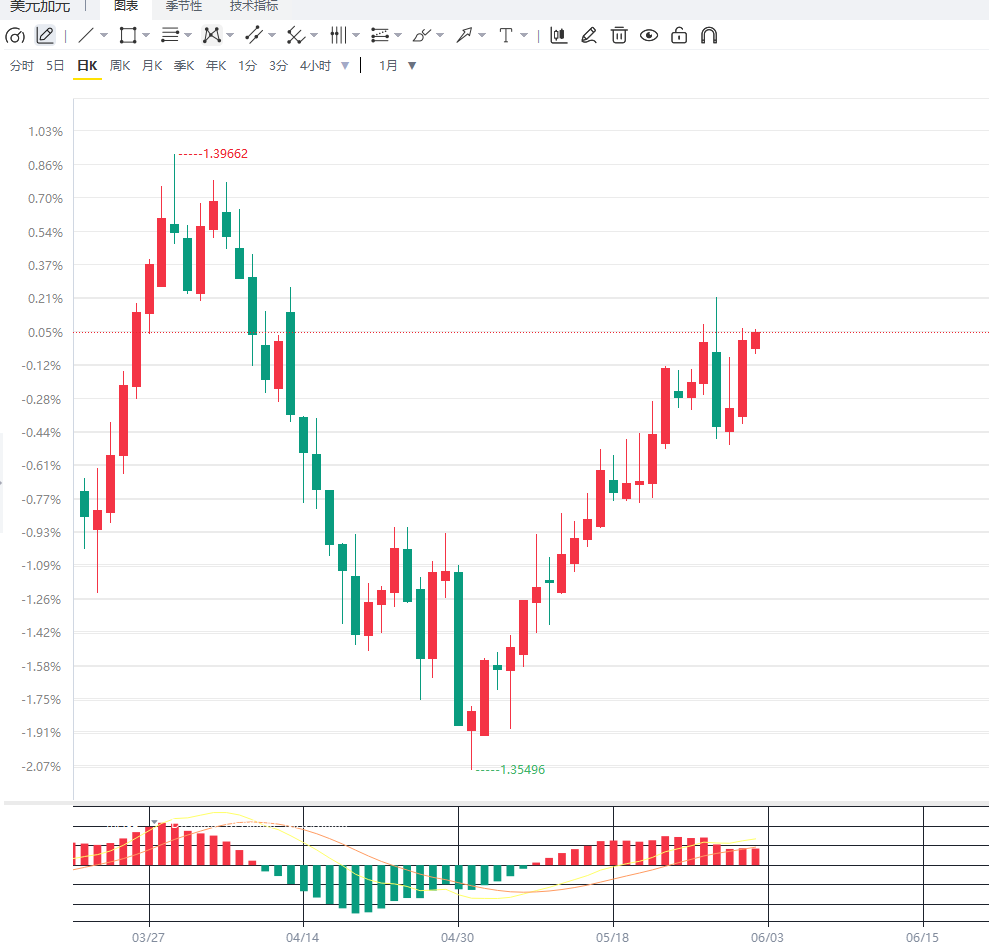
Editor's Summary : The current rise in USD/CAD is primarily driven by increased demand for the safe-haven dollar and the market's repricing of expectations regarding Federal Reserve policy. While high oil prices typically benefit the Canadian dollar, the market is currently more focused on the dollar's advantage stemming from rising global risks. Future movements will depend on two main factors: whether the situation in the Middle East escalates further, and whether US economic data continues to support a high-interest-rate environment. If risk aversion continues to rise and the US job market remains strong, USD/CAD is expected to continue its upward trend towards 1.3900; conversely, if oil prices rise sharply and improve the Canadian economic outlook, the Canadian dollar may regain support.
The recent situation in the Middle East has continued to be a focus of global financial markets. Latest reports indicate that Iran has suspended indirect communication with the United States and plans to take further measures in response to the ongoing ceasefire dispute. Meanwhile, tensions around the Strait of Hormuz have escalated, significantly increasing market concerns about the security of global energy transportation.
Market concerns that disruptions to shipping through the Strait of Hormuz could create new uncertainties in global crude oil supply, potentially driving energy prices higher. For Canada, a major global energy exporter, rising oil prices should theoretically benefit the Canadian dollar. However, this market reaction has been somewhat different. While crude oil prices have remained high, the US dollar has benefited more from safe-haven buying and interest rate advantages, preventing the Canadian dollar from fully capitalizing on the energy market rally.
Current market capital flows are primarily concentrated in US dollar assets. As the situation in the Middle East deteriorates, global investors' risk appetite declines, and the US dollar continues to be favored as an international reserve currency and safe-haven asset. At the same time, the inflationary risks brought about by rising energy prices are also changing market perceptions of the Federal Reserve's future policy path.
As international oil prices rebound, markets are beginning to worry that the process of declining US inflation may be affected. Rising energy costs not only increase pressure on businesses but could also push consumer prices up again at a faster pace. Against this backdrop, investors are beginning to readjust their expectations for the Federal Reserve's monetary policy.
Market pricing indicates that some traders have begun betting on the possibility of further tightening by the Federal Reserve. As expectations of interest rate hikes rise, US Treasury yields remain high, providing additional support for the dollar. Market analysts believe that if energy prices continue to remain high, the Federal Reserve may need to maintain restrictive policies for a longer period, which would help the dollar remain strong.
However, the market is not entirely ignoring the potential positive factors for the Canadian dollar. As a major energy-exporting economy, Canada's economy typically benefits from high oil prices. If crude oil prices rise further in the future, Canadian export revenue is expected to increase, thereby improving the fundamentals of the Canadian dollar.
Furthermore, US President Trump recently stated that diplomatic negotiations between the US and Iran are ongoing, and an agreement to restore normal navigation in the Strait of Hormuz may be reached within the next week. This statement has alleviated market concerns about energy supply disruptions to some extent.
Trump also revealed that he had recently been directly involved in regional coordination efforts to prevent further escalation of the conflict. Although many uncertainties remain in the negotiations, the market still holds some hope for a diplomatic solution.
This week, the market will also see the release of US job openings data and the highly anticipated non-farm payroll report. The performance of the job market will directly influence market expectations regarding the Federal Reserve's future policies. If the employment data continues to be strong, it could further strengthen the dollar's advantage; conversely, if economic data shows signs of cooling, the USD/CAD pair may face downward pressure.
From the daily chart, the USD/CAD pair has rebounded steadily after stabilizing in the 1.3500 area, and is currently holding above the 1.3800 level again. The MACD indicator has formed a golden cross and continues to rise, indicating expanding bullish momentum. The RSI indicator is around 62, showing a slightly bullish market but not yet entering overbought territory. Key resistance levels to watch are 1.3880, 1.3950, and the psychological level of 1.4000; support levels are around 1.3780, 1.3700, and 1.3620. The overall trend remains one of slightly bullish consolidation.
Observing the 4-hour chart, the USD/CAD pair continues to move along a short-term upward channel, with the moving average system showing a bullish alignment. The MACD histogram has slowed somewhat, indicating a slight cooling in the short-term upward momentum, but the overall trend remains upward. The RSI indicator remains around 60, reflecting that the market still has room for further upward movement. If the price breaks through the 1.3880 resistance area, it may further challenge 1.3950; if it falls below the 1.3780 support, it may retrace to test the 1.3700 area, but the medium-term upward trend remains intact.
Editor's Summary : The current rise in USD/CAD is primarily driven by increased demand for the safe-haven dollar and the market's repricing of expectations regarding Federal Reserve policy. While high oil prices typically benefit the Canadian dollar, the market is currently more focused on the dollar's advantage stemming from rising global risks. Future movements will depend on two main factors: whether the situation in the Middle East escalates further, and whether US economic data continues to support a high-interest-rate environment. If risk aversion continues to rise and the US job market remains strong, USD/CAD is expected to continue its upward trend towards 1.3900; conversely, if oil prices rise sharply and improve the Canadian economic outlook, the Canadian dollar may regain support.
- Risk Warning and Disclaimer
- The market involves risk, and trading may not be suitable for all investors. This article is for reference only and does not constitute personal investment advice, nor does it take into account certain users’ specific investment objectives, financial situation, or other needs. Any investment decisions made based on this information are at your own risk.