Iran's surprise attack on Kuwait initiates a cycle of US-Iran retaliation, causing oil prices to fluctuate at high levels.
2026-06-03 20:50:20
On Wednesday (June 3) during the Asian and European sessions, news emerged that Trump was making a gesture of good news by hand, indicating that negotiations were going smoothly. However, the subsequent bombing of Kuwait immediately reversed this view . As a result, oil prices experienced a slight correction and then continued to consolidate at high levels. Currently, WTI crude oil is up 2.67% and trading at $96.27 per barrel.
The geopolitical game between the US and Iran is stuck in a complex stalemate of "fighting while negotiating," with the sounds of gunfire in the Persian Gulf and the tug-of-war at the negotiating table intertwined, putting continued pressure on the already fragile regional peace.
The recent Iranian attack on Kuwait International Airport has become a new trigger for escalation of the conflict, while the differences in rhetoric between the United States and Iran on the progress of negotiations and the policy rift between the US and its allies, Israel, have made the situation even more uncertain.
In an interview, US President Trump declared that the US and Iran are close to reaching an agreement, that Iran has agreed to abandon its nuclear weapons development, and that he himself is expected to meet with Iran's Supreme Leader Mojtaba Khamenei.
However, this optimistic statement did not receive a response from Iran. Instead, it was dampened by news from Iran's semi-official news agency that Tehran had suspended ceasefire extension negotiations with the mediators, demanding that the ceasefire in Lebanon be implemented first before returning to the negotiating table.
Trump immediately refuted the rumors of a "breakdown in negotiations," emphasizing that communication between the US and Iran "never stopped," and urged Iran to "seize the window of opportunity to finalize an agreement." The conflicting statements from both sides made the prospects for the negotiations increasingly unpredictable.
On Wednesday, Iran launched a drone and ballistic missile attack on Terminal 1 of Kuwait International Airport, killing one Indian citizen, injuring 63 others, and causing severe damage to airport infrastructure.
This marks Iran's first direct strike on a key civilian infrastructure project in a Gulf state during this round of conflict, which the market interprets as a strong signal of retaliation against recent US military actions.
While the Iranian Revolutionary Guard admitted to attacking US military facilities, it deliberately omitted the name of Kuwait; Kuwait, on the other hand, made it clear that it would reserve the right to retaliate, and only partially resumed operations after temporarily closing its airport.
In response, the U.S. military intercepted multiple Iranian missiles and drones and launched airstrikes on an Iranian military command post on Qeshm Island in the Strait of Hormuz, creating a "retaliation cycle" between the two sides.
In addition, the US-Bahrain coalition successfully intercepted incoming weapons targeting Bahrain, where the US Navy's Fifth Fleet is based, indicating that the scope of geopolitical military confrontation is gradually expanding.
In an interview, Trump unexpectedly revealed that he used profanity during a phone call with Israeli Prime Minister Netanyahu on June 1, calling him "crazy" and expressing his dissatisfaction with Israel's continued escalation of the war in Lebanon.
Despite Trump's emphasis on a "pleasant cooperation," this statement exposed the deep-seated contradictions between the US and Israel—the US hoped to achieve a breakthrough in US-Iran negotiations through restraint, while Netanyahu, under pressure from the domestic elections, was determined to intensify the crackdown on Hezbollah, which is supported by Iran.
This disagreement made the Lebanese issue a key sticking point in the US-Iran ceasefire agreement: Iran insisted on including the Lebanese ceasefire in the overall agreement, while Israel advocated for handling it separately, and the stalemate between the two sides further hampered the negotiation process.
Against this backdrop, the UAE called on Gulf states to form a “unified and tough stance” in response to Iran. Anwar Gargash posted on social media that Iran’s attacks were “targeting all Gulf states” and that GCC member states need to respond together with a “security connectivity and shared interests” approach. This initiative also reflects the concerns of regional countries about the escalation of the conflict.
It is worth noting that control of the Strait of Hormuz has always been a core bargaining chip in the conflict.
As the essential route for more than a quarter of the world's seaborne oil, Iran's control over this energy lifeline, in contrast to the US port blockade, has directly driven up the risk premium in the global energy market.
International oil prices have now entered a period of high volatility, and the spillover effects of geopolitical conflicts extend far beyond the Middle East, continuing to impact global commodity and foreign exchange markets.
As uncertainty surrounding US-Iran negotiations intensifies and military conflict escalates, market concerns about disruptions to crude oil supply continue to rise. Coupled with the risk of navigation disruptions in the Strait of Hormuz, oil prices will continue to be supported by geopolitical premiums.
In the short term, if there is no substantial breakthrough in the negotiations or the conflict spreads further, international oil prices are likely to remain high and volatile. Any progress in the negotiations or the emergence of a ceasefire signal could trigger a sharp correction in oil prices, and geopolitical factors will continue to dominate the pricing logic of the crude oil market.
From a technical perspective, WTI oil prices have rebounded continuously after bottoming out near 87 (as previously mentioned in previous articles for several days). They have now risen above the 0.618 Fibonacci retracement level of 94.5, with current support at 94.5. The 96-98 area is a previous important resistance level and also near the 50-day moving average. If oil prices can fluctuate narrowly within this range, they are likely to rise further.
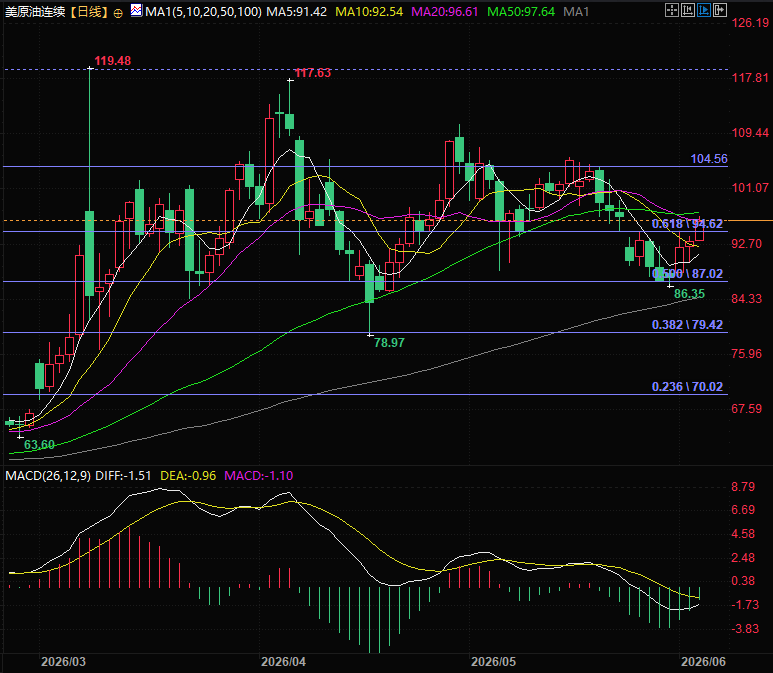
(WTI crude oil futures daily chart, source: FX678)
At 20:48 Beijing time, WTI crude oil futures were trading at $96.10 per barrel.
The geopolitical game between the US and Iran is stuck in a complex stalemate of "fighting while negotiating," with the sounds of gunfire in the Persian Gulf and the tug-of-war at the negotiating table intertwined, putting continued pressure on the already fragile regional peace.
The recent Iranian attack on Kuwait International Airport has become a new trigger for escalation of the conflict, while the differences in rhetoric between the United States and Iran on the progress of negotiations and the policy rift between the US and its allies, Israel, have made the situation even more uncertain.
Negotiation Fog: US and Iran hold conflicting views, making the future of the agreement uncertain.
In an interview, US President Trump declared that the US and Iran are close to reaching an agreement, that Iran has agreed to abandon its nuclear weapons development, and that he himself is expected to meet with Iran's Supreme Leader Mojtaba Khamenei.
However, this optimistic statement did not receive a response from Iran. Instead, it was dampened by news from Iran's semi-official news agency that Tehran had suspended ceasefire extension negotiations with the mediators, demanding that the ceasefire in Lebanon be implemented first before returning to the negotiating table.
Trump immediately refuted the rumors of a "breakdown in negotiations," emphasizing that communication between the US and Iran "never stopped," and urged Iran to "seize the window of opportunity to finalize an agreement." The conflicting statements from both sides made the prospects for the negotiations increasingly unpredictable.
Military escalation: Attacks on civilian infrastructure intensify the cycle of retaliation.
On Wednesday, Iran launched a drone and ballistic missile attack on Terminal 1 of Kuwait International Airport, killing one Indian citizen, injuring 63 others, and causing severe damage to airport infrastructure.
This marks Iran's first direct strike on a key civilian infrastructure project in a Gulf state during this round of conflict, which the market interprets as a strong signal of retaliation against recent US military actions.
While the Iranian Revolutionary Guard admitted to attacking US military facilities, it deliberately omitted the name of Kuwait; Kuwait, on the other hand, made it clear that it would reserve the right to retaliate, and only partially resumed operations after temporarily closing its airport.
In response, the U.S. military intercepted multiple Iranian missiles and drones and launched airstrikes on an Iranian military command post on Qeshm Island in the Strait of Hormuz, creating a "retaliation cycle" between the two sides.
In addition, the US-Bahrain coalition successfully intercepted incoming weapons targeting Bahrain, where the US Navy's Fifth Fleet is based, indicating that the scope of geopolitical military confrontation is gradually expanding.
Allied Rifts: US-Israel Differences Become More Prominent, Gulf States Unite to Respond
In an interview, Trump unexpectedly revealed that he used profanity during a phone call with Israeli Prime Minister Netanyahu on June 1, calling him "crazy" and expressing his dissatisfaction with Israel's continued escalation of the war in Lebanon.
Despite Trump's emphasis on a "pleasant cooperation," this statement exposed the deep-seated contradictions between the US and Israel—the US hoped to achieve a breakthrough in US-Iran negotiations through restraint, while Netanyahu, under pressure from the domestic elections, was determined to intensify the crackdown on Hezbollah, which is supported by Iran.
This disagreement made the Lebanese issue a key sticking point in the US-Iran ceasefire agreement: Iran insisted on including the Lebanese ceasefire in the overall agreement, while Israel advocated for handling it separately, and the stalemate between the two sides further hampered the negotiation process.
Against this backdrop, the UAE called on Gulf states to form a “unified and tough stance” in response to Iran. Anwar Gargash posted on social media that Iran’s attacks were “targeting all Gulf states” and that GCC member states need to respond together with a “security connectivity and shared interests” approach. This initiative also reflects the concerns of regional countries about the escalation of the conflict.
Energy Linkage: Geopolitical Risks Dominate, Oil Prices Set to Fluctuate at High Levels
It is worth noting that control of the Strait of Hormuz has always been a core bargaining chip in the conflict.
As the essential route for more than a quarter of the world's seaborne oil, Iran's control over this energy lifeline, in contrast to the US port blockade, has directly driven up the risk premium in the global energy market.
International oil prices have now entered a period of high volatility, and the spillover effects of geopolitical conflicts extend far beyond the Middle East, continuing to impact global commodity and foreign exchange markets.
As uncertainty surrounding US-Iran negotiations intensifies and military conflict escalates, market concerns about disruptions to crude oil supply continue to rise. Coupled with the risk of navigation disruptions in the Strait of Hormuz, oil prices will continue to be supported by geopolitical premiums.
In the short term, if there is no substantial breakthrough in the negotiations or the conflict spreads further, international oil prices are likely to remain high and volatile. Any progress in the negotiations or the emergence of a ceasefire signal could trigger a sharp correction in oil prices, and geopolitical factors will continue to dominate the pricing logic of the crude oil market.
From a technical perspective, WTI oil prices have rebounded continuously after bottoming out near 87 (as previously mentioned in previous articles for several days). They have now risen above the 0.618 Fibonacci retracement level of 94.5, with current support at 94.5. The 96-98 area is a previous important resistance level and also near the 50-day moving average. If oil prices can fluctuate narrowly within this range, they are likely to rise further.
(WTI crude oil futures daily chart, source: FX678)
At 20:48 Beijing time, WTI crude oil futures were trading at $96.10 per barrel.
- Risk Warning and Disclaimer
- The market involves risk, and trading may not be suitable for all investors. This article is for reference only and does not constitute personal investment advice, nor does it take into account certain users’ specific investment objectives, financial situation, or other needs. Any investment decisions made based on this information are at your own risk.