Does basic logic suggest that the euro is beginning to possess safe-haven attributes?
2026-06-03 21:38:36
Amidst frequent geopolitical conflicts and rising global policy uncertainty, the safe-haven logic in the currency market is quietly changing. The euro, a traditional non-core safe-haven currency, has recently begun to exhibit noteworthy safe-haven characteristics.

The core value of safe-haven currencies lies in providing investors with a "safe haven" for their assets when market risks are concentrated.
When global markets shift to a risk-averse mode, funds will continue to flow into these types of assets—which can both preserve value during periods of escalating risk and even appreciate in value.
This rebalancing of asset allocation often lowers the yields of high-rated sovereign bonds such as US Treasury bonds and German government bonds, while classic safe-haven currencies such as the US dollar, Swiss franc, and Japanese yen tend to strengthen.
However, looking back at historical trends, the euro has consistently underperformed during periods of safe-haven demand: its effective exchange rate has appreciated by an average of only 0.1%, far lower than the Swiss franc's nearly 0.7% increase during the same period.
From 2025 to early 2026, a series of global risk events will occur, and the sudden shift in market sentiment will continue to turmoil the exchange rate market. During this period, the safe-haven characteristics of the euro will gradually emerge.
On April 2, 2025, the United States announced new tariff policies, which triggered a sharp increase in volatility in global financial markets. The euro did not weaken along with risk assets, but instead rose sharply in tandem with traditional safe-haven currencies such as the Swiss franc and the Japanese yen.
In contrast, the US dollar depreciated against the trend, while US Treasury yields rose in tandem—this cross-asset inverse correlation is quite unusual in a normal risk-averse market.
Similar patterns have been repeated in risk events that originated in the United States: whether it was the US Department of Justice subpoenaing the Federal Reserve, or the escalation of the geopolitical game between the US and Europe over Greenland and the release of news by the US about imposing additional tariffs on Europe, the US dollar came under pressure and declined, while the euro, Swiss franc, and Japanese yen simultaneously began to appreciate.
The outbreak of geopolitical conflicts in the Middle East has further tested the euro's resilience as a safe haven.
In the early stages of the conflict, the euro weakened rapidly in the short term due to rising global risk aversion; however, as geopolitical tensions eased marginally, the euro gradually recovered some of its losses.
This trend is highly similar to that of the Swiss franc and the Japanese yen, while the US dollar shows a pattern of "rising first and then falling back".
The strength of the US dollar relative to the euro at the beginning of the war was mainly driven by the global safe-haven premium, which also confirms that the core safe-haven status of the US dollar remains unshakable.
However, the fluctuation of the US dollar exchange rate is not solely driven by global risks: as an energy exporter, the United States has benefited from improved terms of trade amid geopolitical conflicts.
The Eurozone, as a net energy importer, is suffering from the negative impact of deteriorating terms of trade.
This divergence in economic fundamentals expectations between Europe and the United States has further put downward pressure on the euro exchange rate.
In fact, the varying degrees to which different countries are affected by energy shocks is also a significant factor contributing to the overall strengthening of the US dollar.
As global tensions subsequently eased, the euro rebounded against the dollar, but the exchange rate never returned to pre-war levels.
While US TIC cross-border fund data continues to confirm the strong demand for the US dollar as a safe haven—with foreign capital continuing to increase its holdings of US assets throughout 2025 and early 2026—a set of data from March 2026 reveals a subtle change:
Central banks and other official institutions depositing US Treasury bonds with the Federal Reserve Bank of New York decreased by $82 billion, with remaining holdings falling to $2.7 trillion. This means that the recent surge in US Treasury yields is not entirely due to inflation, but also to central banks selling bonds to obtain foreign currency. At the same time, the remaining US Treasury holdings hit a record low since 2012, suggesting that the logic behind overseas institutions' allocation of US Treasury bonds may be quietly changing.
For the Eurozone, in the context of persistent global macroeconomic uncertainty, the key path to effectively hedge against the risk of sharp exchange rate fluctuations is clear: accelerate the integration of capital markets and rely on a sound market system to help the euro complete its transformation into a global international currency.
Historical experience shows that currencies that only possess safe-haven attributes but lack international application scenarios are highly susceptible to significant exchange rate fluctuations when market sentiment reaches a turning point.
The US dollar, Japanese yen, and Swiss franc can quickly surge during crises thanks to a massive influx of safe-haven funds. However, the depth and liquidity of the domestic markets for the yen and Swiss franc are far inferior to those of the US market, making it difficult to smoothly absorb speculative funds that flow in and out in the short term. The core of these funds is the demand for global safe-haven assets, rather than confidence in the intrinsic fundamentals of the economy.
Since April 2025, the euro has repeatedly broken away from the volatility typical of standard safe-haven currencies, laying the foundation for further consolidation of its position.
Looking ahead, the Eurozone needs to finalize a practical timetable for implementation and take concrete steps to expand capital markets and increase market depth and liquidity.
Only in this way can the euro smoothly absorb cross-border hedging funds and effectively guide these inflows of capital to high-quality projects in the real economy, truly achieving the leap from "occasional hedging" to "stable hedging".
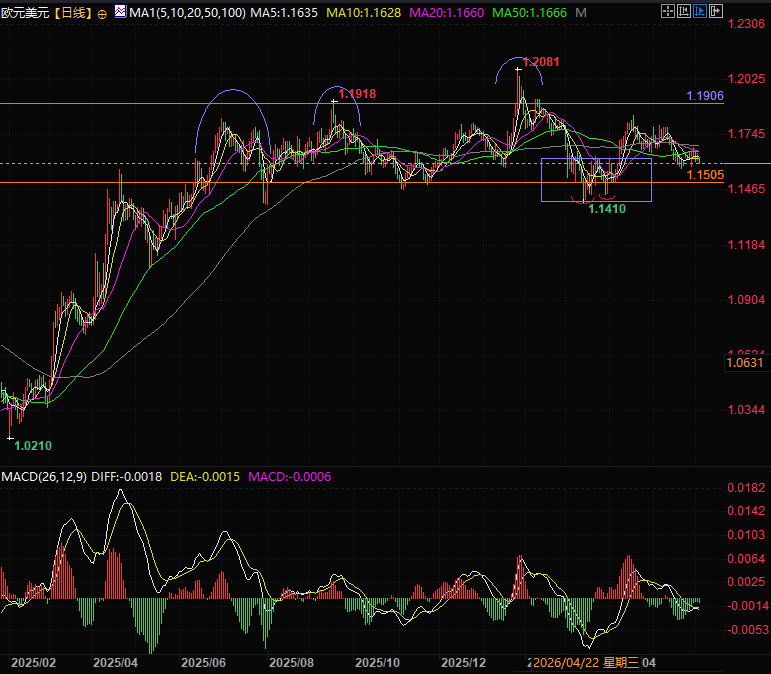
(Euro/USD daily chart, source: FX678)
The core logic of safe-haven currencies and the historical performance of the euro
The core value of safe-haven currencies lies in providing investors with a "safe haven" for their assets when market risks are concentrated.
When global markets shift to a risk-averse mode, funds will continue to flow into these types of assets—which can both preserve value during periods of escalating risk and even appreciate in value.
This rebalancing of asset allocation often lowers the yields of high-rated sovereign bonds such as US Treasury bonds and German government bonds, while classic safe-haven currencies such as the US dollar, Swiss franc, and Japanese yen tend to strengthen.
However, looking back at historical trends, the euro has consistently underperformed during periods of safe-haven demand: its effective exchange rate has appreciated by an average of only 0.1%, far lower than the Swiss franc's nearly 0.7% increase during the same period.
A period of concentrated risk events: the euro's safe-haven characteristics gradually emerge.
From 2025 to early 2026, a series of global risk events will occur, and the sudden shift in market sentiment will continue to turmoil the exchange rate market. During this period, the safe-haven characteristics of the euro will gradually emerge.
On April 2, 2025, the United States announced new tariff policies, which triggered a sharp increase in volatility in global financial markets. The euro did not weaken along with risk assets, but instead rose sharply in tandem with traditional safe-haven currencies such as the Swiss franc and the Japanese yen.
In contrast, the US dollar depreciated against the trend, while US Treasury yields rose in tandem—this cross-asset inverse correlation is quite unusual in a normal risk-averse market.
Similar patterns have been repeated in risk events that originated in the United States: whether it was the US Department of Justice subpoenaing the Federal Reserve, or the escalation of the geopolitical game between the US and Europe over Greenland and the release of news by the US about imposing additional tariffs on Europe, the US dollar came under pressure and declined, while the euro, Swiss franc, and Japanese yen simultaneously began to appreciate.
The Middle East conflict tests the euro's safe-haven resilience and its divergent trends.
The outbreak of geopolitical conflicts in the Middle East has further tested the euro's resilience as a safe haven.
In the early stages of the conflict, the euro weakened rapidly in the short term due to rising global risk aversion; however, as geopolitical tensions eased marginally, the euro gradually recovered some of its losses.
This trend is highly similar to that of the Swiss franc and the Japanese yen, while the US dollar shows a pattern of "rising first and then falling back".
The strength of the US dollar relative to the euro at the beginning of the war was mainly driven by the global safe-haven premium, which also confirms that the core safe-haven status of the US dollar remains unshakable.
However, the fluctuation of the US dollar exchange rate is not solely driven by global risks: as an energy exporter, the United States has benefited from improved terms of trade amid geopolitical conflicts.
The Eurozone, as a net energy importer, is suffering from the negative impact of deteriorating terms of trade.
This divergence in economic fundamentals expectations between Europe and the United States has further put downward pressure on the euro exchange rate.
In fact, the varying degrees to which different countries are affected by energy shocks is also a significant factor contributing to the overall strengthening of the US dollar.
As global tensions subsequently eased, the euro rebounded against the dollar, but the exchange rate never returned to pre-war levels.
Unusual Fund Flows: Subtle Signals Revealed by Changes in US Treasury Holdings
While US TIC cross-border fund data continues to confirm the strong demand for the US dollar as a safe haven—with foreign capital continuing to increase its holdings of US assets throughout 2025 and early 2026—a set of data from March 2026 reveals a subtle change:
Central banks and other official institutions depositing US Treasury bonds with the Federal Reserve Bank of New York decreased by $82 billion, with remaining holdings falling to $2.7 trillion. This means that the recent surge in US Treasury yields is not entirely due to inflation, but also to central banks selling bonds to obtain foreign currency. At the same time, the remaining US Treasury holdings hit a record low since 2012, suggesting that the logic behind overseas institutions' allocation of US Treasury bonds may be quietly changing.
The Eurozone's Path to Breaking the Deadlock: From "Occasional Risk-Averse" to "Stable Risk-Averse"
For the Eurozone, in the context of persistent global macroeconomic uncertainty, the key path to effectively hedge against the risk of sharp exchange rate fluctuations is clear: accelerate the integration of capital markets and rely on a sound market system to help the euro complete its transformation into a global international currency.
Historical experience shows that currencies that only possess safe-haven attributes but lack international application scenarios are highly susceptible to significant exchange rate fluctuations when market sentiment reaches a turning point.
The US dollar, Japanese yen, and Swiss franc can quickly surge during crises thanks to a massive influx of safe-haven funds. However, the depth and liquidity of the domestic markets for the yen and Swiss franc are far inferior to those of the US market, making it difficult to smoothly absorb speculative funds that flow in and out in the short term. The core of these funds is the demand for global safe-haven assets, rather than confidence in the intrinsic fundamentals of the economy.
Since April 2025, the euro has repeatedly broken away from the volatility typical of standard safe-haven currencies, laying the foundation for further consolidation of its position.
Looking ahead, the Eurozone needs to finalize a practical timetable for implementation and take concrete steps to expand capital markets and increase market depth and liquidity.
Only in this way can the euro smoothly absorb cross-border hedging funds and effectively guide these inflows of capital to high-quality projects in the real economy, truly achieving the leap from "occasional hedging" to "stable hedging".
(Euro/USD daily chart, source: FX678)
- Risk Warning and Disclaimer
- The market involves risk, and trading may not be suitable for all investors. This article is for reference only and does not constitute personal investment advice, nor does it take into account certain users’ specific investment objectives, financial situation, or other needs. Any investment decisions made based on this information are at your own risk.