Non-farm payrolls unexpectedly strengthened! The dollar rose and gold fell, giving the Fed more confidence to "hold back"?
2026-06-03 20:53:44
On Wednesday (June 3), at 8:15 PM Beijing time, the US ADP National Employment Report released its May private sector employment data, showing an increase of 122,000 jobs, higher than the market expectation of 117,000. The previous figure was revised down to 105,000. The global market is currently in an environment of intertwined expectations regarding Federal Reserve policy and geopolitical factors. The probability of the Federal Reserve maintaining interest rates unchanged in June remains as high as 98.3%, and the probability of maintaining them unchanged in July is 88%, with a cumulative probability of a 25 basis point rate hike of 10.5%. The labor market has gradually stabilized after previous fluctuations, and despite continued external uncertainties, the layoff rate remains at historically low levels. As a leading indicator for Friday's non-farm payroll report, the stronger-than-expected performance of the ADP data further confirms the resilience of the labor market and provides a window for observing the subsequent policy path.
Ahead of the data release, market expectations for the ADP report were relatively cautious, with a general consensus that private sector employment growth would see a moderate rebound. Institutions were generally focused on the data's guidance for Friday's non-farm payrolls report, while retail investors were more focused on its immediate impact on the US dollar and gold.

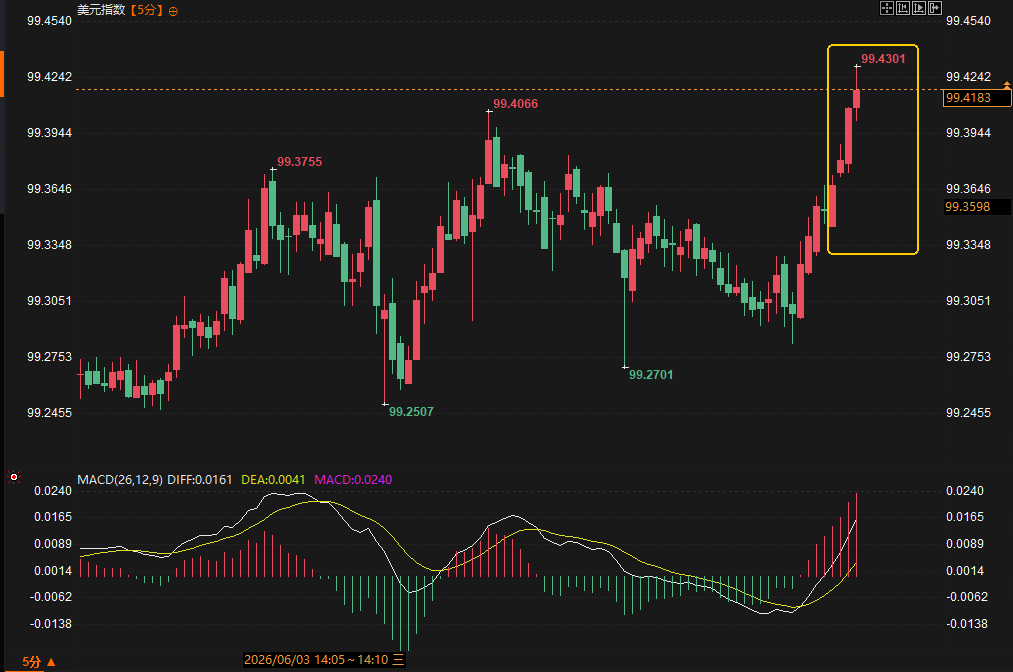
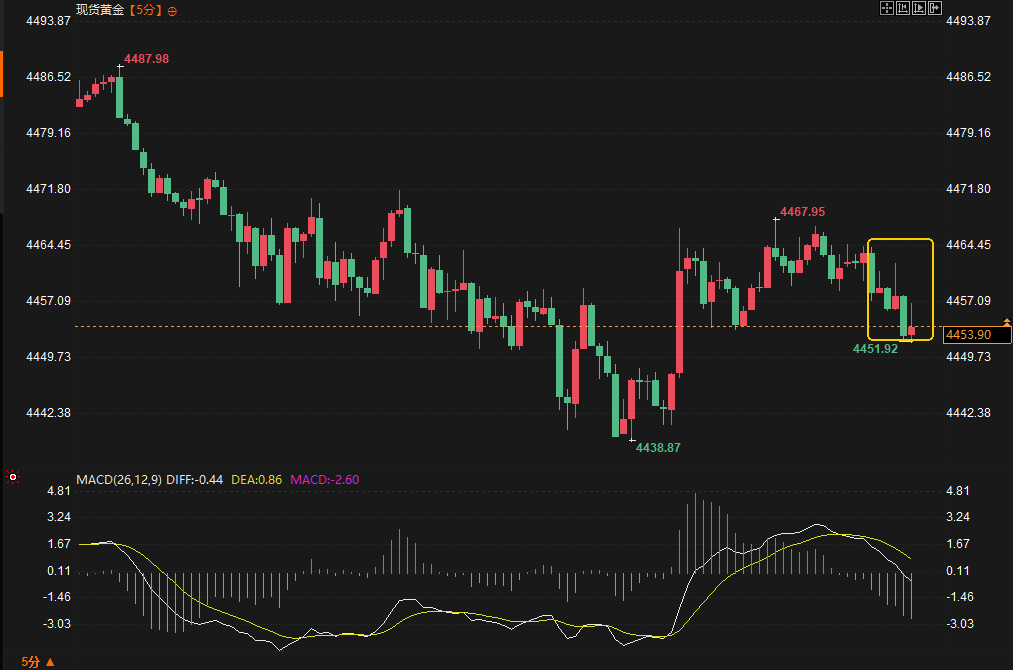
Following the release of this data, the US dollar index rose by about 0.1%, reaching a high of 99.3190, while spot gold fell slightly by about $10 to around $4448.20 per ounce.
The ADP data exceeded expectations, primarily in the breadth of job growth: eight of the ten major industries saw net increases, and employment covered large, medium, and small enterprises. This result contrasts with the downwardly revised data from April, indicating that hiring momentum in the labor market has strengthened compared to the previous period.
From a fundamental perspective, stronger-than-expected employment data eased excessive market concerns about an economic slowdown, while also reinforcing the assessment that inflationary pressures may persist. Combined with recent commodity price trends and April inflation data, a stable labor market helps support consumption but also limits the Federal Reserve's room for premature policy adjustments. The CME FedWatch Tool shows that the probability of maintaining interest rates in June only slightly changed before and after the data release, reflecting that the market has already largely priced in a resilient employment scenario.
From a technical perspective, the US dollar index rebounded briefly after the data release, indicating a temporary confirmation of bullish expectations for a strong dollar. Gold prices fell slightly, consistent with the logic of diminishing safe-haven demand following strong employment data. For related assets, dollar assets received some support, while precious metals such as gold faced short-term pressure, but overall volatility remains constrained by broader geopolitical and policy factors.
Prominent institutions showed a clear discrepancy between their expectations before and after the data release. Before the release, some institutions emphasized the limited historical accuracy of ADP forecasts, focusing more on its role as a "clue" rather than a decisive signal for non-farm payrolls. After the release, institutions generally acknowledged the breadth of employment growth, pointing out that this could increase the probability of Friday's non-farm payrolls exceeding expectations and reinforcing the narrative of "high interest rates being maintained for longer."
Prior to the data release, retail investors held mixed views: some traders expected moderate data to benefit risk assets, while others worried that strong employment figures might delay easing. After the release, retail investors quickly shifted their focus, concentrating on the chain reaction of "strong employment = stronger dollar = pressure on gold." Some users mentioned that consecutive better-than-expected data might influence the Fed's July path assessment, but also cautioned against waiting for a more comprehensive non-farm payroll report on Friday. Institutional accounts, on the other hand, focused more on the potential transmission of the data to bond yields and sector rotation, exhibiting a more structured analytical framework than retail investors.
The comparison shows that before the event, retail investors were more emotionally driven by expectations, while institutions focused on the logical chain of data and policy transmission. After the event, institutions quickly integrated the data into higher-frequency policy probability models, while retail investors' focus remained largely on short-term fluctuations in the stock.
In the short term, stronger-than-expected ADP data provided temporary support for the US dollar, putting downward pressure on assets such as gold. However, the market's focus remains on Friday's non-farm payroll report. If the non-farm payroll data continues its strong performance, the US dollar index may test its previous highs, while gold will need to monitor the effectiveness of its support level. In the medium term, the broad improvement in the job market will contribute to economic resilience, but uncertainty surrounding the inflation path will continue to dominate the Fed's decision-making process. In the long term, the low layoffs and high stability in the labor market may continue to support the consumption base, and the pricing of related assets will need to comprehensively weigh growth and policy balance. Overall, subsequent market movements will increasingly reflect the dynamic process of data verification and expectation revision.
Q: What is the actual impact of stronger-than-expected ADP data on the Fed's policy expectations?
A: After the data release, the probability of the Federal Reserve maintaining interest rates in June remained largely stable at 98.3%, while the probability of a rate hike in July was slightly reflected in market pricing. This indicates that strong employment data reinforced the "data-dependent" observation model, but did not significantly change the current consensus that the status quo is highly probable. The market still needs further confirmation from Friday's non-farm payroll data and subsequent inflation data.
Q: Why is ADP's historical ability to predict non-farm payrolls considered limited?
A: ADP is based on a private sector sample, while non-farm payrolls have a broader scope and include government departments. Historical data shows a correlation between the two but often with discrepancies; ADP is more of a leading indicator than a precise forecasting tool. Although this data was stronger than expected, institutions generally advise that it should be considered in conjunction with Friday's official report for a comprehensive judgment.
Q: What is the logic behind the short-term reaction of the US dollar and gold after the data is released?
A: Strong employment data typically boosts the US dollar, as it suggests economic resilience supporting a prudent monetary policy stance; gold, as a safe-haven asset, faces selling pressure due to a temporary improvement in risk appetite. However, the actual volatility was limited; the dollar index rose by about 0.1% within half an hour, while gold fell by about $10, indicating a restrained market reaction, with further confirmation pending.
Q: What are the main differences in viewpoints between institutional investors and retail investors?
A: Before the announcement, retail investors focused more on short-term fluctuations in commodities, while institutions emphasized the data's transmission to policy paths. After the announcement, retail investors focused on the direct correlation between the strengthening dollar and the pressure on gold, while institutions analyzed the impact of employment breadth on bond yields, sector rotation, and Friday's non-farm payroll data, presenting a more systematic framework.
Q: What factors should the market focus on to determine the continuation of the trend?
A: The key lies in the details of Friday's non-farm payroll report, including the quality of job growth, wage growth, and changes in the unemployment rate. At the same time, it's necessary to continuously monitor inflation data, geopolitical developments, and statements from Federal Reserve officials. These factors will collectively determine whether the resilience in employment translates into sustained policy constraints or growth support.
Ahead of the data release, market expectations for the ADP report were relatively cautious, with a general consensus that private sector employment growth would see a moderate rebound. Institutions were generally focused on the data's guidance for Friday's non-farm payrolls report, while retail investors were more focused on its immediate impact on the US dollar and gold.
Following the release of this data, the US dollar index rose by about 0.1%, reaching a high of 99.3190, while spot gold fell slightly by about $10 to around $4448.20 per ounce.
Deep interconnect analysis
The ADP data exceeded expectations, primarily in the breadth of job growth: eight of the ten major industries saw net increases, and employment covered large, medium, and small enterprises. This result contrasts with the downwardly revised data from April, indicating that hiring momentum in the labor market has strengthened compared to the previous period.
From a fundamental perspective, stronger-than-expected employment data eased excessive market concerns about an economic slowdown, while also reinforcing the assessment that inflationary pressures may persist. Combined with recent commodity price trends and April inflation data, a stable labor market helps support consumption but also limits the Federal Reserve's room for premature policy adjustments. The CME FedWatch Tool shows that the probability of maintaining interest rates in June only slightly changed before and after the data release, reflecting that the market has already largely priced in a resilient employment scenario.
From a technical perspective, the US dollar index rebounded briefly after the data release, indicating a temporary confirmation of bullish expectations for a strong dollar. Gold prices fell slightly, consistent with the logic of diminishing safe-haven demand following strong employment data. For related assets, dollar assets received some support, while precious metals such as gold faced short-term pressure, but overall volatility remains constrained by broader geopolitical and policy factors.
Prominent institutions showed a clear discrepancy between their expectations before and after the data release. Before the release, some institutions emphasized the limited historical accuracy of ADP forecasts, focusing more on its role as a "clue" rather than a decisive signal for non-farm payrolls. After the release, institutions generally acknowledged the breadth of employment growth, pointing out that this could increase the probability of Friday's non-farm payrolls exceeding expectations and reinforcing the narrative of "high interest rates being maintained for longer."
Prior to the data release, retail investors held mixed views: some traders expected moderate data to benefit risk assets, while others worried that strong employment figures might delay easing. After the release, retail investors quickly shifted their focus, concentrating on the chain reaction of "strong employment = stronger dollar = pressure on gold." Some users mentioned that consecutive better-than-expected data might influence the Fed's July path assessment, but also cautioned against waiting for a more comprehensive non-farm payroll report on Friday. Institutional accounts, on the other hand, focused more on the potential transmission of the data to bond yields and sector rotation, exhibiting a more structured analytical framework than retail investors.
The comparison shows that before the event, retail investors were more emotionally driven by expectations, while institutions focused on the logical chain of data and policy transmission. After the event, institutions quickly integrated the data into higher-frequency policy probability models, while retail investors' focus remained largely on short-term fluctuations in the stock.
Trend Outlook
In the short term, stronger-than-expected ADP data provided temporary support for the US dollar, putting downward pressure on assets such as gold. However, the market's focus remains on Friday's non-farm payroll report. If the non-farm payroll data continues its strong performance, the US dollar index may test its previous highs, while gold will need to monitor the effectiveness of its support level. In the medium term, the broad improvement in the job market will contribute to economic resilience, but uncertainty surrounding the inflation path will continue to dominate the Fed's decision-making process. In the long term, the low layoffs and high stability in the labor market may continue to support the consumption base, and the pricing of related assets will need to comprehensively weigh growth and policy balance. Overall, subsequent market movements will increasingly reflect the dynamic process of data verification and expectation revision.
Frequently Asked Questions
Q: What is the actual impact of stronger-than-expected ADP data on the Fed's policy expectations?
A: After the data release, the probability of the Federal Reserve maintaining interest rates in June remained largely stable at 98.3%, while the probability of a rate hike in July was slightly reflected in market pricing. This indicates that strong employment data reinforced the "data-dependent" observation model, but did not significantly change the current consensus that the status quo is highly probable. The market still needs further confirmation from Friday's non-farm payroll data and subsequent inflation data.
Q: Why is ADP's historical ability to predict non-farm payrolls considered limited?
A: ADP is based on a private sector sample, while non-farm payrolls have a broader scope and include government departments. Historical data shows a correlation between the two but often with discrepancies; ADP is more of a leading indicator than a precise forecasting tool. Although this data was stronger than expected, institutions generally advise that it should be considered in conjunction with Friday's official report for a comprehensive judgment.
Q: What is the logic behind the short-term reaction of the US dollar and gold after the data is released?
A: Strong employment data typically boosts the US dollar, as it suggests economic resilience supporting a prudent monetary policy stance; gold, as a safe-haven asset, faces selling pressure due to a temporary improvement in risk appetite. However, the actual volatility was limited; the dollar index rose by about 0.1% within half an hour, while gold fell by about $10, indicating a restrained market reaction, with further confirmation pending.
Q: What are the main differences in viewpoints between institutional investors and retail investors?
A: Before the announcement, retail investors focused more on short-term fluctuations in commodities, while institutions emphasized the data's transmission to policy paths. After the announcement, retail investors focused on the direct correlation between the strengthening dollar and the pressure on gold, while institutions analyzed the impact of employment breadth on bond yields, sector rotation, and Friday's non-farm payroll data, presenting a more systematic framework.
Q: What factors should the market focus on to determine the continuation of the trend?
A: The key lies in the details of Friday's non-farm payroll report, including the quality of job growth, wage growth, and changes in the unemployment rate. At the same time, it's necessary to continuously monitor inflation data, geopolitical developments, and statements from Federal Reserve officials. These factors will collectively determine whether the resilience in employment translates into sustained policy constraints or growth support.
- Risk Warning and Disclaimer
- The market involves risk, and trading may not be suitable for all investors. This article is for reference only and does not constitute personal investment advice, nor does it take into account certain users’ specific investment objectives, financial situation, or other needs. Any investment decisions made based on this information are at your own risk.