World Gold Council: Many countries continue to increase gold hoarding; global central banks returned to net buying in April.
2026-06-04 13:49:35
According to the latest statistics from the World Gold Council, the global central bank gold purchasing trend has undergone a phased shift. After becoming net sellers of gold in March, central banks around the world resumed net buying in April, with a net purchase of 17 tons of gold in the month.
Eastern European and Asian economies remain the main drivers of gold purchases, with many countries making large-scale gold hoardings and others selling small amounts to hedge their positions. Based on historical survey data, central banks' willingness to allocate gold in the medium to long term continues to rise, and the association's latest annual survey report is about to be released.
Marissa Salim, senior research director for Asia Pacific at the World Gold Council, said that global central banks reversed the large gold sales trend of March in April, and resumed net purchases of 17 tons of gold.
By country, Poland remained the largest gold buyer in April, with a net purchase of 14 tons. The major Asian country made a net purchase of 8 tons of gold in April, marking the highest monthly increase since December 2024, and has been continuously increasing its gold reserves for 18 consecutive months. The Czech Republic maintained steady purchases, buying 3 tons in April, marking the 38th consecutive month of monthly increases.

Among those selling gold, Russia sold 6 tons in April, bringing its year-to-date sales to 22 tons. Uzbekistan slightly reduced its holdings by 1 ton, but remains a net buyer overall, having purchased 24 tons, second only to Poland in net purchases. Turkey, which sold a large amount of gold in March, maintained its gold reserves largely unchanged in April. With short-term gold-to-dollar swaps expiring, only medium- to long-term swaps with maturities of 1 to 3 months remain.
From a long-term perspective, central banks in Asia and Eastern Europe are the core forces in global gold purchases. Over the past 36 months, the two regions have purchased an average of 11 tons and 12 tons of gold per month, respectively, while global central banks have made an average net purchase of 29 tons of gold per month during the same period.
Following this round of purchases, Poland has accumulated 45 tons of gold this year, bringing its total gold reserves to 595 tons, with gold accounting for 30% of its total foreign exchange reserves. Major Asian countries have increased their official gold reserves to approximately 2,322 tons, representing 9% of their total reserves. The Czech Republic has accumulated 79 tons of gold reserves, accounting for 6% of its total reserves. Uzbekistan's gold reserves are 414 tons, accounting for a significant 88% of its overall reserves. Countries are continuously optimizing their reserve allocations, using gold to mitigate the risks associated with fluctuations in foreign exchange assets.
Marissa Salim added that the World Gold Council's ninth Global Central Bank Gold Reserves Survey Report for 2026 will be officially released that month, and the report will provide a clear picture of central banks' long-term gold reserve allocation strategies.
Past survey data supports the fact that central banks' enthusiasm for purchasing gold has been increasing year by year. In 2025, 95% of the surveyed central banks predicted that global official gold reserves would continue to rise in the coming year, up from 81% in 2024. The proportion of central banks planning to increase their own gold reserves rose from 29% to 43%, and the logic of long-term increase has become an industry consensus.
Overall, the resumption of central bank gold purchases in April confirms gold's safe-haven value, with many Eurasian countries maintaining a solid long-term upward trend in holdings, and only a few countries realizing profits in stages. With central banks' investment preferences continuing to rise, global gold demand will remain fundamentally supported.
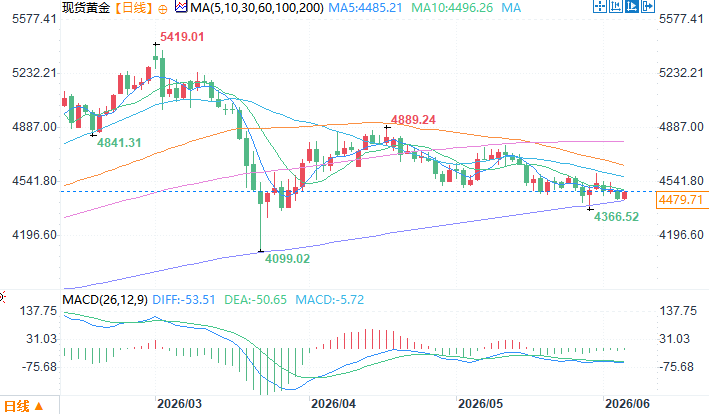
Spot gold daily chart source: EasyForex
At 13:49 Beijing time on June 4, spot gold was trading at $4467.71 per ounce.
Eastern European and Asian economies remain the main drivers of gold purchases, with many countries making large-scale gold hoardings and others selling small amounts to hedge their positions. Based on historical survey data, central banks' willingness to allocate gold in the medium to long term continues to rise, and the association's latest annual survey report is about to be released.
Monthly gold buying trends reversed as central banks in many countries continued their long-term buying pace.
Marissa Salim, senior research director for Asia Pacific at the World Gold Council, said that global central banks reversed the large gold sales trend of March in April, and resumed net purchases of 17 tons of gold.
By country, Poland remained the largest gold buyer in April, with a net purchase of 14 tons. The major Asian country made a net purchase of 8 tons of gold in April, marking the highest monthly increase since December 2024, and has been continuously increasing its gold reserves for 18 consecutive months. The Czech Republic maintained steady purchases, buying 3 tons in April, marking the 38th consecutive month of monthly increases.
Among those selling gold, Russia sold 6 tons in April, bringing its year-to-date sales to 22 tons. Uzbekistan slightly reduced its holdings by 1 ton, but remains a net buyer overall, having purchased 24 tons, second only to Poland in net purchases. Turkey, which sold a large amount of gold in March, maintained its gold reserves largely unchanged in April. With short-term gold-to-dollar swaps expiring, only medium- to long-term swaps with maturities of 1 to 3 months remain.
With the optimization of reserve structures in various countries, Eurasian central banks have become key players in long-term gold hoarding.
From a long-term perspective, central banks in Asia and Eastern Europe are the core forces in global gold purchases. Over the past 36 months, the two regions have purchased an average of 11 tons and 12 tons of gold per month, respectively, while global central banks have made an average net purchase of 29 tons of gold per month during the same period.
Following this round of purchases, Poland has accumulated 45 tons of gold this year, bringing its total gold reserves to 595 tons, with gold accounting for 30% of its total foreign exchange reserves. Major Asian countries have increased their official gold reserves to approximately 2,322 tons, representing 9% of their total reserves. The Czech Republic has accumulated 79 tons of gold reserves, accounting for 6% of its total reserves. Uzbekistan's gold reserves are 414 tons, accounting for a significant 88% of its overall reserves. Countries are continuously optimizing their reserve allocations, using gold to mitigate the risks associated with fluctuations in foreign exchange assets.
Investment confidence has been rising year by year, and the latest central bank research report is about to be released.
Marissa Salim added that the World Gold Council's ninth Global Central Bank Gold Reserves Survey Report for 2026 will be officially released that month, and the report will provide a clear picture of central banks' long-term gold reserve allocation strategies.
Past survey data supports the fact that central banks' enthusiasm for purchasing gold has been increasing year by year. In 2025, 95% of the surveyed central banks predicted that global official gold reserves would continue to rise in the coming year, up from 81% in 2024. The proportion of central banks planning to increase their own gold reserves rose from 29% to 43%, and the logic of long-term increase has become an industry consensus.
Summarize
Overall, the resumption of central bank gold purchases in April confirms gold's safe-haven value, with many Eurasian countries maintaining a solid long-term upward trend in holdings, and only a few countries realizing profits in stages. With central banks' investment preferences continuing to rise, global gold demand will remain fundamentally supported.
Spot gold daily chart source: EasyForex
At 13:49 Beijing time on June 4, spot gold was trading at $4467.71 per ounce.
- Risk Warning and Disclaimer
- The market involves risk, and trading may not be suitable for all investors. This article is for reference only and does not constitute personal investment advice, nor does it take into account certain users’ specific investment objectives, financial situation, or other needs. Any investment decisions made based on this information are at your own risk.