Rising expectations of a Bank of Japan rate hike coupled with concerns about intervention pressured the pound, causing it to fluctuate at high levels against the yen.
2026-06-04 16:37:58
The British pound continued its pullback against the Japanese yen (GBP/JPY) during Thursday's European trading session, consolidating around 214.70. The market is reassessing the future monetary policy paths of the UK and Japan, while geopolitical tensions and energy market developments continue to influence exchange rate movements.
The recent exchange rate movement of the Japanese yen has become a focus of market attention. With the USD/JPY pair continuing to hover around the important psychological level of 160.00, investor expectations for potential foreign exchange intervention by the Japanese government have clearly intensified. Historical experience shows that when the USD/JPY approaches or breaks through key highs, the Japanese Ministry of Finance often uses verbal warnings or direct market intervention to curb excessive yen depreciation. Therefore, the market is currently cautious about short yen positions, which to some extent limits the upside potential of the GBP/JPY pair.
Meanwhile, expectations for the Bank of Japan's policy are also beginning to shift. With domestic inflation remaining high and imported inflationary pressures from the prolonged depreciation of the yen increasing, the market is increasingly inclined to believe that the Bank of Japan will further raise interest rates at its policy meeting on June 15-16. If the Bank of Japan continues its monetary policy normalization process, the long-standing ultra-low interest rate gap between Japan and other major economies will narrow, thereby enhancing the yen's attractiveness. For the pound/yen exchange rate, this means that support from carry trades is gradually weakening.
However, the potential for yen appreciation is also limited by economic fundamentals. As one of the world's major energy importers, Japan is highly sensitive to changes in international energy prices. The situation in the Middle East remains tense, and the risks to shipping through the Strait of Hormuz have not been completely eliminated. As the US and Iran have yet to achieve a substantial breakthrough in their discussions on the nuclear issue and regional security, market concerns about the stability of energy supply persist.
High energy prices will increase production costs for Japanese companies and the burden on residents' lives, potentially dragging down economic growth. Therefore, while the market is optimistic about a Bank of Japan interest rate hike, it remains relatively cautious about a further significant appreciation of the yen. In contrast, the pound has been relatively stable recently. Following the ceasefire agreement between Lebanon and Israel, market risk aversion eased, and the dollar index adjusted. The weakening dollar indirectly provided some support for the pound and slowed the rate of decline against the yen.
However, expectations for UK monetary policy have shifted. Previously, the market anticipated a more aggressive tightening policy from the Bank of England, but recent stable economic data, coupled with uncertainty surrounding the global economic outlook, has led investors to lower their expectations for continued interest rate hikes. Currently, the market widely expects only one 25-basis-point rate hike by the Bank of England before the end of the year. This change, compared to previous more aggressive expectations, weakens the pound's interest rate advantage.
From a capital flow perspective, the market is gradually reducing bets on further significant appreciation of the pound. As the policy differences between the UK and Japan narrow, the previous one-sided upward trend of the pound against the yen is showing signs of cooling. Furthermore, global investors are closely watching the upcoming US non-farm payroll data. Since the performance of the US economy directly affects global interest rate expectations and risk appetite, this data could have a significant impact on cross-currency pairs, including the pound against the yen.
From a daily chart perspective, the GBP/JPY pair maintains its medium-term uptrend, but short-term downward pressure has increased significantly. After retreating from this week's high near 215.50, the price has entered a consolidation phase. The MACD indicator is running at a high level, but the red histogram bars are continuously shortening, indicating that upward momentum is weakening. The RSI indicator has fallen back to around 55, and market sentiment is gradually shifting from bullish to neutral.
From a 4-hour chart perspective, the exchange rate has broken below the 100-hour simple moving average, which is considered a short-term bearish signal. If it subsequently breaks below the 214.00 support area, it may further test the support levels around 213.20 and 212.50. On the upside, watch the resistance areas at 215.50 and 216.30; only a retest of these levels could allow the bulls to regain control.
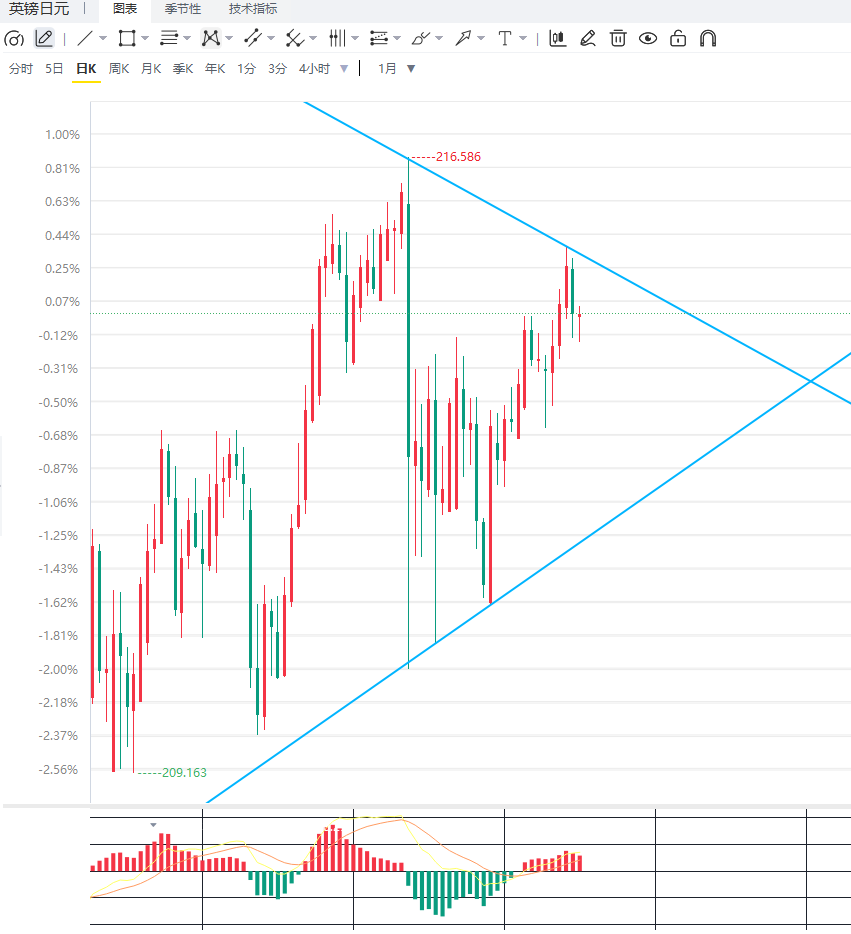
Editor's Summary : The recent pullback in the GBP/JPY exchange rate was mainly due to rising expectations of a Bank of Japan (BOJ) interest rate hike and the potential risk of Japanese government intervention in the foreign exchange market. As the market gradually believes that Japan's monetary policy will further normalize, the yen has gained new fundamental support. Meanwhile, cooling expectations of a Bank of England (BOE) interest rate hike have weakened the pound's interest rate advantage, reducing its upward momentum. The upcoming BOJ policy meeting will be a crucial event in determining the exchange rate direction. If the BOJ releases a more hawkish signal, the GBP/JPY may face further downward pressure. However, energy risks stemming from the Middle East situation will continue to limit the yen's appreciation potential. Overall, the exchange rate is likely to maintain a high-level, slightly weak trend in the short term, and investors should pay close attention to Japanese policy developments and changes in global risk sentiment.
The recent exchange rate movement of the Japanese yen has become a focus of market attention. With the USD/JPY pair continuing to hover around the important psychological level of 160.00, investor expectations for potential foreign exchange intervention by the Japanese government have clearly intensified. Historical experience shows that when the USD/JPY approaches or breaks through key highs, the Japanese Ministry of Finance often uses verbal warnings or direct market intervention to curb excessive yen depreciation. Therefore, the market is currently cautious about short yen positions, which to some extent limits the upside potential of the GBP/JPY pair.
Meanwhile, expectations for the Bank of Japan's policy are also beginning to shift. With domestic inflation remaining high and imported inflationary pressures from the prolonged depreciation of the yen increasing, the market is increasingly inclined to believe that the Bank of Japan will further raise interest rates at its policy meeting on June 15-16. If the Bank of Japan continues its monetary policy normalization process, the long-standing ultra-low interest rate gap between Japan and other major economies will narrow, thereby enhancing the yen's attractiveness. For the pound/yen exchange rate, this means that support from carry trades is gradually weakening.
However, the potential for yen appreciation is also limited by economic fundamentals. As one of the world's major energy importers, Japan is highly sensitive to changes in international energy prices. The situation in the Middle East remains tense, and the risks to shipping through the Strait of Hormuz have not been completely eliminated. As the US and Iran have yet to achieve a substantial breakthrough in their discussions on the nuclear issue and regional security, market concerns about the stability of energy supply persist.
High energy prices will increase production costs for Japanese companies and the burden on residents' lives, potentially dragging down economic growth. Therefore, while the market is optimistic about a Bank of Japan interest rate hike, it remains relatively cautious about a further significant appreciation of the yen. In contrast, the pound has been relatively stable recently. Following the ceasefire agreement between Lebanon and Israel, market risk aversion eased, and the dollar index adjusted. The weakening dollar indirectly provided some support for the pound and slowed the rate of decline against the yen.
However, expectations for UK monetary policy have shifted. Previously, the market anticipated a more aggressive tightening policy from the Bank of England, but recent stable economic data, coupled with uncertainty surrounding the global economic outlook, has led investors to lower their expectations for continued interest rate hikes. Currently, the market widely expects only one 25-basis-point rate hike by the Bank of England before the end of the year. This change, compared to previous more aggressive expectations, weakens the pound's interest rate advantage.
From a capital flow perspective, the market is gradually reducing bets on further significant appreciation of the pound. As the policy differences between the UK and Japan narrow, the previous one-sided upward trend of the pound against the yen is showing signs of cooling. Furthermore, global investors are closely watching the upcoming US non-farm payroll data. Since the performance of the US economy directly affects global interest rate expectations and risk appetite, this data could have a significant impact on cross-currency pairs, including the pound against the yen.
From a daily chart perspective, the GBP/JPY pair maintains its medium-term uptrend, but short-term downward pressure has increased significantly. After retreating from this week's high near 215.50, the price has entered a consolidation phase. The MACD indicator is running at a high level, but the red histogram bars are continuously shortening, indicating that upward momentum is weakening. The RSI indicator has fallen back to around 55, and market sentiment is gradually shifting from bullish to neutral.
From a 4-hour chart perspective, the exchange rate has broken below the 100-hour simple moving average, which is considered a short-term bearish signal. If it subsequently breaks below the 214.00 support area, it may further test the support levels around 213.20 and 212.50. On the upside, watch the resistance areas at 215.50 and 216.30; only a retest of these levels could allow the bulls to regain control.
Editor's Summary : The recent pullback in the GBP/JPY exchange rate was mainly due to rising expectations of a Bank of Japan (BOJ) interest rate hike and the potential risk of Japanese government intervention in the foreign exchange market. As the market gradually believes that Japan's monetary policy will further normalize, the yen has gained new fundamental support. Meanwhile, cooling expectations of a Bank of England (BOE) interest rate hike have weakened the pound's interest rate advantage, reducing its upward momentum. The upcoming BOJ policy meeting will be a crucial event in determining the exchange rate direction. If the BOJ releases a more hawkish signal, the GBP/JPY may face further downward pressure. However, energy risks stemming from the Middle East situation will continue to limit the yen's appreciation potential. Overall, the exchange rate is likely to maintain a high-level, slightly weak trend in the short term, and investors should pay close attention to Japanese policy developments and changes in global risk sentiment.
- Risk Warning and Disclaimer
- The market involves risk, and trading may not be suitable for all investors. This article is for reference only and does not constitute personal investment advice, nor does it take into account certain users’ specific investment objectives, financial situation, or other needs. Any investment decisions made based on this information are at your own risk.