Signs of a cooling UK job market are emerging, putting the Bank of England's interest rate hike prospects at risk, but the pound remains supported in the medium term.
2026-06-05 16:54:55
With market focus on the US non-farm payrolls report, changes in the UK job market are also drawing investor attention. Derek Halpenney, a foreign exchange analyst at MUFG, points out that increasing data suggests the UK labor market is gradually cooling, a trend that could significantly impact the Bank of England's future monetary policy.

Recent employment data released by HMRC (Her Majesty's Revenue and Customs) shows a significant decline in the number of jobs, raising concerns about a slowdown in UK economic growth. Meanwhile, data from the UK insolvency services also indicates an increase in the number of large-scale layoff notices filed by companies, further confirming the pressure on the job market.
Under current UK regulations, companies planning to lay off 20 or more employees are required to submit an HR1 form to the relevant authorities for record-keeping. Therefore, HR1 data is often considered a leading indicator of corporate layoff trends. Harpenney believes that the recent weak HMRC employment data is, to some extent, validated by the HR1 layoff reporting data. This suggests that UK companies are adopting more cautious human resource strategies in the face of rising costs, slowing economic growth, and an uncertain business environment.
However, from a longer-term perspective, the current situation is insufficient to prove that the UK job market has deteriorated across the board. Data shows that the cumulative number of job cuts reported up to April 2026 has remained largely unchanged compared to the same period in 2025, indicating that while the scale of layoffs has increased, it remains within the normal range of historical fluctuations. "Recent four-week data shows a rise in potential job cuts, which warrants continued monitoring, but it is currently insufficient to indicate a significant deterioration in the overall UK labor market."
Analysts point out that the main challenge facing the UK economy remains inflationary pressures. Volatile energy prices, rising costs in the service sector, and resilient wage growth have kept UK inflation consistently above the Bank of England's target range. Against this backdrop, the Bank of England faces a dilemma. On the one hand, signs of a cooling job market could indicate weakening economic growth; on the other hand, persistent inflationary risks necessitate maintaining a certain level of monetary tightening.
If UK employment data continues to be weak in the coming months, market expectations for further interest rate hikes by the Bank of England could be impacted. Especially with international oil prices remaining low, imported inflationary pressures have eased, reducing the need for the Bank of England to take aggressive tightening measures. However, from a medium- to long-term perspective, the market still believes that the Bank of England's tolerance for inflation risks is declining. As inflationary pressures may re-accumulate, the Bank of England may maintain a relatively hawkish stance in the future, which could provide potential support for the pound's performance.
In the foreign exchange market, the pound has recently been affected by both weak UK employment data and a strong dollar. However, the overall decline in the pound has been relatively limited as the market also expects the Bank of England not to shift to an easing policy prematurely. From a market sentiment perspective, investors are currently more concerned about whether the cooling of the UK job market is a temporary fluctuation or the beginning of a deeper economic slowdown. If future data continues to deteriorate, the Bank of England's policy path may be adjusted; conversely, if the job market remains stable, market expectations of persistently high UK interest rates are likely to continue to support the pound.
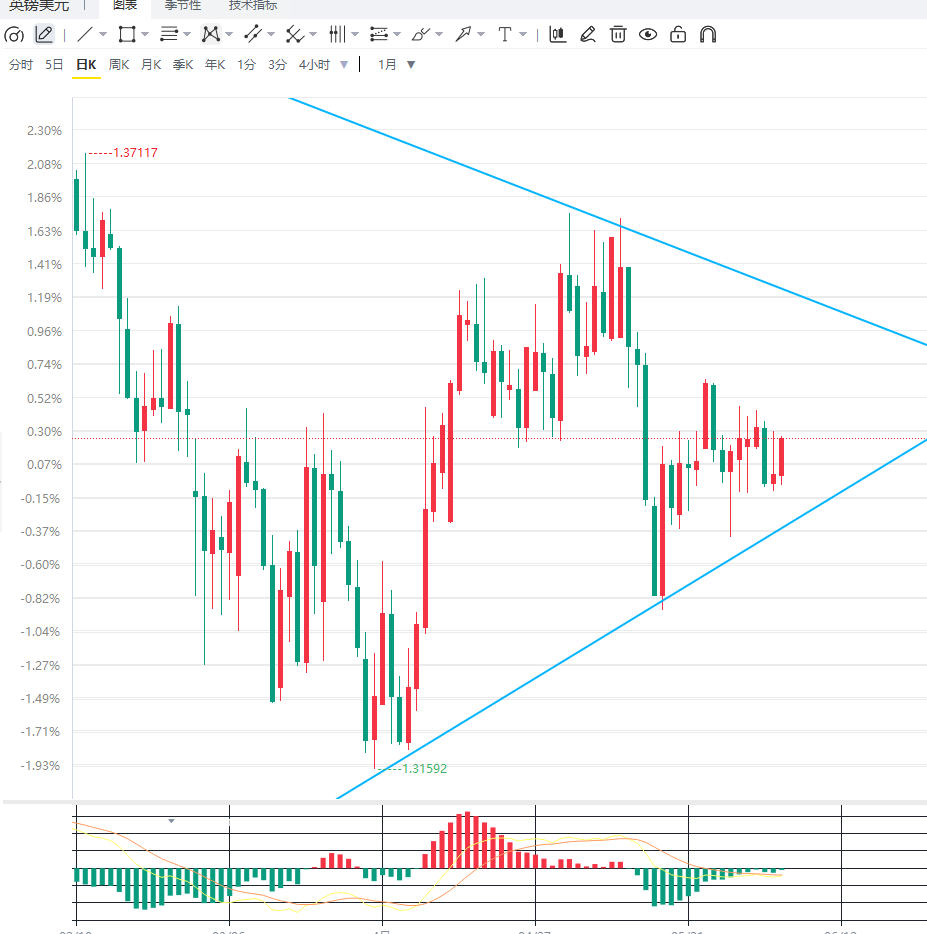
From a daily chart perspective, the GBP/USD pair maintains a generally bullish medium- to long-term trend. Currently, the exchange rate is trading near major moving averages, indicating a relatively balanced market sentiment between bulls and bears. Key support lies around 1.3400, with further support at the 1.3360 area; key resistance levels are around 1.3500 and 1.3620. The MACD indicator is above the zero line, but the red bars are showing signs of shrinking, suggesting weakening upward momentum. The RSI indicator remains in the neutral-to-strong zone, reflecting a continued bullish bias, but lacking a clear breakout in the short term.
From a 4-hour chart perspective, the GBP/USD pair has entered a consolidation phase at higher levels. Short-term moving averages are gradually flattening, indicating the market is awaiting new fundamental drivers. A break above the 1.3500 resistance area could lead to a further challenge of the 1.3580 high; conversely, a break below the 1.3400 support level could trigger a period of correction.
Editor's Summary : While the UK job market has indeed shown signs of cooling recently, overall data is insufficient to suggest a significant deterioration. Although weak employment data may dampen market expectations for a short-term interest rate hike by the Bank of England, persistent inflation risks will limit policy flexibility. The Bank of England's future policy path will seek a balance between the slowing job market and inflationary pressures. In the short term, UK employment data, wage growth, and energy price changes will be key variables influencing market expectations. From a medium- to long-term perspective, as long as the Bank of England remains vigilant about inflation, the pound is likely to receive some support.
Recent employment data released by HMRC (Her Majesty's Revenue and Customs) shows a significant decline in the number of jobs, raising concerns about a slowdown in UK economic growth. Meanwhile, data from the UK insolvency services also indicates an increase in the number of large-scale layoff notices filed by companies, further confirming the pressure on the job market.
Under current UK regulations, companies planning to lay off 20 or more employees are required to submit an HR1 form to the relevant authorities for record-keeping. Therefore, HR1 data is often considered a leading indicator of corporate layoff trends. Harpenney believes that the recent weak HMRC employment data is, to some extent, validated by the HR1 layoff reporting data. This suggests that UK companies are adopting more cautious human resource strategies in the face of rising costs, slowing economic growth, and an uncertain business environment.
However, from a longer-term perspective, the current situation is insufficient to prove that the UK job market has deteriorated across the board. Data shows that the cumulative number of job cuts reported up to April 2026 has remained largely unchanged compared to the same period in 2025, indicating that while the scale of layoffs has increased, it remains within the normal range of historical fluctuations. "Recent four-week data shows a rise in potential job cuts, which warrants continued monitoring, but it is currently insufficient to indicate a significant deterioration in the overall UK labor market."
Analysts point out that the main challenge facing the UK economy remains inflationary pressures. Volatile energy prices, rising costs in the service sector, and resilient wage growth have kept UK inflation consistently above the Bank of England's target range. Against this backdrop, the Bank of England faces a dilemma. On the one hand, signs of a cooling job market could indicate weakening economic growth; on the other hand, persistent inflationary risks necessitate maintaining a certain level of monetary tightening.
If UK employment data continues to be weak in the coming months, market expectations for further interest rate hikes by the Bank of England could be impacted. Especially with international oil prices remaining low, imported inflationary pressures have eased, reducing the need for the Bank of England to take aggressive tightening measures. However, from a medium- to long-term perspective, the market still believes that the Bank of England's tolerance for inflation risks is declining. As inflationary pressures may re-accumulate, the Bank of England may maintain a relatively hawkish stance in the future, which could provide potential support for the pound's performance.
In the foreign exchange market, the pound has recently been affected by both weak UK employment data and a strong dollar. However, the overall decline in the pound has been relatively limited as the market also expects the Bank of England not to shift to an easing policy prematurely. From a market sentiment perspective, investors are currently more concerned about whether the cooling of the UK job market is a temporary fluctuation or the beginning of a deeper economic slowdown. If future data continues to deteriorate, the Bank of England's policy path may be adjusted; conversely, if the job market remains stable, market expectations of persistently high UK interest rates are likely to continue to support the pound.
From a daily chart perspective, the GBP/USD pair maintains a generally bullish medium- to long-term trend. Currently, the exchange rate is trading near major moving averages, indicating a relatively balanced market sentiment between bulls and bears. Key support lies around 1.3400, with further support at the 1.3360 area; key resistance levels are around 1.3500 and 1.3620. The MACD indicator is above the zero line, but the red bars are showing signs of shrinking, suggesting weakening upward momentum. The RSI indicator remains in the neutral-to-strong zone, reflecting a continued bullish bias, but lacking a clear breakout in the short term.
From a 4-hour chart perspective, the GBP/USD pair has entered a consolidation phase at higher levels. Short-term moving averages are gradually flattening, indicating the market is awaiting new fundamental drivers. A break above the 1.3500 resistance area could lead to a further challenge of the 1.3580 high; conversely, a break below the 1.3400 support level could trigger a period of correction.
Editor's Summary : While the UK job market has indeed shown signs of cooling recently, overall data is insufficient to suggest a significant deterioration. Although weak employment data may dampen market expectations for a short-term interest rate hike by the Bank of England, persistent inflation risks will limit policy flexibility. The Bank of England's future policy path will seek a balance between the slowing job market and inflationary pressures. In the short term, UK employment data, wage growth, and energy price changes will be key variables influencing market expectations. From a medium- to long-term perspective, as long as the Bank of England remains vigilant about inflation, the pound is likely to receive some support.
- Risk Warning and Disclaimer
- The market involves risk, and trading may not be suitable for all investors. This article is for reference only and does not constitute personal investment advice, nor does it take into account certain users’ specific investment objectives, financial situation, or other needs. Any investment decisions made based on this information are at your own risk.